U.S. manufacturing costs are becoming a growing challenge for American industrial businesses as factory backlogs expand, shipments slow, and the prices of essential production inputs rise. The latest figures point to an uncomfortable situation for manufacturers: there is substantial demand waiting to be fulfilled, but delivering products is becoming more expensive.
In an October 8, 2026, report, FreightWaves highlighted a striking development. Unfilled U.S. factory orders reached approximately $1.61 trillion in August, while shipments barely moved. At the same time, manufacturing executives reported higher prices for steel, freight, and diesel fuel.
The numbers do not indicate that American manufacturing has stopped growing. In fact, the sector remained in expansion territory in September, according to the Institute for Supply Management (ISM). The concern is that rising input prices and material shortages could make it harder for factories to convert orders into finished products and completed deliveries.
For manufacturers, distributors, freight providers, and industrial buyers, the next challenge is not simply finding customers. It is managing production schedules, securing materials, controlling transportation expenses, and protecting margins while uncertainty persists.
Background and Context: Why U.S. Manufacturing Costs Matter Now
Manufacturing depends on a network of interconnected expenses. Factories purchase raw materials, components, energy, and equipment. They pay workers to turn those inputs into finished products, then rely on trucking, rail, ocean freight, and other transportation services to move goods to customers.
When several of those expenses rise simultaneously, the pressure can spread across the entire supply chain.
Steel prices affect manufacturers of machinery, vehicles, industrial equipment, and fabricated metal products. Diesel fuel influences trucking expenses and fuel surcharges. Freight rates affect the cost of moving components into factories and finished products out of them.
Tariffs can add another layer of expense for imported materials and components, depending on the product, origin, applicable exemptions, and customs treatment.
The impact is not identical across every industry. A manufacturer with long-term supplier agreements may face a different cost environment from a business purchasing steel on the spot market. A factory located close to its customers may be less exposed to long-distance freight costs than one dependent on cross-country distribution.
However, when material shortages, expensive transportation, and uncertain delivery schedules occur together, even manufacturers with healthy order books can struggle to maintain predictable production.
That is why the latest U.S. manufacturing cost data deserves attention. It offers a view of the tension between demand and the ability to fulfill orders efficiently.
Latest Update: Factory Backlogs Reach $1.61 Trillion
According to the U.S. Census Bureau’s August 2026 manufacturers’ shipments, inventories, and orders report, unfilled factory orders increased 0.6% to $1,609.6 billion.
The figures were released on October 2 and subsequently analyzed by FreightWaves on October 8.
Several indicators help explain what is happening inside the industrial economy.
1. Unfilled orders continue to grow
Unfilled factory orders increased in 25 of the previous 26 months, according to FreightWaves’ analysis of Census Bureau data.
The August total reached approximately $1.61 trillion, with transportation equipment accounting for $1,009.9 billion. Transportation equipment also led the monthly increase.
These figures represent orders that have not yet been fulfilled, rather than revenue already earned or products physically sitting in warehouses. They should not be interpreted as proof that every outstanding order will turn into a completed sale.
Still, a sustained increase in backlogs indicates that manufacturers have substantial commitments to fulfill.
The challenge is determining how quickly those commitments can be converted into shipments and revenue without allowing costs to erode profitability.
2. Shipments barely moved
Manufacturers’ shipments were virtually unchanged at $658.6 billion in August, following eight consecutive monthly increases.
New orders increased 0.1% to $663.5 billion.
The ratio of unfilled orders to shipments rose to 6.87 from 6.81, according to the FreightWaves report.
This ratio is a useful indicator of the relationship between outstanding orders and current shipments. It is not a direct prediction of how many months every factory will need to clear its backlog, because product mix, production schedules, and reporting categories vary.
Even so, the combination of growing backlogs and nearly flat shipments suggests that demand is not translating into faster deliveries across the aggregate manufacturing sector.
3. Manufacturing activity is still expanding
The September ISM Manufacturing PMI registered 54.5, according to the Institute for Supply Management’s October 1 report.
A reading above 50 indicates expansion in the survey’s manufacturing activity measure. September marked the ninth consecutive month of expansion following an earlier period of contraction.
That is an important qualification. The latest data does not describe a manufacturing sector in universal decline. Instead, it points to continued activity alongside growing cost pressure.
The prices index rose 6.8 points to 77.9 in September. ISM reported that 58.6% of respondents said they were paying higher prices, up from 46.2% in August.
The combination of expansion and inflation creates a difficult operating environment. Manufacturers may have sufficient demand to keep production lines busy while simultaneously facing higher costs to fulfill those orders.
Expert Analysis: Three Forces Pushing U.S. Manufacturing Costs Higher
Steel availability and prices are creating production challenges
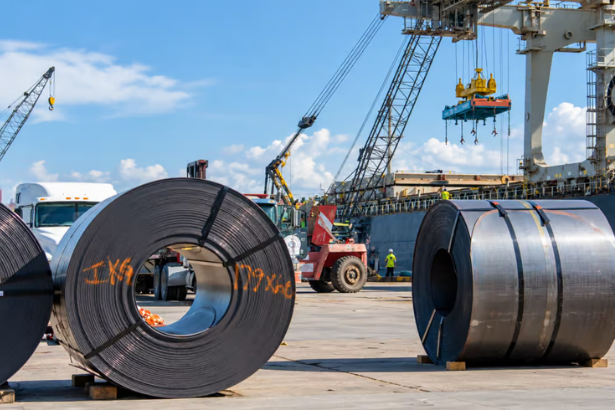
Steel is a fundamental input for numerous American industries, including automotive manufacturing, construction equipment, industrial machinery, fabricated metal products, and transportation equipment.
When steel becomes more expensive or harder to obtain, manufacturers face a choice: absorb the higher costs, renegotiate prices with customers, seek alternative suppliers, or adjust production schedules.
None of those options is necessarily straightforward.
A fabricated metal products respondent quoted in the FreightWaves report described a shortage of workers and deteriorating steel availability as major constraints on production. The company reported that it had orders extending through year-end at levels above its forecasts.
This example illustrates an important distinction. Strong customer demand does not guarantee higher output when factories lack the labor or materials needed to manufacture products.
A business may have enough orders to keep its production schedule full but still miss delivery dates because a critical steel component has not arrived.
For buyers, the result can be longer lead times and greater uncertainty. For manufacturers, it can mean overtime costs, production rescheduling, and pressure to find replacement materials without compromising specifications or quality.
Diesel and freight costs are adding pressure
Transportation expenses affect manufacturing long before a finished product reaches its customer.
Factories pay to bring raw materials and components to production facilities. Finished products must then move to distributors, retailers, construction sites, or industrial customers.
The FreightWaves report cited a weekly U.S. diesel benchmark of $6.529 per gallon on September 21, based on Energy Information Administration data. The publication reported that this was a record for the benchmark used in many fuel surcharge calculations.
Diesel prices can affect trucking costs through fuel consumption and surcharges. The final effect on a manufacturer’s transportation bill depends on route length, carrier contracts, equipment type, shipment density, and surcharge formulas.
Manufacturers shipping heavy machinery or steel products can be particularly exposed to freight expenses because transportation represents an important part of the delivered cost.
Higher freight costs can also create indirect expenses. If a supplier delays a critical component, a factory may need to pay for expedited shipping to keep production moving.
That makes transportation planning a cost-control function rather than simply an operational task.
Tariffs and imported components complicate procurement
The FreightWaves report also describes uncertainty around cross-border trade, including U.S.-Canada tariffs and the resulting concerns reported by manufacturing businesses.
The article cites a machinery-sector respondent who described difficulties involving cross-border costs, semiconductor and electronics lead times, and government-related orders.
Tariff effects depend on the product classification, country of origin, applicable trade measures, and any available exclusions or exemptions. Not every imported component faces the same rate, and tariff announcements do not automatically translate into identical cost increases for every manufacturer.
However, uncertainty itself can influence business decisions.
Manufacturers may hesitate to commit to major capital expenditures if they cannot confidently estimate the cost of imported machinery, electronics, or other components. Procurement teams may also spend more time evaluating suppliers, revising contracts, and checking compliance requirements.
The result can be slower purchasing decisions and more complicated production planning.
Broader Implications: What Rising Manufacturing Costs Mean for the U.S. Economy
Industrial companies could face tighter profit margins
When material and transportation expenses increase, manufacturers need to decide how much of the additional cost they can pass to customers.
Businesses with strong pricing power may be able to adjust prices. Others may be locked into existing contracts or face competition from suppliers that can offer lower prices.
In those cases, higher input costs can reduce gross margins even when sales volumes remain healthy.
Companies may respond by improving production efficiency, renegotiating freight agreements, redesigning products to reduce material usage, or increasing inventory of critical components.
The effectiveness of each approach depends on the industry and the company’s financial position.
Supply chain delays could spread beyond factories
Manufacturing bottlenecks rarely remain confined to the factory floor.
If a machinery producer cannot obtain steel, its delivery schedules may slip. Customers waiting for the machinery may then delay construction, equipment installation, or other projects.
Similarly, a shortage of electronic components can affect production schedules for industrial systems and transportation equipment.
When many businesses experience these problems at once, the effects can spread through distributors, contractors, logistics providers, and downstream manufacturers.
The growing backlog therefore matters to the broader economy, although the aggregate figures alone cannot establish how much of the increase is caused by material shortages, labor constraints, or transportation problems.
Small and midsize manufacturers may have fewer options
Large industrial companies often have more purchasing leverage, a wider supplier base, and greater financial resources to manage disruptions.
Smaller manufacturers may have fewer alternatives when a supplier raises prices or delays a shipment.
They may also have less flexibility to maintain extra inventory or pay for expedited transportation.
For these companies, rising U.S. manufacturing costs can create a difficult balance between protecting cash flow and maintaining reliable delivery performance.
Supplier diversification, stronger customer communication, and more disciplined inventory planning can help, but each requires time and resources.
Higher prices could affect customers and investment decisions
Manufacturers do not operate independently of the wider economy. If production costs rise and businesses pass those increases to customers, the effects can reach construction projects, vehicle production, industrial equipment purchases, and other sectors.
At the same time, uncertain costs can make businesses more cautious about investment decisions.
The FreightWaves report cites a transportation equipment respondent who described customers postponing capital expenditures while they waited for greater certainty about costs and demand.
That is a potential feedback loop: manufacturers face higher costs, customers delay purchases, and suppliers become less certain about future demand.
It is not inevitable, but it is one reason industrial leaders pay close attention to pricing indexes, order backlogs, and delivery schedules.
For additional coverage of industrial technology and business operations, visit The Tech Marketer’s technology and business section.
Related History: What Previous Manufacturing Cycles Can Teach Businesses
Manufacturers have dealt with input-price shocks, transportation bottlenecks, and order backlogs in earlier economic cycles.
The pandemic exposed how quickly disruptions in shipping and component availability can affect production. Businesses responded by reconsidering supplier concentration, inventory policies, and the risks associated with relying on a small number of overseas suppliers.
More recently, companies have had to balance efficiency with resilience. Lean inventory systems can reduce storage costs, but they also leave less room for unexpected disruptions. Maintaining extra stock can improve continuity, yet it ties up cash and increases warehousing expenses.
The current environment brings these trade-offs back into focus.
The latest data suggests that U.S. manufacturers are still operating in an expanding industrial environment, but with rising input prices and uneven delivery performance.
That differs from a simple demand-collapse scenario. Businesses may have substantial orders waiting to be fulfilled while facing the practical challenge of securing materials and moving products at a reasonable cost.
The lesson is that strong demand and healthy operating margins are not the same thing. Production capacity, supplier reliability, and transportation economics matter just as much as the number of orders on the books.
What Happens Next? Four Indicators U.S. Manufacturers Should Watch
1. The next manufacturing PMI report
The ISM Manufacturing PMI provides an updated view of business activity, new orders, production, employment, supplier deliveries, inventories, and prices.
Manufacturers should pay particular attention to whether the prices index continues rising and whether new orders and production remain strong enough to support the existing backlog.
One monthly reading rarely tells the whole story. The direction of several indicators over time is more useful for assessing whether cost pressure is intensifying or easing.
2. Steel availability and supplier lead times
Procurement teams should monitor both quoted steel prices and actual availability.
A stable price is of limited value if the required material cannot arrive in time to meet production schedules. Similarly, an alternative supplier may offer a lower price but introduce additional qualification, transport, or quality-control requirements.
Maintaining visibility into supplier lead times can help manufacturers identify risks before they affect production.
3. Diesel prices and freight contracts
Fuel prices can change the economics of freight agreements, particularly where contracts include adjustable fuel surcharges.
Manufacturers should review how those surcharges are calculated, compare rates across appropriate transportation options, and identify shipments where better planning can reduce premium freight expenses.
Intermodal transportation, consolidated shipments, and improved scheduling may provide savings in some cases, although suitability depends on shipment characteristics and service requirements.
4. Order conversion and inventory levels
A large backlog is useful only if manufacturers can convert it into profitable shipments.
Businesses should compare outstanding orders with confirmed material availability, production capacity, customer delivery requirements, and expected margins.
It is also important to distinguish genuine customer demand from orders that may be delayed, revised, or canceled.
Better visibility into the relationship between orders, inventories, and shipments can help companies avoid committing resources to work that they cannot complete profitably.
Conclusion: U.S. Manufacturing Faces a Test of Cost Control and Execution
The latest factory data reveals a complicated picture of American manufacturing. Unfilled orders reached approximately $1.61 trillion in August, shipments barely changed, and the September manufacturing survey showed continued expansion alongside a sharp increase in reported price pressure.
Steel availability, diesel expenses, freight costs, and trade uncertainty are making it harder for some businesses to plan production and deliver orders on schedule.
The figures do not prove that a broad manufacturing downturn is underway. They show that a growing order pipeline can coexist with material shortages, higher operating expenses, and limited shipment growth.
For manufacturers, the immediate priority is to improve control over procurement, transportation, production scheduling, and customer commitments. Businesses that understand their true cost per order and identify supply chain risks early will be better positioned to protect profitability.
For freight companies and industrial suppliers, the same conditions create opportunities to help customers improve delivery reliability and manage cost volatility.
The central issue is no longer just how many orders American factories can attract. It is how efficiently they can fulfill those orders while costs continue to rise.
Frequently Asked Questions
1. What are U.S. manufacturing costs?
U.S. manufacturing costs include raw materials, labor, energy, equipment, freight, warehousing, and other expenses required to produce and deliver goods. Their effect on profitability depends on a company’s production process, supplier contracts, and ability to adjust prices.
2. Why are U.S. manufacturing costs rising in October 2026?
The October 8 FreightWaves report highlights higher steel, diesel, and freight costs, along with trade uncertainty and material availability concerns. The September ISM Manufacturing PMI also showed a sharp increase in its prices index.
3. How large are U.S. factory backlogs?
Unfilled U.S. factory orders reached $1,609.6 billion in August 2026, up 0.6% from the previous month, according to Census Bureau figures reported by FreightWaves.
4. Does a growing factory backlog mean manufacturing is slowing down?
Not necessarily. A growing backlog means orders are accumulating faster than they are being fulfilled. It may reflect strong demand, production constraints, supply shortages, or a combination of factors. In September, the ISM Manufacturing PMI remained above 50, indicating expansion.
5. How do diesel prices affect manufacturers?
Diesel influences the cost of trucking raw materials, components, and finished products. Higher fuel costs can increase carrier expenses and fuel surcharges, raising the delivered cost of goods.
6. How do steel prices affect U.S. manufacturing?
Steel is a key input for machinery, vehicles, fabricated metal products, and industrial equipment. Higher prices or limited availability can increase production expenses, delay orders, and reduce margins.
7. What can manufacturers do to control rising costs?
Companies can improve supplier diversification, negotiate freight agreements, monitor inventory more closely, reduce avoidable expedited shipping, improve production planning, and evaluate pricing and contract terms. No single strategy eliminates every source of cost pressure.
8. Where can readers find current U.S. manufacturing cost data?
Useful sources include the U.S. Census Bureau, the Institute for Supply Management, and the U.S. Energy Information Administration. FreightWaves provides additional freight and supply chain analysis.
Sources & References
- FreightWaves: Factory Backlogs Build as Freight and Steel Costs Climb. Thomas Wasson, October 8, 2026.
- U.S. Census Bureau: Manufacturers’ Shipments, Inventories, and Orders. Official data on factory orders, shipments, inventories, and unfilled orders.
- Institute for Supply Management: ISM Report on Business: Manufacturing PMI. Manufacturing activity, supplier conditions, and input-price survey data.
- U.S. Energy Information Administration: Weekly U.S. No. 2 Diesel Retail Prices. Official weekly diesel price data.
- Reuters: U.S. Factory Orders Increase Slightly in August. October 2, 2026.