Introduction
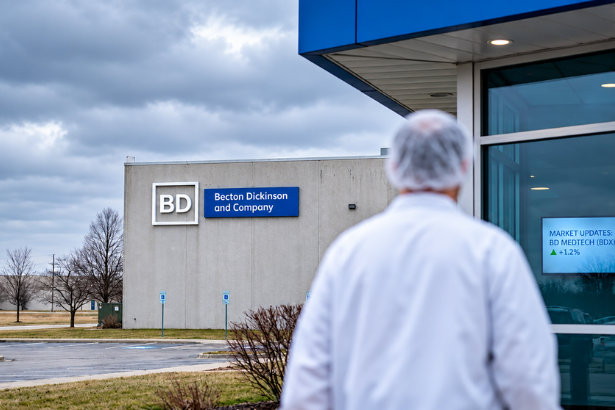
The Becton Dickinson manufacturing expansion announced this week is much bigger than a single company’s factory investment. BD plans to invest $19 billion in the United States over several years, including $3 billion specifically for domestic manufacturing, under a new agreement with the U.S. government. The company says the broader investment will include capital, operational and supply-chain spending. BD Newsroom
More than $1 billion of the manufacturing investment is planned for Nebraska, where BD intends to ramp up production of multiple medical products, including needles made with American steel, according to Reuters. Reuters
The announcement arrives as pharmaceutical and medical-device companies accelerate U.S. investment in response to supply-chain vulnerabilities and changing trade policy. Reuters reports that major healthcare companies have announced roughly $500 billion in U.S. investments across manufacturing, research and infrastructure. Reuters
For BD, however, the strategy is especially focused on something that became painfully visible during the pandemic: the country cannot afford to treat critical medical supplies as ordinary commodities.
Background and Context
Becton Dickinson, commonly known as BD, is one of the world’s largest medical technology companies. Its products span areas including medication delivery, diagnostics and medical supplies.
That makes its manufacturing footprint strategically important.
Needles, syringes and other medical consumables may not receive the same attention as semiconductor factories or electric-vehicle plants, but they are foundational to healthcare systems. Hospitals, clinics, pharmacies and laboratories depend on reliable access to these products every day.
The COVID-19 pandemic demonstrated what happens when global supply chains become severely disrupted.
Medical equipment became difficult to source. Countries competed for critical supplies. Manufacturers faced shortages of raw materials, transportation constraints and sudden changes in demand.
The lesson for policymakers was straightforward: resilience requires more than maintaining inventory. It also requires maintaining production capability.
That thinking is now influencing U.S. industrial policy.
BD’s agreement comes as healthcare companies respond to a changing trade environment under the Trump administration. Reuters says global healthcare firms have been committing billions of dollars to U.S. manufacturing and research as they seek to reduce supply-chain risks and adapt to potential tariffs. Reuters
Latest Update: Becton Dickinson Commits $3 Billion to U.S. Manufacturing
The headline figure is $3 billion.
BD says that amount will be directed toward expanding strategic U.S. manufacturing sites. But the company’s broader commitment is considerably larger.
Under its agreement with the U.S. government, BD intends to:
- Invest $19 billion in the U.S. over several years
- Direct $3 billion toward U.S. manufacturing expansion
- Expand end-to-end domestic production by approximately 5 billion essential medical consumables annually
- Increase the share of essential medical consumables it supplies domestically to roughly 80%
- Manufacture 100% of BD needles used in America domestically
- Use American-made steel for those U.S.-produced needles BD Newsroom
The Nebraska portion is particularly significant.
Reuters reports that BD will invest more than $1 billion in Nebraska to increase production of numerous medical products, including needles made using American steel. Reuters
The investment therefore isn’t simply about adding factory capacity.
It is about changing where the inputs and finished products come from.
That distinction matters.
A medical product can technically be manufactured in America while still relying heavily on imported raw materials or components. BD’s plan to use American steel for needles pushes the concept further toward domestic end-to-end production.
Why Nebraska Is at the Center of the Investment
The decision to direct more than $1 billion toward Nebraska gives the manufacturing announcement a strong regional dimension.
Nebraska is already home to BD manufacturing operations, and the new investment is designed to expand production capacity.
For the state, that can mean more industrial activity, construction spending and potentially additional manufacturing employment.
For BD, the location provides something even more important: an existing manufacturing base that can be expanded rather than building an entirely new domestic production ecosystem from scratch.
The broader strategy is essentially reshoring through expansion.
Instead of simply moving individual production lines back to America, BD can increase the capacity of facilities already integrated into its U.S. manufacturing network.
That can reduce some of the complexity involved in creating an entirely new supply chain.
The Bigger Story: Medical Manufacturing Is Coming Home
The Becton Dickinson manufacturing announcement is part of a much broader movement.
Reuters reports that global healthcare companies have announced approximately $500 billion in U.S. investments, including commitments from Pfizer, GSK, Eli Lilly, Johnson & Johnson, Roche, AstraZeneca, Novartis, Sanofi and others. Reuters
Some of these investments are enormous.
Pfizer has committed $70 billion toward U.S. research and domestic manufacturing.
Johnson & Johnson plans to increase U.S. investment to $55 billion over four years.
Roche has announced a $50 billion U.S. investment over five years.
AstraZeneca has committed $50 billion to U.S. manufacturing by 2030.
Novartis plans to spend $23 billion on U.S. facilities over five years.
Sanofi has pledged at least $20 billion through 2030.
These commitments vary in scope and timing, so they should not be treated as a single pool of immediate factory spending. But collectively, they show how dramatically the economics of healthcare manufacturing are changing. Reuters
Tariffs Are Changing the Manufacturing Equation
The most important policy element of the BD agreement may not be the $3 billion itself.
It is the relationship between manufacturing investment and tariffs.
BD says its agreement provides relief from future Section 232 tariffs on covered products and inputs, subject to the final scope of those tariffs and BD meeting agreed milestones. Reuters describes the arrangement as the first such benefit secured by a major medical-device company through a domestic manufacturing commitment. BD Newsroom
That creates a new incentive structure for manufacturers.
Traditionally, a company might compare:
Cost of producing in the U.S.
versus
Cost of producing overseas plus transportation and import costs.
Tariffs change the second number.
If imported products become more expensive, domestic manufacturing becomes relatively more attractive.
Government incentives can then change the equation again.
BD’s agreement effectively connects manufacturing location to trade policy.
That could influence how other medical-device companies make capital-allocation decisions.
Expert Insights or Analysis
The most important thing about BD’s announcement is not simply that the company is spending $3 billion.
It is that the investment changes the strategic value of domestic manufacturing.
For years, globalization encouraged manufacturers to optimize primarily for cost.
A factory might be located wherever labor, materials, energy and logistics were most competitive.
But the pandemic exposed the weakness of that model when the product is critical and demand can suddenly surge.
A low-cost global supply chain can become very expensive when one link breaks.
Healthcare products are particularly sensitive to that risk.
A hospital cannot simply postpone the purchase of needles because shipping costs have increased.
A medical provider cannot switch suppliers overnight if a critical product is unavailable.
The economic value of domestic capacity therefore includes something that does not always appear on a traditional manufacturing spreadsheet:
resilience.
BD’s planned increase to roughly 80% domestic supply of essential medical consumables is significant for precisely that reason. BD Newsroom
The company is effectively paying for additional manufacturing capacity that can act as a buffer against international disruptions.
What American-Made Needles Actually Signal
The plan to manufacture 100% of BD needles used in America domestically, using American-made steel, is particularly symbolic.
A needle is a relatively small and inexpensive product.
That makes it an interesting test case for reshoring.
If a company is willing to bring production of high-volume, relatively low-cost medical consumables into a domestic supply chain, it suggests the calculation is no longer based purely on unit manufacturing cost.
Supply security has become part of the value proposition.
That could encourage other manufacturers to reconsider products that previously appeared too inexpensive or too standardized to justify domestic production.
In other words, the needle could become a symbol of a much larger industrial shift.
Broader Implications
The Becton Dickinson manufacturing investment could have consequences well beyond BD.
1. More domestic medical capacity
BD says its expansion could add capacity for approximately 5 billion essential medical consumables annually. BD Newsroom
That would materially increase the company’s ability to supply the U.S. market from domestic facilities.
2. More resilient healthcare supply chains
A larger domestic production base gives healthcare providers another layer of protection against overseas disruptions.
It does not eliminate global supply-chain risk, but it reduces dependence on foreign production.
3. More pressure on competitors
If BD receives favorable treatment under the new trade framework, competitors may seek similar arrangements.
That could encourage a wave of additional domestic manufacturing commitments.
4. More U.S. industrial investment
Factories require construction, equipment, utilities, maintenance, logistics and skilled workers.
A major manufacturing expansion therefore creates economic activity beyond the factory itself.
5. A new role for trade policy
Tariffs are increasingly becoming part of corporate manufacturing strategy.
Companies are no longer asking only where they can produce most cheaply.
They are also asking where they can produce with the least regulatory, geopolitical and tariff exposure.
For more analysis of U.S. industrial investment, manufacturing technology and supply-chain transformation, explore The Tech Marketer’s manufacturing coverage.
Related History or Comparable Technologies
The United States has a long history of encouraging domestic production of strategically important goods.
Defense manufacturing is perhaps the clearest example.
For decades, the federal government has treated certain industrial capabilities as national-security assets rather than ordinary commercial activities.
Healthcare is increasingly moving toward the same logic.
The pandemic demonstrated that medical supplies can become strategically important during a crisis.
That includes everything from personal protective equipment to syringes and diagnostic products.
The current wave of healthcare manufacturing investment represents an evolution of that thinking.
The goal is not necessarily to produce everything in America.
That would be economically difficult and, in many cases, unnecessary.
Instead, policymakers and manufacturers are increasingly focused on maintaining enough domestic capacity to prevent a supply disruption from becoming a healthcare crisis.
BD’s target of roughly 80% domestic supply for essential medical consumables fits that model. BD Newsroom
What Happens Next
The next phase will be execution.
BD has made a significant commitment, but factories do not appear overnight.
The company will need to expand facilities, install production equipment, develop manufacturing capacity, secure materials and integrate the new production into its broader supply chain.
The agreement’s tariff benefits are also tied to conditions, including the final scope of future Section 232 actions and BD’s achievement of agreed milestones. BD Newsroom
That means the relationship between government policy and corporate investment will remain important.
There are several developments worth watching.
Manufacturing expansion
The first question is how quickly BD can translate its commitment into additional U.S. production.
Nebraska investment
More than $1 billion is earmarked for Nebraska, making the state a key location to watch as the expansion develops. Reuters
Domestic sourcing
The move toward American-made steel for needles will test how far BD can localize its supply chain.
Competitor response
Other medical-device manufacturers could seek similar tariff arrangements or announce their own domestic capacity expansions.
Healthcare costs
Domestic production may improve resilience, but it does not automatically mean lower prices. Higher U.S. manufacturing costs could create pressure elsewhere in the healthcare system.
That is the central economic question.
How much is the U.S. healthcare system willing to pay for supply-chain resilience?
The Cost of Resilience
There is a temptation to view reshoring as an obvious economic win.
It is more complicated.
Domestic factories can create jobs, strengthen supply chains and reduce exposure to international disruptions.
But producing goods domestically can also be more expensive.
If those costs are passed through the supply chain, hospitals, distributors and ultimately healthcare providers may pay more.
That does not necessarily make reshoring a bad investment.
It simply changes the objective.
The goal becomes less about achieving the absolute lowest unit cost and more about achieving an acceptable balance between cost, reliability and strategic security.
For critical medical supplies, that tradeoff can be very different from the one used for ordinary consumer products.
Why This Matters for U.S. Manufacturing
The BD announcement captures something important about America’s manufacturing strategy in 2026.
The country is not simply trying to build more factories.
It is trying to decide which factories matter most.
Semiconductors matter because modern computing depends on them.
Batteries matter because transportation and energy systems are changing.
Medical supplies matter because healthcare cannot function without them.
That makes the next phase of U.S. manufacturing policy less about industrial volume and more about industrial priorities.
BD’s $3 billion manufacturing commitment fits directly into that shift.
Conclusion
The Becton Dickinson manufacturing expansion is a significant milestone in the reshaping of America’s healthcare supply chain.
BD plans to invest $19 billion in the United States over several years, with $3 billion specifically targeted at expanding domestic manufacturing. More than $1 billion of that manufacturing investment is planned for Nebraska, while the company aims to produce approximately 5 billion more essential medical consumables domestically each year. BD Newsroom
The company also plans to manufacture 100% of the BD needles used in America domestically using American-made steel. BD Newsroom
But the story is bigger than BD.
Pfizer, Johnson & Johnson, Roche, AstraZeneca, Eli Lilly, Novartis, Sanofi and other healthcare companies are making enormous U.S. investment commitments as supply-chain resilience and trade policy become increasingly important to corporate strategy. Reuters
The result could be a fundamental change in how medical products are manufactured in America.
For decades, globalization optimized healthcare production for efficiency.
Now the industry is being asked to optimize for something else too:
resilience.
And the $3 billion BD manufacturing commitment may be one of the clearest signs yet that the calculation has changed.
FAQ
How much is Becton Dickinson investing in U.S. manufacturing?
Becton Dickinson plans to invest $3 billion in U.S. manufacturing as part of a broader $19 billion U.S. investment commitment over several years. BD Newsroom
How much is BD investing in Nebraska?
BD plans to invest more than $1 billion in Nebraska to expand production of numerous medical products, including needles made with American steel, according to Reuters. Reuters
What products will Becton Dickinson manufacture in the U.S.?
BD’s announcement covers essential medical consumables and says the company plans to expand end-to-end U.S. production by approximately 5 billion units annually. It also plans to manufacture 100% of BD needles used in America domestically. BD Newsroom
Why is Becton Dickinson expanding U.S. manufacturing?
The investment is designed to strengthen domestic production and healthcare supply-chain resilience. It is also connected to a government agreement that provides relief from future Section 232 tariffs on covered BD products and inputs, subject to agreed conditions. Reuters
What does the BD investment mean for U.S. manufacturing?
It signals a broader shift toward reshoring strategically important healthcare production. Other pharmaceutical and medical companies are also announcing large U.S. manufacturing and research investments as they adapt to supply-chain risks and changing trade policy. Reuters
Will the investment create more U.S. jobs?
The expansion is expected to increase manufacturing activity, but the sources available for this article do not provide a specific total number of new BD jobs associated with the $3 billion manufacturing investment. It would therefore be premature to assign a precise employment figure.
What is the connection between tariffs and the BD investment?
BD’s agreement provides relief from future Section 232 tariffs on covered products and inputs, subject to the final tariff rules and BD meeting agreed milestones. The arrangement illustrates how U.S. trade policy is increasingly influencing corporate manufacturing decisions. Reuters
Sources & References
- Reuters: Trump says Becton Dickinson to invest $3 billion to expand U.S. medical product manufacturing
- BD: BD and U.S. Government Launch Landmark Partnership to Expand U.S. Manufacturing and Strengthen America’s Healthcare Resilience
- Reuters: Global healthcare companies invest billions to boost U.S. presence
- BD Investor Relations: BD Reports Third Quarter Fiscal 2026 Financial Results