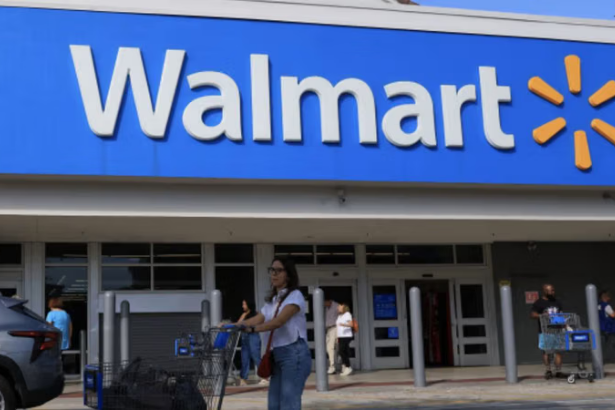
Walmart layoffs 2026 are here. The world’s largest retailer confirmed Tuesday that it is cutting or relocating approximately 1,000 corporate workers as it moves to consolidate its global technology and AI product teams under a unified structure. The Wall Street Journal first reported the moves, citing people familiar with the situation and an internal memo sent to staff by Walmart’s head of global AI acceleration Daniel Danker and global technology chief Suresh Kumar. This is not a distress move — Walmart recently reported over $190 billion in quarterly revenue. This is a strategic reorganization designed to eliminate redundancy and accelerate the company’s AI-driven transformation ahead of an intensifying competition with Amazon, Costco, and Aldi. Here is everything you need to know.
Why Walmart Is Making These Cuts Now
Walmart is set to cut or relocate about 1,000 corporate employees as the retail giant reorganizes its global technology and AI product teams. Walmart’s head of global AI acceleration Daniel Danker and global technology chief Suresh Kumar reviewed the company’s internal structures and decided to streamline overlapping teams for greater efficiency. The two executives informed employees about the changes through an internal memo. The memo reportedly said some teams had been working on similar problems, prompting the restructuring effort. 9to5Toys
The “working on similar problems” phrase from the internal memo is the key diagnostic detail. When two technology teams inside a company with Walmart’s scale are independently working on the same problems, the waste is not just financial — it is strategic. Duplicated effort means slower decision-making, conflicting outputs, and an inability to move at the speed that AI product development requires. Danker and Kumar identified the overlap and moved to eliminate it.
The move comes as the company accelerates its AI-focused digital transformation under Chief Executive Officer John Furner. Furner has been building toward this moment since he took the CEO role, pushing Walmart’s technology investment in a direction that positions the company not just as the world’s largest retailer but as a technology-first enterprise that happens to sell groceries and general merchandise. 9to5Toys
Who Is Affected and Where They Are Being Sent
Many of the affected staff have been asked to relocate to Walmart’s Bentonville or Northern California offices. The two hubs represent Walmart’s current strategy for centralizing its corporate operations. Bentonville, Arkansas is the company’s historic headquarters and the center of its retail operations. Northern California is where Walmart has built its technology infrastructure, including teams focused on digital commerce, data science, and AI product development. 9to5Toys
The relocation requirement is the critical policy detail that separates this round of Walmart layoffs 2026 from a pure headcount reduction. Employees who are offered relocation are not being laid off — they are being asked to make a choice. Accept the move to Bentonville or Northern California and retain employment. Decline and effectively separate from the company. For employees in distributed offices across other states, that choice is genuinely consequential.
Walmart has been consolidating employees into major corporate hubs in recent years. Earlier restructuring exercises included relocating workers to key offices in Arkansas and California while trimming certain corporate roles. This is not a new playbook. Walmart has been executing versions of hub consolidation for several years. The 2026 round is the most significant in scale since the restructuring push began, and it is explicitly tied to AI team integration rather than general cost reduction. 9to5Toys
Daniel Danker and Suresh Kumar: The Architects of the Restructuring
The two executives whose names are attached to the internal memo that triggered the Walmart layoffs 2026 are not household names outside of enterprise technology circles — but they are among the most consequential people at the company right now.
Daniel Danker carries the title of head of global AI acceleration, a role that signals Walmart’s commitment to treating AI as a first-order business function rather than a technology department experiment. His mandate is to drive AI adoption across every part of Walmart’s global operations — supply chain, pricing, customer experience, advertising, and workforce management. The restructuring of teams that were duplicating AI work is a direct expression of his role.
Suresh Kumar, as head of global technology, oversees the infrastructure, engineering, and product teams that power Walmart’s digital business. His review of internal structures — conducted jointly with Danker — represents a top-to-bottom assessment of where technology resources were deployed and where consolidation could generate both efficiency and capability gains. The 1,000-person impact reflects the scale of the overlap they found.
The Business Context: $190 Billion in Revenue and Still Cutting
The most important context for understanding the Walmart layoffs 2026 is that Walmart does not need to make these cuts to survive. Walmart recently reported strong quarterly revenue of over $190 billion. This move is viewed as a strategic optimization rather than a reaction to declining sales. CNN
A company cutting 1,000 corporate jobs while generating $190 billion in quarterly revenue is not a company in trouble. It is a company choosing to invest its resources differently — concentrating talent in locations and structures that serve its AI ambitions rather than maintaining a distributed corporate workforce that predates the AI era.
That distinction matters for the employees affected and for the broader interpretation of what these layoffs signal about Walmart’s health and direction. The stock market tends to reward this kind of efficiency-driven restructuring in companies with strong revenue, and Walmart’s investor base will likely read the 2026 moves as execution discipline rather than financial distress.
Walmart vs. Amazon: The Real Competitive Pressure Behind the Cuts
Walmart has been increasing investments in technology and artificial intelligence as it looks to strengthen its position against rivals including Amazon, Costco, and Aldi. 9to5Toys
The Amazon comparison is the most important competitive lens for understanding why Walmart is moving this aggressively. Amazon is simultaneously Walmart’s biggest retail competitor and one of the world’s leading AI infrastructure companies through AWS. The asymmetry creates pressure: Amazon generates AI capability as a byproduct of its cloud business and can deploy it across retail at scale. Walmart has to build and buy its AI capability through deliberate investment and restructuring.
Every efficiency gain Walmart extracts from consolidating its technology teams is capital and talent it can redirect toward closing that gap. The 1,000 corporate roles being cut or relocated are not the destination of this story. They are a step in a longer transformation that Walmart has been executing quietly and is now executing at pace.
The Pattern of 2026 Corporate Layoffs: Walmart Is Not Alone
The Walmart layoffs 2026 arrive in a year that has already seen significant corporate restructuring across the technology and retail sectors. Coinbase eliminated 700 positions in February, citing AI pods replacing traditional teams. Cloudflare cut 1,100 employees. Intel announced multiple rounds of headcount reduction. In retail specifically, several major chains have restructured corporate operations to concentrate resources in AI, data, and digital commerce functions.
The common thread across all of these actions is AI. Not AI as a cost-cutting excuse — AI as a genuine structural shift in how companies organize work. When Walmart says teams were working on similar problems and needed to be consolidated, it is describing the organizational consequence of a technology that does not respect departmental silos. AI product development requires unified data access, unified model deployment, and unified feedback loops. Siloed teams working on similar problems are structurally incompatible with that requirement.
Broader Implications: What Walmart Layoffs 2026 Mean for Corporate America
The Walmart layoffs 2026 are a signal that the largest employers in the world are entering a phase of AI-driven organizational redesign that will reshape the corporate workforce at scale. Walmart is not a startup. It is not a technology company making its first restructuring move. It is the world’s largest private employer, with 1.6 million US workers, executing a deliberate transformation of its corporate knowledge work structure.
When Walmart moves, the rest of retail moves. The consolidation of AI and technology teams that Danker and Kumar are executing at Bentonville and Northern California will become a template that other large retailers study, adapt, and deploy. The question for every corporate employee in retail and adjacent industries is not whether this wave is coming. The question is when it arrives at their organization and what form it takes. For more on how AI is reshaping the corporate workforce, visit The Tech Marketer.
Latest Updates
The Walmart layoffs 2026 were reported Tuesday, May 12. Here is where to follow the full story:
- The Wall Street Journal broke the Walmart layoffs 2026 story, with reporting from people familiar with the situation and details from the internal memo sent by Daniel Danker and Suresh Kumar to affected employees. Read more at WSJ
- Business Insider has the full text of the internal memo that Walmart’s technology leadership sent to staff announcing the cuts and relocations, including the specific language used to describe the overlapping team problem. Read more at Business Insider
- Reuters has the complete wire report on the Walmart layoffs 2026, citing people familiar with the situation and confirming the scale, scope, and relocation destinations for affected corporate workers. Read more at Reuters
FAQ: Walmart Layoffs 2026
1. How many employees are affected by the Walmart layoffs 2026? Approximately 1,000 corporate workers are being laid off or offered relocation as part of Walmart’s restructuring of its global technology and AI product teams announced Tuesday, May 12, 2026.
2. Why is Walmart laying off 1,000 corporate workers in 2026? Walmart’s head of global AI acceleration Daniel Danker and global technology chief Suresh Kumar identified overlapping teams working on similar problems across the company’s AI and technology divisions. The restructuring consolidates those teams to eliminate redundancy and accelerate Walmart’s AI-driven transformation under CEO John Furner.
3. Where are affected Walmart employees being asked to relocate? Many of the affected corporate workers have been offered relocation to Walmart’s headquarters in Bentonville, Arkansas, or to its Northern California technology offices. Employees who decline relocation are effectively separated from the company.
4. Is Walmart financially struggling when making these layoffs? No. Walmart recently reported quarterly revenue of over $190 billion, making it one of the strongest financial performers in global retail. The 2026 layoffs are a strategic restructuring to consolidate AI and technology teams, not a response to financial pressure or declining sales.
5. How do the Walmart layoffs 2026 compare to its previous restructurings? Walmart has been consolidating corporate employees into major hubs for several years, with earlier rounds relocating workers to Arkansas and California while trimming certain roles. The 2026 round is the most explicitly AI-driven restructuring in the company’s history and the most significant in scale since the hub consolidation strategy began.
Sources and References
- The Wall Street Journal: Walmart Lays Off or Relocates About 1,000 Corporate Workers
- Business Insider: Read the Memo: Walmart Cuts or Reorganizes 1,000 Jobs
- Reuters: Walmart Lays Off or Relocates About 1,000 Corporate Workers, WSJ Reports