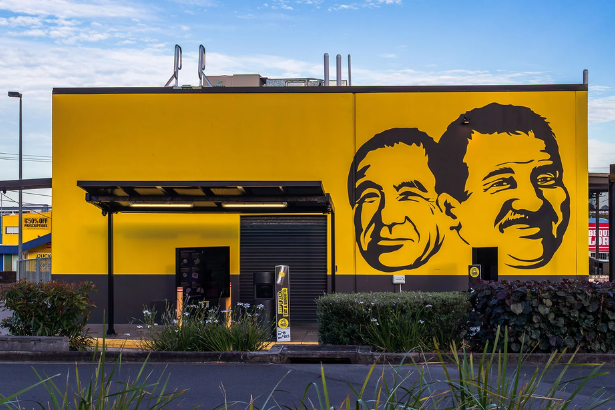
The Australian fast-casual chain once positioned as a Chipotle challenger is shutting down all U.S. locations after struggling to scale in America’s crowded restaurant market.
The Guzman y Gomez US closure is quickly becoming one of the biggest restaurant industry stories trending online after the Mexican-inspired fast-casual chain confirmed it is shutting down all American operations and abandoning future U.S. expansion plans.
The Australian-based company, often described as a rival to Chipotle Mexican Grill, had spent years attempting to break into the American market. But after operational challenges, intense competition, and slowing consumer spending across the restaurant sector, Guzman y Gomez has decided to exit the United States entirely.
Background and Context
Guzman y Gomez was founded in Australia in 2006 and rapidly expanded across Asia-Pacific markets with a menu focused on burritos, tacos, nachos, and Mexican-inspired fast food.
The company built a strong following internationally by positioning itself as a fresher, cleaner alternative to traditional fast food chains.
Its U.S. expansion strategy aimed to capitalize on growing demand for fast-casual Mexican dining, a category largely dominated by:
- Chipotle Mexican Grill
- Qdoba
- Taco Bell
- Moe’s Southwest Grill
But entering the U.S. restaurant market proved far more difficult than expected.
Latest Update: Why Guzman y Gomez Is Closing U.S. Restaurants
Reports indicate the company has officially decided to exit the American market entirely after struggling to gain meaningful market share. (MLive)
The closure includes all remaining U.S. locations and effectively ends Guzman y Gomez’s American growth ambitions for the foreseeable future.
According to coverage from Fox Business and Yahoo-linked reporting, several factors contributed to the shutdown:
- Slowing restaurant traffic
- Rising operational costs
- Competitive pricing pressure
- High labor expenses
- Difficulty differentiating in a saturated market
The company reportedly determined that future U.S. expansion would not deliver sustainable returns under current economic conditions. (Yahoo News)
Expert Insights and Industry Analysis
The Guzman y Gomez US closure highlights how difficult the American fast-casual market has become even for globally successful restaurant brands.
Over the last decade, the U.S. restaurant industry experienced explosive growth in fast-casual dining. But the market is now crowded with brands competing aggressively on:
- Price
- Delivery convenience
- Loyalty apps
- Digital ordering
- Health-focused menus
At the same time, inflation has pushed up ingredient, labor, and real estate costs across the industry.
Restaurant analysts note that expansion into the United States often requires enormous capital investment, especially for international chains without deep domestic brand recognition.
Even successful regional restaurant brands can struggle to compete against entrenched national giants with larger supply chains and stronger customer loyalty ecosystems.
Broader Implications
For the Fast-Casual Industry
The Guzman y Gomez US closure may signal a broader pullback in aggressive restaurant expansion plans across the fast-casual sector.
Investors and operators are increasingly prioritizing profitability and operational efficiency over rapid location growth.
For International Restaurant Brands
The shutdown also reinforces how challenging the American restaurant landscape can be for overseas chains attempting to scale nationally.
While some brands achieve breakout success, many encounter steep customer acquisition costs and intense competition from established incumbents.
For Consumer Spending Trends
The closure arrives during a period when consumers are becoming more selective about discretionary spending, particularly in dining categories where prices have risen sharply since the pandemic.
The Tech Marketer recently explored how inflation and delivery platform economics are reshaping restaurant profitability models across the food technology industry.
Related Industry History
The restaurant industry has seen several major chains retreat from U.S. expansion efforts over the past decade.
Some brands entered the market with strong international momentum only to discover that:
- U.S. operating costs were higher than expected
- Marketing expenses escalated quickly
- Consumer loyalty proved difficult to build
- Regional competition fragmented demand
Meanwhile, dominant brands like Chipotle continued strengthening digital ordering infrastructure, loyalty programs, and delivery partnerships, making market entry even harder for smaller challengers.
What Happens Next
Guzman y Gomez is expected to refocus resources on markets where the company already maintains stronger brand recognition and operational scale.
Industry analysts believe the company may prioritize:
- Australia
- Singapore
- Japan
- Southeast Asian expansion
Meanwhile, investors will continue watching whether other fast-casual restaurant brands begin slowing expansion plans as economic pressures persist across the sector.
The broader restaurant industry is increasingly shifting toward profitability-focused growth rather than aggressive footprint expansion.
Conclusion
The Guzman y Gomez US closure marks the end of an ambitious attempt to crack one of the world’s most competitive restaurant markets.
While the company found success internationally, the American fast-casual landscape ultimately proved too crowded and operationally expensive to support long-term expansion.
The shutdown also reflects a larger shift happening across the restaurant industry, where sustainable margins and operational efficiency are becoming more important than rapid growth at any cost.
For the broader fast-casual sector, Guzman y Gomez’s exit serves as another reminder that scale alone is not enough to survive in the modern U.S. restaurant economy.
FAQ
Why is Guzman y Gomez closing U.S. restaurants?
The company cited operational challenges, slowing traffic, rising costs, and difficulties scaling profitably in the U.S. market.
Is Guzman y Gomez shutting down permanently?
No. The company is exiting the U.S. market but continues operating internationally.
How many U.S. locations did Guzman y Gomez have?
The company maintained a relatively small American footprint compared to larger competitors like Chipotle and Qdoba.
Is Guzman y Gomez similar to Chipotle?
Yes. Guzman y Gomez operates in the fast-casual Mexican dining category with burritos, tacos, bowls, and similar menu offerings.
Will Guzman y Gomez return to the U.S.?
The company has not announced plans to re-enter the U.S. market.
What does the Guzman y Gomez US closure mean for restaurant stocks?
The closure highlights growing investor concern around expansion costs and profitability in the restaurant industry.