


Introduction
The U.S.-China supply chain is entering another period of adjustment after Washington and Beijing identified approximately $30 billion of goods from each country that could receive more favorable tariff treatment. The lists cover a broad range of non-sensitive products, including Chinese toys and household goods shipped to the United States and U.S. agricultural products, medical devices and other goods destined for China.
The development does not represent a blanket removal of tariffs.
The two governments have published product lists and a framework for potential reductions, but the exact U.S. tariff reductions and implementation timing remain subject to domestic legal processes. China’s Commerce Ministry said roughly 90% of the products covered on the lists would move to most-favored-nation tariff rates once the relevant procedures are completed.
For companies that source from China, sell into China or depend on trans-Pacific freight, the practical question is what happens next.
The answer could influence purchasing decisions, landed costs, inventory planning and supplier negotiations heading into 2027.
Background and Context
Tariffs have become an increasingly important variable in global supply chain planning.
For an importer, the cost of a product does not stop at the factory gate. A typical landed-cost calculation can include:
- Factory price
- International freight
- Insurance
- Customs duties
- Port and terminal charges
- Warehousing
- Domestic transportation
- Compliance costs
- Inventory carrying costs
A change in tariff treatment can therefore alter the economics of an established sourcing route.
The latest U.S.-China framework focuses specifically on non-sensitive goods.
The U.S. Trade Representative said the U.S.-China Board of Trade recommended about $30 billion in trade on each side for potentially more favorable tariff treatment. The U.S. list includes categories such as agricultural products and medical devices, while products coming from China include household goods, toys and other consumer products.
The White House published the board’s working procedures, terms of reference and product lists on September 27.
This means businesses now have more specific information than they had during earlier phases of the tariff dispute.
But there is still uncertainty around implementation.
Latest Update: $60 Billion of Goods Identified for Potential Tariff Relief
The latest framework divides the potential tariff relief approximately evenly between the two countries.
The United States identified around $30 billion of imports from China, while China identified around $30 billion of U.S. imports.
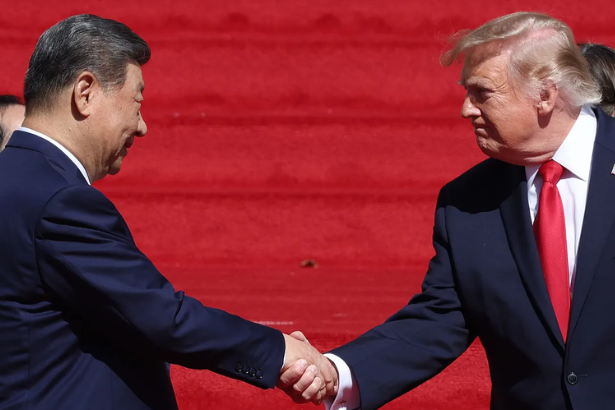
The lists were released following the September 2026 meeting between U.S. President Donald Trump and Chinese President Xi Jinping.
What is included?
The Chinese list includes a variety of consumer and household products entering the United States.
Reported examples include:
- Toys
- Kitchenware
- Household products
- Decorative products
- Sporting goods
- Certain promotional products
The U.S. list includes products such as:
- Agricultural goods
- Medical equipment
- Personal care products
- Coal
- Other non-sensitive exports
The exact treatment depends on the individual product classification.
That distinction is important because the agreement does not mean every Chinese product entering the United States will suddenly receive lower tariffs.
Strategic products remain outside the framework
Some major technology categories are not included.
Associated Press reported that semiconductors and electric vehicles were excluded from the product lists.
That leaves many strategically important industries operating under separate trade and regulatory conditions.
For technology companies and electronics manufacturers, therefore, the latest announcement should not be interpreted as a broad reset of U.S.-China trade conditions.
What the $60 Billion Framework Means for Supply Chains
The headline number is large, but its operational effect will depend on how companies use the information.
For supply chain managers, the immediate change is visibility.
Companies can now examine specific product classifications and ask whether their goods are included.
That creates several possible planning scenarios.
Scenario 1: Lower landed costs
If a product receives reduced tariff treatment, the importer could see a lower landed cost.
Depending on the company’s commercial strategy, that reduction could potentially be reflected in:
- Retail pricing
- Supplier negotiations
- Distributor margins
- Inventory investment
- Promotional activity
The actual effect will vary by company and product.
Scenario 2: Sourcing strategies remain unchanged
Lower tariffs do not automatically mean companies will abandon alternative suppliers.
Many businesses diversified sourcing during earlier tariff disputes.
A company that moved production from China to Vietnam, India, Mexico or another manufacturing location may now compare the total cost of returning some production to China against the costs of maintaining its diversified network.
That calculation includes much more than tariffs.
Labor costs, freight rates, supplier capability, lead times, quality, tooling, intellectual property, geopolitical exposure and customer requirements all matter.
Scenario 3: Inventory decisions become more flexible
Tariff uncertainty can encourage companies to build inventory ahead of policy changes.
Greater clarity can reduce the need for some forms of precautionary inventory, although companies still have to consider implementation dates and the possibility of future policy changes.
This is particularly relevant to seasonal goods.
Toys and holiday products are purchased and shipped months before consumers see them in stores. A tariff change announced near the end of September may therefore have limited immediate impact on merchandise already in transit or already manufactured for the 2026 holiday season.
Time reported that the timing of the potential reductions could limit their impact on this year’s holiday merchandise because much of that inventory has already been ordered and shipped.
Expert Insights and Analysis
1. The product list matters more than the headline number
A $60 billion headline gives the announcement scale, but supply chain managers need to look much deeper.
The relevant question for an individual company is:
Is my product classification included?
If the answer is no, the framework may have little direct effect on that company’s landed costs.
If the answer is yes, the next questions involve the actual tariff rate, effective date and documentation requirements.
This is why customs classification and trade compliance teams will be central to implementation.
2. Tariff relief does not eliminate supply chain risk
Even with lower duties, companies remain exposed to:
- Ocean freight rates
- Port congestion
- Currency movements
- Supplier disruptions
- Labor costs
- Quality issues
- Geopolitical developments
- Export controls
- Regulatory changes
The U.S.-China supply chain is therefore unlikely to return to a simple pre-tariff model.
Instead, companies may continue using multi-country sourcing while selectively increasing China exposure where the economics make sense.
3. Supplier diversification remains relevant
The latest development could encourage companies to reassess their sourcing footprints rather than simply reverse them.
For example, an importer might maintain Chinese production for certain consumer products while retaining suppliers in Southeast Asia or North America for risk diversification.
That creates a more complex supply network.
Instead of asking whether a company is “in China” or “out of China,” procurement teams increasingly need to evaluate product-by-product sourcing strategies.
Broader Implications for the U.S.-China Supply Chain
The potential tariff reductions could affect several layers of the supply chain.
Procurement
Purchasing teams may need to revisit supplier quotations and landed-cost calculations.
A tariff reduction can change the relative competitiveness of two suppliers even if neither supplier changes its factory price.
Transportation
If China-based sourcing becomes more attractive for certain products, trans-Pacific container demand could eventually change.
That effect would take time because companies need to adjust production schedules and purchase orders before additional freight reaches U.S. ports.
Warehousing
Lower landed costs could influence inventory decisions.
Retailers may reconsider safety-stock levels, replenishment cycles and distribution strategies if sourcing economics become more predictable.
Retail
Consumer products are particularly relevant because toys, household products and other everyday goods appear on the Chinese product list.
Whether consumers ultimately see lower prices depends on how much of any tariff reduction is passed through the supply chain.
Retailers, importers, distributors and brands make separate decisions about margins and pricing.
Manufacturing
Manufacturers may also reassess where different components are sourced.
A reduction in tariffs on specific inputs could change the economics of manufacturing in the United States or elsewhere.
For The Tech Marketer, an internal link opportunity would be U.S. Supply Chain and Manufacturing Technology.
Related History and Comparable Trade Developments
The latest framework is part of a much longer U.S.-China trade relationship.
Tariffs have previously prompted companies to examine alternatives to China-based manufacturing.
The result has been a broader discussion around:
- China plus one
- Nearshoring
- Reshoring
- Regional manufacturing
- Multi-sourcing
- Strategic inventory
- Supplier diversification
The current framework does not erase those trends.
Instead, it adds another variable to the calculation.
A company that previously moved some production because of tariff exposure now has to compare the new tariff environment with the costs of its alternative manufacturing location.
That comparison can be complicated.
A factory relocation involves tooling, supplier qualification, worker training, quality assurance and logistics changes. A lower tariff alone may not justify reversing those investments.
What Happens Next?
The biggest question is implementation.
1. Domestic procedures
The White House terms of reference state that future duty reductions will be determined and implemented according to each side’s domestic legal processes.
That means businesses cannot necessarily assume that the listed products immediately receive new tariff treatment.
2. Customs guidance
Importers will need clear guidance on effective dates, product classifications and documentation.
Trade compliance departments will likely examine the lists line by line.
3. Supplier negotiations
If a product qualifies for reduced tariffs, buyers may ask suppliers to revisit pricing.
That could become an important part of the commercial impact.
4. Freight planning
Transportation companies will be watching purchase orders and container volumes for evidence that sourcing patterns are changing.
However, any meaningful freight impact is likely to emerge gradually rather than immediately.
5. Additional product categories
The Board of Trade’s terms of reference indicate that the favorable treatment could potentially be expanded to additional products after monitoring and assessment.
That makes the current product lists important not only for what they contain, but also for what they could signal about future negotiations.
Conclusion
The latest U.S.-China supply chain development gives importers and exporters a more detailed map of where potential tariff relief could emerge.
Washington and Beijing have identified approximately $30 billion of goods from each country for potentially reduced tariff treatment. The lists include Chinese household goods and toys entering the United States, along with U.S. agricultural products, medical equipment and other non-sensitive goods entering China.
But the framework is not a blanket tariff rollback.
The reductions still depend on domestic legal procedures, and sensitive sectors such as semiconductors and electric vehicles remain outside the current lists.
For supply chain executives, the practical task now is product-level analysis.
Companies will need to determine which goods qualify, calculate the potential landed-cost effect, review supplier strategies and decide whether any sourcing or inventory changes make commercial sense.
The biggest impact may not come from one dramatic shift.
It may come from thousands of individual sourcing decisions made across the U.S.-China supply chain as businesses adjust to a changing tariff environment.
FAQ
1. What is happening with the U.S.-China supply chain?
The United States and China have identified approximately $60 billion of bilateral goods for potential tariff reductions, split roughly equally between the two countries. The framework focuses on non-sensitive products.
2. Which Chinese goods could receive U.S. tariff relief?
The Chinese product list includes categories such as toys, household goods, decorative products and other non-sensitive consumer products. The exact treatment depends on the relevant product classification.
3. Does the $60 billion announcement eliminate U.S. tariffs on Chinese goods?
No. The framework identifies products that could receive reduced tariff treatment. Implementation remains subject to domestic legal procedures, and many products remain outside the arrangement.
4. Will the tariff changes immediately lower consumer prices?
Not necessarily. The effect depends on implementation timing, product eligibility, importer costs, retailer margins and other supply chain expenses. Some 2026 holiday inventory may already have been purchased and shipped before the changes take effect.
5. Are semiconductors included in the tariff relief?
Associated Press reported that semiconductors and electric vehicles were excluded from the current product lists.
6. How could companies respond to the tariff changes?
Companies could reassess supplier pricing, landed costs, inventory levels, sourcing locations and transportation strategies. However, the appropriate response will depend on each company’s products, contracts and supply chain structure.
Sources & References
- U.S.-China Board of Trade, White House, September 27, 2026
White House: U.S.-China Board of Trade - Ambassador Greer Issues a Statement on Announcement of Recommendations from the U.S.-China Board of Trade, U.S. Trade Representative, September 27, 2026
U.S. Trade Representative announcement - US and China release $60 billion nonsensitive product lists for tariff cuts after Trump-Xi meeting, Associated Press, September 28, 2026
Associated Press report - US-China trade board carves path for tariff relief on $60B of goods, Supply Chain Dive, September 28, 2026
Supply Chain Dive analysis - Eighth round of China-U.S. economic and trade consultations yields positive consensus, Chinese Government, September 28, 2026
Chinese Government trade statement