Introduction
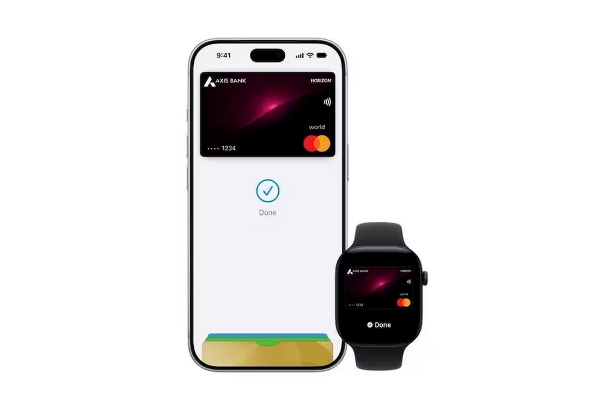
Apple Pay India is finally live, giving Apple’s growing Indian user base a new way to pay with an iPhone, iPad or Apple Watch. The launch, announced by Apple on September 30, 2026, initially supports eligible Axis Bank-issued Visa and Mastercard credit cards and allows users to pay in stores, apps and on websites without repeatedly entering card information, PINs or one-time passwords.
The launch marks Apple’s entry into one of the world’s largest digital payments markets, but it is arriving with a deliberately limited first step.
At launch, India’s domestic RuPay network is not supported, and Apple Pay does not function as a UPI payment service. Reuters reports that UPI accounts for about 84% of India’s digital payment volumes, making the country’s payments environment very different from many other markets where Apple Pay has expanded.
That makes the India launch less about replacing existing payment habits overnight and more about Apple establishing its card-based payments infrastructure in a market where digital transactions are already deeply embedded in everyday life.
Background and Context
Apple Pay has been available internationally for years, but India has remained one of the major markets where the service was absent.
That changed on September 30.
Apple says the service is now available across iPhone, iPad and Apple Watch, with Mac support coming soon. Customers with eligible Axis Bank Visa and Mastercard credit cards can add their cards to Apple Wallet and use them at participating merchants and NFC-enabled payment terminals.
The launch is also notable because Apple is entering a payments ecosystem that is already highly developed.
India’s Unified Payments Interface, or UPI, allows consumers to transfer money directly between bank accounts using mobile apps and QR codes. Services such as Google Pay, PhonePe and Paytm have built large user bases around that infrastructure.
Quartz described Apple Pay’s initial rollout as limited to Axis Bank Visa and Mastercard credit cards, with UPI and RuPay outside the launch.
This gives Apple Pay a very specific starting position.
It is primarily a card wallet and contactless payment service, rather than another UPI application.
Latest Update: Apple Pay India Is Officially Live
Apple’s official announcement confirms that Apple Pay is available in India starting September 30.
Customers can add eligible Axis Bank-issued Visa and Mastercard credit cards through the latest Axis Bank app or directly through the Apple Wallet app.
Once a card has been added, the payment process is familiar to existing Apple Pay users in other markets.
For an in-store transaction, users can:
- Double-click the side button or Home button.
- Authenticate with Face ID, Touch ID or a device passcode when required.
- Hold the iPhone near a contactless payment terminal.
- Complete the transaction.
Apple Watch users can similarly authenticate and hold the watch near the reader.
The service also works for online and in-app purchases on supported devices.
Apple says users do not need to repeatedly enter card details, billing information or shipping information when checking out with Apple Pay.
Which cards work with Apple Pay India?
The initial rollout is limited.
Supported at launch:
- Eligible Axis Bank Visa credit cards
- Eligible Axis Bank Mastercard credit cards
Not supported at launch:
- RuPay cards
- Other banks’ cards that have not yet been enabled
- UPI as a direct Apple Pay payment method
Reuters confirmed that Axis Bank is the first Indian bank offering Apple Pay, while Apple has held discussions with HDFC Bank and ICICI Bank without reaching commercial agreements at the time of launch.
That means Apple’s banking network in India is likely to be an important part of the next phase of the rollout.
Where Can Apple Pay Be Used in India?
Apple says Apple Pay will be accepted at millions of merchants across India.
The company specifically lists businesses including Apple Store locations, Blinkit, Chaayos, Comet, Croma, Interflora, Ixigo, Le15 Patisserie, Reliance brands, Tata 1mg and Zomato.
Apple has also worked with payment service providers including:
- BillDesk
- Cashfree
- Juspay
- Mswipe
- Paytm
- PayU
- Pine Labs
- Razorpay
These integrations are important because payment acceptance in India depends heavily on the infrastructure connecting merchants, banks, payment processors and card networks.
The launch therefore involves more than Apple’s Wallet application.
It requires an ecosystem of payment processors and merchant networks to make Apple Pay usable at scale.
Security and Privacy: Apple’s Main Differentiator
One of Apple’s biggest selling points for Apple Pay India is the way card information is handled.
Apple says actual card numbers are not stored on the device or on Apple servers, and they are not shared with merchants.
Instead, Apple Pay creates a unique Device Account Number, which is encrypted and stored in the Secure Element on the device.
This means the merchant does not receive the user’s actual card number during a transaction.
The authentication process is also handled through Apple’s device security system.
Users can authorize payments with:
- Face ID
- Touch ID
- Device passcode
Apple says transaction information that can be tied back to the user is not retained by Apple.
For Mastercard transactions, Mastercard says its tokenization technology creates a unique cryptographically secured token rather than exposing the underlying card details. Visa also highlighted its tokenization infrastructure as part of the India launch.
The result is a payment experience designed around device authentication rather than entering a card PIN or OTP at checkout.
Apple Pay India vs UPI: Why the Difference Matters
This is where the Indian launch becomes particularly interesting.
Apple Pay and UPI solve different payment problems.
Apple Pay
Apple Pay primarily uses a linked payment card.
The user’s card is stored in Apple Wallet in tokenized form and authenticated through the Apple device.
UPI
UPI is fundamentally a bank-to-bank payment system.
Consumers can send money directly from their bank accounts using UPI applications, QR codes, payment addresses and other supported methods.
This distinction means Apple Pay is not simply another competitor to Google Pay or PhonePe in the traditional Indian payments sense.
Google Pay and PhonePe have built their Indian payment experiences heavily around UPI.
Apple Pay is initially bringing a card-centric experience.
Reuters reported that UPI accounts for 84% of digital payment volumes in India, underscoring the scale of the infrastructure Apple is entering.
Quartz similarly noted that Apple Pay is entering a market led by UPI and major payment platforms including Google Pay, PhonePe and Paytm.
That creates an important limitation for Apple’s initial rollout.
A consumer who primarily uses a bank account and UPI QR code does not automatically gain the same functionality through Apple Pay.
Expert Insights and Analysis
1. Apple’s first challenge is bank coverage
The initial partnership with Axis Bank gives Apple a starting point, but widespread adoption will require more banks.
India has a large and diverse banking ecosystem.
If Apple Pay remains limited to one bank’s eligible credit cards, its addressable user base will remain narrower than the overall iPhone user population.
Reuters reported that Apple has discussed partnerships with HDFC Bank and ICICI Bank but had not finalized commercial terms at the time of its launch.
The addition of more banks could therefore be one of the biggest milestones for Apple Pay’s Indian expansion.
2. RuPay support could become an important question
RuPay is India’s domestic card network.
Its absence from the initial Apple Pay rollout means a large category of Indian cardholders cannot currently add their RuPay cards to Apple Pay.
Reuters explicitly confirmed that RuPay cards are not eligible at launch.
That does not necessarily indicate a permanent exclusion.
Apple’s launch announcement says more merchants and apps are coming over time, while the current banking relationship represents the first phase of the service.
But broader card-network coverage would materially change the size of Apple’s potential payment audience.
3. Apple’s payments strategy extends beyond transactions
Apple Pay can also strengthen Apple’s broader ecosystem.
When users store cards in Apple Wallet and use an Apple Watch or iPhone for everyday payments, the device becomes more deeply integrated into financial routines.
That creates an ecosystem effect.
The value is not only the individual payment transaction. It is the connection between:
iPhone + Apple Watch + Wallet + banks + merchants + payment networks
That broader integration is important for Apple as it expands its services business.
Broader Implications for India’s Digital Payments Market
The arrival of Apple Pay adds another major technology company to India’s increasingly sophisticated payments ecosystem.
But it does so without replacing the infrastructure that already dominates the market.
Instead, Apple is building on existing card networks, merchant terminals and payment service providers.
The launch could have several implications.
More competition in mobile payments
Apple Pay gives iPhone users another payment option.
That may encourage other payment platforms and banks to compete on convenience, security and device integration.
More pressure for contactless payments
Apple Pay is designed around NFC contactless payments.
As more consumers become familiar with tapping a phone or watch at a terminal, contactless card acceptance could become more visible in everyday transactions.
Greater integration between banks and device ecosystems
Banks that support Apple Pay can offer their customers access to Apple’s hardware-based payment experience without requiring a separate payment application for every transaction.
New opportunities for merchants
Apple says millions of merchants can accept Apple Pay through its network of payment service providers.
That means merchants with compatible infrastructure can potentially reach Apple users without creating a separate Apple-specific payment system.
For The Tech Marketer, an internal linking opportunity is Digital Payments and FinTech Technology.
Related History and Comparable Technologies
Apple Pay’s India launch follows a pattern seen in other markets where Apple initially works with local banks and payment networks before expanding its coverage.
The service now operates in more than 90 countries and regions and works with more than 11,000 bank and network partners worldwide, according to Apple.
India is different because of the strength of its domestic payments infrastructure.
In many markets, mobile wallets became a primary way to digitize card payments.
India developed something different at scale.
UPI created a real-time bank payment infrastructure that made QR-based payments common across restaurants, retailers, small businesses and online services.
That means Apple Pay’s challenge is not simply persuading consumers to stop using cash.
India has already moved substantially toward digital payments.
The challenge is convincing Apple users that a card-based wallet provides enough additional convenience and utility to become part of their everyday payment routine.
What Happens Next?
The next phase of Apple Pay India will likely revolve around breadth.
More banks
The initial Axis Bank partnership is only the starting point.
Additional major banks would substantially expand the number of eligible users.
More card networks
RuPay support would broaden the service beyond the initial Visa and Mastercard customer base.
Mac support
Apple says Mac support is coming soon.
That would extend the service further into Apple’s device ecosystem.
More merchant integrations
Apple already lists millions of merchants and several payment service providers as part of the launch.
The company says more merchants and apps will come over time.
Potential UPI expansion
The initial launch does not support UPI.
Quartz reported that Bloomberg had previously reported expectations of an eventual expansion toward additional banks and UPI, although Apple has not announced UPI support as part of today’s launch.
That distinction is important.
UPI support should be treated as a potential future development, not a feature available in the current launch.
What the Google Trends Spike Says
The supplied Google Trends screenshot shows a sharp search-interest spike for “visa”, with the related news panel dominated by stories about Apple’s launch of Apple Pay in India.
That is a useful signal because Visa is directly tied to the first phase of Apple’s Indian rollout.
The current Apple Pay India launch supports eligible Axis Bank Visa and Mastercard credit cards.
The search spike therefore sits at the intersection of three major topics:
Visa + Apple Pay + India digital payments
For publishers and technology marketers, that makes the story broader than a simple product launch.
It connects Apple’s ecosystem, Indian banking, card networks and the country’s rapidly evolving payments infrastructure.
Conclusion
The Apple Pay India launch finally brings Apple’s payment service to one of the world’s most important digital economies.
The initial rollout is focused and clearly defined: eligible Axis Bank Visa and Mastercard credit cards can now be added to Apple Wallet and used with iPhone, iPad and Apple Watch for in-store, in-app and online payments.
But Apple is entering a market where UPI already dominates digital payments.
RuPay is not supported at launch, and Apple has not introduced UPI functionality as part of today’s rollout. Reuters reports that Apple has discussed partnerships with additional banks, including HDFC Bank and ICICI Bank, but agreements had not been finalized at launch.
That makes the next stage especially important.
If Apple expands bank coverage, adds more card networks and eventually supports additional Indian payment infrastructure, Apple Pay could become a much broader part of the country’s mobile payments ecosystem.
For now, September 30 marks the starting point.
Apple Pay is officially in India.
FAQ
1. What is Apple Pay India?
Apple Pay India is Apple’s digital payment service launched in India on September 30, 2026. It allows eligible users to add supported cards to Apple Wallet and make contactless, in-app and online payments using compatible Apple devices.
2. Which bank supports Apple Pay India at launch?
Axis Bank is Apple’s first Indian banking partner. The initial rollout supports eligible Axis Bank-issued Visa and Mastercard credit cards.
3. Does Apple Pay India support UPI?
No. UPI is not supported as part of the initial Apple Pay India launch. Apple Pay currently relies on eligible payment cards rather than direct UPI bank transfers.
4. Does Apple Pay India support RuPay?
RuPay cards are not eligible for Apple Pay at launch. The initial rollout is limited to eligible Axis Bank Visa and Mastercard credit cards.
5. Which Apple devices support Apple Pay in India?
Apple says Apple Pay is available on iPhone, iPad and Apple Watch, with Mac support coming soon. The current requirements include iPhone XR or later with iOS 18 or later, and Apple Watch Series 6 or later with watchOS 11 or later.
6. Does Apple Pay require a PIN or OTP?
Apple says users can authenticate payments using Face ID, Touch ID or a device passcode, and the service is designed to avoid entering a card PIN or OTP at checkout.
7. Where can Apple Pay be used in India?
Apple says Apple Pay is accepted at millions of merchants, including Apple Store locations, Blinkit, Croma, Ixigo, Reliance brands, Tata 1mg and Zomato, with additional merchant and app support expected over time.
Sources & References
- Apple Pay launches in India, Apple Newsroom, September 30, 2026
Apple Newsroom: Apple Pay launches in India - Apple Pay launches in India with Axis Bank partnership, Reuters, September 30, 2026
Reuters: Apple Pay launches in India with Axis Bank partnership - Apple launched Apple Pay in India, entering a market dominated by Google Pay, Quartz, September 30, 2026
Quartz: Apple Pay launches in India with Axis Bank partnership - Apple starts India payments service to take on Google Pay and Paytm, Bloomberg, September 30, 2026
Bloomberg: Apple starts India payments service - Apple Pay finally launches in India after years on the sidelines, TechCrunch, September 29, 2026
TechCrunch: Apple Pay launches in India