Introduction
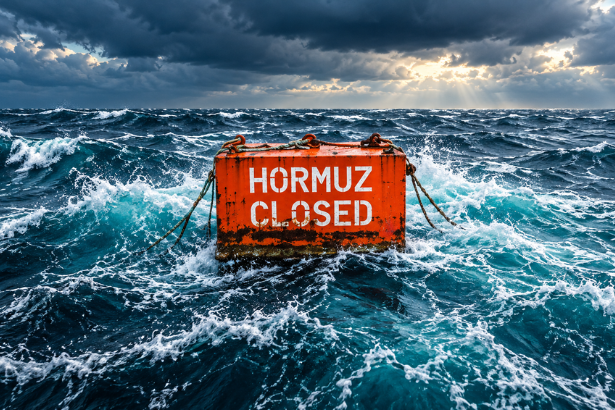
The U.S. supply chain is entering another period of energy and transportation uncertainty as shipping traffic through the Strait of Hormuz falls to extremely low levels. Reuters reported Tuesday that only two commodity vessels crossed the waterway on Monday, down from 10 the previous day and far below the roughly 125 large commercial vessels that crossed daily before the conflict began.
The Strait is one of the world’s most important maritime chokepoints, carrying a significant share of global crude oil and liquefied natural gas supplies.
For American manufacturers, trucking companies, retailers and logistics providers, the issue is not limited to crude oil.
Diesel is the fuel that moves much of the physical economy.
Trucks carry manufactured goods between factories and distribution centers. Agricultural equipment depends on diesel. Construction fleets use it. Warehouses and logistics operators are exposed to transportation costs throughout the supply chain.
The U.S. Energy Information Administration reported a national average on-highway diesel price of $6.285 per gallon for the week of September 14, up from $5.967 the previous week.
That creates a difficult combination for supply-chain operators: shipping disruption abroad and elevated fuel costs at home.
Background and Context
The Strait of Hormuz connects the Persian Gulf with the Gulf of Oman and the Arabian Sea.
Its importance comes from geography. Major oil and gas exporters in the Gulf depend on the waterway to reach global markets.
Before the current conflict, Reuters says approximately 125 large commercial vessels crossed the Strait each day, including tankers, gas carriers, bulk carriers and container vessels. The waterway accounted for about 20% of global daily crude oil and LNG supply.
The latest shipping data presents a radically different picture.
Only two commodity vessels were recorded crossing on Monday. Reuters cautioned that the preliminary figures do not capture vessels that may have turned off their Automatic Identification System transponders to avoid detection.
Two vessels were also reported struck in separate incidents while transiting the waterway, although responsibility for those incidents had not been confirmed.
Meanwhile, the Bab el-Mandeb Strait at the southern end of the Red Sea recorded 26 vessel crossings on Monday, unchanged from the previous day.
The result is a fragmented global shipping environment in which companies are trying to maintain trade flows through alternative routes and logistics arrangements.
Latest Update or News Breakdown
Hormuz traffic falls to two vessels
The most significant supply-chain development today is the collapse in recorded commercial traffic through Hormuz.
Reuters reported that only two commodity vessels crossed the Strait on Monday. That compares with 10 crossings on Sunday and approximately 125 large commercial vessels per day before the conflict.
The numbers matter because shipping networks depend on predictable transit.
When a major chokepoint becomes unreliable, companies cannot simply assume that cargo will move according to normal schedules.
Carriers may have to reroute.
Cargo owners may need additional inventory.
Insurers may reassess risk.
Charter rates can rise.
And transportation planners have to build more uncertainty into delivery schedules.
Oil prices are falling, but the supply-chain problem has not disappeared
There is an unusual twist to today’s market.
Oil prices have actually moved lower as the outlook for Gulf supplies improves.
Reuters reported Tuesday that Brent crude’s November contract fell to around $98.23 a barrel during trading, while WTI October futures fell to about $93.30. The decline followed indications that Iran could reopen the Strait within seven days if certain conditions were met, alongside the restart of Saudi Arabia’s East-West pipeline.
That does not mean the logistics disruption has already ended.
Shipping traffic remains extremely low.
The difference between an oil-price recovery and a shipping-network recovery is important.
Markets can react immediately to expectations about future supply.
Physical logistics takes longer.
Ships need to move.
Cargoes need to be loaded.
Ports need to operate.
Insurance and routing decisions need to change.
And transportation networks need to return to predictable schedules.
For supply-chain managers, that means today’s lower crude price does not automatically translate into lower transportation costs tomorrow.
U.S. diesel prices remain above $6
Diesel is arguably the most direct U.S. supply-chain transmission mechanism.
EIA data shows the national average U.S. on-highway diesel price reached $6.285 per gallon for the week ending September 14. The previous week’s average was $5.967.
Regional differences are even larger.
The September 14 EIA data showed:
- U.S. average: $6.285 per gallon
- East Coast: $6.158
- Midwest: $6.250
- Gulf Coast: $6.027
- Rocky Mountain: $6.066
- West Coast: $7.250
- California: $8.039
For trucking companies, fuel is a major operating expense.
Higher diesel prices can eventually feed into freight rates, especially when carriers cannot absorb the increase through efficiency improvements or existing fuel-surcharge structures.
That can affect manufacturers and retailers even if they never purchase oil directly.
The diesel problem is bigger than crude oil
The current situation also demonstrates why crude prices and diesel prices can move differently.
The EIA explains that diesel prices depend on crude costs, refining margins, distribution expenses, taxes and crack spreads. It noted that tight global distillate supplies and elevated crude prices have pushed diesel costs higher.
Reuters reported that global diesel prices have reached record levels, with disruptions affecting supplies from major producers and U.S. inventories remaining below their five-year seasonal average.
That creates a supply-chain problem even when crude prices begin falling.
Refineries need time to adjust.
Inventories need time to rebuild.
And transportation companies continue buying fuel at market prices.
Freight operators are absorbing a wider energy shock
FreightWaves reported Monday that approximately 8% of global diesel supply had been removed from the market because of simultaneous disruptions involving Russia and the Middle East. The publication said the estimated shortfall amounted to around 2 million barrels per day.
For U.S. carriers, that creates direct exposure.
A trucking company does not need to have a ship crossing Hormuz to feel the impact.
The effect can arrive through the fuel market.
That makes diesel one of the most important indicators for watching the next stage of the supply-chain disruption.
Alternative routes are becoming more important
Energy companies are already looking for ways around disrupted maritime corridors.
Reuters reported that Saudi Arabia has restarted its East-West pipeline, which can move crude toward the Red Sea and bypass Hormuz. The pipeline has a potential capacity of around 7 million barrels per day, although Reuters reported that restoring full capacity could take six to eight weeks because pumping stations were damaged.
Other producers have also used ship-to-ship transfers near Oman to maintain crude flows.
Reuters reported that these transfers reached approximately 2.5 million barrels per day in September, up from 1.4 million barrels per day in August.
The workaround comes at a cost.
More complicated routes require more coordination, additional vessels and higher freight costs.
That is the hidden cost of supply-chain resilience.
A company can keep goods moving, but the network may become substantially more expensive.
Expert Insights or Analysis
The biggest lesson from today’s shipping data is that supply-chain resilience is not the same thing as supply-chain efficiency.
Normal supply chains are optimized around predictable routes.
Factories order components according to schedules.
Trucks arrive at distribution centers according to appointment windows.
Retailers plan inventory around expected transit times.
When a major maritime chokepoint becomes unreliable, the entire system begins carrying additional uncertainty.
Companies respond in several ways.
They may hold more inventory.
They may diversify suppliers.
They may use different ports.
They may charter alternative transportation.
They may increase safety stock for critical components.
All of those strategies can improve resilience.
They can also increase costs.
That tradeoff is becoming increasingly important for U.S. manufacturers.
A company that previously optimized for minimum inventory may now decide that holding additional stock is worth the expense if it reduces the risk of production stoppages.
The same logic applies to freight.
A cheaper route is not necessarily the best route if the probability of delay is high.
Broader Implications
The U.S. supply-chain impact extends across several industries.
Manufacturing
Manufacturers depend on transportation at almost every stage of production.
Raw materials need to reach factories.
Components need to move between suppliers.
Finished products need to reach customers.
Higher fuel costs can therefore affect production economics even when the underlying product has nothing to do with petroleum.
Retail
Retailers face another layer of exposure.
Higher transportation costs can affect the cost of moving imported goods from ports to warehouses and then to stores or customers.
For companies operating on narrow margins, sustained logistics inflation can become a meaningful financial issue.
Agriculture
Agriculture is heavily dependent on diesel for tractors, combines, irrigation equipment and transportation.
Higher fuel prices therefore affect both farm operations and the cost of moving agricultural products.
Trucking
Trucking is the most immediate transmission channel.
A long-haul carrier cannot avoid fuel consumption.
If diesel remains elevated, transportation companies will need to manage fuel surcharges, route optimization and fleet efficiency more aggressively.
Warehousing and distribution
Distribution networks are also affected indirectly.
If transportation becomes less predictable, companies may hold additional inventory closer to customers.
That can increase warehouse demand while also tying up more working capital.
For additional coverage of U.S. logistics, manufacturing and supply-chain technology, see The Tech Marketer.
Related History or Comparable Technologies
The current disruption is part of a broader trend toward companies treating geopolitical and transportation risks as permanent supply-chain variables rather than temporary exceptions.
The pandemic demonstrated how quickly port congestion could disrupt global manufacturing.
The Red Sea shipping disruptions showed how rerouting vessels around Africa can add substantial time and distance to international transportation.
The current Hormuz situation adds another layer because the region is critical not only to shipping but also to energy markets.
There is an important difference between these disruptions.
A container ship can sometimes be rerouted around a longer maritime path.
Oil and gas flows have fewer economical alternatives because pipelines, tanker routes, terminals and refining infrastructure are geographically constrained.
That makes energy logistics especially sensitive to chokepoint disruptions.
The response is increasingly technological as well.
Supply-chain platforms are using real-time visibility, predictive analytics and AI-based planning to identify alternative routes and adjust inventory decisions.
The goal is no longer simply knowing where a shipment is.
It is understanding what could happen to the shipment next.
What Happens Next
The next few weeks will be important for U.S. logistics operators.
1. Watch Hormuz vessel traffic
The most direct indicator of normalization will be actual ship movements.
Oil prices can respond to expectations, but physical vessel traffic shows whether the maritime network is genuinely recovering.
2. Watch U.S. diesel prices
The EIA’s weekly data will show whether the elevated fuel-cost environment is beginning to ease.
The September 14 national average was $6.285 per gallon.
3. Watch refinery and inventory data
Even if crude prices decline, tight diesel inventories can keep transportation fuel expensive.
4. Watch freight rates
If carriers face prolonged fuel pressure and routing disruption, freight rates and fuel surcharges may remain elevated.
5. Watch inventory strategies
Manufacturers and retailers may respond by increasing safety stock or shifting sourcing toward suppliers closer to U.S. markets.
That could accelerate an existing trend toward regionalized supply chains.
6. Watch alternative energy routes
Saudi Arabia’s East-West pipeline and other alternative logistics systems will be important indicators of how much global energy trade can bypass Hormuz.
Conclusion
The U.S. supply chain is facing a complicated energy shock.
The Strait of Hormuz recorded only two commodity-vessel crossings on Monday, compared with roughly 125 large commercial vessels per day before the conflict.
At the same time, U.S. diesel prices reached $6.285 per gallon in the latest EIA weekly data, with prices substantially higher in some regions.
Oil prices have started moving lower as expectations for additional Gulf supply improve, but physical shipping networks remain disrupted.
That distinction is crucial.
A lower crude price does not immediately repair a disrupted supply chain.
For American manufacturers, retailers, farmers, trucking companies and logistics providers, the key issue is whether transportation becomes predictable again.
If Hormuz traffic recovers and diesel markets loosen, some pressure could ease.
If shipping disruption continues, companies may respond with higher inventories, alternative routes, more diversified suppliers and greater investment in supply-chain visibility.
The immediate story is about a maritime chokepoint.
The bigger story is how much uncertainty modern U.S. supply chains can absorb before resilience becomes more important than efficiency.
FAQ
What is happening to the U.S. supply chain today?
The U.S. supply chain is facing elevated transportation and energy costs as disruption around the Strait of Hormuz affects global shipping and fuel markets. U.S. diesel prices were $6.285 per gallon in the latest EIA weekly data.
Why is the Strait of Hormuz important to the U.S. supply chain?
Hormuz is a major global energy shipping chokepoint. Before the current conflict, approximately 125 large commercial vessels crossed it daily, and the waterway handled about 20% of global daily crude oil and LNG supply.
How many vessels crossed the Strait of Hormuz?
Preliminary shipping data showed only two commodity vessels crossed on Monday, down from 10 the previous day.
Why are U.S. diesel prices important for logistics?
Diesel is a primary fuel for trucking, agriculture, construction and other industrial activities. Higher diesel costs can increase freight expenses and eventually affect the cost of moving goods through the supply chain.
What is the current U.S. diesel price?
The EIA reported a national average on-highway diesel price of $6.285 per gallon for the week of September 14, 2026.
Could lower oil prices reduce U.S. supply-chain costs?
Potentially, but not immediately. Lower crude prices can reduce one component of fuel costs, but diesel prices also depend on refining margins, inventories, distribution costs and other factors.
Are companies finding alternatives to the Strait of Hormuz?
Yes. Saudi Arabia has restarted its East-West pipeline, while producers have also used alternative shipping arrangements such as ship-to-ship transfers near Oman.
Sources & References
- “Hormuz vessel traffic falls to two, data shows,” Reuters, September 22, 2026
Read the Reuters report - “Oil falls to two-week low as Gulf supply outlook improves,” Reuters, September 22, 2026
Read the Reuters oil-market report - “Saudi Arabia restarts East-West oil pipeline, sources say,” Reuters, September 22, 2026
Read the Reuters pipeline report - “Retail Prices for Diesel,” U.S. Energy Information Administration, September 2026
View EIA diesel price data - “What goes into diesel prices?” U.S. Energy Information Administration, September 18, 2026
Read the EIA analysis - “Diesel Supply Down 8%: What Trucking Faces Next,” FreightWaves, September 21, 2026
Read the FreightWaves analysis