Introduction
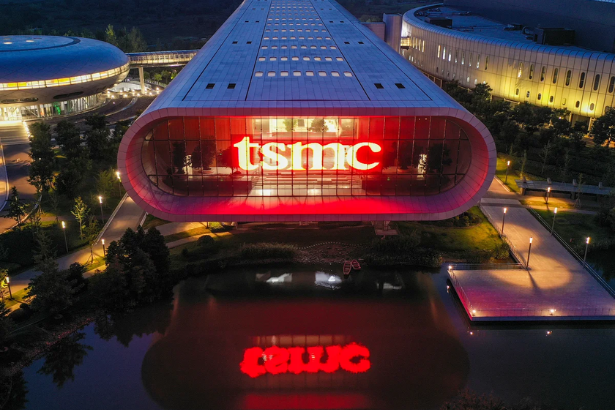
TSMC Texas manufacturing is emerging as a new possibility for the U.S. semiconductor industry. Taiwan Semiconductor Manufacturing Company, the world’s largest contract chipmaker, is evaluating a potential investment in Texas to expand chip production in the United States, according to two sources familiar with the matter cited by Reuters on September 30, 2026.
The potential Texas project has not been finalized. Reuters reported that TSMC has not yet responded to inquiries about the possible investment, meaning the scale, location, technology and timeline of any Texas expansion remain unknown.
What is already clear is the scale of TSMC’s existing U.S. manufacturing push.
The company has committed to a major expansion in Arizona, including multiple advanced semiconductor fabrication facilities, advanced packaging capacity and research and development infrastructure. TSMC said in 2025 that its planned U.S. investment would reach $165 billion, while its 2026 disclosures show continued capital deployment into Arizona.
A Texas expansion would therefore represent a potential next chapter in the company’s U.S. manufacturing strategy.
Background and Context
TSMC is the world’s largest dedicated semiconductor foundry. Its customers include major technology companies that design processors and other advanced chips but outsource manufacturing to specialized foundries.
The company’s manufacturing footprint has historically been concentrated in Taiwan, but its U.S. presence has expanded significantly.
TSMC began high-volume production at its first Arizona fab in the fourth quarter of 2024. The company’s second Arizona fab is targeting high-volume production in the second half of 2027, while construction of a third fab began in 2025.
TSMC’s Arizona plans have continued to expand.
In July 2026, the company said it intended to build additional semiconductor logic fabs for 2-nanometer and more advanced technologies, alongside advanced packaging facilities. TSMC’s Arizona operation says the expansion is intended to support U.S. customer demand in areas including AI, high-performance computing and advanced mobile applications.
The company also approved a capital injection of up to $20 billion into TSMC Arizona in May 2026 as part of its long-term capacity planning.
That existing investment provides the context for the latest Texas report.
Latest Update: TSMC Evaluates Potential Texas Investment
Reuters reported on September 30 that TSMC is evaluating a potential Texas investment to increase U.S. chip production.
Two sources familiar with the matter told Reuters about the potential project. The sources said the Texas investment would be in addition to the $265 billion TSMC has committed to Arizona, according to Reuters.
The important word is evaluating.
There is currently no finalized announcement for a Texas fab, no publicly confirmed investment amount and no confirmed construction schedule.
That distinction matters because semiconductor manufacturing projects require years of planning, capital allocation, site preparation, equipment installation and qualification before a fab reaches high-volume production.
Texas would add another U.S. semiconductor location
TSMC already has a connection to Texas.
The company operates a design service center in Austin, Texas, while its major U.S. manufacturing operation is in Phoenix, Arizona. TSMC also operates a fab in Camas, Washington.
A new manufacturing investment in Texas would therefore expand an existing U.S. presence rather than establish the company’s first operation in the state.
It could also broaden the geographic footprint of advanced semiconductor production in the United States.
The scale of the existing Arizona expansion is significant
TSMC announced in March 2025 that it intended to increase its U.S. investment by an additional $100 billion, bringing its planned U.S. investment to $165 billion at that time.
The plan included:
- Three additional fabrication plants
- Two advanced packaging facilities
- A major research and development center
TSMC said the expansion would build on its existing $65 billion Arizona investment.
By 2026, TSMC’s disclosures described an even larger Arizona program. During its second-quarter 2026 earnings call, company executives discussed the additional $100 billion Arizona investment and described total Arizona investment as $265 billion.
That figure is the key backdrop to the Texas story.
Why TSMC Texas Manufacturing Matters
A new Texas project could affect more than TSMC itself.
Semiconductor manufacturing creates demand across a broad industrial ecosystem.
A major fab requires:
- Semiconductor manufacturing equipment
- Specialty chemicals
- Industrial gases
- Advanced materials
- Precision engineering
- Cleanroom systems
- Construction services
- Power infrastructure
- Water infrastructure
- Logistics providers
- Equipment maintenance
- Packaging and testing services
That means a new manufacturing site can create demand throughout an interconnected industrial supply chain.
For Texas, the potential impact would depend heavily on what TSMC ultimately decides to build.
A leading-edge logic fab would have different requirements from an advanced packaging facility or a specialty semiconductor plant.
Because the Texas plan has not been finalized, those details should not yet be treated as established facts.
AI Is a Major Driver of Semiconductor Manufacturing Demand
The timing of the potential Texas investment is closely connected to the growth of artificial intelligence.
AI systems require enormous amounts of computing power.
That demand is driving investment in advanced processors, high-bandwidth memory, networking components and sophisticated semiconductor packaging.
TSMC has repeatedly linked its capacity expansion to sustained AI and high-performance computing demand.
At its 2026 annual shareholders’ meeting, the company said its Arizona expansion was being driven partly by strong multi-year AI-related demand. TSMC said its Arizona plans are intended to create an independent GIGAFAB cluster serving customers in smartphone, AI and high-performance computing applications.
That demand changes the manufacturing equation.
Chipmakers need more capacity, but they also need advanced manufacturing technologies close to important customers and major technology ecosystems.
A larger U.S. footprint can potentially support that objective.
Expert Insights and Analysis
1. The Texas story is about capacity, not just geography
The most important question is not simply whether TSMC builds a factory in Texas.
It is what kind of capacity that factory could provide.
Advanced semiconductor manufacturing depends on process technology, yield, packaging capabilities and equipment availability.
A new fab operating on an advanced process node could have a very different strategic role from a facility producing mature-node chips.
Since Reuters’ report does not establish the technology or scale of the proposed Texas project, those details remain open questions.
2. U.S. semiconductor manufacturing is becoming a broader ecosystem
TSMC’s Arizona investment demonstrates that building a semiconductor manufacturing base involves much more than constructing a fab.
TSMC’s U.S. plans include manufacturing, advanced packaging and R&D.
The company has said its Arizona expansion is intended to help complete more of the domestic AI semiconductor supply chain.
A potential Texas project could add another geographic node to that ecosystem.
It could also connect with Texas’ existing technology, engineering, semiconductor and manufacturing infrastructure.
3. Supply chain resilience is becoming a manufacturing consideration
Semiconductor production depends on a highly interconnected global network.
A chip can involve design in one country, wafer fabrication in another, packaging elsewhere and final integration somewhere else.
Expanding manufacturing in the United States does not eliminate that global network.
However, additional domestic capacity can change where certain stages of production take place.
That is particularly important for customers seeking geographic diversification.
TSMC itself said in its 2026 shareholder materials that customers value geographic flexibility and that its global manufacturing footprint is being expanded based on customer needs and government support.
Broader Implications for U.S. Manufacturing
A potential TSMC Texas investment arrives during a broader expansion of U.S. semiconductor manufacturing.
The U.S. semiconductor industry is seeing major investments from chipmakers and equipment manufacturers across multiple states.
TSMC’s Arizona expansion is one of the largest examples.
The company announced in 2025 that its planned U.S. investment would reach $165 billion, including additional fabs, advanced packaging and R&D.
The U.S. Department of Commerce has also cited TSMC’s $165 billion advanced manufacturing investment as part of a wider wave of semiconductor investment in the country.
The potential Texas project could therefore become part of a larger geographic shift in semiconductor manufacturing.
Texas could benefit beyond the fab itself
If the project moves forward, supporting industries could potentially expand around it.
These may include:
- Semiconductor equipment suppliers
- Industrial construction companies
- Chemical suppliers
- Cleanroom specialists
- Logistics companies
- Engineering firms
- Utility providers
- Equipment maintenance companies
- Advanced manufacturing suppliers
The exact economic impact would depend on the eventual project size and technology.
For The Tech Marketer, an internal linking opportunity is U.S. Manufacturing and Semiconductor Technology.
Related History and Comparable Technologies
The move toward geographically distributed semiconductor manufacturing is not entirely new.
TSMC has built manufacturing operations outside Taiwan in several markets.
Its U.S. presence includes Arizona and Washington manufacturing operations, as well as design centers in Texas and California.
The company also has manufacturing operations in Japan and Europe.
What is different about the current U.S. expansion is the scale and technological ambition.
TSMC’s Arizona strategy is designed to support advanced logic manufacturing, advanced packaging and R&D in one broader ecosystem.
The first Arizona fab entered high-volume production using the N4 process in late 2024. The second fab is targeting N3 production in the second half of 2027, while the third fab is intended for N2 and A16 technologies.
That progression illustrates how semiconductor manufacturing evolves.
A modern fab is not simply a building containing machines. It is an integrated manufacturing system requiring advanced process technology, precision equipment, software, utilities, materials and highly specialized workers.
What Happens Next?
The next step is determining whether the Texas concept becomes a formal investment.
1. TSMC would need to finalize the project
Reuters’ report describes the Texas investment as being under evaluation.
There is currently no confirmed project amount, fab count, process node or construction timetable.
Those details would be necessary before the project could be assessed in terms of production capacity or economic impact.
2. Location will matter
Texas has multiple technology and industrial clusters.
A final site would need access to reliable electricity, water, transportation infrastructure, skilled labor and semiconductor suppliers.
TSMC’s existing Austin presence could also provide an existing technology and engineering connection within the state.
3. Technology will determine the project’s role
If TSMC ultimately builds advanced logic fabs, the project could become part of the company’s leading-edge U.S. capacity.
If it focuses on another manufacturing technology, its role in the supply chain would be different.
Until TSMC confirms the details, it is too early to determine which scenario will apply.
4. Arizona remains central
Regardless of what happens in Texas, TSMC’s Arizona expansion remains a major part of its U.S. strategy.
The company continues to invest in Arizona, including additional capital approved for TSMC Arizona in 2026.
The potential Texas project should therefore be viewed as a possible addition to the existing U.S. footprint, rather than a replacement for Arizona.
Conclusion
The latest TSMC Texas manufacturing story is significant because it points to another possible expansion of advanced semiconductor production in the United States.
Reuters reports that TSMC is evaluating a potential Texas investment, with the project potentially coming on top of the company’s enormous Arizona commitment. But the Texas plan remains under evaluation, and key details such as investment size, technology, location and construction schedule have not been announced.
What is already established is the scale of TSMC’s U.S. manufacturing push.
The company is expanding Arizona capacity, developing advanced packaging capabilities and building an R&D ecosystem around growing demand from AI and high-performance computing.
If the Texas proposal advances, it could add another major piece to the U.S. semiconductor manufacturing network.
For manufacturers and supply chain companies, the broader story is clear: the physical infrastructure behind the AI economy is expanding, and semiconductor fabs are becoming increasingly important nodes in that infrastructure.
FAQ
1. Is TSMC building a new semiconductor factory in Texas?
Not yet. Reuters reported on September 30, 2026, that TSMC is evaluating a potential Texas investment. The project has not been finalized, and details about its size and technology have not been announced.
2. What is TSMC’s Texas manufacturing plan?
The reported plan would involve a potential investment to expand TSMC’s U.S. chip production. Reuters has not reported a confirmed investment amount, fab count, location or production timeline.
3. How much is TSMC investing in U.S. semiconductor manufacturing?
TSMC announced in 2025 that its planned U.S. investment would reach $165 billion, including three additional fabs, two advanced packaging facilities and an R&D center. In 2026, TSMC described its total Arizona investment as $265 billion following additional planned investment.
4. Does TSMC already operate in Texas?
Yes. TSMC operates a design service center in Austin, Texas. Its U.S. semiconductor manufacturing operations include its major Arizona site and a fab in Camas, Washington.
5. Why is TSMC expanding semiconductor manufacturing in the United States?
TSMC has cited strong multi-year customer demand, including demand associated with AI and high-performance computing, as a major reason for expanding its U.S. manufacturing footprint.
6. What would a Texas semiconductor fab mean for the U.S. supply chain?
If the project moves forward, it could add manufacturing capacity and potentially increase demand for semiconductor equipment, materials, engineering, logistics, utilities and other supporting industries. The actual impact would depend on the project’s eventual scale and technology.
Sources & References
- TSMC evaluates potential Texas investment, sources say, Reuters, September 30, 2026
Reuters report on the potential Texas investment - TSMC Intends to Expand Its Investment in the United States to US$165 Billion to Power the Future of AI, TSMC
TSMC U.S. investment announcement - TSMC Arizona, Taiwan Semiconductor Manufacturing Company
TSMC Arizona manufacturing overview - TSMC 2026 Annual Shareholders’ Meeting Materials
TSMC 2026 shareholder materials - TSMC 2Q 2026 Earnings Conference Transcript
TSMC Q2 2026 earnings transcript