


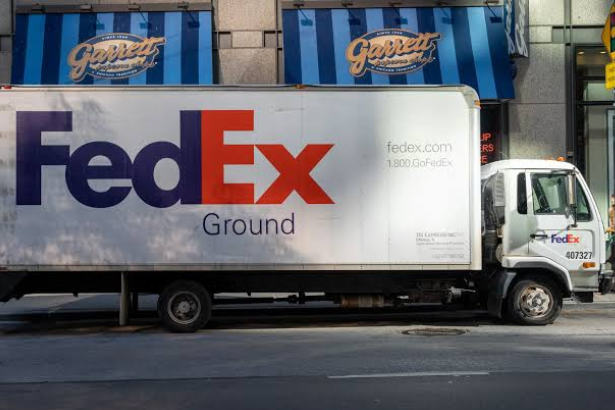
CMA CGM has completed its $1.4 billion acquisition of FedEx Supply Chain, giving CEVA Logistics a much larger North American contract logistics network and creating new commercial links between CMA CGM and FedEx across ocean and air freight.
The deal closed on October 1, 2026, and immediately became one of the most significant logistics transactions in the U.S. market this week. CMA CGM says the acquisition nearly triples CEVA Logistics’ North American contract logistics footprint and adds approximately 34 million square feet of warehouse space.
Background and Context
The CMA CGM FedEx Supply Chain transaction was first announced in July 2026, when the companies disclosed an agreement valuing the business at $1.4 billion.
At the time, CMA CGM said the purchase would significantly expand the North American contract logistics operations of its CEVA Logistics subsidiary. FedEx, meanwhile, positioned the sale as part of a broader effort to simplify its portfolio and concentrate on its core transportation and delivery operations.
The transaction has now moved from announcement to execution.
FedEx confirmed on October 1 that it had completed the sale of FedEx Supply Chain to CMA CGM for an enterprise value of $1.4 billion.
For CMA CGM, the transaction adds another major piece to its strategy of offering logistics services across multiple stages of the supply chain.
Instead of focusing primarily on ocean transportation, the company is building a network that covers transportation, warehousing, inland logistics and other supply chain services.
Latest Update: CMA CGM Completes the $1.4 Billion Deal
The closing gives CEVA Logistics access to FedEx Supply Chain’s assets and nearly 10,000 employees.
According to CMA CGM, the combined operation will add approximately 34 million square feet of warehouse space and approximately 150 warehouses. CEVA’s overall North American presence will expand to more than 240 locations, with a combined workforce of roughly 20,000 people.
CMA CGM’s official acquisition announcement
That scale matters because contract logistics increasingly involves more than simply storing products.
Warehousing can be connected with transportation planning, inventory management, fulfillment, customs processes, distribution and final-mile delivery.
CMA CGM says the acquisition will help it provide more integrated logistics services across ocean, air, land and warehousing.
FedEx Is Narrowing Its Focus
The transaction also represents a strategic change for FedEx.
FedEx said the sale advances its ongoing portfolio simplification and allows the company to concentrate resources on its core transportation network and other areas where it sees strategic value.
FedEx’s announcement on the completed sale
This creates a different strategic picture for the two companies.
CMA CGM is expanding deeper into contract logistics, while FedEx is reducing its exposure to that part of the business.
What the Deal Means for U.S. Logistics
The biggest impact is the expansion of CEVA’s physical logistics infrastructure.
With additional warehouses, employees and operational capabilities, CEVA will have a substantially larger platform for serving manufacturers, retailers, healthcare companies, technology businesses and other customers in North America.
CMA CGM specifically identified healthcare, technology, consumer and retail as areas where the combined business can deepen its sector capabilities.
This is important as companies increasingly look for logistics providers that can manage multiple steps rather than coordinating separate providers for ocean freight, inland transportation and warehousing.
1. More End-to-End Logistics
The acquisition strengthens CMA CGM’s ability to connect different parts of a shipment’s journey.
A simplified supply chain could involve:
Manufacturing → Ocean freight → Port → Inland transportation → Warehouse → Fulfillment → Final delivery
CMA CGM already has significant capabilities in ocean transportation and other logistics activities. Adding FedEx Supply Chain’s contract logistics infrastructure gives CEVA a larger physical network in the middle of that chain.
That creates opportunities to connect freight movement with warehousing and distribution.
2. A Larger North American Warehouse Network
The approximately 34 million square feet of additional warehouse capacity is one of the most tangible effects of the transaction.
The expanded footprint could allow CEVA to support customers that need regional inventory positioning, fulfillment and distribution across the United States and Canada.
It also gives CMA CGM more physical infrastructure inside the North American market rather than relying primarily on transportation links.
3. Automation and Robotics
CMA CGM says the combined operation will bring together complementary digital and operational capabilities while accelerating the deployment of automation and robotics across the North American network.
That could become increasingly important as logistics operators deal with labor costs, fulfillment expectations and the need to process larger volumes of goods efficiently.
The acquisition therefore isn’t simply about adding warehouses. Technology and automation are also part of the integration strategy.
New Ocean and Air Freight Agreements
The acquisition comes with another important component.
CMA CGM and FedEx have entered into multi-year commercial agreements covering ocean and air freight.
Under the arrangement, CMA CGM will become a preferred ocean carrier for FedEx under a non-exclusive agreement.
The companies also plan to cooperate on air cargo capacity on strategic routes, including Asia-Europe.
The agreements create a relationship between the companies even after FedEx Supply Chain has moved into CEVA.
For FedEx, the arrangement provides access to CMA CGM’s ocean capabilities. For CMA CGM, it creates additional commercial links with one of the world’s largest transportation companies.
Expert Insights and Analysis
The deal reflects a larger shift in logistics toward integrated supply chain services.
Historically, companies could purchase ocean transportation, warehousing, customs services, trucking and delivery from different providers.
That model still exists, but large logistics providers increasingly want to manage multiple stages of the journey.
FreightWaves reported that the acquisition significantly expands CEVA’s contract logistics operations and fits CMA CGM’s broader strategy of providing transportation and logistics services across the supply chain.
FreightWaves’ coverage of the acquisition
The potential advantage for customers is coordination.
When transportation, warehousing and distribution are connected within one broader network, companies can potentially simplify supplier relationships and improve visibility across different stages of a shipment.
But the actual benefits will depend on how effectively CMA CGM integrates FedEx Supply Chain’s operations, technology and workforce into CEVA.
The transaction creates scale immediately. Integration is the next challenge.
Broader Implications for U.S. Logistics
The CMA CGM FedEx Supply Chain deal also illustrates how the U.S. logistics market is evolving.
Large logistics companies are increasingly building networks that extend beyond a single mode of transportation.
For shippers, that could mean more options for consolidating logistics services with fewer providers.
For competitors, the deal creates a larger CEVA operation with a significantly expanded warehouse and distribution footprint.
For warehouse operators and third-party logistics providers, it highlights the growing importance of scale, technology and integrated transportation networks.
The transaction could also influence how manufacturers and retailers evaluate logistics partners.
Instead of asking only who can move a container or deliver a parcel, businesses may increasingly evaluate providers based on their ability to manage the entire flow of inventory.
For more coverage of business technology, transportation and industrial trends, see The Tech Marketer.
Related History and Comparable Logistics Deals
The logistics industry has seen increasing consolidation as transportation companies attempt to build broader service portfolios.
CMA CGM’s strategy is particularly notable because the company has expanded beyond its traditional ocean-shipping roots into logistics and air freight.
CEVA Logistics is a major part of that strategy.
The acquisition of FedEx Supply Chain substantially increases CEVA’s North American contract logistics presence. CMA CGM says CEVA will have more than 240 locations in North America after the integration, compared with the smaller footprint it had before the transaction.
The deal also follows FedEx’s broader portfolio strategy.
By selling the supply chain unit while maintaining commercial relationships with CMA CGM, FedEx can reduce the number of businesses it directly operates while retaining access to logistics capabilities through partnerships.
That makes the transaction more than a straightforward acquisition. It is also a restructuring of how two major transportation companies participate in the logistics ecosystem.
What Happens Next?
The next stage will be integration.
CEVA will need to combine FedEx Supply Chain’s warehouses, employees, technology and customer operations into its existing North American network.
CMA CGM says the combined business will accelerate automation and robotics deployment, but the practical impact will depend on how quickly those systems can be integrated across the enlarged network.
The companies also have several years of commercial cooperation ahead.
CMA CGM says the ocean and air freight agreements will support broader collaboration between the two companies, with air cargo cooperation planned on selected strategic routes.
For U.S. logistics customers, several areas will be worth watching:
- How CEVA integrates the approximately 150 warehouses associated with the combined operation
- Whether automation investment changes warehouse productivity
- How customer contracts and operations transition
- How CMA CGM uses the expanded network alongside its ocean and air freight capabilities
- Whether FedEx’s narrower portfolio changes its transportation strategy
- How competitors respond to CEVA’s larger North American footprint
Conclusion
The CMA CGM FedEx Supply Chain deal is now official, and its effects extend well beyond the $1.4 billion purchase price.
CMA CGM has added nearly 10,000 employees, approximately 34 million square feet of warehouse space and a much larger North American contract logistics platform to CEVA Logistics.
FedEx, meanwhile, is using the sale to simplify its portfolio and concentrate on its core transportation operations.
The result is a new logistics relationship in which CMA CGM owns and operates the former FedEx Supply Chain business through CEVA, while FedEx and CMA CGM maintain commercial cooperation in ocean and air freight.
For the U.S. logistics industry, the important question now shifts from who bought the business to how effectively the expanded network can be integrated and used.
That will determine how much this $1.4 billion transaction ultimately changes the competitive landscape for North American logistics.
FAQ
What is the CMA CGM FedEx Supply Chain deal?
CMA CGM completed its acquisition of FedEx Supply Chain for an enterprise value of $1.4 billion on October 1, 2026. The business is being integrated into CEVA Logistics.
Why did CMA CGM buy FedEx Supply Chain?
The acquisition significantly expands CEVA Logistics’ North American contract logistics footprint and supports CMA CGM’s strategy of providing integrated logistics services across ocean, air, land and warehousing.
What happens to FedEx Supply Chain employees?
CMA CGM said the transaction brings nearly 10,000 FedEx Supply Chain team members into the CEVA Logistics organization.
How large is CEVA’s North American logistics network after the deal?
CMA CGM says the combined business will operate approximately 150 warehouses and expand CEVA’s North American presence to more than 240 locations, with about 20,000 employees.
What does the acquisition mean for U.S. logistics?
The acquisition gives CEVA a substantially larger warehouse and contract logistics network in North America and strengthens CMA CGM’s ability to offer integrated transportation and logistics services.
Will FedEx and CMA CGM continue working together?
Yes. The companies have entered into multi-year commercial agreements involving ocean and air freight. CMA CGM will become a preferred ocean carrier for FedEx under a non-exclusive agreement, while the companies also plan to collaborate on selected air cargo capacity.
Sources & References
- CMA CGM Group Completes Acquisition of FedEx Supply Chain, Strengthening Its Logistics Presence in North America, and Enters into Multi-Year Commercial Agreements Related to Air and Ocean Freight
Read the CMA CGM announcement - FedEx Completes Sale of FedEx Supply Chain to CMA CGM Group
Read the FedEx announcement - CMA CGM Finalizes $1.4B Acquisition of FedEx Supply Chain
Read the FreightWaves report - CMA CGM Closes $1.4 Billion FedEx Supply Chain Acquisition
Read the Journal of Commerce report