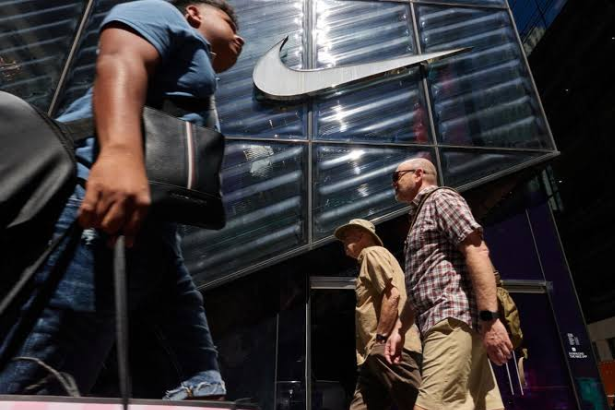
Nike stock is facing another difficult stretch after the sportswear giant reported weaker-than-expected quarterly revenue, warned of a high-single-digit sales decline for fiscal 2027 and announced a new restructuring program that will eliminate roles beginning next year.
The latest numbers put Nike’s turnaround under a brighter spotlight. The company is making progress in performance categories such as running and football, but those gains are being offset by weakness in Sportswear, Jordan Brand and Greater China.
Background and Context
Nike has spent the past several quarters trying to reverse a slowdown that has affected its product mix, wholesale relationships, direct-to-consumer business and international operations.
CEO Elliott Hill has framed the recovery around a strategy called Sport Offense, with greater emphasis on performance sports and product innovation. Nike says that strategy is producing measurable momentum in priority sports.
But the recovery is uneven.
Greater China has become one of the company’s most persistent problems. In fiscal 2027’s first quarter, revenue in the region dropped 26% on a currency-neutral basis, according to Nike’s earnings materials.
That weakness matters because China remains one of Nike’s major international markets and an important part of its long-term growth strategy.
The company is also dealing with pressure in Nike Sportswear and Jordan Brand, two areas that historically played an important role in its lifestyle business.
Latest Nike Stock News and Earnings Breakdown
Nike reported fiscal first-quarter revenue of $11.21 billion, down 4% from the same period a year earlier. Analysts had been expecting roughly $11.32 billion. Adjusted earnings per share came in at $0.48, above the $0.43 analyst expectation cited by CNBC through Yahoo Finance.
The revenue miss was accompanied by a much weaker outlook.
Nike now expects fiscal 2027 revenue to decline at a high-single-digit percentage rate. The company also expects adjusted fiscal 2027 earnings per share of between $1.15 and $1.35, excluding approximately $0.15 of EPS impact associated with its Pace transformation program.
Greater China was particularly weak:
- Greater China revenue declined 22% on a reported basis.
- Currency-neutral revenue declined 26%.
- Revenue came in at approximately $1.18 billion.
- Converse revenue fell 28% to $263 million.
- North America revenue increased 2% to $5.13 billion.
Nike’s gross margin, meanwhile, improved by 60 basis points to 42.8%, helped partly by lower warehousing and logistics expenses.
Nike Announces More Job Cuts
Nike also introduced Pace, a new operating model designed to simplify the organization and generate approximately $2.5 billion in cumulative savings through fiscal 2031.
The company expects the program to include fewer roles beginning in 2027, supply-chain modernization, a geographic reorganization and the creation of a new campus in India. Nike expects approximately $1 billion in pretax charges over the program’s period.
Nike has not disclosed a final number of positions that will be eliminated under the new round of restructuring.
The announcement is therefore less about a single headline layoff figure and more about a broader attempt to reduce complexity and redirect resources toward product, sport and consumer-facing operations.
Why Nike Stock Is Under Pressure
Several issues are converging at once.
1. Revenue recovery is taking longer
Nike had previously expected a gradual improvement, but the latest fiscal 2027 outlook points to another year of declining revenue.
The company said its deliberate efforts to reduce supply in parts of Sportswear, Jordan and Greater China will create additional pressure on reported revenue during fiscal 2027 and into fiscal 2028.
That creates an unusual turnaround dynamic: some of Nike’s corrective actions are designed to improve the quality of sales and reduce discounting, but they can also make near-term revenue numbers weaker.
2. China remains a major challenge
Nike is changing how it distributes products digitally in China.
The company plans to concentrate more of its digital presence around official Nike storefronts on Tmall, JD and Douyin, alongside Nike.com and its app. Management says the objective is to reduce discounting and create a more controlled brand experience.
The immediate financial impact could be painful because the company is deliberately reducing some distribution.
3. The lifestyle business needs a reset
Nike’s performance categories are producing stronger results, but Sportswear and Jordan remain under pressure.
Management says it wants Jordan to become more selective and protect the brand’s long-term positioning rather than relying heavily on repeated product releases and promotions.
That strategy could change the balance between short-term volume and longer-term brand positioning.
Expert Insights and Analysis
The most important detail in the latest report may not be the earnings beat. It is the gap between improvement in parts of Nike’s business and the continuing weakness in its overall revenue trajectory.
Nike’s own earnings commentary points to stronger momentum in performance sports, while acknowledging that Sportswear, Jordan and Greater China require further work.
That makes the turnaround increasingly dependent on whether Nike can translate its performance-category momentum into a broader recovery.
There is also a clear financial tradeoff in the strategy.
Reducing excess supply, discounting and weaker distribution channels can potentially improve full-price realization. But those decisions can suppress sales while the company works through inventory and channel changes. Nike explicitly warned that some of these actions would pressure reported revenue in fiscal 2027 and into fiscal 2028.
The Pace restructuring adds another layer. Nike expects significant savings over several years, but the program itself carries implementation costs and workforce reductions.
Broader Implications for Nike Stock
The latest results make Nike stock particularly sensitive to three measurements over the next several quarters:
Revenue stabilization: Investors will be watching for evidence that declining sales are approaching a floor.
China recovery: The company’s distribution changes need to eventually translate into stronger demand and healthier pricing.
Performance versus lifestyle: Nike’s ability to expand growth beyond running, football and other performance categories will matter for the broader recovery.
The restructuring also puts operating efficiency under the microscope. If Pace reduces costs while Nike rebuilds product momentum, the company’s earnings profile could evolve differently from its revenue trajectory.
For more coverage of technology, business and market trends, see the The Tech Marketer business and markets section.
Related History and Comparable Technologies
Nike’s current situation reflects a broader pattern seen across major consumer brands: periods of rapid digital expansion can eventually produce complicated distribution networks, excessive promotions and difficult inventory decisions.
The China challenge is particularly notable because local sportswear companies have become stronger competitors while international brands compete for a consumer market that has changed considerably.
Research published by S&P Global before Nike’s latest results highlighted pressure in Greater China and noted the company’s planned shift toward a more tightly controlled digital marketplace.
Nike’s current restructuring therefore combines several familiar turnaround tactics:
- Reducing organizational complexity
- Tightening distribution
- Cutting costs
- Reducing discounting
- Prioritizing higher-growth sports
- Rebuilding relationships with wholesale partners
- Investing selectively in local markets
The challenge is executing all of them without weakening the brand or sacrificing too much near-term revenue.
What Happens Next for Nike Stock?
Nike’s next major test will be whether the company’s operating changes begin producing measurable improvement in subsequent quarters.
The company expects fiscal 2027 revenue to decline at a high-single-digit rate, while adjusted EPS is projected at $1.15 to $1.35 before the stated Pace-related EPS impact.
Management also expects the restructuring to continue into the coming years, with the largest savings expected later in the program.
For investors following Nike stock, the key numbers to watch will include Greater China revenue, North American demand, gross margin, inventory, full-price sales and the pace of cost reductions.
Nike is also expected to provide additional detail around its strategy later in the year as the company continues refining its priorities.
Conclusion
Nike stock is entering another important phase of its turnaround.
The company did post an earnings beat and improved gross margin, but those positives were overshadowed by a revenue miss, a high-single-digit fiscal 2027 revenue decline forecast and continued weakness in Greater China, Sportswear and Jordan.
The new Pace program adds a significant restructuring component, including job reductions beginning in 2027 and a targeted $2.5 billion in cumulative savings through fiscal 2031.
The next stage of the Nike story will depend on whether its investment in performance products and its restructuring of weaker businesses can eventually produce broader sales growth.
FAQ
What is happening with Nike stock?
Nike stock has come under pressure after the company reported a 4% year-over-year decline in fiscal first-quarter revenue and projected a high-single-digit revenue decline for fiscal 2027.
Why is Nike cutting jobs?
Nike’s new Pace operating model is designed to simplify operations, modernize its supply chain and reduce costs. The company expects fewer roles beginning in 2027 and estimates approximately $2.5 billion in cumulative savings through fiscal 2031.
Why are Nike sales falling in China?
Greater China revenue declined 26% on a currency-neutral basis in Nike’s fiscal first quarter. Nike is responding by tightening its digital distribution and concentrating sales through selected official channels.
What is Nike’s fiscal 2027 revenue forecast?
Nike currently expects fiscal 2027 revenue to decline at a high-single-digit percentage rate.
What is Nike’s fiscal 2027 EPS outlook?
Nike expects adjusted fiscal 2027 EPS of approximately $1.15 to $1.35, while noting that the Pace program is expected to have an additional impact of roughly $0.15 on adjusted diluted EPS.
What is Nike doing to improve its business?
Nike is focusing on performance sports, restructuring Sportswear and Jordan, changing its China distribution strategy, improving inventory management, reducing discounting and simplifying its organizational structure through Pace.
Sources & References
- NIKE, Inc. Reports Fiscal 2027 First Quarter Results
- Nike Q1 FY2027 earnings: revenue misses, full-year outlook cut
- Nike (NKE) Q1 2027 Earnings Call Transcript
- Nike heads into Q1 2027 results with sales still under pressure
- Nike plans more job cuts to boost sputtering turnaround, forecasts steep revenue drop