


Introduction
US project logistics is entering a more demanding phase as major construction and infrastructure projects require increasingly large and specialized equipment to reach sites across the country.
The latest industry coverage points to growing demand exposing constraints in labor, equipment and transportation capacity across road, rail and barge networks. heavyliftpfi.com
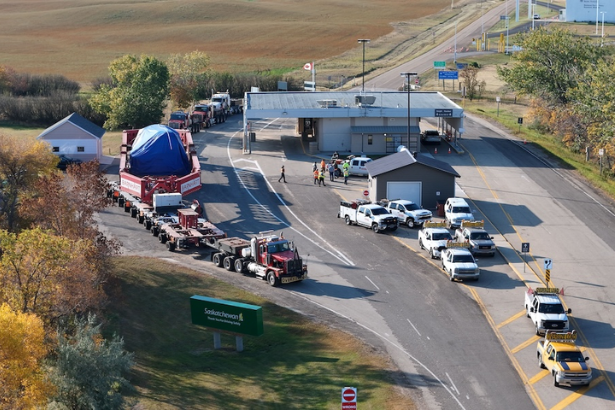
This is not the same logistics challenge faced by parcel carriers or container shippers. A project cargo shipment can involve a transformer weighing hundreds of tons, industrial machinery that exceeds standard road dimensions, or equipment that requires a route to be engineered weeks before the cargo moves.
That makes the current expansion particularly important. America’s investment cycle is generating more cargo, but the infrastructure required to move that cargo is not expanding at the same speed.
Background and Context
Project logistics sits at the intersection of construction, freight transportation and industrial engineering.
Instead of moving thousands of standardized containers through predictable networks, project logistics deals with cargo that often cannot be easily substituted, split into smaller pieces or transported through ordinary freight lanes.
Think of:
- Large power transformers
- Gas turbines
- Industrial generators
- Wind-energy components
- Refinery equipment
- Semiconductor manufacturing equipment
- Data center electrical systems
- Heavy construction machinery
- Oversized manufacturing modules
The challenge begins before a truck reaches the highway.
A logistics team may need to examine bridge clearances, road geometry, weight restrictions, rail infrastructure, port handling capabilities, permits, police escorts, crane availability and the final route into a construction site.
The Port of New Orleans, for example, says planning an oversized rail movement can take weeks or months because routes must be reviewed for bridge clearances, tunnel restrictions, track geometry and other infrastructure limitations. Port of New Orleans
That complexity explains why project logistics is becoming strategically important as the U.S. builds more energy infrastructure, manufacturing capacity and data centers.
Latest Update: US Project Logistics Is Running Into Capacity Constraints
The immediate trigger for the latest industry attention is straightforward: demand is growing faster than some parts of the logistics ecosystem can comfortably absorb it.
Heavy Lift & Project Forwarding International reported on October 5 that U.S. project logistics growth is exposing constraints across labor, equipment, rail, road and barge capacity. heavyliftpfi.com
That matters because project cargo depends on coordination across all of those modes.
A shipment might arrive at a port by vessel, move onto rail, transfer to specialized road equipment and then travel to a construction site. A bottleneck at any one stage can disrupt the entire project schedule.
Trucks remain the critical final-mile link
For many oversized shipments, trucking provides the final connection between a port, rail facility, fabrication yard and construction site.
But heavy-haul trucking is not simply conventional trucking with a larger trailer.
The equipment can include multi-axle configurations, specialized trailers and self-propelled modular transporters. Routes may require extensive permitting and engineering.
That makes skilled drivers, operators and project planners especially valuable.
A shortage in specialized equipment or personnel can therefore have a much bigger impact than a shortage of ordinary freight capacity.
Rail is becoming more important for heavy industrial cargo
Rail offers an important advantage when cargo is too heavy or inefficient to move entirely by highway.
The Association of American Railroads reported that U.S. railroads averaged nearly 297,000 intermodal containers and trailers per week in August 2026, up 4.4% year over year and a new monthly record. Total carloads also reached their highest weekly average since October 2019. Association of American Railroads
That does not mean every project cargo shipment can simply move onto a train. Oversized equipment still has to fit within physical rail constraints.
But it does show that the broader freight rail system is experiencing strong demand at the same time project logistics is expanding.
Ports are becoming project-logistics decision points
Ports are no longer judged only by how quickly they can unload a vessel.
For project cargo, the question increasingly becomes:
What happens after the cargo leaves the dock?
The Port of New Orleans illustrates the issue. Port NOLA has direct access to all six Class I railroads through the New Orleans Public Belt Railroad, giving it an important connection to the U.S. interior. Port of New Orleans
The port has also partnered with UTC Transoceanic on AI-powered technology designed to determine whether oversized cargo can move through the rail network and identify potential routing options.
The system uses a digital model of the New Orleans Public Belt Railroad to track infrastructure conditions, bridge ratings, clearances and other constraints. Port of New Orleans
The significance goes beyond New Orleans.
It points toward a broader shift in project logistics: infrastructure intelligence is becoming almost as important as physical infrastructure.
US Project Logistics Is Being Reshaped by New Construction
Several investment themes are creating additional demand for specialized logistics.
Energy infrastructure
Energy projects are among the most logistics-intensive developments in the country.
Power generation and transmission projects require large transformers, turbines, generators and other equipment that can be difficult to transport.
The same applies to LNG and industrial infrastructure, where equipment may need to move through specialized Gulf Coast logistics corridors.
Data centers
The data center boom adds another layer.
AI infrastructure requires enormous amounts of electricity and increasingly sophisticated cooling and electrical systems. Those facilities require equipment such as transformers, switchgear, backup power systems, cooling equipment and generators.
The Port of New Orleans specifically identifies data centers, energy projects and industrial manufacturing as drivers of demand for oversized cargo. Port of New Orleans
This creates a logistics challenge that is easy to overlook.
A data center may be a digital business, but building one is intensely physical.
Servers are only one part of the equation. Before the servers arrive, the site needs power, cooling, structural systems and electrical infrastructure.
Advanced manufacturing
The expansion of U.S. manufacturing is another source of project cargo.
Factories require specialized machinery, production equipment and large electrical systems. Semiconductor facilities are particularly demanding because manufacturing equipment can be expensive, delicate and highly sensitive to delivery schedules.
That makes logistics planning part of the factory construction strategy itself.
Expert Insights and Analysis
The biggest mistake would be to interpret the current situation as simply a shortage of trucks.
The real issue is network coordination.
A project logistics operation can fail even when enough trucks are available.
If the port cannot handle the cargo, the truck does not matter.
If the rail route cannot accommodate the load, the port cannot solve the problem.
If the road from the rail terminal has a bridge with insufficient clearance, the rail movement does not complete the job.
And if the crane crew is unavailable when the cargo arrives, the entire sequence can stall.
This is why technology is becoming more important.
The Port of New Orleans’ digital rail initiative is an example of how logistics companies and infrastructure operators are trying to identify constraints earlier in the planning process. Port of New Orleans
The economics are also changing.
The more expensive the cargo and the tighter the construction schedule, the more valuable certainty becomes.
A project developer may be willing to pay more for a logistics provider that can answer three questions early:
- Can the cargo physically move?
- Which route is safest and most efficient?
- Can the shipment arrive when the construction team needs it?
That is a very different value proposition from simply offering the lowest freight rate.
Infrastructure Investment Is Trying to Catch Up
The federal government is also targeting freight bottlenecks.
On October 1, the U.S. Department of Transportation announced $426 million through its INFRA program for projects in 12 states. The funding targets congestion bottlenecks, freight corridors, bypasses and highway capacity. Department of Transportation
The projects include:
- An I-4 capacity project in Florida
- A freight bottleneck project in Los Angeles County
- A port logistics connector in Savannah, Georgia
- A major freight bypass expansion in Kansas
- A freight bottleneck project in Louisiana
The Savannah project is particularly relevant to the broader story because the DOT says the corridor will support port logistics and growing industrial demand, including semiconductor manufacturing facilities. Department of Transportation
These investments will not immediately eliminate project logistics constraints.
Road construction takes time. Rail upgrades take time. Port improvements take time.
But they demonstrate that freight capacity is increasingly being treated as an economic infrastructure issue rather than simply a transportation issue.
Broader Implications
The growth of US project logistics could have consequences well beyond the freight industry.
Construction schedules could become logistics schedules
Large industrial projects increasingly need logistics plans before construction reaches its most demanding stages.
A delayed transformer is not simply a late shipment. It can delay energization.
A delayed piece of factory equipment can delay commissioning.
A delayed generator can affect an entire data center construction sequence.
That makes logistics performance increasingly connected to project finance and construction risk.
Ports may compete on inland connectivity
Ports historically competed on location, terminal efficiency and ocean access.
Project cargo adds another metric: how easily can oversized freight leave the port?
A port with strong rail connections and detailed infrastructure data could become more attractive to industrial developers even if another port is geographically closer.
Digital twins could become standard logistics tools
The New Orleans project provides a glimpse of where the industry may be headed.
Instead of asking whether a shipment can move after the cargo has arrived, logistics teams could simulate the route beforehand.
That could reduce engineering time, identify infrastructure problems earlier and give project owners more confidence when selecting ports and transportation providers.
Freight infrastructure becomes part of industrial strategy
The broader lesson is that reshoring and domestic manufacturing require more than factories.
America needs the infrastructure to move the machines that build those factories.
That means highways, railways, ports, bridges, cranes, warehouses, specialized vehicles and skilled workers all become part of the industrial strategy.
For more coverage of the intersection between technology, transportation and industrial infrastructure, see The Tech Marketer.
Related History and Comparable Technologies
The current project logistics challenge is not entirely new.
The U.S. has long relied on specialized logistics for power plants, refineries, aerospace facilities, chemical plants and major infrastructure projects.
What has changed is the number and diversity of simultaneous projects.
Historically, oversized logistics was heavily associated with oil, gas and large industrial facilities.
Today, the cargo mix is expanding.
It includes:
- AI data centers
- Semiconductor factories
- Renewable energy infrastructure
- Grid modernization
- Traditional energy projects
- Advanced manufacturing
- Large infrastructure programs
That diversification matters because different projects compete for the same underlying logistics resources.
A crane, specialized trailer, heavy-haul crew or rail corridor cannot necessarily serve several projects at exactly the same time.
The result is a logistics market where scheduling and capacity planning can become competitive advantages.
What Happens Next?
The next stage of the U.S. project logistics market will likely be defined by three developments.
1. More investment in specialized capacity
Logistics providers have an incentive to add heavy-haul equipment, specialized trailers, lifting capacity and warehousing where project pipelines are strongest.
2. More multimodal planning
Projects will increasingly be designed around the entire cargo journey rather than a single transportation mode.
The best route might involve ocean freight, rail, barge and truck rather than simply choosing the fastest highway option.
3. More technology before the shipment moves
Digital twins, route modeling, AI-assisted clearance analysis and real-time infrastructure data can help logistics teams determine feasibility before expensive cargo reaches a port.
That could become one of the industry’s biggest competitive differentiators.
The companies that can combine engineering, transportation, permitting, technology and execution will likely be better positioned than providers competing only on freight price.
Conclusion
The US project logistics market is becoming a critical piece of America’s industrial expansion.
The immediate problem is not a lack of ambition. The U.S. is building energy infrastructure, data centers, manufacturing facilities and transportation projects at a scale that is generating significant demand for specialized cargo movement.
The challenge is getting all the physical pieces to the right place at the right time.
Trucks need roads. Rail needs clearances. Ports need inland connections. Projects need skilled labor. And increasingly, all of those systems need better data.
The next logistics advantage may therefore not belong to the company with the biggest fleet.
It may belong to the company that can see the entire route before the first wheel starts moving.
FAQ
1. What is US project logistics?
US project logistics is the planning and transportation of oversized, heavy, specialized or high-value cargo for major construction and industrial projects. It can involve trucks, rail, ports, barges, cranes, warehouses, permits and route engineering.
2. Why is US project logistics growing?
Demand is being supported by energy infrastructure, data centers, advanced manufacturing, semiconductor facilities and other large construction projects that require specialized equipment and machinery.
3. Why is oversized cargo difficult to transport?
Oversized cargo may exceed standard weight or dimensional limits. Routes must therefore be evaluated for bridges, tunnels, road geometry, rail clearances, infrastructure ratings and other restrictions.
4. What role does rail play in project logistics?
Rail can efficiently move extremely heavy industrial cargo over long distances, but oversized shipments require detailed route planning because bridges, tunnels, track geometry and other infrastructure can restrict movement.
5. Are U.S. ports becoming more important to project logistics?
Yes. Ports are increasingly evaluated not only on their ability to unload cargo but also on their ability to connect oversized shipments with rail, highways and inland project sites.
6. How is AI being used in project logistics?
AI and digital-twin technology can help logistics teams evaluate routes, infrastructure clearances and transportation options before cargo arrives. Port NOLA and its partners are already using this approach for oversized rail cargo. Port of New Orleans
7. What industries are driving project logistics demand?
Energy, data centers, semiconductor manufacturing, industrial manufacturing, infrastructure and construction are among the major demand drivers.
8. Could logistics bottlenecks delay major U.S. projects?
Yes. A delay involving specialized equipment, transportation capacity, port handling or route availability can potentially affect construction and commissioning schedules.
Sources & References
- “US project logistics growth tests capacity”
Heavy Lift & Project Forwarding International heavyliftpfi.com - “Trump’s Transportation Secretary Sean P. Duffy Invests $426 Million to Eliminate Bottlenecks and Congested Highways Across U.S.”
U.S. Department of Transportation Department of Transportation - “Port NOLA and New Orleans Public Belt Railroad Partner with UTC Transoceanic to Bring AI-Powered Oversized Cargo Technology to New Orleans”
Port of New Orleans Port of New Orleans - “Rail Industry Overview”
Association of American Railroads Association of American Railroads - “United States Project Logistics Market Size, Share & 2031 Growth Trends Report”
Mordor Intelligence Mordor Intelligence