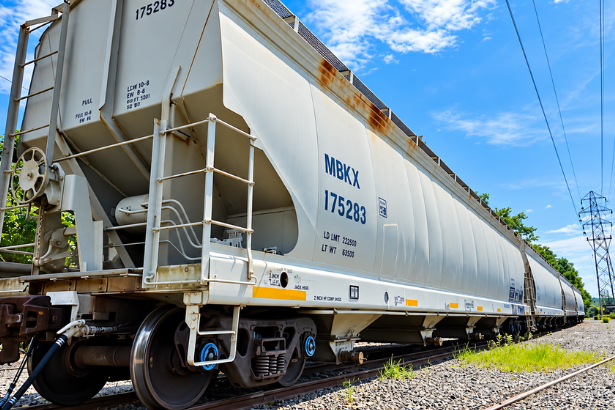
U.S. intermodal rail volume nearly reached 301,500 containers and trailers in the latest weekly data, extending a broader 2026 growth trend as shippers balance trucking costs, inventory needs and transportation capacity.
U.S. intermodal rail freight is showing renewed momentum.
According to the latest Association of American Railroads data, U.S. intermodal volume reached 301,456 containers and trailers for the week ending September 19, 2026, up 6.9% from the same week a year earlier. Total U.S. rail traffic increased 4.9% year over year to 535,663 carloads and intermodal units.
The latest numbers arrive only one week after U.S. intermodal volume fell 4.1% year over year, making the rebound particularly notable.
The bigger story, however, is not one week’s number.
Intermodal has been gaining share in the U.S. freight market throughout 2026. FreightWaves analysis has linked part of that growth to the widening cost advantage of rail over truckload transportation, while stronger inventory flows and early peak-season activity have also supported demand.
Background and Context
Intermodal transportation combines multiple modes, typically moving a container or trailer by truck at the beginning or end of its journey and by rail for the longer middle portion.
For shippers, that creates a middle ground between pure truckload transportation and traditional rail freight.
Truck is generally faster and offers greater flexibility.
Rail can move large volumes over long distances while potentially reducing transportation costs.
That tradeoff has become increasingly important in 2026.
FreightWaves reported in August that domestic intermodal container use was up about 10% year over year, while long-haul truckload volumes were roughly flat. Its analysis attributed part of the divergence to the cost difference between the two modes.
The latest AAR data now provides another indication that rail remains an important part of the freight market.
Latest Update: U.S. Intermodal Rail Volume Rises 6.9%


7
The latest AAR report covers the week ending September 19, 2026.
U.S. railroads handled:
| Metric | Week ending Sept. 19, 2026 | Year-over-year change |
|---|---|---|
| Total rail traffic | 535,663 | +4.9% |
| Carloads | 234,207 | +2.4% |
| Intermodal units | 301,456 | +6.9% |
| Cumulative intermodal volume | 10,477,086 | +4.1% |
| Cumulative total traffic | 18,921,181 | +3.4% |
The intermodal figure is particularly important because containers and trailers represented more than half of the week’s combined U.S. rail traffic.
Through the first 37 weeks of 2026, U.S. railroads had moved 10.48 million intermodal units, up 4.1% compared with the same period in 2025.
That means the latest weekly increase is part of a broader year-to-date expansion rather than an isolated spike.
Why the 7% Intermodal Increase Matters
The latest growth comes after a volatile stretch.
For the week ending September 12, total U.S. rail traffic dropped 3.7% year over year, while intermodal volume declined 4.1%.
One week later, the picture changed.
Intermodal volume climbed nearly 7%.
That suggests weekly rail data can be volatile, particularly around holiday and seasonal effects, but the broader year-to-date numbers remain positive.
The first 37 weeks of 2026 show U.S. intermodal volume up 4.1%.
Total combined rail traffic is up 3.4%.
Carloads are up 2.7%.
The strongest growth is therefore coming from intermodal rather than traditional commodity carloads.
The Truck-to-Rail Shift
One of the most important forces behind the intermodal story is the relationship between rail and trucking.
FreightWaves reported in August that domestic intermodal container volumes were up about 10% year over year while long-haul truckload volumes remained essentially flat. Its analysis pointed to a substantial cost advantage for intermodal.
In another August analysis, FreightWaves reported a 34% discount between intermodal contract rates and truckload contract rates in its Intermodal Savings Index.
That kind of price difference can change transportation decisions.
A shipper moving time-sensitive freight may still choose a truck.
But if the freight does not need to arrive immediately, rail can become more attractive when the cost difference is significant.
This is especially relevant for retailers and manufacturers moving inventory into distribution networks.
Why Inventory Timing Matters
Transportation decisions are rarely based on price alone.
Time matters just as much.
If a retailer needs a shipment tomorrow, rail may not provide enough speed.
If the inventory is needed several weeks or months later, the calculation changes.
FreightWaves described some of the current intermodal growth as freight effectively moving through the supply chain without the immediate time pressure that would normally favor trucking.
This creates an important distinction.
Urgent freight tends to favor speed.
Planned inventory replenishment can favor cost.
Intermodal becomes more competitive when shippers have enough planning time to accept longer transit.
That dynamic appears to be helping rail capture freight that might otherwise have moved entirely by truck.
U.S. Intermodal Rail Is Entering Peak Season
The timing of the latest increase also matters.
Domestic intermodal demand typically becomes stronger during the fall as retailers prepare for holiday inventory requirements.
FreightWaves reported in July that domestic loaded rail container volumes were running above the comparable point of each of the previous six years, with June growth approaching 13% year over year.
The publication also reported that domestic intermodal volumes were already running above the previous year’s peak-season levels during the summer.
That creates an interesting setup for the final months of 2026.
If retailers continue moving inventory early, railroads could carry a significant amount of freight before the traditional holiday shipping rush reaches its peak.
Rail’s Advantage Is Not Just Price
Cost is important, but rail offers another advantage: scale.
A single intermodal train can move a large number of containers over long distances.
That makes rail particularly useful for high-volume freight moving along major corridors.
The U.S. rail network also connects major ports, distribution centers and inland markets.
For shippers, intermodal can therefore become a strategic tool rather than simply a cheaper alternative to trucking.
It can provide another transportation option when truck capacity becomes expensive or constrained.
What the Latest Commodity Data Shows
The AAR report also shows that the intermodal increase is happening alongside growth in several traditional rail commodities.
Seven of the 10 major carload commodity groups increased year over year during the latest week.
Among the biggest increases:
- Metallic ores and metals: +15.1%
- Petroleum and petroleum products: +12.5%
- Nonmetallic minerals: +7%
Several categories moved lower:
- Coal: -3.1%
- Grain: -7.7%
- Motor vehicles and parts: -0.8%
This creates an interesting contrast.
Intermodal is growing strongly while the commodity picture remains mixed.
That suggests the current rail story is not simply a broad-based increase across every freight category.
Intermodal is playing an increasingly important role in the overall growth.
The Week-to-Week Numbers Need Context
It would be easy to look at the 6.9% increase and conclude that rail demand is accelerating uniformly.
The weekly data does not support such a simple interpretation.
One week earlier, intermodal volume was down 4.1% year over year.
Two weeks earlier, AAR data showed intermodal volume up 18% year over year.
That volatility means individual weekly figures should be viewed alongside cumulative data.
The more stable indicator is the year-to-date result.
Through September 19, intermodal volume was up 4.1%.
That suggests the broader trend remains positive despite individual weekly fluctuations.
Expert Analysis: Rail Is Taking Freight Share
FreightWaves’ recent analysis provides a useful explanation for what may be happening beneath the headline numbers.
Its August analysis found domestic intermodal volumes rising while long-haul truckload volumes remained comparatively flat. The publication connected the divergence to a substantial cost difference between rail and truck transportation.
Another FreightWaves analysis found that intermodal use had grown 10% year over year in August, while long-haul tender volumes were flat.
That does not mean every truckload is moving to rail.
Rail has physical and operational limitations.
Some freight needs the speed, flexibility or direct door-to-door service that trucking provides.
But the data suggests that at least some shippers have found enough economic value in intermodal to change their transportation mix.
The Cost Equation Is Changing
Transportation managers constantly balance four variables:
Cost
Speed
Reliability
Capacity
Truckload usually wins on speed and flexibility.
Rail can offer a cost advantage for appropriate lanes and freight.
When trucking becomes more expensive, the relative value of rail increases.
FreightWaves reported in August that truckload contract rates had increased significantly faster than intermodal rates on several lanes, creating opportunities for mode conversion.
That is an important factor behind the current U.S. intermodal rail story.
The rail industry does not necessarily need to become dramatically faster to attract freight.
It can become more attractive simply by remaining relatively economical while truck costs rise.
Fuel Prices Add Another Variable
Fuel economics can further influence the decision.
Truckload carriers are directly exposed to diesel costs.
Railroads also face fuel costs, but the impact on shipper pricing can differ because of fuel surcharge structures and the operating economics of rail.
FreightWaves has noted that rising fuel costs can widen the cost gap between trucking and intermodal, although actual shipper decisions depend on individual lanes and contracts.
That means energy prices can become another variable pushing freight toward rail.
However, a mode shift cannot happen instantly.
Shippers may need to adjust contracts, terminal arrangements, equipment availability and delivery schedules before switching a significant amount of freight from truck to rail.
The Role of Domestic Intermodal
There is an important distinction between domestic and international intermodal.
International containers are closely tied to imports and exports moving through ports.
Domestic intermodal uses larger containers designed for freight moving within the United States.
Domestic intermodal therefore competes more directly with long-haul trucking.
FreightWaves reported that domestic rail container volumes were running well above historical levels during the summer and that the growth was particularly relevant to truck-to-rail conversion.
That makes domestic intermodal one of the most important areas to watch.
If domestic container volumes continue to grow, it would provide stronger evidence that rail is capturing a larger share of freight that could otherwise move by truck.
The Geography of Intermodal Growth
Not every U.S. freight lane is equally suited to intermodal.
Longer routes generally provide more opportunity because rail’s economies of scale become more valuable over distance.
FreightWaves reported strong growth in lanes involving markets such as Chicago and Atlanta, while also highlighting increasing activity across north-south corridors.
That matters because the U.S. logistics network is changing.
Manufacturing growth in the Southeast and increasing freight flows through ports can create new opportunities for railroads.
Intermodal networks can connect those production centers to major consumer markets without requiring every long-haul shipment to travel entirely by truck.
Rail Terminals Become More Important
A growing intermodal market also creates pressure on terminals.
Rail cannot provide the same door-to-door flexibility as a truck.
Instead, containers typically move between:
Truck → rail terminal → rail network → rail terminal → truck
Every transfer introduces another operational step.
That means terminal capacity, drayage availability and local congestion can determine whether intermodal is practical for a shipper.
The more freight moves onto rail, the more important these interfaces become.
This is one reason logistics companies are investing in inland terminals and intermodal infrastructure.
U.S. Intermodal Rail and Supply Chain Resilience
The growth of intermodal also has implications for supply-chain resilience.
A shipper that relies entirely on one transportation mode can become vulnerable when that mode experiences a capacity shortage, price spike or operational disruption.
Intermodal gives companies another option.
That does not mean rail replaces trucking.
It means the two modes can operate as parts of the same transportation strategy.
For example, a company might use:
- Truck for urgent shipments
- Rail for planned long-distance inventory
- Truck for final-mile distribution
- Rail for high-volume replenishment
- Multiple carriers to reduce dependence on a single provider
This kind of multimodal strategy can make transportation planning more flexible.
Broader Implications
The current U.S. intermodal rail growth has implications beyond the railroad industry.
For Trucking
If more long-haul freight moves to rail, trucking companies could face changes in lane demand.
That does not necessarily mean lower overall freight demand.
It can mean a change in the type and distance of freight that remains on the road.
FreightWaves has already identified the relationship between stronger intermodal demand and softer long-haul truckload volumes.
For Railroads
Higher intermodal volumes create opportunities for railroads to improve asset utilization and increase revenue from container traffic.
But sustained growth can also put pressure on terminals, network capacity and service reliability.
For Shippers
Shippers gain another tool for managing transportation costs.
The challenge is determining which freight can tolerate rail’s transit characteristics and which shipments require truck speed.
For Retailers
Retailers can use intermodal to move inventory earlier and potentially reduce transportation costs when delivery timing allows.
That becomes particularly important before major retail periods.
For the Supply Chain
A stronger rail network gives the U.S. freight system another channel for moving large volumes over long distances.
For technology and logistics readers, this is where The Tech Marketer’s business and logistics coverage can provide broader context on the growing intersection between transportation technology, freight economics and supply-chain strategy.
Related History and Comparable Transportation Shifts
The relationship between rail and trucking has always been competitive and complementary.
Truck transportation transformed freight distribution because trucks could provide flexible door-to-door service.
Rail retained an important role in bulk commodities and long-distance freight.
Intermodal transportation brought the two systems together.
Instead of choosing between rail and truck entirely, shippers could combine them.
That model has become increasingly important as supply chains have grown more complex.
Technology is now making the combination easier to manage.
Digital freight platforms, predictive analytics, GPS tracking, automated terminal systems and transportation-management software allow shippers to compare modes more dynamically.
The result is a logistics market in which the question is increasingly not:
Rail or truck?
It is:
Which mode makes the most economic and operational sense for this shipment?
What Happens Next?
Several indicators will determine whether the current intermodal momentum continues through the rest of 2026.
1. October and November Volumes
The traditional peak season will provide an important test.
If intermodal remains strong as retailers prepare for the holidays, the recent growth could prove more durable.
2. Truckload Rates
The relative price of trucking will remain important.
If truckload rates remain elevated compared with intermodal, shippers have a greater financial incentive to evaluate rail.
3. Terminal Capacity
More freight moving by rail could increase pressure on intermodal terminals and drayage networks.
4. Service Reliability
Price is only one factor.
If rail service becomes less predictable, shippers may return some freight to trucking despite higher costs.
5. Domestic Container Volumes
Domestic intermodal growth is particularly important because it competes directly with long-haul truckload freight.
Continued growth would provide a stronger signal of modal conversion.
6. Industrial Freight
Metallic ores, petroleum, minerals and other industrial categories will also influence total rail performance.
The latest AAR data showed several of those categories increasing significantly.
Google Trends Section
Trend Topic: U.S. Intermodal Rail
The strongest search opportunity around this story is the broader topic of U.S. intermodal rail, particularly as logistics professionals and investors look for explanations behind the latest rail volume increase.
Suggested Google Trends Image
Title: U.S. Intermodal Rail Freight Search Trend
Alt Text: U.S. intermodal rail freight search interest and rail volume growth
Caption: Interest in U.S. intermodal rail is rising as weekly freight data shows continued year-over-year growth in container and trailer volumes.
Associated Trend Keywords
- U.S. intermodal rail
- intermodal freight
- rail freight
- rail shipping
- intermodal transportation
- domestic intermodal
- truck to rail
- railroad freight
- AAR rail traffic
- rail freight volumes
- U.S. railroads
- freight transportation
- intermodal containers
- truckload rates
- supply chain logistics
Exactly 3 Reference Links
- Association of American Railroads: Weekly Rail Traffic, September 19, 2026
- FreightWaves: Intermodal rail powers up with 7% gain
- FreightWaves: Modal shift dampens trucking market
Conclusion
The latest U.S. intermodal rail numbers show a freight market that continues to evolve.
For the week ending September 19, U.S. intermodal volume reached 301,456 containers and trailers, up 6.9% year over year. Total U.S. rail traffic increased 4.9%.
The increase follows a weaker week, demonstrating that weekly freight data can move sharply in either direction.
But the broader numbers remain positive.
Through the first 37 weeks of 2026, U.S. intermodal volume was up 4.1%, while total combined rail traffic increased 3.4%.
At the same time, FreightWaves data indicates that domestic intermodal is taking freight share from long-haul trucking as shippers respond to transportation costs, inventory timing and capacity conditions.
The next test will come during the fall peak season.
If intermodal volumes remain elevated as retailers replenish inventory and transportation managers prepare for the holiday period, rail could continue playing a larger role in the U.S. freight mix.
The story is therefore bigger than one 7% weekly increase.
It is about how shippers are changing the way they move freight across the United States.
FAQ
1. What is U.S. intermodal rail?
U.S. intermodal rail is a transportation system in which freight containers or trailers move by rail for part of their journey and by truck for other portions, typically for pickup and final delivery.
2. How much did U.S. intermodal rail volume increase?
U.S. intermodal volume increased 6.9% year over year during the week ending September 19, 2026, reaching 301,456 containers and trailers.
3. Why is intermodal rail growing?
Recent industry analysis points to factors including the relative cost of trucking versus rail, inventory timing, peak-season preparation and transportation capacity.
4. Is freight moving from trucks to rail?
FreightWaves analysis indicates that domestic intermodal volumes have been increasing while long-haul truckload volumes have remained comparatively flat, suggesting some freight is shifting from truck to rail.
5. How many intermodal units have U.S. railroads moved in 2026?
Through the first 37 weeks of 2026, U.S. railroads reported 10,477,086 intermodal units, up 4.1% from the same period in 2025.
6. Is rail cheaper than trucking?
Intermodal can be cheaper than truckload transportation on appropriate lanes, particularly when shipments are less time-sensitive. FreightWaves reported significant cost differences between intermodal and truckload rates in 2026.
7. Why would a shipper choose trucking instead of rail?
Truckload transportation generally provides greater flexibility and can be faster for time-sensitive shipments. Rail becomes more attractive when shippers have enough time to trade some speed for lower transportation costs.
8. What happens to intermodal rail during peak season?
Domestic intermodal demand typically becomes stronger during the fall as retailers replenish inventory ahead of the holiday season. Recent 2026 data has already shown unusually strong domestic intermodal volumes.
SOURCES & REFERENCES
- Association of American Railroads: AAR Reports Weekly Rail Traffic for the Week Ending September 19, 2026
- FreightWaves: Intermodal Rail Powers Up With 7% Gain for Latest Week
- FreightWaves: Modal Shift Dampens Trucking Market
- FreightWaves: Intermodal’s Historic Growth
- FreightWaves: Intermodal Savings Surge, Up to 49% ROI for Shippers