Introduction
Parcel shipping costs are becoming a bigger challenge for U.S. businesses as carriers layer fuel surcharges, residential delivery fees and seasonal charges onto their base rates. A new report published by FreightWaves on October 14, 2026, citing the TD Cowen and AFS Logistics freight index, warns that the United States is on track for its most expensive year on record for parcel shipping. The report points to rising transportation charges and increasingly targeted pricing policies across major carriers.
The timing matters. Retailers, online sellers and fulfillment teams are entering the busiest shipping period of the year, when package volumes rise and additional fees can quickly eat into profit margins. For businesses that rely on affordable delivery to compete, understanding the full cost of every shipment is becoming just as important as getting packages to customers on time.
The challenge is not simply that shipping rates are going up. It is that the final bill can be much harder to predict.
Background and Context: Why Parcel Shipping Costs Are Rising
For years, many businesses planned their shipping budgets around annual carrier rate increases. That approach is becoming less reliable as parcel companies introduce more frequent changes to surcharges, delivery classifications and pricing rules.
The October 14 FreightWaves report describes a market in which carriers are using targeted pricing adjustments to increase revenue per package. Fuel charges are one major contributor, but they are only part of the picture. Delivery location, package dimensions, billable weight, service selection and additional handling can all affect the final cost.
The TD Cowen and AFS Logistics analysis cited by FreightWaves found that the average fuel surcharge increased from 7.75% of the transportation rate in the first quarter of 2021 to 30% in September 2026. The report attributed nearly three-quarters of that increase to carrier adjustments to surcharge formulas rather than changes in fuel prices alone.
That distinction is important for shippers. Even when fuel prices decline, a carrier’s surcharge formula may prevent the fee from falling at the same pace.
Businesses therefore face two separate problems: higher transportation expenses and less certainty about how those expenses will change.
Latest Update: New Carrier Fees Put Holiday Shipping Budgets Under Pressure
The latest FreightWaves report highlights several developments that businesses should watch closely.
1. Fuel surcharges are no longer a minor line item
Fuel charges have become a significant part of parcel transportation expenses. According to the TD Cowen and AFS Logistics data reported by FreightWaves, the effective surcharge remains substantially higher than it was five years ago.
For shippers, the practical implication is straightforward. Comparing only the quoted base rate can lead to an incomplete picture of total shipping costs. Companies need to review the surcharge applied to each shipment and understand how the carrier calculates it.
Read the October 14 FreightWaves report on parcel shipping costs for the underlying analysis.
2. FedEx is applying more targeted delivery charges
FedEx’s published 2026 demand surcharge schedule outlines seasonal fees for several U.S. parcel services.
For example, the schedule lists a residential delivery demand surcharge of $0.50 per package for FedEx Ground and FedEx Home Delivery residential shipments from October 26 through November 22, rising to $0.80 per package from November 23 through December 27, 2026.
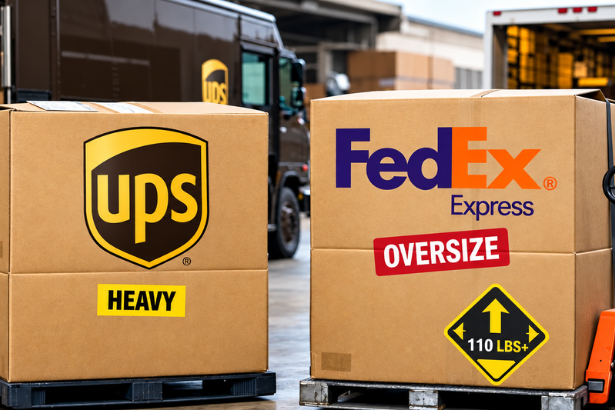
Other charges, including additional handling and oversize fees, have their own seasonal pricing windows. The amount that applies depends on the shipment type and the relevant fee rules.
These charges can make a meaningful difference for businesses shipping thousands of packages. An additional fee that looks small on one parcel can become a material expense when multiplied across an entire holiday season.
Businesses should review the carrier’s official pricing page before finalizing their seasonal budgets because fee schedules and eligibility rules can change.
3. The U.S. Postal Service has introduced a temporary holiday price adjustment
The U.S. Postal Service announced a temporary price change for selected competitive domestic package services, effective October 4, 2026, through January 17, 2027, subject to the announced regulatory process.
Affected services include Priority Mail Express, Priority Mail, USPS Ground Advantage and Parcel Select.
The official USPS announcement explains that the adjustment is intended to help cover additional handling costs during the holiday peak.
This matters because switching carriers does not automatically guarantee lower costs. Businesses need to compare the actual price of eligible services for their package sizes, destinations and delivery requirements.
4. Peak-season charges can make annual averages misleading
An average cost per package is useful for high-level planning, but it may conceal important differences between shipping weeks.
FreightWaves reports that DHL eCommerce, Amazon Shipping, OnTrac, FedEx, UPS and USPS have announced or introduced various peak-season charges or adjustments.
The applicable amounts and dates differ by provider. A retailer shipping lightweight parcels to residential addresses may face a very different cost profile from a company sending larger business-to-business shipments.
For this reason, companies should forecast shipping expenses by week, carrier, service, package dimensions and destination zone rather than relying on a single annual average.
Expert Insights and Analysis: The Real Problem Is Pricing Complexity
The latest reporting points to a change in how parcel transportation is priced. Carriers are increasingly using targeted charges to account for particular delivery conditions and to manage the profitability of their networks.
That creates a challenge for shippers that have limited transportation expertise or rely on spreadsheets to manage logistics spending.
Small businesses may feel the squeeze first
Large retailers often have dedicated transportation teams, sophisticated shipping software and negotiated carrier agreements. Smaller businesses may have fewer resources to analyze invoices, compare competing services or challenge incorrect fees.
A business can negotiate a competitive base rate and still face higher-than-expected expenses if residential charges, fuel adjustments or dimensional-weight rules increase the final bill.
Small and medium-sized businesses should therefore evaluate their total transportation spend rather than focus exclusively on headline discounts.
Lightweight packages are not automatically inexpensive
Online retailers frequently ship small products that appear inexpensive to transport. However, package weight is only one part of the pricing calculation.
Dimensions, delivery location, service level and other applicable fees can change the economics of a shipment. Carriers may also use dimensional or billable weight rules when a package occupies more space than its actual weight suggests.
Businesses should review their most common package sizes and identify products for which packaging changes or alternative services could reduce costs without compromising product protection.
Carrier diversification is becoming a practical strategy
FreightWaves reports that increasingly complex surcharges are encouraging some shippers to broaden their carrier mix.
Diversification does not mean abandoning established providers. It means avoiding unnecessary dependence on one carrier when other services can meet delivery requirements at a competitive total cost.
A company might use a national carrier for time-sensitive deliveries, a postal service for suitable lightweight parcels and a regional provider for selected destinations. The right combination depends on geographic coverage, delivery performance, pickup arrangements, claims handling and contract terms.
A lower quoted rate is useful only if the provider can deliver the required service reliably.
Broader Implications: What Higher Shipping Costs Mean for U.S. Businesses
E-commerce profit margins could face renewed pressure
Shipping is an operating expense that can be difficult to pass directly to customers. Many online shoppers expect inexpensive or free delivery, leaving retailers to absorb at least part of the additional expense.
When shipping costs rise, businesses have several choices: accept lower margins, increase product prices, introduce shipping thresholds or charge customers more for delivery.
Each option comes with trade-offs. Raising prices can affect conversion rates, while absorbing every increase can weaken profitability.
Inventory planning and fulfillment decisions matter more
Higher delivery expenses can change where businesses store inventory and how they fulfill orders.
For example, distributing inventory across multiple fulfillment locations may shorten delivery distances for some orders. However, additional warehouses can increase storage, labor and inventory carrying costs.
The right answer requires comparing the full logistics network rather than assuming that faster or more geographically distributed fulfillment is always cheaper.
Shipping data is becoming a competitive advantage
Businesses that can analyze shipping invoices at the package level are better positioned to identify unnecessary charges, unexpected cost increases and opportunities to change packaging or service selection.
For The Tech Marketer, a useful related internal article would be: Suggested internal link: How AI and Shipping Analytics Are Changing Logistics Cost Management. Link to a relevant published article on the site if one exists; otherwise, treat this as a proposed future article rather than an existing page.
Related History and Comparable Trends
Parcel shipping costs have faced sustained pressure throughout 2026.
In April, FreightWaves reported that fuel surcharges and accumulated rate increases were pushing U.S. parcel expenses higher. The report illustrated the impact with a five-pound ground package sent from Atlanta to a residential address in New York City: its reported cost increased from $22.52 in 2022 to $31.94 in 2026.
In July, another FreightWaves report described record-high parcel cost projections and the growing use of alternative carriers.
The October update adds a further concern: the interaction between ongoing pricing adjustments and the holiday peak. Companies are no longer dealing only with a once-a-year rate increase. They must also account for fees that vary by service, shipment characteristics and time of year.
Sources:
- FreightWaves, April 16, 2026: Fuel surcharges trigger spike in parcel shipping costs
- FreightWaves, July 14, 2026: Fuel surcharges push parcel shipping rates near record high
- FreightWaves, October 14, 2026: Parcel shipping costs approach record high as extra charges stack up
What Happens Next: Five Steps Businesses Should Take Before Peak Season
1. Recalculate the true cost per package
Review invoices from the past 60 to 90 days. Separate base transportation charges from fuel surcharges, residential delivery fees, additional handling, dimensional-weight adjustments and other applicable fees.
Identify the services and destinations where costs have increased most.
2. Build a weekly holiday shipping forecast
Do not apply one average surcharge to the entire holiday period. Use each carrier’s published fee schedule to estimate costs for the weeks in which packages will actually ship.
Update the forecast when providers announce pricing changes.
3. Audit package dimensions
Review packaging for your highest-volume products. Remove unnecessary empty space where safe, use appropriately sized boxes and ensure packaging protects products in transit.
The goal is to reduce avoidable dimensional charges without increasing damage rates or returns.
4. Compare carrier alternatives
Request comparable quotes for representative shipments. Include pickup fees, fuel charges, delivery-area fees, service commitments and any seasonal adjustments.
Test alternatives on selected routes before shifting a large share of shipping volume.
5. Review customer delivery promises
Free shipping and next-day delivery can influence purchasing decisions, but they also create cost exposure.
Analyze whether minimum order thresholds, different delivery options or clearer delivery estimates could improve the balance between customer experience and profitability.
Any changes should be tested against conversion rates, customer satisfaction and repeat purchases.
Conclusion
Parcel shipping costs are emerging as a major operational concern for U.S. businesses in 2026. The latest FreightWaves report suggests that the pressure comes from more than fuel prices alone. Frequent surcharge changes, residential delivery fees, package characteristics and seasonal demand all affect the final amount shippers pay.
For retailers and e-commerce operators, the response should be practical rather than reactive. Audit invoices, model peak-season expenses, review packaging, compare carriers and update delivery policies using actual shipment data.
The businesses best positioned to manage the coming holiday peak will be those that understand the complete cost of each parcel, not simply the rate printed on a carrier’s pricing sheet.
Frequently Asked Questions
1. Why are parcel shipping costs increasing in the United States in 2026?
According to FreightWaves’ October 14 report, higher fuel surcharges, targeted carrier pricing adjustments and additional fees are contributing to rising parcel transportation expenses. Seasonal charges may add further pressure during the holiday period.
2. Are FedEx and UPS adding holiday shipping surcharges in 2026?
FedEx has published a 2026 demand surcharge schedule, and FreightWaves reports that both FedEx and UPS have adjusted various fees. The precise charges depend on service, package characteristics and applicable dates. Shippers should check each carrier’s current official rate documentation.
3. How can a small business reduce parcel shipping costs?
Small businesses can audit invoices, compare carrier quotes, optimize packaging, evaluate alternative delivery services and forecast seasonal charges by shipment type and week.
4. Does a lower base shipping rate guarantee a cheaper shipment?
No. Fuel surcharges, delivery-area fees, residential charges, dimensional weight and additional handling can change the final cost. Businesses should compare the total landed shipping charge for equivalent shipments.
5. How do fuel surcharges affect parcel shipping costs?
Fuel surcharges are added to eligible transportation charges according to carrier-specific formulas. Those formulas may change independently of the latest pump price, so a decline in fuel costs does not necessarily produce an immediate equivalent reduction in shipping expenses.
6. When should businesses prepare for holiday shipping surcharges?
Preparation should begin well before the peak period. For the 2026 season, businesses should review published schedules now, forecast weekly shipment volumes and update budgets as carrier rules change.
7. Is USPS always cheaper than FedEx or UPS?
No. The least expensive service depends on package weight and dimensions, destination, delivery speed, account terms and applicable fees. Businesses should compare actual quotes rather than assume one carrier is always the cheapest.
8. What is the best way to track parcel shipping expenses?
Use shipping software or a structured invoice analysis process that records total cost per shipment, carrier, service, destination, package dimensions and surcharge type. This makes it easier to detect cost changes and identify opportunities for savings.
Sources and References
- FreightWaves: Parcel shipping costs approach record high as extra charges stack up, October 14, 2026.
- FedEx: Demand surcharges, 2026 pricing schedule.
- U.S. Postal Service: Temporary price change for the 2026 holiday shipping season, August 25, 2026.
- FreightWaves: Fuel surcharges trigger spike in parcel shipping costs, April 16, 2026.
- FreightWaves: Fuel surcharges push parcel shipping rates near record high, July 14, 2026.
- FedEx: Weekly fuel surcharge changes, carrier-published surcharge information.