Introduction
U.S. battery manufacturing has become a major industrial priority, but EnerVenue’s latest move illustrates the practical obstacles companies can face when turning laboratory technology into mass production.
The California-based energy-storage startup originally planned a $264 million manufacturing facility in Kentucky. Instead, it has opened its first high-volume manufacturing operation in Changzhou, Jiangsu, China.
Reuters reported that EnerVenue’s decision was driven by a combination of supply-chain depth, engineering expertise, manufacturing costs and the need to refine its technology before attempting large-scale production.
The result is an unusual situation: an American battery technology company is using China as the first major proving ground for a technology it eventually hopes to deploy globally, including in North America.
Background and Context
EnerVenue was founded around technology derived from research at Stanford University and a battery chemistry originally associated with NASA’s nickel-hydrogen systems.
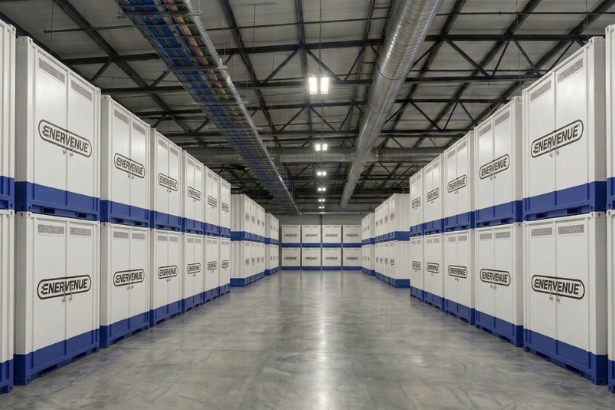
The company has developed what it calls an Aqueous Metal Cell, a water-based metal battery based on nickel-hydrogen chemistry. According to EnerVenue, the technology is designed for long-duration energy storage rather than conventional consumer electronics or electric vehicles.
The company’s original U.S. manufacturing strategy was ambitious.
In March 2022, Kentucky officials announced that EnerVenue planned a $264 million facility in Shelby County, with an initial target of 450 full-time jobs and a planned 1 million-square-foot manufacturing facility.
That plan ultimately changed.
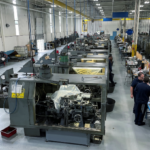
Instead of making Kentucky its first large-scale production base, EnerVenue built its high-volume manufacturing line in Changzhou, one of China’s major industrial and battery-manufacturing clusters.
Latest Update: Why EnerVenue Chose China
The new Changzhou facility is scheduled to open its high-volume manufacturing line on September 24, 2026.
EnerVenue says the first phase will provide 250 MWh of annual production capacity, with a path toward 1 GWh in 2027 and multiple gigawatt-hours as capacity expands.
Reuters reported that the factory is approximately 95% automated and is expected to employ about 400 people by the end of 2026. The company has raised more than $700 million in total, including a $300 million Series B extension announced earlier this year.
The crucial issue, however, was not simply labor cost.
EnerVenue CEO Henning Rath told Reuters that the company reconsidered the Kentucky plan because the technology was not yet ready to scale and because developing custom manufacturing equipment had become expensive.
The company went back to its fourth-generation battery design, improved its performance and cost structure, redesigned the manufacturing line and then chose Changzhou as the location where it could iterate faster.
That distinction matters.
This was not simply a story of an American company moving overseas because Chinese labor is cheaper. Rath pointed instead to the concentration of suppliers, engineers, automation specialists and manufacturing expertise around Changzhou.
EnerVenue itself has described its Changzhou operation as a manufacturing hub supporting the next stage of commercial scale.
Why the Supply Chain Matters
Building a battery factory requires much more than securing a building and installing production equipment.
A factory needs machine builders, automation specialists, materials suppliers, maintenance technicians, process engineers and companies capable of rapidly modifying equipment when production problems appear.
That industrial ecosystem can become a competitive advantage in its own right.
Reuters reported that Rath viewed Changzhou’s concentration of industrial capabilities as a major reason for choosing the region. The cluster provides access to specialists in areas such as hydraulics, pneumatics and automation alongside battery manufacturing expertise.
For a startup attempting to commercialize a new battery architecture, that matters because the first factory is also a learning environment.
The company has to discover which processes work consistently, which machines need redesigning, how materials behave at production scale and where costs can be removed without compromising performance.
In other words, manufacturing itself becomes part of the research and development process.
The Technology Behind the Factory
EnerVenue’s battery technology is different from the lithium-ion systems that dominate today’s energy-storage market.
The company says its Aqueous Metal Cell uses nickel-hydrogen chemistry with a water-based electrolyte. The underlying chemistry has a long history in space applications, including NASA missions, but EnerVenue has redesigned the concept around terrestrial energy storage.
EnerVenue says its fourth-generation cell is designed for up to 30,000 cycles, a 30-year design life and frequent cycling. It also says the system does not require scheduled augmentation over that design life.
Those are company-reported specifications rather than independent performance conclusions, but they explain the commercial proposition EnerVenue is pursuing.
The goal is not simply to sell another battery.
It is to sell energy-storage infrastructure that can operate for decades.
The company has already begun field testing its fourth-generation technology. In May 2026, EnerVenue and Towngas announced a pilot project in Changzhou that combines renewable generation with electric-bus charging and continuously cycles the battery over two-to-four-hour periods.
Expert Insights and Analysis
The EnerVenue case highlights an important distinction in the U.S. battery manufacturing debate: manufacturing incentives and manufacturing capability are not the same thing.
A company can receive tax incentives, secure land and obtain government support while still struggling to assemble the specialized ecosystem needed to manufacture a new product economically.
EnerVenue’s experience also shows why startups can face a different problem from established manufacturers.
A mature battery company may already have qualified suppliers, manufacturing engineers and standardized equipment. A startup building a new chemistry has to develop much of that industrial knowledge while simultaneously trying to raise capital and prove that customers will buy the product.
That creates a difficult feedback loop.
Higher production costs can consume capital. Limited production experience can slow engineering improvements. Delayed production can make fundraising harder. And the company can end up needing a manufacturing environment where iteration happens quickly and relatively efficiently.
Reuters’ reporting suggests that this was central to EnerVenue’s decision.
Rath said the company needed to prove its technology could be industrialized before committing to the scale and capital intensity of the earlier Kentucky strategy.
Broader Implications for U.S. Battery Manufacturing
EnerVenue’s decision does not mean that U.S. battery manufacturing is impossible or that China will necessarily remain the preferred location for every battery company.
It does demonstrate that location decisions are determined by a much broader equation than wages.
For emerging battery companies, the calculation can include:
- Availability of specialized suppliers
- Engineering talent
- Automation expertise
- Factory construction costs
- Equipment lead times
- Access to experienced manufacturing workers
- Speed of prototyping
- Availability of battery-sector infrastructure
- Capital requirements
- Customer proximity
- Regulatory requirements
China has spent decades developing a large battery and industrial manufacturing ecosystem. That accumulated capability can make it easier for companies to move from engineering prototypes toward mass production.
The challenge for the United States is therefore not simply attracting individual factories.
It is building the industrial ecosystem around those factories.
That distinction could become increasingly important as AI data centers, renewable power projects and grid modernization increase demand for energy storage.
For more coverage of the intersection between technology, manufacturing and industrial strategy, see the internal The Tech Marketer technology and industry coverage.
Related History and Comparable Technologies
The battery industry has repeatedly shown that manufacturing scale can become as important as the underlying chemistry.
Lithium-ion batteries provide the clearest example.
The technology was developed through decades of research involving institutions and companies across multiple countries, but East Asian manufacturers eventually built enormous production ecosystems around it.
That ecosystem helped reduce costs, improve manufacturing consistency and accelerate product development.
The same pattern has appeared in solar panels, semiconductors, displays and electric vehicles.
Technology leadership does not automatically translate into manufacturing leadership.
A company can develop an important technology in one country and eventually manufacture it somewhere else because that location has better access to suppliers, equipment, skilled labor or production know-how.
EnerVenue is now attempting to follow a similar path, although its battery chemistry and market focus are different.
What Happens Next?
The immediate test for EnerVenue is straightforward: can the Changzhou factory produce its new batteries consistently at commercial scale?
Opening a factory is only the beginning.
EnerVenue says its first phase targets 250 MWh of annual capacity. The company then plans to move toward 1 GWh in 2027 and larger multi-gigawatt-hour production as demand grows.
The company is already seeing commercial activity in China.
On September 23, EnerVenue announced its first multi-megawatt-hour commercial order: 26 Energy Prism storage units with a combined capacity of 11 MWh for an oilfield in northern China. The first three units are scheduled to ship in December 2026, with the remaining units following in March 2027.
The company also says it has customers or projects across China, Australia, the United States, the European Union, Saudi Arabia and Canada.
The longer-term question is whether EnerVenue eventually establishes manufacturing in North America.
Rath told Reuters that the company wants to serve the North American market and expects to determine the location of a future local factory in 2027, with legislation and regulation among the factors involved.
That means the Kentucky story may not be the end of EnerVenue’s U.S. manufacturing ambitions.
It may instead represent a change in sequence: develop, refine and scale in China first, then consider additional production locations once the technology and business model are more mature.
Conclusion
EnerVenue’s factory decision offers a revealing case study in the difficult economics of rebuilding advanced manufacturing capacity.
The company started as an American battery technology startup with plans for a major Kentucky factory. Four years later, its first high-volume production line is opening in Changzhou, China.
The reason is not reducible to one factor.
Supply-chain density, engineering expertise, production costs, automation and the need to refine an emerging technology all played roles in the company’s decision, according to Reuters and EnerVenue’s own statements.
For U.S. battery manufacturing, the broader lesson is that factories need ecosystems.
Bringing production back to the United States requires more than incentives and construction projects. It requires the suppliers, engineers, equipment makers, skilled workers and production knowledge that allow new technologies to move from promising prototypes to competitive mass-market products.
EnerVenue’s next chapter will show whether the company can use its Chinese manufacturing base to achieve that scale, while eventually expanding production closer to its U.S. roots.
FAQ
1. Why did EnerVenue build its first factory in China?
EnerVenue chose Changzhou because of its concentrated battery supply chain, engineering expertise, manufacturing capabilities and cost advantages. CEO Henning Rath also said the company needed to refine its technology and manufacturing process before scaling.
2. What happened to EnerVenue’s Kentucky factory plan?
EnerVenue previously announced a $264 million Kentucky manufacturing project in Shelby County. The planned facility was expected to create 450 jobs in its initial phase, but the company later abandoned the plan as it changed its manufacturing strategy.
3. What is EnerVenue’s battery technology?
EnerVenue develops an Aqueous Metal Cell based on nickel-hydrogen chemistry and a water-based electrolyte. The company says the technology is designed for long-duration stationary energy storage.
4. How much battery capacity will the China factory produce?
The first phase is designed for approximately 250 MWh of annual capacity. EnerVenue says production is planned to increase to 1 GWh in 2027, followed by further expansion.
5. Does EnerVenue plan to manufacture batteries in the United States?
EnerVenue has said it intends to serve the North American market and expects to determine the location of a future North American factory in 2027.
6. Is EnerVenue’s technology lithium-ion?
No. EnerVenue’s Aqueous Metal Cell is based on nickel-hydrogen chemistry rather than conventional lithium-ion chemistry. The company says its cells do not use lithium or rare earths.
Sources & References
- Reuters, “US battery startup that chose China over Kentucky opens first factory as Trump, Xi meet”
Read the Reuters report - EnerVenue, “EnerVenue’s first multi-megawatt-hour commercial order”
Read EnerVenue’s announcement - Kentucky Governor’s Office, “EnerVenue To Create 450 Full-Time Jobs With New $264 Million Manufacturing Facility in Shelby County”
Read the Kentucky announcement - EnerVenue, “Lithium-free energy storage pioneer EnerVenue appoints internationally renowned tech executive Henning Rath as CEO and closes $300 million Series B funding extension round”
Read the company announcement
GOOGLE TRENDS SECTION
Google Trends Image Suggestion
Suggested image: Google Trends comparison chart for:
- U.S. battery manufacturing
- battery manufacturing
- EnerVenue
- battery factory
- energy storage
Suggested visual: A 12-month U.S. Google Trends line chart highlighting the recent search-interest spike around battery manufacturing, China factory investment and EnerVenue.
Trend Tags and Keywords
U.S. battery manufacturingEnerVenuebattery factorybattery manufacturing ChinaKentucky battery factoryenergy storageAqueous Metal CellU.S. manufacturing