Introduction
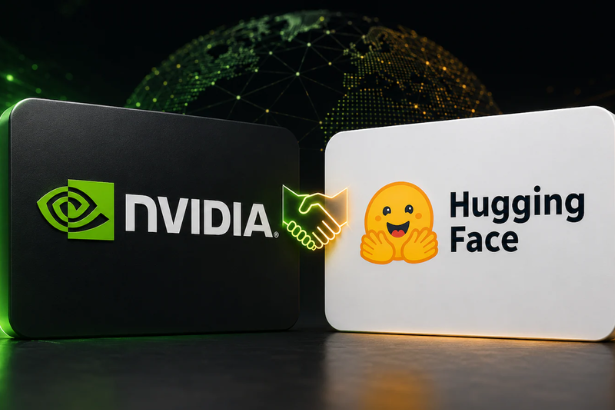
The Nvidia Hugging Face acquisition is one of the biggest signs yet that the AI infrastructure race is moving beyond chips and data centers. Nvidia has agreed to acquire Hugging Face for $12.9303 billion, bringing an enormous developer ecosystem for open models, datasets and AI applications under the world’s leading AI computing company.
The deal is striking for another reason. Nvidia says Hugging Face will remain an open platform, and developers will still be able to choose their models, frameworks, cloud providers, inference services and computing hardware.
That promise is now one of the most important parts of the transaction.
Background and Context
Hugging Face started as a company focused on conversational AI, but evolved into something much larger: a central meeting place for the open AI ecosystem.
Today, Nvidia says more than 18 million developers, researchers and creators use Hugging Face. Its platform contains more than 3 million models, 500,000 datasets and 1 million applications, while more than 200,000 companies use it to discover, evaluate, customize and deploy AI.
That makes Hugging Face strategically different from a typical AI startup.
It is infrastructure for the people building AI.
Nvidia, meanwhile, has spent years moving from being primarily a graphics processor company into becoming the backbone of modern AI computing. Its GPUs power training and inference for many of the industry’s largest AI systems.
The acquisition therefore connects two layers of the AI stack:
Nvidia: computing infrastructure.
Hugging Face: models, datasets, developers and applications.
The combination gives Nvidia a much deeper relationship with the people deciding what AI models get built and deployed.
Latest Update or News Breakdown
The deal was formally announced September 3, 2026, after weeks of reports that Nvidia was in discussions to acquire Hugging Face.
Nvidia’s official announcement puts the transaction value at $12,930,300,000. The company’s SEC filing breaks that into approximately $11.9 billion payable to Hugging Face shareholders, subject to adjustments, plus an equity-based retention program of up to approximately $1 billion for Hugging Face employees who join Nvidia.
The transaction is expected to close during the first half of 2027, assuming customary closing conditions and regulatory approvals are satisfied.
The most important commitment is about openness.
Nvidia says Hugging Face will continue allowing developers to upload and download models and datasets of their choice. It will also continue supporting other silicon vendors and multi-cloud and multi-accelerator development.
In other words, Nvidia is explicitly saying that Hugging Face will not become an Nvidia-only marketplace.
Nvidia CEO Jensen Huang also said Nvidia compute will not be required to build on or deploy through Hugging Face.
That is a significant distinction.
The acquisition is therefore not being pitched as “Nvidia owns the AI model store.” It is being pitched as Nvidia providing more resources to a platform that already sits at the center of open model development.
Why Nvidia Wants Hugging Face
The strategic logic becomes clearer when looking at how AI development is changing.
The industry increasingly needs models that can be downloaded, customized, fine-tuned and deployed on different infrastructure.
Closed AI services remain enormously important, but open-weight models offer developers more control over costs, data, customization and deployment.
Nvidia wants to be involved in both worlds.
The company says it is already the largest contributor of open models and data to Hugging Face, with more than 500 models and 250 open datasets published on the platform.
Buying the platform takes that relationship to another level.
The Deal’s Unusual $12.9303 Billion Price
There is even a bit of AI culture hidden inside the transaction.
The exact $12.9303 billion figure corresponds to the Unicode code point for the Hugging Face emoji, 🤗, according to reporting on the deal.
It is an unusually playful detail for a transaction worth nearly $13 billion, but it also captures how closely the Hugging Face brand is associated with its developer community.
Expert Insights or Analysis
The Nvidia Hugging Face acquisition should be viewed less as a conventional software acquisition and more as a bet on where AI development is heading.
For Nvidia, selling GPUs is only one part of the opportunity.
The bigger opportunity is becoming embedded throughout the AI development lifecycle.
A developer might discover a model on Hugging Face, modify it, evaluate it, train it and eventually deploy it. If Nvidia can become deeply integrated into those workflows, it gains influence over demand for compute without requiring Hugging Face itself to become an Nvidia-only service.
That is particularly useful as AI hardware becomes more competitive.
Nvidia’s SEC filing explicitly acknowledges that other silicon vendors will continue to be supported by Hugging Face. It also identifies regulatory and geopolitical risks surrounding open-source foundation models, including potential government restrictions affecting models and datasets originating in different regions.
That is a reminder that the open AI ecosystem is not just a technology story.
It is becoming a policy and infrastructure story too.
Nvidia’s Stock Reaction
The acquisition also immediately became an Nvidia stock story.
Shares were higher following the announcement, according to reporting from Yahoo Finance and AP.
The market’s reaction makes sense. Investors are not simply being asked to value a $12.93 billion software acquisition. They are being asked to assess whether Hugging Face can help Nvidia extend its position from AI hardware into the software and developer layer surrounding that hardware.
That is potentially much more valuable than the purchase price alone suggests.
Broader Implications
The Nvidia Hugging Face acquisition could reshape several parts of the AI market.
Open AI Gets a Powerful New Backer
Hugging Face has become one of the central distribution points for open models.
Nvidia’s capital, engineering resources and infrastructure could help it scale faster, improve reliability and expand model evaluation and deployment capabilities. Nvidia explicitly says those are among the areas where it expects the acquisition to add resources.
Nvidia Gets Closer to Developers
Nvidia has historically benefited from developers building around its hardware.
Hugging Face gives it direct access to an enormous developer community working with models and applications.
That could help Nvidia understand what developers actually need before those requirements turn into hardware purchasing decisions.
Competitors Will Be Watching
The acquisition creates an uncomfortable strategic question for companies building alternative AI chips.
If Hugging Face genuinely remains hardware-neutral, AMD, Google, AWS and other accelerator providers can continue participating.
But Nvidia will now own the platform where much of that activity happens.
The distinction between technical neutrality and strategic influence will be closely watched.
Open Source Faces a New Corporate Test
Hugging Face’s independence was part of its appeal.
Now one of the world’s most valuable technology companies is becoming its owner.
That does not automatically mean the platform becomes less open. Nvidia has made explicit commitments to maintaining access and supporting other hardware.
But developers will inevitably watch what happens after the deal closes.
For more analysis on AI platforms, semiconductors and the business of artificial intelligence, see The Tech Marketer’s AI coverage.
Related History or Comparable Technologies
The closest historical comparison may be Microsoft’s acquisition of GitHub.
GitHub had become foundational infrastructure for software developers before Microsoft acquired it. The fundamental question was similar: could a giant technology company own a crucial developer platform without destroying the neutrality that made the platform valuable?
Hugging Face now faces a comparable test.
The difference is that AI models are becoming a strategic resource in their own right.
A repository containing millions of models and datasets is not simply a place to store code. It is increasingly part of the machinery through which companies discover, customize and deploy AI.
There is another comparison inside Nvidia itself.
The company has spent years expanding its CUDA software ecosystem around its GPUs. CUDA helped Nvidia turn hardware into a broader developer platform.
Hugging Face gives Nvidia access to a much broader, hardware-independent AI community.
That could prove strategically important as the market moves toward heterogeneous AI infrastructure.
What Happens Next
The acquisition is expected to close in the first half of 2027, giving Nvidia and Hugging Face several months to work through regulatory and operational requirements.
The most important developments to watch are:
- Regulatory review: Authorities will examine the transaction and its potential impact on AI competition.
- Platform neutrality: Developers will watch whether non-Nvidia hardware continues receiving comparable support.
- Model distribution: Nvidia could expand Hugging Face’s infrastructure for hosting, evaluating and deploying open models.
- AI enterprise adoption: The combination could make customized open models easier for businesses to deploy.
- Developer reaction: Hugging Face’s community will ultimately determine whether the acquisition strengthens or weakens the platform’s appeal.
There is also a larger strategic question.
Nvidia has already established itself as the company supplying much of the computing power behind the AI boom. With Hugging Face, it is making a major move toward owning a piece of the developer layer that determines what gets built on that infrastructure.
If successful, Nvidia will not just sell the picks and shovels for AI.
It will have a much larger role in the marketplace where the builders find the blueprints.
Conclusion
The Nvidia Hugging Face acquisition is a $12.93 billion statement about where Nvidia believes AI is going next.
The chipmaker is buying a platform used by more than 18 million developers, researchers and creators, with millions of models, datasets and applications already hosted across its ecosystem.
Yet the most consequential part of the deal may be what Nvidia says it will not do.
It says Hugging Face will remain open, will support other hardware and cloud providers, and will not require Nvidia compute.
Now the industry has to see whether that promise survives integration.
If it does, Nvidia could give open AI an enormous infrastructure boost while gaining a powerful new position in the software layer. If developers begin to perceive Hugging Face as an Nvidia-controlled gateway, the company’s biggest strategic asset could become its biggest challenge.
Either way, the acquisition makes one thing clear: the AI platform war is no longer just about who has the fastest chip.
It is increasingly about who controls the ecosystem around the models.
FAQ
1. What is the Nvidia Hugging Face acquisition worth?
Nvidia has agreed to acquire Hugging Face for $12.9303 billion. The SEC filing describes approximately $11.9 billion for Hugging Face shareholders and up to approximately $1 billion in employee retention awards.
2. Why is Nvidia buying Hugging Face?
Nvidia wants to strengthen its position in open AI models, developer tools and AI deployment while adding resources to one of the world’s largest open-model communities.
3. Will Hugging Face remain open source after Nvidia’s acquisition?
Nvidia says Hugging Face will remain an open platform and continue supporting open-source and open-weight models, multiple clouds and multiple accelerator platforms.
4. How many developers use Hugging Face?
Nvidia says more than 18 million developers, researchers and creators use Hugging Face. The platform hosts more than 3 million models, 500,000 datasets and 1 million applications.
5. Will Hugging Face require Nvidia GPUs?
Not according to Nvidia’s stated plans. Jensen Huang said Nvidia compute will not be required to build on or deploy through Hugging Face, and the company says the platform will continue supporting other silicon vendors.
6. When will Nvidia’s Hugging Face acquisition close?
Nvidia expects the transaction to close during the first half of 2027, subject to customary closing conditions and regulatory approvals.
Trend References