Introduction
ASML stock is drawing fresh attention after the Dutch semiconductor equipment manufacturer reported record third-quarter revenue and raised its full-year 2026 sales outlook on October 14. The results offer a look at an increasingly important part of the artificial intelligence boom: the specialized machines required to manufacture advanced chips.
ASML reported third-quarter net sales of €11.7 billion and net income of approximately €5.0 billion. It now expects full-year 2026 net sales of €44 billion to €45 billion, raising the lower end of its previous forecast. The company also expects fourth-quarter sales of €14.2 billion to €15.2 billion.
The bigger signal came from management’s assessment of demand. ASML said its currently planned supply for both 2027 and 2028 would not fully meet customer demand, and it is exploring ways to expand capacity further. Some customers are already discussing potential orders for 2029 and 2030, according to the company’s official quarterly results announcement.
For investors and technology watchers, the results highlight both the opportunity created by AI infrastructure spending and the practical limits of manufacturing the tools that make advanced chips possible.
Background and Context: Why ASML Matters to the AI Chip Industry
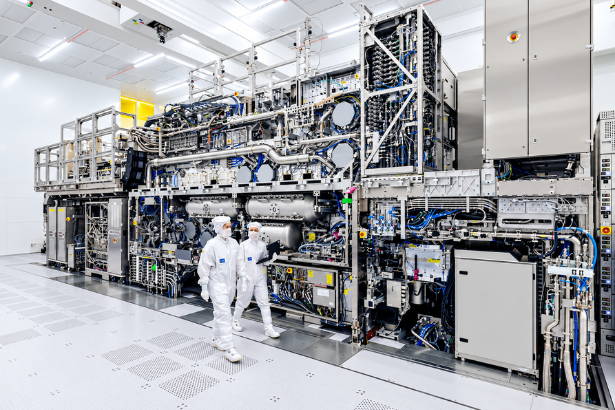
ASML is a Netherlands-based supplier of semiconductor manufacturing equipment. Its machines use lithography to transfer intricate circuit patterns onto silicon wafers, a core step in making modern processors and memory chips.
The company’s extreme ultraviolet, or EUV, lithography systems are particularly important for producing advanced semiconductor designs at scale. These systems are highly complex, expensive machines that must operate within demanding precision and reliability requirements.
ASML occupies a strategically important position in the semiconductor supply chain because it is the only supplier of commercial EUV lithography systems. That does not mean it manufactures the chips themselves. Instead, it sells equipment and related services to semiconductor manufacturers, including companies investing in production for AI accelerators, high-performance computing, smartphones, and memory.
The distinction is central to understanding ASML stock. Its business depends not simply on how many AI chips consumers buy, but on how much chipmakers invest in factories, manufacturing technology, upgrades, and future production capacity.
As companies build more data centers and expand AI computing infrastructure, semiconductor manufacturers may need additional equipment. That creates a potential tailwind for ASML, although actual orders and revenue depend on customer investment decisions, delivery schedules, and the company’s ability to manufacture and install its systems.
Latest Update: ASML’s Q3 2026 Results and Raised Outlook
ASML’s October 14 announcement delivered three key figures.
| Financial metric | Q3 2026 / latest outlook |
|---|---|
| Third-quarter net sales | €11.7 billion |
| Third-quarter net income | €5.0 billion |
| Third-quarter gross margin | 57.5% |
| Q4 2026 net sales guidance | €14.2 billion to €15.2 billion |
| Full-year 2026 net sales guidance | €44 billion to €45 billion |
| Full-year 2026 gross margin guidance | Around 56% |
Figures are rounded from ASML’s official results release. The company’s fourth-quarter and full-year figures are guidance, not completed results.
AI demand is extending beyond the next few quarters
ASML said customers have continued to increase their short- and medium-term equipment demand forecasts, driven primarily by expectations for the scale and duration of AI-related investment.
The company had already communicated plans to increase capacity for certain EUV and deep ultraviolet (DUV) immersion systems. But management now expects the supply currently planned for 2027 and 2028 to fall short of customer demand. ASML is investigating additional capacity expansion for 2028 beyond the previously communicated plan.
That is a meaningful development for the industry’s planning horizon. Customers are not only looking for machines for immediate projects. Some are discussing potential orders as far ahead as 2029 and 2030.
Reuters’ report on ASML’s latest outlook describes the demand pressure and the company’s efforts to expand supply. CNBC’s earnings coverage also focuses on the relationship between AI demand, equipment orders, and production capacity.
ASML’s sales forecast is rising, but capacity remains the constraint
ASML raised the lower end of its full-year revenue forecast from €43 billion to €44 billion, while keeping the upper end at €45 billion. Its fourth-quarter forecast of €14.2 billion to €15.2 billion also reflects expectations for a strong finish to the year.
The company reported that installed-base management sales, which include service and field-option sales for systems already in use, reached approximately €3.3 billion in the quarter. ASML said strong demand for productivity upgrades contributed to its gross margin exceeding guidance.
That service business matters because the installed base of equipment can generate revenue after the original machines have been delivered. It also gives customers ways to improve the productivity of existing systems while navigating limits on new equipment supply.
Expert Insights and Analysis: What the Results Say About AI Infrastructure
ASML’s results illustrate a broader feature of the AI investment cycle: expanding computing capacity requires more than designing faster chips or building new data centers.
The supply chain includes semiconductor design, wafer fabrication, lithography equipment, materials, packaging, testing, networking, power, and cooling. Each layer has its own lead times and constraints. If demand accelerates faster than one part of the chain can expand, the shortage can affect investment plans elsewhere.
ASML’s comments suggest that demand for its equipment is running ahead of its currently planned supply for the next two years. This is evidence of strong customer expectations, but it should not be interpreted as a guarantee that every potential order will become revenue. Customer plans can change with market conditions, financing, chip demand, and factory construction schedules.
There is also a difference between a strong order outlook and an effortless production ramp. Lithography machines are sophisticated systems that require specialized components, engineering expertise, assembly, installation, and customer qualification. Expanding output is not equivalent to adding a conventional production line overnight.
For ASML, the central business question is how quickly it can expand capacity while maintaining system quality, delivery schedules, and profitability. For chipmakers, the question is whether planned AI demand will justify the large investments needed to build and equip additional factories.
Broader Implications: The AI Boom Has a Hardware Bottleneck
The latest results have implications beyond ASML itself. The company supplies tools used by major chip manufacturers, so its outlook can offer a window into how those customers are planning their production capacity.
Companies including TSMC, Samsung, and Intel are part of the global semiconductor manufacturing ecosystem. Their investment decisions are influenced by expected demand for AI accelerators, processors, and memory. When several major customers seek more equipment at the same time, a specialized supplier can face competing demands for production slots and delivery windows.
The situation may also encourage more investment in productivity improvements. Upgrading installed machines can help chipmakers get more output from existing facilities, potentially easing some constraints while new factories and tools are being prepared.
However, a tight supply of lithography systems does not automatically mean every company in the semiconductor sector will benefit equally. Chip designers, foundries, memory suppliers, equipment manufacturers, and data-center operators face different cost structures and market risks.
For readers tracking the relationship between AI infrastructure and industrial technology, The Tech Marketer could link internally to a related explainer on AI infrastructure and semiconductor supply chains. A useful companion article would explain why chip production capacity takes years to plan and bring online.
Related History: EUV Lithography and the Long Road to Advanced Chips
Advanced semiconductor manufacturing depends on repeatedly printing extremely small patterns onto silicon wafers. Lithography systems project those patterns through a complex optical process, helping define the structures that eventually become transistors and interconnects.
EUV lithography uses light with a wavelength of 13.5 nanometers. Its adoption required years of engineering and investment across optics, light sources, masks, materials, and manufacturing processes. The resulting systems are among the most technically demanding pieces of equipment used in commercial chip production.
ASML also supplies DUV lithography equipment, which remains important across many chipmaking processes. EUV and DUV tools serve different needs within a broader production environment, and customers can use upgrades to improve output from existing equipment.
This history helps explain why capacity is difficult to increase rapidly. ASML cannot expand production solely by responding to a short-term rise in orders. Its own supply chain and the specialized nature of its machines shape how quickly additional systems can be delivered.
The company’s quarterly results and investor materials provide further context on sales, margins, production plans, and management’s outlook.
What Happens Next?
Several developments will shape how the ASML story evolves over the coming quarters.
- Capacity expansion plans. Investors will be watching for more detail on how ASML intends to increase production beyond its previously communicated plans for 2027 and 2028.
- Customer capital spending. Announcements from major chip manufacturers will help show whether demand for new equipment remains aligned with current expectations.
- Quarterly guidance and deliveries. The company’s fourth-quarter results and future guidance will show how demand translates into completed shipments and reported revenue.
- Productivity upgrades. Service and upgrade sales could remain important as customers seek to improve output from installed equipment.
- Geopolitical and trade restrictions. Export controls and changing trade rules can affect where equipment may be sold and how semiconductor manufacturers plan their operations.
- The pace of AI investment. Data-center construction and spending on AI computing remain important drivers, but investment cycles can change if customer demand or expected returns shift.
For anyone following ASML stock, these are measurable business factors to track rather than relying solely on a day’s share-price move or a headline about AI demand.
Conclusion
ASML’s third-quarter 2026 results reinforce its importance in the semiconductor equipment supply chain. Record quarterly sales, a higher full-year revenue outlook, and management’s warning that planned supply may not satisfy customer demand in 2027 and 2028 all point to sustained pressure on chipmaking capacity.
The AI boom is creating demand for more advanced chips, but those chips depend on highly specialized manufacturing tools. ASML’s challenge is to expand output in a business where equipment is technically complex and production capacity takes time to build.
For investors, the results provide important information about revenue expectations, margins, customer demand, and the company’s expansion plans. They do not remove the risks associated with valuation, execution, customer spending, or the broader semiconductor cycle. The next stage of the story will depend on how effectively ASML turns strong demand into delivered systems and sustained financial performance.
FAQ
1. Why is ASML stock in the news today?
ASML reported its third-quarter 2026 results on October 14, posting €11.7 billion in net sales and €5.0 billion in net income. It also raised the lower end of its 2026 sales outlook and said planned equipment supply may not fully meet customer demand in 2027 and 2028.
2. What were ASML’s Q3 2026 financial results?
ASML reported net sales of €11.662 billion, net income of €4.960 billion, and a gross margin of 57.5%. These figures were published in the company’s official third-quarter results release.
3. Why is AI demand important for ASML?
AI infrastructure requires advanced processors and memory chips. Semiconductor manufacturers need lithography and other manufacturing equipment to produce those chips, so increased factory investment can drive demand for ASML’s systems and services.
4. What is ASML forecasting for full-year 2026 sales?
ASML expects full-year 2026 net sales of €44 billion to €45 billion, with a gross margin around 56%. This is management guidance and should not be confused with final full-year results.
5. Can ASML meet demand for chipmaking equipment in 2027 and 2028?
ASML said its supply as currently planned for both years will not fully meet customer demand. The company is investigating ways to expand 2028 capacity beyond the increase it had previously communicated.
6. What makes ASML’s EUV machines important?
Extreme ultraviolet lithography systems use 13.5-nanometer light to print extremely fine patterns needed in advanced semiconductor manufacturing. ASML is the only commercial supplier of EUV lithography systems.
7. Does strong demand automatically mean ASML stock will rise?
No. Share prices can reflect expectations before earnings are announced and can respond to valuation, guidance, margins, production risks, broader market conditions, and investor positioning. Strong company results do not guarantee a particular stock-price outcome.
Sources & References
- ASML, “ASML reports €11.7 billion total net sales and €5.0 billion net income in Q3 2026”
https://www.investor.asml.com/news-releases/news-release-details/asml-reports-eu11.7-billion-total-net-sales-and-eu5.0-billion-net-income-q3-2026 - CNBC, “ASML 3Q earnings: AI demand, orders and capacity”
https://www.cnbc.com/2026/10/14/asml-3q-earnings-ai-demand-orders-capacity.html - Bloomberg, “ASML Raises Full-Year Sales Outlook as AI Boom Drives Demand”
https://www.bloomberg.com/news/articles/2026-10-14/asml-raises-full-year-sales-outlook-as-ai-boom-drives-demand - Reuters, “ASML forecasts Q4 sales above expectations on AI chip demand”
https://www.reuters.com/business/asml-forecasts-q4-sales-above-expectations-ai-chip-demand-2026-10-14/ - ASML Investor Relations, “Quarterly results”
https://www.investor.asml.com/quarterly-results - ASML, “Press releases and announcements”
https://www.investor.asml.com/news/press-releases-and-announcements