The Apple TV 4K 2026 announcement marks a shift in Apple’s approach to the living room. Beyond sharper streaming and faster hardware, the new model is designed to play a bigger role in voice control and Apple’s connected-home experience. Apple has highlighted onboard microphones, a more powerful processor and a Siri AI experience intended to make finding content and controlling compatible devices more natural.
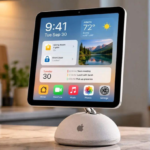
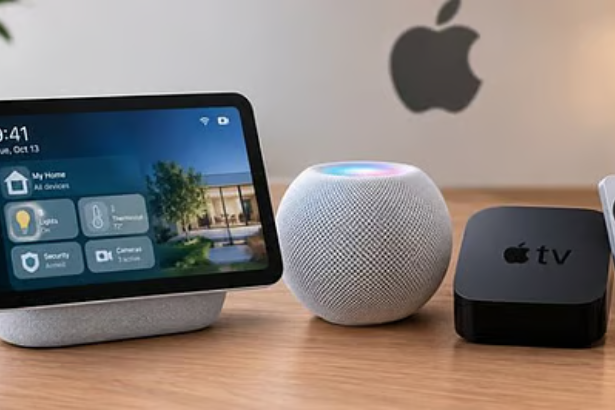
The launch also arrives alongside Apple’s new HomeView smart home hub and HomePod mini 2. That context matters: Apple is not simply refreshing a streaming box, but building a more connected set of products around entertainment, voice assistance and home automation.
The Google Trends screenshot shows a rise in searches for “apple tv 4k,” with related queries including “new Apple TV,” “HomePod mini 2” and “Apple HomePod.” The supplied coverage points to three main consumer questions: what has changed, how much the new device costs and whether the upgrades make it worth buying.
Background and Context: Apple TV Is Becoming More Than a Streaming Box
Apple TV has traditionally focused on streaming services, apps, games and access to Apple’s entertainment ecosystem. It has also served as a home hub for compatible smart home accessories, giving it a role beyond video playback.
The new model appears designed to strengthen both sides of that job. A faster processor can help apps and interfaces feel more responsive, while onboard microphones could make hands-free interaction easier without requiring users to speak into a remote control.
The other piece is Siri. Apple is presenting the new Apple TV 4K as part of its broader push to bring its AI-powered assistant into everyday household interactions. That could mean more conversational ways to search for films and television shows, alongside voice control for compatible smart home devices.
However, a feature announcement does not guarantee that every capability will be available everywhere at launch. Siri features, language support, regional availability and smart home compatibility can vary. Buyers should check the specifications and software details for their market before making a purchase.
Latest Update: What Apple Announced About Apple TV 4K 2026
1. A faster processor
Apple’s official October 13 announcement describes the new Apple TV 4K as a faster model designed to support its expanded entertainment and Siri AI experience.
A more powerful chip can improve app responsiveness and provide additional headroom for demanding software features. The practical difference will depend on the apps people use, the performance of the previous generation and how much of the new processing capability is exposed through everyday tasks.
For streaming customers, the most meaningful improvements are likely to be those they notice repeatedly: faster navigation, smoother app switching and a more responsive interface. Apple’s final technical specifications should be used to confirm the processor model and performance claims.
2. Onboard microphones and hands-free Siri
One of the headline changes highlighted by CNET is the addition of onboard microphones. Its Apple TV 4K 2026 report describes the new hardware alongside the updated processor and raises questions about the price.
Built-in microphones could make it easier to ask Siri to find a film, search for a show or control compatible home devices without picking up the remote. That could make Apple TV feel more like a home assistant as well as a media player.
The value of hands-free control will depend on how reliably the system responds in a room with a television playing, background conversation or several people present. Apple will also need to make microphone controls and privacy settings clear to users.
3. Siri AI and conversational content discovery
Apple says the new Apple TV 4K supports a more conversational Siri AI experience for finding movies and television shows. In principle, that could reduce the friction of navigating separate streaming apps and searching for content with a remote.
A more natural assistant could help people describe what they want to watch rather than remembering an exact title. But the quality of the experience will depend on which services are supported, how accurately Siri interprets requests and whether results are relevant.
The most important benchmark is not the presence of AI in the product description. It is whether people can find something to watch faster and complete common tasks with fewer steps.
4. HomePod mini 2 expands the same ecosystem
The Apple TV refresh is arriving alongside the HomePod mini 2, which is also attracting search interest. The Verge’s HomePod mini 2 preorder coverage provides a buying-focused companion to the launch.
The two products serve different roles. Apple TV is centered on the television and entertainment experience, while HomePod mini is a compact smart speaker. Together, they could give households more options for voice interaction and compatible home controls across different rooms.
Buyers should compare the products based on how they intend to use them. Someone who mainly streams video may prioritize Apple TV, while a household looking for a small speaker and voice interface may prefer HomePod mini 2.
5. Price could be the deciding factor
CNET’s coverage explicitly questions the new Apple TV’s price. That makes pricing an important part of the story, especially for customers who already own a recent Apple TV 4K.
Before recommending an upgrade, compare the official price in your country with the cost of the previous model, the actual processor change, microphone functionality and Siri features available at launch. Also consider whether a television or sound system already supports the streaming formats you need.
A higher price can be justified if the product meaningfully improves daily use. It is harder to justify if the new features are limited, arrive later through software updates or duplicate functions already available through another device.
Expert Insights and Analysis: Is Hands-Free Siri Enough to Justify an Upgrade?
The new Apple TV 4K should be evaluated as a combination of hardware and software. Onboard microphones and a faster processor are concrete hardware changes, but their value depends on how Apple uses them.
Three questions are especially important.
Does Siri make content discovery better? Streaming libraries are fragmented across apps, and viewers often spend more time browsing than watching. If Siri can interpret requests and return useful results across supported services, it could make Apple TV more convenient. If it mainly replicates existing voice search, the improvement may feel incremental.
Is hands-free control reliable? Built-in microphones could reduce dependence on the remote, but performance in a real living room is the test. Recognition accuracy, background noise, accidental activation and clear privacy controls all matter.
Does the device justify its cost for existing owners? Customers with an older streaming box may see a substantial benefit from faster performance and new voice features. People with a recent Apple TV 4K may find fewer reasons to upgrade unless the new features are both useful and exclusive to the new hardware.
The same logic applies to the wider smart home lineup. A connected ecosystem becomes valuable when the products work together without requiring constant setup or troubleshooting. A faster streaming box is useful; a streaming box that also improves everyday home interactions could be more valuable.
Broader Implications: Apple Wants the Living Room to Be a Smart Home Control Center
The new Apple TV 4K fits into a broader strategy that links entertainment with home automation. Apple TV already occupies a central place in many living rooms. Adding a stronger voice interface could help turn it into a more accessible control point for compatible accessories and household routines.
That creates an opportunity for Apple to deepen the role of its services and devices in daily life. It may also encourage customers to add HomePod speakers and other compatible accessories. The company can make its ecosystem more attractive when each device adds a useful capability to the others.
But this strategy depends on openness and reliability. Consumers often have smart devices from different manufacturers, and they do not want to replace everything they own to gain one new feature. Compatibility with relevant smart home standards and clear support information will therefore be important.
Privacy is another factor. A device with onboard microphones needs understandable controls that let users know when voice features are active and how they can be disabled. Apple’s privacy positioning can be an advantage, but it must be supported by clear settings and dependable behavior.
Internal link suggestion: Link the phrase “Apple’s smart home ecosystem” to a related smart home or Apple Home explainer on The Tech Marketer. Replace the homepage link with the exact URL of the most relevant published article before publication.
Related History: From Apple TV to a Connected Home Platform
Apple TV began as a way to bring digital media to the television. Over time, it evolved into a platform for streaming apps, games, Apple services and smart home functions.
The addition of voice assistants across the technology industry changed expectations for these devices. Streaming boxes increasingly compete on more than picture quality: interface design, search, recommendations, voice control and integration with other products all shape the experience.
Apple’s broader HomeView and HomePod mini 2 launch suggests the company wants these functions to work together more closely. A display hub can provide a shared screen, a smart speaker can offer room-level audio and voice interaction, and Apple TV can anchor the entertainment setup.
That approach is not unique to Apple, but the company’s opportunity is to make the components feel cohesive for customers who already use its devices. Whether that works will depend on real-world software integration, not just a coordinated product launch.
What Happens Next?
The next useful signal will come from hands-on reviews and customer experience after the new Apple TV 4K becomes available. Reviewers should test the speed difference, microphone pickup, Siri accuracy, app support and how well the device controls compatible home accessories.
Before buying, consider the following checklist:
- Compare the new model’s official local price with the previous generation.
- Confirm which Siri AI features are available in your country and language.
- Check whether hands-free microphone functionality can be configured to suit your privacy preferences.
- Verify support for the streaming services, video formats and audio equipment you use.
- Consider whether your current Apple TV already meets your needs.
- Compare the role of Apple TV with HomePod mini 2 if your priority is voice control rather than television streaming.
Apple’s broader smart home plans will also be worth watching. If the company makes Siri more capable and expands accessory support, the new Apple TV could become a more important part of the home. If the improvements remain modest or fragmented across software updates, the upgrade may appeal mainly to customers with older hardware.
Conclusion
The Apple TV 4K 2026 refresh brings a faster processor, onboard microphones and a more prominent Siri AI role to Apple’s streaming platform. Those changes could make it more useful as both an entertainment device and a home control point, particularly when paired with HomePod mini 2 and the wider Apple smart home ecosystem.
The main question is value. Existing Apple TV owners need to know whether the new features justify the price, while new buyers should compare the product with their actual streaming and smart home needs. Hardware upgrades create potential, but dependable voice control, useful search results and strong compatibility will determine whether this model feels like a meaningful step forward.
FAQ
What is new in the Apple TV 4K 2026?
The new model is announced with a faster processor, onboard microphones and a more prominent Siri AI experience for content discovery and compatible smart home control.
Does the new Apple TV 4K have built-in microphones?
Yes. CNET’s launch coverage identifies onboard microphones as one of the key hardware changes. Check Apple’s official technical specifications for the final details about voice features and controls.
What does Siri AI do on the new Apple TV 4K?
Apple describes a more conversational Siri experience intended to help users find movies and television shows. The practical benefits depend on supported services, feature availability and how accurately the assistant interprets requests.
Is the Apple TV 4K 2026 worth upgrading to?
It depends on your current device and the local price. Owners of older models may benefit more from faster hardware and hands-free voice control. Owners of a recent Apple TV 4K should compare the confirmed features with what their existing device already does.
What is the difference between Apple TV 4K and HomePod mini 2?
Apple TV 4K is a streaming device designed for a television, while HomePod mini 2 is a compact smart speaker. They can serve complementary roles in Apple’s home ecosystem, depending on supported features and configuration.
Can the new Apple TV 4K control smart home devices?
Apple positions Apple TV as part of its connected-home platform. The devices and routines available to users depend on compatible accessories, software support and the features enabled in their region.
Where can I find the official Apple TV 4K 2026 price?
Check Apple’s official Apple TV announcement and local Apple Store listing for the price in your market. Do not assume that a US price applies internationally.
Sources & References
- Apple, “Apple unveils the new Apple TV 4K, supercharged by Siri AI.” Apple Newsroom, October 13, 2026. Read the official announcement.
- The Verge, “Apple’s HomePod Mini 2 is available to preorder.” Read the coverage.
- CNET, “Apple TV 4K 2026 Gains Onboard Mics and Better Processor, but Whoa, That Price.” Read the review and analysis.