Introduction
Voice of customer in manufacturing is becoming an important part of business growth for manufacturers that want to retain customers, improve products, and compete on more than price.
Manufacturing companies spend considerable time tracking orders, monitoring production schedules, managing quality, and negotiating contracts. These activities are essential, but they do not always reveal how customers perceive the business or what they expect from a supplier.
A customer may continue placing orders while becoming increasingly frustrated with delivery communication. Another may appreciate a product’s quality but believe the company is difficult to work with. A third may be evaluating competitors because a supplier has not kept pace with changing technical requirements.
Those signals can remain hidden until an order declines or a customer leaves.
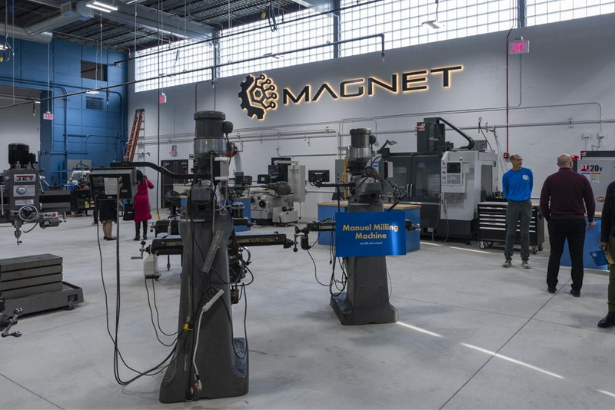
In a September 2026 article, Ohio-based manufacturing organization MAGNET highlighted this problem through its discussion of formal Voice of Customer research. The central lesson was straightforward: companies can believe they understand their customers while overlooking the language, priorities, and concerns customers actually use to evaluate them.
For manufacturers operating in a competitive U.S. market, that disconnect can affect customer retention, sales performance, product development, and long-term growth.
A well-designed Voice of Customer program gives businesses a practical way to identify these gaps. It turns conversations into evidence that leaders can use when making decisions about products, service, pricing, and strategy.
The objective is not simply to ask customers whether they are satisfied. It is to understand what matters to them, why it matters, and what the business should do differently as a result.
Background and Context: What Is Voice of Customer in Manufacturing?
Voice of Customer, commonly abbreviated as VoC, is a structured process for collecting and analyzing information about customers’ needs, expectations, experiences, and perceptions.
In manufacturing, that information can come from several sources:
- Interviews with current customers.
- Feedback from former customers.
- Conversations with prospects who chose another supplier.
- Customer service and quality complaints.
- Sales discussions and lost-deal reviews.
- Surveys and satisfaction scores.
- Product returns and warranty claims.
- Account reviews and recurring business meetings.
The important distinction is that VoC is not simply the collection of feedback. It involves identifying patterns, understanding the reasons behind them, and translating those findings into business decisions.
For example, a manufacturer might discover that customers do not choose it primarily because of its product range. Instead, they value its ability to respond quickly when a production problem occurs.
That finding could change how the company presents its services, trains its sales team, structures customer support, and prioritizes investments.
Another manufacturer might learn that customers see its technical support as a major strength but find order updates confusing. The company could then improve communication without making an expensive change to its production equipment.
These insights matter because the supplier’s internal view of its strengths may differ from the customer’s actual experience.
Why traditional customer feedback can miss the bigger picture
Many manufacturers already collect customer information. The problem is that it often remains fragmented across departments.
Sales teams hear objections during negotiations. Customer service handles complaints. Quality teams investigate defects. Operations managers track delivery performance. Executives review revenue and account profitability.
Each department sees part of the customer relationship.
Without a process for bringing those perspectives together, the company may struggle to identify the underlying problem.
A customer who complains about late deliveries, for instance, might actually be concerned about unpredictable communication. The physical delay is one issue, but uncertainty about when the order will arrive creates a separate operational challenge for the customer.
A structured conversation helps distinguish between these problems.
Latest Update: Why Customer Insight Matters in the Current Manufacturing Market
Manufacturers must make decisions in an environment shaped by changing demand, investment requirements, production costs, and customer expectations.
The latest available U.S. Census Bureau manufacturing orders report, released October 2, 2026, provides useful context.
For August 2026, new orders for manufactured goods increased by $0.7 billion, or 0.1%, to $663.5 billion. Shipments were virtually unchanged at $658.6 billion, while unfilled orders rose 0.6% to $1,609.6 billion.
These figures indicate a mixed operating environment rather than a simple story of uniform expansion. The data is available through the Census Bureau’s Monthly Full Report on Manufacturers’ Shipments, Inventories, and Orders.
For manufacturers, the implication is that operational and commercial decisions need to be grounded in more than assumptions about market demand.
When orders change, leaders need to understand why. Is the customer reducing purchases because its own market is weakening? Is a competitor offering better terms? Has the customer’s product design changed? Is the supplier failing to meet delivery or service expectations?
Aggregate industry data cannot answer those questions for an individual business.
Customer research can help.
Customer retention deserves the same attention as new business
Manufacturing sales cycles can involve technical reviews, qualification processes, purchasing approvals, and lengthy contract negotiations.
Winning a new account may require significant time and resources. Losing an established customer can therefore affect revenue, production planning, and future sales opportunities.
Yet customer relationships can deteriorate gradually.
A supplier may miss several delivery windows, respond slowly to technical questions, or fail to communicate changes in lead times. Individually, each issue may seem manageable. Together, they can persuade a customer to investigate alternatives.
Regular customer conversations help businesses identify dissatisfaction before it becomes a purchasing decision.
They can also reveal opportunities to expand existing relationships by identifying new applications, additional product requirements, or service improvements that customers would value.
Expert Analysis: Five Ways Voice of Customer Can Improve Manufacturing Performance
1. Identify what customers actually value
Manufacturers often describe their strengths using internal language.
A company might emphasize precision engineering, production capacity, certifications, or a broad product portfolio. Those capabilities may be important, but customers may prioritize something different.
A purchasing manager might value predictable lead times. An engineer may care most about technical responsiveness. An operations leader may prioritize consistent product quality because a defect can interrupt an entire production line.
VoC interviews help uncover these differences.
Instead of assuming that every customer buys for the same reason, manufacturers can identify which benefits matter to different segments.
That information can improve marketing messages, sales presentations, account planning, and product positioning.
It can also help businesses avoid competing exclusively on price when customers are willing to pay for reliability, expertise, or reduced operational risk.
2. Find problems before customers switch suppliers
Customers do not always communicate dissatisfaction directly.
Some may avoid difficult conversations with their account manager. Others may believe that repeated complaints will not lead to meaningful changes.
By the time purchasing volumes decline, the customer may already have started qualifying another supplier.
A structured VoC process creates an opportunity to uncover concerns earlier.
Manufacturers should consider speaking with customers who have reduced order volumes, experienced recurring service problems, or stopped purchasing particular products.
The goal is to understand the experience, not to pressure the customer into placing another order.
Useful questions include:
- What has become more difficult about working with us?
- Where do we create unnecessary work for your team?
- What do you wish we communicated earlier?
- What could cause you to consider another supplier?
- Which part of our service would you change first?
Answers can reveal problems that internal performance reports do not capture.
3. Improve product development and technical support
Customer feedback can help manufacturers distinguish between features customers genuinely need and features that simply sound attractive internally.
An engineering team may be considering a new product configuration, additional customization options, or a more advanced technical feature.
Before investing heavily, the company can speak with customers to understand the operational problem the proposed change is intended to solve.
These conversations can clarify which requirements are essential, which are optional, and which would create little practical value.
They may also reveal unmet needs that the company has not considered.
For manufacturers serving specialized industrial markets, this insight can be especially valuable because customers often understand the conditions in which a product must operate.
Customer input should not replace engineering validation, safety requirements, or formal product testing. It should help teams prioritize the problems worth solving.
4. Make sales conversations more relevant
A sales team that understands why customers buy can have more productive conversations.
Instead of presenting the same list of capabilities to every prospect, salespeople can connect the company’s offering to the customer’s specific priorities.
For one account, that might mean emphasizing quality consistency. For another, it could mean engineering support or the ability to accommodate changing production requirements.
VoC findings can also improve lost-deal analysis.
When a prospect selects another supplier, the manufacturer should try to understand the decision. Was the difference price, technical fit, delivery capability, service, or an existing relationship?
The answer may reveal a problem that affects multiple opportunities.
Over time, this information can help companies improve qualification, refine proposals, and focus sales resources on customers whose needs align with their capabilities.
5. Connect customer feedback to operational improvements
Customer experience is not solely a sales or marketing responsibility.
Many customer concerns originate in production planning, order processing, quality control, packaging, shipping, or technical support.
A complaint about inconsistent delivery dates may require better production scheduling. Repeated confusion about specifications may point to a documentation problem. Frequent requests for order updates may indicate that communication processes need improvement.
A useful VoC program therefore connects customer findings with the teams responsible for resolving them.
Leaders should identify recurring themes, assign accountable owners, set deadlines, and measure whether the changes improve the customer experience.
Without this follow-through, customer research risks becoming a report that generates discussion but produces little operational change.
How to Build a Voice of Customer Program in a Manufacturing Business
Manufacturers do not need an expensive research department to begin.
A small, disciplined program can provide useful insight if the company selects the right participants, asks open-ended questions, and acts on the findings.
Step 1: Define the business question
Start with a clear objective.
The company might want to understand why customer retention is weakening, why prospects are choosing competitors, or which services customers value most.
Avoid beginning with a broad instruction to learn everything about customers.
A focused question makes it easier to select interview participants and identify findings that can influence decisions.
Step 2: Interview a representative mix of customers
Do not speak only with the company’s most loyal accounts.
Include customers with different purchasing patterns and experiences, such as:
- Long-term strategic customers.
- Smaller or transactional accounts.
- Customers whose order volumes have declined.
- Former customers who switched suppliers.
- Prospects who selected a competitor.
- Customers using different products or services.
This approach reduces the risk of hearing only the most positive perspectives.
The appropriate mix will depend on the business objective, customer base, and available resources.
Step 3: Ask open-ended questions
Leading questions often produce answers that confirm existing assumptions.
For example, asking whether customers appreciate the company’s fast service assumes that speed is a meaningful strength.
A more useful question would be: “When you evaluate suppliers, what makes service valuable to your team?”
Other questions can explore recent experiences, purchasing decisions, recurring problems, and unmet needs.
Interviewers should encourage specific examples rather than accepting broad statements such as “communication could be better.”
A follow-up question might be: “Can you describe a recent situation where communication created a problem?”
Specific examples make it easier to identify practical improvements.
Step 4: Analyze themes across conversations
One customer’s opinion may identify an isolated issue. Repeated feedback can reveal a broader pattern.
After the interviews, organize findings into themes such as quality, delivery reliability, responsiveness, technical support, pricing transparency, and ease of doing business.
Compare those themes across customer segments.
A concern affecting several major accounts may deserve immediate attention. A request from one customer may still be important, but it should be evaluated in the context of the company’s strategy and resources.
Avoid treating every comment as equally representative.
Step 5: Turn findings into measurable actions
Each major finding should lead to a decision or a clear reason for taking no action.
For example:
| Customer Finding | Possible Action | Measurement |
|---|---|---|
| Customers receive inconsistent delivery updates | Establish a standard order-status communication process | On-time update rate and customer feedback |
| Technical questions take too long to resolve | Define response targets and escalation procedures | Response time and resolution time |
| Customers struggle to understand product options | Improve technical documentation and product guidance | Repeated clarification requests |
| Lost prospects cite unclear differentiation | Refine sales messaging using verified customer priorities | Win rate and lost-deal reasons |
| Long-term customers report recurring quality issues | Investigate root causes and corrective actions | Defect rates and repeat complaints |
The measures should match the problem being addressed.
A business should not claim that VoC has improved retention simply because it conducted interviews. It should examine whether the resulting changes affected customer behavior or operational performance.
Step 6: Repeat the process
Customer expectations change as markets, technologies, and business priorities evolve.
A single research project can provide a useful starting point, but it will not remain sufficient indefinitely.
Manufacturers should establish a recurring review schedule and conduct additional interviews when major events occur, such as launching a product, entering a new market, experiencing customer losses, or changing a service model.
The goal is to make customer insight part of routine business planning rather than an occasional research exercise.
Broader Implications: Why Customer Insight Is a Manufacturing Growth Strategy
The value of VoC extends beyond customer satisfaction.
When manufacturers understand what buyers value, they can make more informed decisions about where to invest time, money, and technical resources.
Stronger competitive positioning
A company that understands its customers can explain its value more clearly.
Instead of relying on generic claims about quality and service, it can identify the specific problems it solves and the capabilities customers consider important.
This can help the business differentiate itself in markets where competitors offer similar products.
Better alignment between departments
Customer research can give sales, engineering, operations, and leadership teams a shared understanding of customer priorities.
That alignment can reduce situations in which sales promises a capability that operations cannot deliver or engineering develops a feature that customers do not need.
The objective is not to make every department respond to every customer request. It is to give decision-makers a common evidence base for evaluating priorities.
More disciplined investment decisions
Manufacturing investments can involve equipment, software, product development, and workforce training.
Customer insight can help leaders understand which investments are most likely to address meaningful business needs.
It should be considered alongside financial analysis, engineering requirements, operational data, and risk assessments.
The strongest decisions combine customer evidence with the company’s technical and commercial realities.
For related insights, readers can explore The Tech Marketer’s coverage of manufacturing technology, industrial growth strategies, and business operations.
Related History: From Customer Satisfaction Surveys to Continuous Customer Insight
Manufacturers have long collected customer complaints, conducted account reviews, and measured satisfaction.
What has changed is the growing emphasis on connecting those activities to broader business decisions.
A satisfaction score can show that a customer is unhappy. It may not explain which operational problem caused the dissatisfaction or what would make the relationship stronger.
A formal VoC process adds depth by combining customer interviews with evidence from sales, quality, delivery, and service operations.
Modern customer relationship management systems and analytics tools can help companies organize this information, identify recurring issues, and track follow-up actions.
However, technology cannot replace meaningful conversations.
A dashboard may show that order delays are increasing. Direct customer discussions can help explain whether the primary concern is late delivery, inaccurate estimates, poor communication, or the resulting disruption to the customer’s production schedule.
The most effective approach combines quantitative measurement with qualitative insight.
What Happens Next?
Manufacturers looking to improve customer understanding should begin with a practical assessment of their current processes.
First, identify the decisions that depend on assumptions about customer needs. These might involve product development, pricing, service investments, sales messaging, or customer retention.
Next, determine whether the company has enough evidence to support those assumptions.
If the available information comes mainly from internal discussions, a small set of structured customer interviews may reveal important gaps.
Businesses should then select a manageable research objective, involve the appropriate teams, and establish a clear process for acting on the findings.
Over time, customer insight can become a regular part of strategic planning, supported by repeatable interviews, operational metrics, and accountable follow-through.
The goal is not to create another management process for its own sake. It is to help the company make better decisions about the customers it serves and the value it delivers.
Conclusion
Voice of customer in manufacturing is a practical way to understand the difference between what a company believes it delivers and what customers actually experience.
Manufacturers already collect information through orders, complaints, sales meetings, and quality reports. The opportunity is to connect those signals, ask better questions, and uncover the reasons behind customer decisions.
A disciplined VoC program can help businesses identify service problems, improve product development, strengthen sales conversations, and prioritize operational improvements.
The process does not require every manufacturer to launch a large research initiative. It requires a clear question, honest conversations, a representative mix of customers, and a willingness to act on what those customers say.
In a competitive industrial market, the companies that listen carefully can make more informed decisions about where to improve and how to grow.
The most valuable customer insight may not come from a new dashboard or another internal strategy meeting. It may come from asking a customer a question the business has never seriously asked before.
Frequently Asked Questions
1. What is Voice of Customer in manufacturing?
Voice of Customer in manufacturing is a structured process for understanding customers’ needs, expectations, purchasing decisions, and experiences. It uses interviews, surveys, complaints, sales feedback, and operational data to help manufacturers make better business decisions.
2. Why is Voice of Customer important for manufacturers?
It helps manufacturers understand why customers buy, what problems they experience, and what could cause them to switch suppliers. These insights can support customer retention, product development, sales effectiveness, and operational improvement.
3. How can a manufacturer collect customer feedback?
Manufacturers can use structured interviews, surveys, customer reviews, lost-deal analysis, account reviews, warranty records, and service complaints. Combining these sources provides a more complete view than relying on one method alone.
4. What questions should manufacturers ask customers?
Useful questions include what customers value most, which parts of the relationship create unnecessary work, what they would change about the service, and what might cause them to consider another supplier. Open-ended questions generally provide more context than questions that suggest a preferred answer.
5. How often should manufacturers conduct Voice of Customer research?
The frequency depends on the business, its customer relationships, and the decisions being made. An annual review can be a useful starting point, with additional research before major product launches, market expansions, or strategic changes.
6. Can small manufacturing companies benefit from Voice of Customer programs?
Yes. Smaller manufacturers can begin with a focused set of interviews and a simple process for recording themes, assigning actions, and reviewing outcomes. The program should match the company’s resources and business objectives.
7. How does Voice of Customer improve manufacturing sales?
It helps sales teams understand the factors that influence purchasing decisions. With better insight into customer priorities, salespeople can make more relevant proposals, address objections, and improve how the business explains its value.
8. What is the difference between Voice of Customer and customer satisfaction surveys?
Customer satisfaction surveys measure responses to specific questions and can help track changes over time. Voice of Customer is broader. It can include surveys, but it also uses interviews and other evidence to understand why customers think and behave as they do.
Sources & References
- MAGNET, “The Customer Conversation Most Manufacturers Aren’t Having,” September 22, 2026. The article discusses the role of formal Voice of Customer interviews in uncovering customer perceptions and business opportunities.
- U.S. Census Bureau, “Monthly Full Report on Manufacturers’ Shipments, Inventories, & Orders,” October 2, 2026. The report provides current manufacturing orders, shipments, unfilled orders, and inventory figures.
- U.S. Census Bureau, “Manufacturing and Trade Inventories and Sales: August 2026,” October 15, 2026. The report provides additional context on manufacturing and trade sales and inventory levels.
- National Institute of Standards and Technology, Manufacturing Extension Partnership. Its resources provide guidance and support for U.S. manufacturers seeking operational improvement and business growth.