Manufacturing has always depended on precision, productivity and the ability to produce consistent results at scale. But the technology powering modern factories is undergoing a significant transformation.
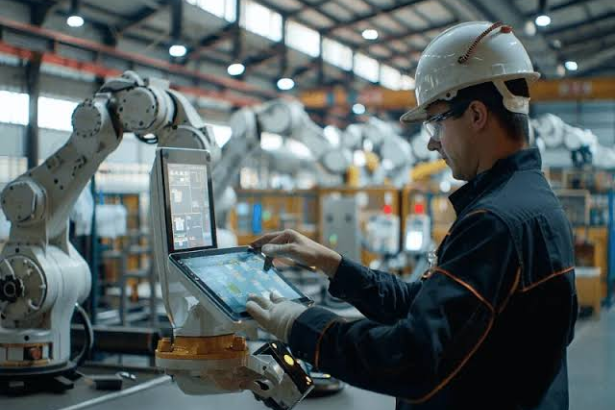
Smart manufacturing is becoming one of the most important developments in industrial technology in 2026. Artificial intelligence, industrial robotics, digital twins, predictive maintenance and connected production systems are changing how manufacturers design products, operate equipment and manage production lines.
The shift is no longer limited to large technology companies or experimental factories.
Manufacturers are increasingly integrating AI into everyday industrial operations, using it to identify production problems, inspect products, forecast machine failures and improve resource utilization.
A June 2026 KPMG report offers an indication of how quickly the industry is moving.
Its survey of 258 industrial manufacturing technology leaders across 22 countries and territories found that 49% reported active AI use cases already delivering business value. Another 68% expected to deploy AI at scale within the following 12 months.
However, the report also highlighted a significant challenge: 76% of respondents identified unreliable data as a major AI risk. KPMG
That contrast captures the current manufacturing landscape.
Companies recognize the potential of industrial AI, but successful implementation requires more than installing new machines or purchasing sophisticated software.
It requires connected systems, reliable data, cybersecurity, employee training and a clear understanding of how technology improves factory performance.
From automotive assembly lines and electronics production to pharmaceutical facilities and industrial equipment manufacturing, smart manufacturing is becoming a strategic priority.
The question for manufacturers is no longer whether factories will become more intelligent.
It is how quickly they can make that transformation commercially successful.
Background and Context: What Is Smart Manufacturing?
Endee – AI Search and Intelligence Platform
Smart manufacturing refers to the integration of digital technologies, connected equipment, artificial intelligence and automated systems to improve industrial production.
Traditional manufacturing often relies on predefined production schedules, manual inspections and equipment maintenance performed at fixed intervals.
Smart factories introduce a more connected approach.
Machines collect operational information. Sensors monitor production conditions. AI systems analyze performance. Digital twins simulate manufacturing processes. Robots perform repetitive and increasingly complex physical tasks.
Together, these technologies create a manufacturing environment that can respond more effectively to changing conditions.
What Makes a Factory Smart?
A smart factory connects physical manufacturing equipment with digital systems that can monitor, analyze and improve operations.
Its capabilities generally include:
- Real-time production monitoring.
- AI-powered quality inspection.
- Predictive equipment maintenance.
- Connected industrial machinery.
- Automated material handling.
- Digital production planning.
- Robotics and autonomous systems.
- Energy and resource optimization.
- Data-driven decision-making.
For example, consider an automotive manufacturing facility.
A traditional production line may rely on scheduled maintenance and periodic quality inspections.
A smart factory can continuously monitor machine vibration, temperature, production speed and component quality.
AI models can identify unusual operating patterns and alert engineers before equipment performance deteriorates.
Computer vision can inspect components for defects, while production planning software adjusts schedules when equipment becomes unavailable.
The objective is to make the entire operation more predictable, flexible and efficient.
Traditional Manufacturing vs Smart Manufacturing
| Traditional manufacturing | Smart manufacturing |
|---|---|
| Fixed production schedules | Data-driven adaptive scheduling |
| Time-based maintenance | Predictive maintenance |
| Manual or periodic quality checks | AI-powered continuous inspection |
| Isolated machinery | Connected industrial equipment |
| Limited operational visibility | Real-time production monitoring |
| Manual process adjustments | AI-assisted optimization |
| Reactive problem-solving | Predictive and proactive decisions |
The difference is not that traditional factories lack automation.
Many conventional factories already use sophisticated industrial machines and programmable control systems.
The difference is the ability to connect these systems, interpret operational information and use it to improve decisions across the factory.
Industry 4.0 and the Rise of Intelligent Factories
Smart manufacturing is closely connected to Industry 4.0.
Industry 4.0 describes the integration of technologies such as industrial IoT, cloud computing, robotics, big data analytics and cyber-physical systems into manufacturing.
The concept has evolved considerably since its introduction.
In 2026, manufacturers are increasingly exploring AI-driven automation, intelligent production systems and closer collaboration between people and machines.
The World Economic Forum’s April 2026 Intelligent Industrial Operations Outlook describes this transition as a movement from traditional automation toward connected and increasingly autonomous industrial operations.
It highlights how companies are moving beyond isolated technology pilots toward operating models in which humans and intelligent systems work together in real time. World Economic Forum
This is the foundation of the next generation of manufacturing.
Latest Update: Industrial AI Is Moving From Factory Experiments to Real Production Operations
FPR Machine Vision System Overview for Modern Manufacturing
One of the biggest developments in 2026 is the growing adoption of AI in actual industrial environments.
Manufacturers are increasingly using artificial intelligence for production monitoring, automated quality inspection, equipment maintenance and process optimization.
Several important developments illustrate this shift.
1. KPMG’s 2026 Manufacturing Report Shows AI Moving Toward Enterprise Scale
In its June 24, 2026 Global Tech Report on Industrial Manufacturing, KPMG surveyed 258 technology leaders across 22 countries and territories.
The findings highlight a manufacturing sector that is becoming increasingly serious about AI implementation.
KPMG Global Tech Report 2026
49%
Report active AI use cases already delivering business value
68%
Expect AI deployment at scale within 12 months
76%
Identify unreliable data as a major AI risk
89%
Believe managing AI agents will become a critical workplace skill within five years
Source: KPMG Global Tech Report 2026, Industrial Manufacturing. Survey percentages reflect respondents, not all manufacturers globally.
The findings suggest that industrial AI is becoming an enterprise technology priority rather than a collection of isolated experiments.
However, the data problem remains significant.
Manufacturers may have advanced equipment and sophisticated AI software, but unreliable sensor information, disconnected systems and inconsistent production records can limit the value of those investments.
Read KPMG Global Tech Report 2026: Industrial Manufacturing. KPMG
2. NIST Publishes a 2026 Roadmap for AI and Machine Learning in Manufacturing
Demoproduktion am Fraunhofer IIS am Standort Dresden – Fraunhofer IIS
On July 3, 2026, the US National Institute of Standards and Technology published its 2026 Roadmap on Artificial Intelligence and Machine Learning for Smart Manufacturing.
The roadmap examines how AI and machine learning can improve manufacturing efficiency, adaptability and autonomy across industrial value chains.
It covers several important technology areas:
- Industrial big data analytics.
- Advanced sensing and machine perception.
- Autonomous manufacturing systems.
- Digital twins.
- Industrial robotics.
- Additive and laser-based manufacturing.
- Sustainable manufacturing.
- Explainable and trustworthy AI.
- Industrial large language models.
An especially important theme is reliability.
Manufacturing environments are different from ordinary consumer software applications.
An incorrect recommendation can affect production quality, equipment safety and physical operations.
For this reason, manufacturers need AI systems that are explainable, reliable and capable of operating within defined industrial controls.
The NIST roadmap provides a useful framework for understanding the technical requirements behind this transition.
Read NIST’s 2026 Roadmap on AI and Machine Learning for Smart Manufacturing. NIST
3. Cisco’s 2026 Industrial AI Research Highlights the Importance of Infrastructure
Securing AI Agents in the Enterprise: A Three-Tier Control Framework | by MrDuc | Mar, 2026 | Medium
Cisco’s March 2026 State of Industrial AI research provides another important perspective.
Its global study surveyed more than 1,000 operational technology decision-makers across 19 countries and 21 industrial sectors.
The research found that 61% of surveyed organizations were already using AI in live industrial operations, while 20% reported scaled, mature deployments.
It also found that 83% planned to increase AI spending.
However, network readiness, cybersecurity and collaboration between information technology and operational technology teams were identified as major factors influencing successful adoption.
This matters because industrial AI requires reliable communication between machines, sensors, software and control systems.
A factory cannot operate an intelligent production environment effectively if its digital infrastructure cannot support real-time information exchange.
Read Cisco’s State of Industrial AI Report 2026. Cisco Newsroom
4. Digital Twins Are Becoming More Important to Industrial Decision-Making
Digital twins are moving beyond their earlier role as visualization and simulation tools.
Manufacturers increasingly want virtual models that can connect with real-world production information and help engineers evaluate operational decisions.
In July 2026, NIST published its Digital Twins Workshops Summary Report.
The report identifies opportunities to improve product design, manufacturing and lifecycle management through digital twin technology.
It also highlights challenges involving interoperability, validation, cybersecurity and workforce readiness.
These issues are important because a digital twin is only useful when its virtual representation accurately reflects the physical system it is intended to model.
Read NIST Digital Twins Workshops Summary Report. NIST
Together, these developments indicate that smart manufacturing is moving into a more practical stage.
The focus is shifting from demonstrating individual technologies toward connecting AI, industrial equipment, digital models and human decision-making into reliable production environments.
Expert Analysis: Five Technologies Reshaping Smart Manufacturing in 2026
1. Industrial AI: Giving Factories the Ability to Think With Data
Industrial Automation Using AI and Machine Vision Systems
2026边缘AI视觉白皮书:为什么70%的工厂开始解雇”算法工程师”? | 技术洞察 | 云质变 | 软硬融合决策平台
12
Artificial intelligence is becoming the intelligence layer of modern manufacturing.
Factories generate enormous amounts of operational data through sensors, production equipment, quality inspection systems and enterprise software.
The challenge is turning that information into useful decisions.
Industrial AI can analyze production data, recognize unusual patterns and help manufacturers improve manufacturing processes.
Some important applications include:
AI-Powered Production Optimization
AI can analyze production speed, machine utilization, material availability and order requirements to identify opportunities for improvement.
For example, a factory producing automotive components may use AI to identify production stages that consistently create bottlenecks.
Managers can then adjust machine schedules, staffing and material allocation.
Computer Vision for Quality Inspection
Computer vision systems use cameras and AI models to inspect manufactured products.
They can identify:
- Surface scratches.
- Incorrect dimensions.
- Missing components.
- Assembly defects.
- Packaging inconsistencies.
- Color and finish variations.
Unlike traditional inspection processes that rely entirely on human observation, AI-enabled systems can inspect products continuously and consistently.
However, their accuracy depends on camera quality, lighting, training data and proper validation.
AI-Powered Production Scheduling
Manufacturing schedules must account for machine availability, labor, materials, production priorities and delivery deadlines.
AI can analyze these variables and recommend more efficient production sequences.
This is especially useful for manufacturers handling customized orders or frequent changes in demand.
Generative AI for Manufacturing Engineers
Generative AI is also finding applications in industrial environments.
Engineers can use specialized AI assistants to search technical documentation, review machine histories, investigate production problems and retrieve maintenance instructions.
When connected to validated factory information, these systems can reduce the time required to locate operational knowledge.
The important distinction is that AI should support engineering decisions rather than independently override safety-critical production controls.
2. Digital Twins: Building a Virtual Version of the Factory
生産ライン可視化がもたらす驚きの効果は?具体的な取り組み事例を紹介 | レポート | PROTRUDE
Industrial Digital Twin Platform | PETRAN | Ombrulla
Digital twin for F&B machines | Ebook | Siemens
9
Digital twins are among the most promising technologies in smart manufacturing.
A digital twin is a digital representation of a physical asset, process or production environment.
It can use information from sensors, machine systems, engineering models and operational databases to represent how a real-world system behaves.
Think of it as a virtual version of a factory that engineers can use to study performance and evaluate possible changes.
How Digital Twins Work
Consider a manufacturing company planning to introduce a new automotive assembly line.
Building the production line immediately could involve substantial investment and operational disruption.
A digital twin allows engineers to model important elements before physical implementation.
The process can include:
- Creating a virtual representation of the production environment.
- Connecting engineering specifications and equipment information.
- Integrating real-time or historical operational data.
- Simulating different production scenarios.
- Identifying potential bottlenecks.
- Evaluating alternative layouts and operating conditions.
- Applying validated improvements to the physical factory.
This can help manufacturers identify design problems earlier and make better decisions before committing to expensive changes.
Five Important Applications of Digital Twins
| Application | Manufacturing benefit |
|---|---|
| Factory layout simulation | Evaluates production layouts before implementation |
| Equipment monitoring | Helps analyze machine performance |
| Production optimization | Tests alternative operating scenarios |
| Product development | Supports design and engineering validation |
| Maintenance planning | Helps assess equipment behavior and potential failure scenarios |
Digital Twins and AI: A More Powerful Combination
Digital twins become more valuable when combined with artificial intelligence.
AI can analyze the information generated by a digital twin, identify unusual patterns and evaluate alternative operating scenarios.
For example, an AI-powered digital twin could simulate how changing machine speeds affects production throughput, energy consumption and equipment performance.
Engineers can compare multiple scenarios before making changes on the production floor.
The World Economic Forum’s 2026 technology convergence research describes how digital twins are evolving from relatively passive models into more dynamic systems that combine real-time information, spatial intelligence and AI-driven simulation.
This is an important step toward more adaptive industrial operations. World Economic Forum+1
3. Predictive Maintenance: Fixing Machines Before They Fail
AI Industrial Predictive Maintenance – The Future of Equipment Reliability
Unexpected equipment failure can disrupt an entire manufacturing operation.
A malfunctioning motor, conveyor system or production machine can stop downstream processes, delay orders and increase maintenance costs.
Traditional preventive maintenance relies on scheduled inspections and replacement intervals.
Predictive maintenance takes a more data-driven approach.
It uses information from equipment sensors, operating histories and machine performance to estimate when maintenance may be necessary.
How AI Predictive Maintenance Works
Imagine a factory operating several industrial motors.
Sensors continuously monitor:
- Vibration.
- Temperature.
- Pressure.
- Rotational speed.
- Electrical consumption.
- Operating hours.
An AI model analyzes this information and compares it with historical equipment behavior.
If the system detects unusual patterns, it can alert maintenance engineers to investigate.
The objective is to identify potential problems before they result in an unexpected breakdown.
Predictive Maintenance vs Preventive Maintenance
| Preventive maintenance | Predictive maintenance |
|---|---|
| Performed according to a fixed schedule | Based on equipment condition and data |
| Uses predefined service intervals | Uses sensor information and predictive models |
| Can replace parts before necessary | Helps identify when intervention may be appropriate |
| May miss unexpected failures | Can identify developing abnormalities |
| Relies on maintenance schedules | Supports condition-based maintenance planning |
Predictive maintenance is particularly valuable in industries where equipment failure has significant consequences.
Examples include:
- Automotive manufacturing.
- Steel production.
- Cement plants.
- Chemical processing.
- Pharmaceuticals.
- Food and beverage manufacturing.
- Semiconductor production.
A Real-World Research Example From the Tyre Manufacturing Industry
A particularly interesting 2026 research study examined the use of generative AI for predictive maintenance at a tyre manufacturing operation.
The study, published online in May 2026 in Production Planning & Control, examined a GenAI-enabled maintenance solution for curing presses.
The system combined a specialized large language model with historical production information.
Engineers could ask questions about previous production cycles using natural language and obtain diagnostic insights.
The reported results included:
Reported outcomes from the tyre manufacturing case study
106 → 80
Mean dry cycle time, seconds
+304
Additional tyres of daily curing capacity
0.3 MT
Daily steam consumption reduction
10 days → 2 hours
Complex root-cause analysis turnaround
Source: Jaiswal and Biswas, 2026, Production Planning & Control. Results from a specific case study, not an industry-wide benchmark.
This example demonstrates how generative AI can become a practical engineering tool when connected to relevant manufacturing data.
It also highlights an important point: AI does not need to operate a machine directly to create manufacturing value.
Helping engineers diagnose production problems faster can be equally important.
4. Industrial Robotics: Moving Toward More Flexible Production Lines
Mechanical Engineering – IndiBay Technologies
What is a Collaborative Robot?
Operators, cobots and mobile robots work in harmony | Article | Automotive Manufacturing Solutions
10
Industrial robots have been part of manufacturing for decades.
Automotive manufacturers, electronics producers and industrial equipment companies have used robots for welding, painting, assembly and material handling.
What is changing in 2026 is the increasing integration of AI into robotic systems.
Traditional industrial robots generally perform predefined tasks in controlled environments.
Newer AI-enabled systems are becoming better at recognizing objects, adapting movements and working with changing production requirements.
Four Types of Robotics Transforming Manufacturing
1. Industrial Robotic Arms
Robotic arms perform repetitive and precision-intensive activities such as welding, assembly, painting and component handling.
AI-based vision and control systems can improve their ability to work with different components and production conditions.
2. Collaborative Robots (Cobots)
Cobots are designed to work alongside human employees in appropriately safeguarded environments.
They can support activities such as:
- Component assembly.
- Machine tending.
- Packaging.
- Material handling.
- Repetitive inspection.
Their purpose is to assist employees with repetitive or physically demanding tasks.
3. Autonomous Mobile Robots (AMRs)
AMRs transport materials across manufacturing facilities.
They can move components between production stations, transport finished products and support internal logistics.
Unlike fixed conveyor systems, they can navigate changing environments using sensors and navigation software.
4. AI-Powered Vision Robots
These robots use computer vision to identify components, assess their orientation and perform tasks requiring visual recognition.
They are useful in applications where product shapes, sizes or positions can vary.
Physical AI: The Next Evolution of Industrial Robotics
Physical AI is becoming an important concept in manufacturing.
It refers to AI systems that interact with the physical world through robots, sensors and machines.
Instead of simply processing information on a computer, these systems can perceive their surroundings and influence physical actions.
The World Economic Forum’s 2026 Intelligent Industrial Operations Outlook identifies physical AI as one of the technologies contributing to more connected and increasingly autonomous industrial operations. World Economic Forum
The long-term goal is not necessarily a factory without human workers.
It is a production environment in which machines handle appropriate repetitive and precision-intensive activities while humans supervise, solve problems and make complex decisions.
5. Industry 4.0 and Industry 5.0: The Factory Is Becoming More Connected and Human-Centric
Industry 4.0 — Industrial Iot, Ai & Digital Twin | ABC Trainings
Industry 4.0 introduced the idea of interconnected manufacturing systems.
It brought together industrial IoT, cloud computing, robotics, analytics and connected machinery.
Industry 5.0 builds on that foundation with greater emphasis on human-machine collaboration, resilience and sustainability.
The distinction is important.
Industry 4.0 focuses heavily on connectivity, automation and intelligent production systems.
Industry 5.0 places additional emphasis on how those technologies support people, sustainable operations and resilient industrial ecosystems.
What Industry 5.0 Means for Manufacturers
- Employees work alongside increasingly capable machines.
- Production systems become more adaptable.
- Digital technologies support resource efficiency.
- Human expertise remains central to decision-making.
- Manufacturers consider resilience alongside productivity.
For factory owners, this means smart manufacturing should not be measured exclusively by how many activities have been automated.
It should also be evaluated through employee safety, production flexibility, resource efficiency and the ability to respond to disruption.
The Technology Stack Behind a Smart Factory
Smart manufacturing is not powered by one technology.
It depends on multiple connected systems working together.
| Technology | Role in manufacturing | Practical application |
|---|---|---|
| Artificial Intelligence | Analyzes information and supports decisions | Production optimization |
| Machine Learning | Identifies patterns in operational data | Failure prediction |
| Industrial IoT | Connects machines and sensors | Real-time monitoring |
| Digital Twins | Models physical assets and processes | Production simulation |
| Computer Vision | Analyzes images and video | Automated quality inspection |
| Industrial Robotics | Performs physical production tasks | Assembly and welding |
| Edge Computing | Processes data close to machines | Low-latency industrial applications |
| Cloud Computing | Connects data and applications | Multi-factory analytics |
| 5G and Industrial Networking | Supports connected equipment | Machine communication |
| Generative AI | Helps retrieve and interpret technical information | Engineering assistants |
The most important factor is interoperability.
A manufacturing company may have excellent robots, sophisticated sensors and advanced AI software, but those technologies will deliver limited value if they cannot communicate effectively.
This is why data architecture and industrial connectivity are becoming major priorities.
Broader Implications: How Smart Manufacturing Will Change the Industrial Economy
Foxconn Is Bringing in More Robot Workers, but Not the 1 Million It Promised It Would
The transformation of manufacturing is not limited to improvements inside individual factories.
It could influence industrial competitiveness, workforce requirements, supply chain resilience and the economics of production.
1. Manufacturers Will Compete on Data and Operational Intelligence
For decades, competitive manufacturing advantages came from production capacity, labor efficiency, equipment quality and access to raw materials.
These factors remain important.
However, operational intelligence is becoming another competitive advantage.
Manufacturers that can identify inefficiencies earlier, predict equipment failures and optimize production schedules may respond more effectively to market changes.
This is especially important for companies operating multiple production facilities.
2. Product Quality Could Become More Consistent
AI-powered inspection systems can monitor production quality continuously.
This can help identify defects earlier and reduce the risk of faulty products moving through the manufacturing process.
The biggest opportunity is combining inspection information with production data.
If a specific machine repeatedly produces defective components, AI can help engineers identify the relationship between operating conditions and quality problems.
That turns inspection into a source of process improvement.
3. Manufacturing Could Become More Energy Efficient
Energy consumption is a major operating expense in many industrial sectors.
AI can help manufacturers understand how machines, production schedules and environmental conditions affect energy usage.
Potential applications include:
- Optimizing machine operating schedules.
- Identifying energy-intensive production stages.
- Monitoring compressed air systems.
- Improving heating and cooling operations.
- Reducing unnecessary machine idle time.
- Coordinating production with energy availability.
These improvements can support both operating efficiency and sustainability goals.
4. Supply Chains Could Become More Resilient
Smart factories are increasingly connected to supplier networks, warehouse systems and transportation platforms.
This allows manufacturers to incorporate external information into production decisions.
For example, if an important component faces a supply disruption, production planners can evaluate alternative schedules, inventory availability and supplier options.
The goal is to reduce the time between identifying a disruption and responding to it.
5. Workforce Skills Will Change
Smart manufacturing will change the skills required across industrial organizations.
Manufacturers will increasingly need employees who understand both physical production and digital technology.
Important emerging skills include:
- Industrial data analytics.
- Robotics programming.
- AI system supervision.
- Digital twin engineering.
- Industrial cybersecurity.
- Predictive maintenance.
- Industrial IoT integration.
- Automation engineering.
The objective should be to develop a workforce capable of operating and improving increasingly intelligent production systems.
6. Smaller Manufacturers Could Gain Access to Advanced Technology
Historically, sophisticated industrial automation required substantial capital investment.
Cloud-based manufacturing software, subscription AI services and modular robotics are gradually creating more accessible options.
Smaller manufacturers may be able to begin with specific applications such as machine monitoring, predictive maintenance or automated inspection.
They do not necessarily need to build a fully autonomous factory from the beginning.
For additional coverage of industrial technology, enterprise AI and digital transformation, explore The Tech Marketer.
Smart Manufacturing in India: Why the Next Industrial Transformation Matters
What Electronics Does India Manufacture? A Complete Guide to the 2026 Industry
Production Ramp-Up Monitoring in India | IMARC Engineering
11
India is particularly well positioned to benefit from smart manufacturing.
The country has a large industrial base spanning automotive production, pharmaceuticals, electronics, chemicals, textiles, engineering goods and consumer products.
As manufacturers expand production capacity and compete in international markets, improving operational efficiency and product quality becomes increasingly important.
Smart manufacturing offers an opportunity to modernize existing facilities while developing more advanced production capabilities.
1. Automotive Manufacturing
India’s automotive sector is already familiar with industrial robotics, automated assembly and precision manufacturing.
AI can add another layer of intelligence through:
- Predictive maintenance of production equipment.
- Automated inspection of components.
- Production scheduling optimization.
- Robotic material handling.
- Digital twin simulations of assembly lines.
These applications can help manufacturers improve production consistency and respond to changing vehicle demand.
2. Electronics Manufacturing
Electronics production requires precision and high levels of quality control.
AI-powered computer vision can inspect circuit boards, identify component placement problems and detect manufacturing defects.
Digital twins can also help engineers simulate production processes and evaluate alternative factory configurations.
For electronics manufacturers operating at high volumes, even relatively small improvements in defect detection can have meaningful operational value.
3. Pharmaceutical Manufacturing
Pharmaceutical production involves strict quality requirements, documentation and process controls.
Smart manufacturing technologies can support:
- Automated quality inspection.
- Process monitoring.
- Equipment maintenance.
- Environmental monitoring.
- Production traceability.
- Data-driven process optimization.
AI must operate within validated processes and applicable regulatory requirements.
It should support, rather than bypass, established quality management and human approval procedures.
4. Textile and Apparel Manufacturing
Textile manufacturers can use AI for fabric defect detection, production monitoring and demand forecasting.
Computer vision systems can identify irregularities in fabric surfaces, while predictive maintenance can help monitor spinning, weaving and processing equipment.
AI-based production planning may also help manufacturers manage product variations and changing order requirements.
5. Government Initiatives and Industrial Modernization
Uno Minda Expands EV Footprint with Second Plant for 4W EV Powertrain in Maharashtra
India’s manufacturing modernization is supported by broader industrial and digital infrastructure initiatives.
Programs such as Make in India, the Production Linked Incentive schemes and the Smart Advanced Manufacturing and Rapid Transformation Hubs initiative, known as SAMARTH Udyog, form part of the country’s wider industrial development landscape.
The opportunity is to connect industrial investment with modern manufacturing technologies.
KPMG’s 2026 India manufacturing report specifically highlights the role of digital infrastructure, AI adoption, workforce development and stronger data foundations in industrial transformation.
For Indian manufacturers, the challenge is to make these investments practical and commercially sustainable rather than treating digital transformation as a branding exercise. KPMG
The Challenges: What Is Slowing Smart Manufacturing Adoption?
Cybersecurity on the Factory Floor
Despite the opportunities, implementing smart manufacturing across an entire industrial organization is complicated.
Many manufacturers operate equipment that was installed years or even decades ago.
Some machines have limited connectivity. Others use proprietary communication protocols or outdated control systems.
Connecting them to modern AI platforms can require substantial technical work.
Here are seven major challenges.
1. High Initial Investment
Industrial robotics, sensors, digital twins, AI platforms and network infrastructure can require substantial capital.
Manufacturers must consider not only equipment purchase costs but also installation, integration, training, maintenance and software licensing.
The business case should account for the full lifecycle cost of the technology.
2. Legacy Machinery and Integration Problems
A modern AI platform cannot automatically connect to every industrial machine.
Older equipment may lack suitable sensors or digital interfaces.
Manufacturers may need additional hardware, gateways or system upgrades before integrating AI into existing production processes.
3. Data Quality and Fragmentation
AI models depend on reliable information.
But manufacturing data may be distributed across:
- Machine control systems.
- Manufacturing execution systems.
- Enterprise resource planning platforms.
- Quality management systems.
- Maintenance databases.
- Supplier applications.
If the information is incomplete, inconsistent or poorly structured, AI outputs may be unreliable.
KPMG’s 2026 findings reinforce this issue, with 76% of surveyed leaders identifying unreliable data as a major AI risk. KPMG
4. Industrial Cybersecurity
Connected factories create additional cybersecurity exposure.
A cyberattack can affect more than business information. It may disrupt physical equipment, production systems and industrial operations.
Manufacturers need to prioritize:
- Network segmentation.
- Identity and access management.
- Secure remote access.
- Endpoint protection.
- Industrial system monitoring.
- Backup and recovery procedures.
- Third-party vendor security.
Cybersecurity must be part of the initial architecture, not something added after automation has been deployed.
5. Workforce Resistance and Skills Gaps
Employees may be concerned about job security, unfamiliar technologies or changes to established production processes.
Manufacturers need clear communication and structured training.
Technology adoption works better when employees understand how new systems support their work and when they have the skills to supervise them.
6. Safety and Regulatory Compliance
Industrial environments involve heavy machinery, electrical systems, chemicals and potentially hazardous production processes.
AI and robotics must operate within appropriate safety requirements.
A system that produces a technically accurate recommendation can still create a dangerous situation if it ignores machine safeguards or human operating procedures.
7. Uncertain Return on Investment
A factory may install expensive digital infrastructure without achieving measurable operational improvements.
The reason is often that technology implementation is not connected to clearly defined business objectives.
Manufacturers should establish measurable performance targets before beginning major projects.
Related History: From Industry 1.0 to Smart Manufacturing in 2026
Fordizm: İşçi sınıfını dönüştüren üretim modeli ve krizi – İşçi Haber
The Future of Manufacturing: Automation, Robotics, and Human Collaboration
8
Today’s smart factories are the result of more than two centuries of industrial development.
Understanding the earlier industrial revolutions helps explain why the current transition is significant.
Industry 1.0: Mechanization
The first industrial revolution introduced mechanical production powered by water and steam.
Factories began replacing many forms of manual production with machinery.
Industry 2.0: Mass Production
The second industrial revolution introduced electricity, assembly lines and large-scale standardized manufacturing.
Companies could produce goods in significantly greater quantities.
Industry 3.0: Computerization and Automation
The third industrial revolution brought electronics, computers, programmable logic controllers and industrial robotics.
Machines became increasingly automated, reducing the need for manual intervention in repetitive production tasks.
Industry 4.0: Connected and Intelligent Manufacturing
Industry 4.0 introduced connected machinery, industrial IoT, cloud computing, big data and cyber-physical production systems.
Factories began using operational data to improve manufacturing decisions.
Industry 5.0: Human-Centric and Sustainable Manufacturing
Industry 5.0 builds on connected industrial systems while emphasizing human-machine collaboration, sustainability and resilience.
The objective is to make manufacturing more adaptable while retaining the value of human knowledge and expertise.
What Comes Next?
The next generation of factories will likely combine physical AI, intelligent robotics, advanced digital twins and AI-driven production management.
Instead of simply automating individual machines, manufacturers will increasingly focus on coordinating entire production environments.
This is where smart manufacturing becomes a broader industrial transformation rather than another factory technology upgrade.
What Happens Next: Five Smart Manufacturing Trends to Watch Beyond 2026
India’s manufacturing shift: From Industry 4.0 to human-centric 5.0, ETManufacturing
manufacturing.economictimes.indiatimes.com
The next phase of industrial transformation will focus on making factories more adaptive, connected and capable of responding to changing production conditions.
Here are five developments manufacturing leaders should watch.
1. Agentic AI Will Support Production Management
AI agents are likely to become more involved in production planning, maintenance coordination and operational reporting.
For example, an AI agent may identify a production bottleneck, investigate machine availability, review material requirements and recommend an alternative production schedule.
Over time, carefully governed systems may be allowed to execute selected low-risk workflow changes.
2. Physical AI Will Make Robots More Adaptive
Robots will increasingly combine perception, reasoning and physical movement.
This could make robotic systems more useful in environments where components, layouts and production tasks change frequently.
3. Digital Twins Will Become More Operational
Digital twins are likely to become more connected to real-time factory information.
This could help engineers test production changes, simulate disruptions and evaluate alternative manufacturing scenarios.
4. AI-Powered Quality Control Will Become More Advanced
Computer vision systems will continue improving their ability to identify subtle product defects.
Manufacturers will also increasingly connect inspection results with production information to identify the underlying causes of quality problems.
5. Sustainable Manufacturing Will Become More Data-Driven
AI can help factories understand their energy consumption, material usage and equipment efficiency.
Combined with connected sensors and digital twins, this could support more efficient production planning and resource management.
The opportunity is to improve sustainability without compromising manufacturing performance.
Practical Roadmap: How Manufacturers Can Implement Smart Manufacturing
Adapting Strategies for Evolving Market Demands – lightlyfiled.com
Manufacturers do not need to transform every production line simultaneously.
A phased approach is often more practical.
The starting point should be an operational problem that can be measured.
Six-phase smart manufacturing implementation roadmap
- Phase 1: Assess factory readinessEvaluate machinery, connectivity, production software, workforce capabilities and existing operational data.
- Phase 2: Identify high-value use casesPrioritize equipment downtime, product defects, production bottlenecks, energy consumption or material waste.
- Phase 3: Build the data foundationConnect relevant sensors, PLCs, manufacturing execution systems, ERP platforms and quality databases.
- Phase 4: Start with a focused pilotImplement a specific application such as predictive maintenance or AI-powered visual inspection on one production line.
- Phase 5: Integrate AI and automationConnect validated AI applications with industrial robotics, digital twins and production management systems where appropriate.
- Phase 6: Scale and continuously improveMeasure results, train employees, strengthen cybersecurity and expand successful applications to other production facilities.
Which KPIs Should Manufacturers Track?
| KPI | What it measures |
|---|---|
| Overall Equipment Effectiveness (OEE) | Availability, performance and quality |
| Mean Time Between Failures (MTBF) | Average operating time between equipment failures |
| Mean Time to Repair (MTTR) | Average time required to restore equipment |
| First Pass Yield | Products meeting quality requirements without rework |
| Production Cycle Time | Time required to complete a production cycle |
| Unplanned Downtime | Production time lost to unexpected stoppages |
| Scrap Rate | Percentage of material or products rejected |
| Energy Consumption per Unit | Energy efficiency of production |
| On-Time Production Rate | Ability to complete manufacturing schedules |
| AI ROI | Financial return from AI investments |
The most important measure is whether the technology improves actual manufacturing performance.
A digital twin is not automatically valuable because it looks impressive.
A predictive maintenance system is not successful simply because it generates alerts.
The value comes from fewer failures, better production quality, improved capacity utilization and stronger financial performance.
Conclusion: Smart Manufacturing Is Becoming the Foundation of the Next Industrial Revolution
Manufacturing is moving into a new technological era.
Artificial intelligence is giving factories better analytical capabilities. Digital twins are helping engineers simulate production environments. Predictive maintenance is improving equipment management, while intelligent robotics is making industrial automation more flexible.
The latest research from KPMG, NIST, Cisco and the World Economic Forum demonstrates that these technologies are moving beyond experimentation and becoming part of broader industrial transformation strategies.
But the biggest challenge is not simply adopting new technology.
It is connecting machines, software, data and people into a reliable manufacturing ecosystem.
Companies that build strong digital foundations, invest in employee capabilities and focus on measurable operational improvements will be better positioned to benefit.
For manufacturers in India and across the global industrial economy, smart manufacturing represents an opportunity to improve competitiveness, increase production flexibility and develop more resilient operations.
The factory of the future will not simply be automated.
It will be connected, intelligent, adaptive and increasingly capable of making better decisions with the help of AI.
That is what makes smart manufacturing one of the most important industrial technology developments of 2026.
Frequently Asked Questions
1. What is smart manufacturing?
Smart manufacturing is the integration of artificial intelligence, industrial IoT, robotics, digital twins and connected production systems to improve factory efficiency, quality, flexibility and decision-making.
2. How is AI transforming smart manufacturing in 2026?
AI is transforming manufacturing through predictive maintenance, automated quality inspection, production scheduling, process optimization, industrial robotics and intelligent engineering assistants.
3. What is a digital twin in manufacturing?
A digital twin is a digital representation of a physical machine, production process or factory. It uses engineering models and operational data to simulate, monitor and analyze real-world manufacturing environments.
4. What is predictive maintenance in smart manufacturing?
Predictive maintenance uses sensors, machine learning and equipment data to identify potential failures before they cause unexpected breakdowns. It helps manufacturers plan maintenance based on equipment condition.
5. What is the difference between Industry 4.0 and Industry 5.0?
Industry 4.0 focuses on connected machines, automation, data and intelligent manufacturing systems. Industry 5.0 builds on these capabilities while emphasizing human-machine collaboration, sustainability and industrial resilience.
6. How do industrial robots improve manufacturing?
Industrial robots perform repetitive and precision-intensive tasks such as welding, assembly, painting, packaging and material handling. AI can improve their ability to recognize components and adapt to changing production conditions.
7. What are the benefits of smart manufacturing?
Major benefits include improved product quality, reduced equipment downtime, better production planning, increased operational visibility, improved resource utilization and more flexible manufacturing operations.
8. What are the biggest challenges of smart manufacturing?
Common challenges include high implementation costs, outdated equipment, fragmented data, cybersecurity risks, employee training requirements and difficulties integrating different industrial systems.
9. How can small manufacturers adopt smart manufacturing?
Small manufacturers can begin with practical applications such as machine monitoring, predictive maintenance, digital production tracking and automated quality inspection. Subscription-based software and modular automation can help reduce initial investment.
10. What is the future of smart manufacturing?
The future will involve greater integration of AI agents, physical AI, adaptive robotics, advanced digital twins and connected production systems. Human oversight, industrial safety and sustainable operations will remain important.
Sources & References
1. KPMG, June 24, 2026: KPMG Global Tech Report 2026: Industrial Manufacturing
2. NIST, July 3, 2026: 2026 Roadmap on Artificial Intelligence and Machine Learning for Smart Manufacturing
3. World Economic Forum, April 16, 2026: Intelligent Industrial Operations Outlook 2026
4. Cisco, March 2026: State of Industrial AI Report 2026
5. NIST, July 21, 2026: Digital Twins Workshops Summary Report
6. Production Planning & Control, May 26, 2026: Harnessing Generative Artificial Intelligence for Predictive Maintenance: A Case Study in the Tyre Manufacturing Industry
7. Deloitte Insights: 2026 Manufacturing Industry Outlook