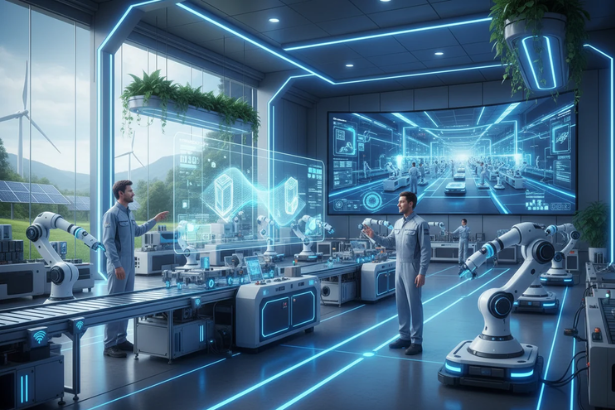
The manufacturing industry is entering a new phase of digital transformation. Artificial intelligence is moving beyond experimental applications and becoming part of everyday factory operations.
From automated quality inspections to predictive maintenance, manufacturers are exploring how AI can improve production efficiency, reduce repetitive work and support faster business decisions.
However, AI in manufacturing is not simply a technology upgrade. It is also a workforce and leadership challenge.
A factory can purchase advanced software, install connected machines and introduce automated inspection systems. But if employees do not understand how these tools work, managers cannot evaluate their recommendations and operational processes remain disconnected, the investment may struggle to deliver meaningful results.
This challenge is becoming increasingly visible among American manufacturers.
On October 27, 2026, Ohio-based manufacturing organization MAGNET published an important article titled AI’s Next Chapter in Manufacturing Is About People, Not Just Technology.
The article explored discussions from MAGNET’s October 8 and October 20 AI events, where manufacturers shared practical examples of artificial intelligence supporting purchase-order verification, supplier research, machine monitoring and quality inspection.
The central message was clear: AI can accelerate work, but people provide the knowledge and judgment needed to turn that speed into better business outcomes. manufacturingsuccess.org
For manufacturers across the United States, this creates an important question.
How can businesses adopt AI without losing the human expertise that keeps production operations running?
The answer lies in combining intelligent technology with employee training, practical implementation strategies and responsible leadership.
Background and Context: Why US Manufacturers Are Investing in AI
Production-Linked Incentives And Lean Manufacturing
Manufacturing has always evolved alongside technological innovation.
The introduction of mechanical production systems, computer-controlled machinery, industrial robotics and connected equipment changed how factories operated.
Today, artificial intelligence is becoming another major step in that evolution.
US manufacturers face several operational pressures:
- Rising production and material costs.
- Difficulty attracting and retaining skilled employees.
- Increasing customer expectations for quality and delivery speed.
- Competition from international manufacturers.
- Greater demand for production visibility.
- Pressure to modernize aging equipment and systems.
These challenges are encouraging companies to explore Industry 4.0 technologies.
Industry 4.0 refers to the integration of digital technologies, connected equipment, automation and data analytics into manufacturing operations.
Artificial intelligence is an important part of this transformation because it can analyze information, identify patterns and support operational decisions.
What is driving AI adoption in manufacturing?
Industrial IoT in Manufacturing: Building Scalable Connected Factory Systems
Several technologies are contributing to the development of intelligent factories.
| Technology | Manufacturing application |
|---|---|
| Artificial intelligence | Production analysis and decision support |
| Machine learning | Predictive analytics and process optimization |
| Computer vision | Automated product inspection |
| Industrial IoT | Connected machines and equipment monitoring |
| Robotics | Repetitive production and material handling |
| Digital work instructions | Employee guidance and standardized processes |
| Predictive maintenance | Identifying potential equipment problems |
The important development is not that every manufacturer needs every technology.
Instead, companies are increasingly looking for practical applications that solve specific operational problems.
That is also the approach emphasized by MAGNET in its manufacturing technology coverage.
Latest Update: MAGNET Highlights the Human Side of AI in Manufacturing
Foxconn-Intrinsic Advance Industrial Automation AI Factories – AI CERTs News
MAGNET’s October 27, 2026 article offers an important perspective on the next stage of industrial AI adoption.
Rather than focusing exclusively on new software and machinery, the organization examined how artificial intelligence is changing employee responsibilities and manufacturing leadership.
The discussions came from two AI-focused events held on October 8 and October 20.
Manufacturers shared examples of AI supporting:
- Purchase-order verification.
- Supplier research.
- Machine monitoring.
- Quality inspection.
- Engineering and administrative workflows.
These applications demonstrate that AI adoption is not limited to robotic production lines.
Some of the most practical opportunities are found in everyday business activities that consume employee time or create avoidable errors.
What MAGNET’s 2025 Ohio Manufacturing Survey reveals
MAGNET’s findings provide useful context for understanding the pace of AI adoption.
Its 2025 Ohio Manufacturing Survey included 266 manufacturing leaders representing approximately 31,000 employees.
39%
Testing simple AI tools
Manufacturers reported experimenting with basic AI applications.
25%
Testing advanced AI
Manufacturers were testing applications such as predictive analytics.
70%
Knowledge transfer
Manufacturers were transferring knowledge from retiring employees to younger workers.
74%
Process innovation
Manufacturers reported investing in production process innovation.
Source: MAGNET’s 2025 Ohio Manufacturing Survey and its October 27, 2026 manufacturing AI article. The figures describe different survey questions, not mutually exclusive groups. manufacturingsuccess.org+1
These findings reveal an important gap between experimentation and implementation.
Manufacturers are increasingly interested in AI, but they still need funding, implementation support and employee training to move from testing to everyday operational use.
Why AI adoption is not just a software decision
One of the most important observations in MAGNET’s article is that technology can produce faster answers without necessarily producing better decisions.
An AI system may identify a possible supplier, flag an inspection issue or recommend a production adjustment.
But someone still needs to determine whether that recommendation makes sense.
Manufacturing decisions often involve material specifications, machine tolerances, safety requirements and production experience.
A technically convincing AI-generated answer is not automatically a correct one.
This is why employee knowledge and human oversight remain essential.
Read the original research: MAGNET: AI’s Next Chapter in Manufacturing Is About People, Not Just Technology. manufacturingsuccess.org
Five Ways AI Is Transforming Modern Manufacturing
CiRA Core คืออะไร? ซอฟต์แวร์ AI Visual Automation ที่ช่วยยกระดับกระบวนการผลิต | Insight AI Co., Ltd.
AI Driven Triage and Troubleshooting in Appliance Repair | aiventic
10
Artificial intelligence is creating opportunities across the manufacturing process.
Its impact is particularly visible in production monitoring, quality control, maintenance, procurement and administrative operations.
Here are five applications that manufacturers should understand.
1. AI-Powered Quality Inspection
Product quality is one of the most important responsibilities in manufacturing.
Traditional inspection processes often depend on human operators examining products, measuring components and identifying defects.
While experienced inspectors remain essential, manual inspection can become difficult when production volumes increase.
AI-powered computer vision offers another approach.
These systems use cameras, image processing and machine learning models to analyze manufactured products and identify potential defects.
For example, an automated inspection system could examine metal components for:
- Surface scratches.
- Cracks and structural defects.
- Incorrect dimensions.
- Missing components.
- Inconsistent product finishes.
- Assembly errors.
The system can flag suspicious products for further inspection.
This allows quality teams to focus their attention on potential problems rather than examining every product manually.
Business benefits:
- Faster inspection workflows.
- More consistent defect identification.
- Improved production visibility.
- Reduced repetitive inspection tasks.
- Better quality reporting.
However, manufacturers must validate AI inspection systems against appropriate quality standards before relying on their results.
2. Predictive Maintenance and Machine Monitoring
Kestirimci Bakım Başlangıç Kılavuzu: CNC’de Arıza Önleme
Unexpected equipment failures can disrupt production schedules and increase operating costs.
A machine breakdown may affect several downstream processes, especially when the equipment is responsible for a critical production operation.
Traditional maintenance often follows fixed schedules or responds after a problem occurs.
Predictive maintenance introduces a more data-driven approach.
AI systems can analyze information from sensors, machine logs and maintenance records to identify unusual operating patterns.
These signals may include:
- Abnormal vibration.
- Increasing operating temperatures.
- Changes in machine performance.
- Unusual energy consumption.
- Repeated equipment alarms.
For example, if a CNC machine begins showing unusual vibration patterns, a predictive maintenance system could flag the condition for investigation.
Maintenance teams can then inspect the equipment before a potential failure becomes a major production interruption.
MAGNET’s Industry 4.0 coverage highlights predictive maintenance as a practical application of connected manufacturing technology. manufacturingsuccess.org
Business benefits:
- Better maintenance planning.
- Reduced unexpected downtime.
- Improved equipment visibility.
- More efficient maintenance scheduling.
- Better use of maintenance resources.
AI predictions should be treated as decision support, with qualified maintenance professionals confirming the appropriate action.
3. AI for Purchase Orders and Supplier Research
Woman Studies Digital Purchase Order Workflow
Procurement is an important part of manufacturing operations.
Companies regularly manage purchase orders, supplier documentation, material specifications, invoices and delivery schedules.
Many of these activities involve repetitive administrative work.
AI can help employees organize information, verify documents and identify discrepancies.
For example, an AI-enabled document processing system may compare information across a purchase order, supplier quotation and invoice.
It can flag differences in:
- Product quantities.
- Pricing.
- Material descriptions.
- Delivery dates.
- Supplier information.
- Purchase order references.
AI can also help organize supplier research by summarizing available documentation and identifying relevant information for procurement teams.
These capabilities can reduce manual document handling and help purchasing employees focus on supplier relationships and commercial decisions.
MAGNET specifically identified purchase-order verification and supplier research as examples of AI applications discussed by manufacturers at its October 2026 events. manufacturingsuccess.org
Business benefits:
- Faster document review.
- Improved information organization.
- Reduced repetitive administrative work.
- Earlier identification of discrepancies.
- More productive procurement teams.
Human approval should remain part of important purchasing and supplier decisions.
4. AI-Powered Production Planning and Process Optimization
AI in ERP: Smarter Production Scheduling (GoSmarter AI Blog)
Manufacturers must coordinate production schedules, material availability, machine capacity and customer requirements.
When these activities are managed through disconnected systems, identifying production bottlenecks can become difficult.
AI-powered production analytics can help manufacturers understand operational patterns and identify areas that require attention.
For example, an analytics system could identify that a particular production line regularly experiences delays during a specific shift.
Managers could investigate whether the issue is connected to machine availability, material shortages, scheduling or employee training.
AI can also help evaluate production scenarios by analyzing available operational data.
However, the quality of these recommendations depends on the accuracy and completeness of the information being used.
MAGNET’s research emphasizes that connected information and focused technology projects can help manufacturers improve visibility across their operations. manufacturingsuccess.org
Business benefits:
- Better production visibility.
- Improved scheduling decisions.
- Earlier bottleneck identification.
- More informed capacity planning.
- Better coordination between production teams.
5. AI-Assisted Workforce Training and Knowledge Management
AI-Guided Maintenance: The Digital Mentor for Your Techs
One of the most important applications of AI in manufacturing involves supporting employees.
Manufacturing companies depend heavily on experienced workers who understand machine operations, product specifications and production processes.
But when experienced employees retire, important operational knowledge can disappear with them.
This is a growing concern for manufacturers managing multigenerational workforces.
AI-powered knowledge management systems can help organize:
- Equipment manuals.
- Maintenance procedures.
- Standard operating procedures.
- Production instructions.
- Quality documentation.
- Troubleshooting records.
Employees could use approved AI assistants to locate relevant instructions and understand documented procedures more quickly.
For example, a newer technician working with a CNC machine could use an internal knowledge assistant to find the correct maintenance procedure.
The assistant could retrieve the approved documentation, while the technician and supervisor remain responsible for confirming the appropriate action.
MAGNET’s survey found that 70% of manufacturers were transferring knowledge from retiring employees to younger workers.
This highlights why technology adoption and employee knowledge transfer should reinforce one another. manufacturingsuccess.org
Business benefits:
- Faster employee onboarding.
- Better access to operational knowledge.
- More consistent training.
- Improved knowledge retention.
- Stronger collaboration between experienced and newer employees.
Why Human Expertise Still Matters in AI-Powered Manufacturing
Apprentice Meaning in 2026: Redefining Industrial Training
The growing use of AI raises an important question: will advanced manufacturing technology replace the need for experienced workers?
The more practical answer is that AI changes how people work, but it does not eliminate the need for manufacturing expertise.
A production engineer understands why a particular process uses specific tolerances.
A maintenance technician knows which machine sounds or operating conditions indicate a developing problem.
A quality manager understands the difference between a minor cosmetic variation and a defect that could affect product performance.
AI can help these employees access information and identify patterns, but it does not automatically replace their accumulated knowledge.
The value of experienced manufacturing employees
MAGNET’s October 27 article challenges the assumption that employees who are less comfortable with new technology are necessarily resistant to innovation.
Experienced workers often understand exceptions, failure points and production adjustments that may not be fully documented.
Their knowledge can help manufacturers evaluate whether AI recommendations are realistic.
This creates an opportunity to bring together two groups:
- Experienced employees who understand production processes.
- Technology-oriented employees who are interested in exploring new tools.
When these groups collaborate, manufacturers can introduce AI while preserving valuable operational knowledge.
Why employee involvement improves AI adoption
Employees are more likely to understand and use new technology when they are involved in the implementation process.
Before introducing an AI system, managers should explain:
- What problem the technology is intended to solve.
- How the system will affect existing responsibilities.
- What information the AI will access.
- Which decisions require human approval.
- How performance improvements will be measured.
This approach makes technology adoption a shared business improvement initiative rather than simply another software rollout.
Industry 4.0 and AI: How Smart Factories Are Evolving
Digital Twins en AI in de Maakindustrie | FME
Artificial intelligence is part of a much broader manufacturing transformation known as Industry 4.0.
Industry 4.0 connects physical manufacturing processes with digital technologies, allowing businesses to collect operational information and use it to improve decisions.
A modern smart factory may combine connected machinery, industrial sensors, robotics, manufacturing execution systems and data analytics.
AI can help interpret information generated by these technologies.
Traditional manufacturing vs smart manufacturing
| Area | Traditional manufacturing | Smart manufacturing |
|---|---|---|
| Machine monitoring | Manual checks | Connected equipment monitoring |
| Maintenance | Scheduled or reactive | Data-supported predictive maintenance |
| Quality control | Manual inspection | Human and AI-assisted inspection |
| Production planning | Static schedules | Data-driven planning |
| Documentation | Paper-based records | Digital documentation and AI assistance |
| Employee training | Manual instruction | Digital work instructions and knowledge tools |
| Decision-making | Historical reports | More timely operational information |
The transition does not need to happen all at once.
MAGNET’s August 9, 2026 article, Making Industry 4.0 Work: Where to Focus and How to Start, recommends focusing on practical improvements rather than adopting technology simply because it is available.
It discusses machine performance monitoring, digital work instructions, production visibility and targeted technology projects.
The underlying principle is straightforward: manufacturers should understand the operational problem before choosing the technology. manufacturingsuccess.org
Digital twins and connected production systems
A digital twin is a digital representation of a physical asset, process or system.
In manufacturing, digital twins can help engineers understand equipment performance, simulate production scenarios and evaluate potential changes.
When connected with reliable operational data, analytics and AI, digital twins may support better planning and process optimization.
However, building useful digital twins requires accurate data and a clear business purpose.
A digital model that does not reflect real operating conditions will provide limited value.
Five Challenges Preventing Wider AI Adoption in Manufacturing
Manufacturing Cybersecurity in the Age of AI – OPSWAT
AI has significant potential, but manufacturers should understand the challenges before investing in new systems.
1. Lack of implementation funding
Advanced automation and AI projects can require investment in software, sensors, connectivity, infrastructure and employee training.
Smaller manufacturers may struggle to justify large projects without clear financial returns.
A focused pilot project can help establish whether an investment is worthwhile.
2. Limited workforce training
Employees need the skills to use AI tools and evaluate their results.
Without proper training, workers may either avoid the technology or rely on its recommendations without sufficient review.
Training should be part of the implementation budget, not an afterthought.
3. Poor data quality
AI systems depend on reliable information.
Inconsistent machine records, incomplete production data and outdated documentation can reduce the accuracy of AI recommendations.
Manufacturers should evaluate their data before introducing advanced analytics.
4. Cybersecurity and confidential information
Manufacturing companies manage sensitive information about product designs, customer requirements, supplier contracts and production processes.
Sending this information into unapproved AI tools can create security and intellectual property risks.
Businesses should establish clear rules about data access, approved tools and employee responsibilities.
5. Resistance to organizational change
New technology can disrupt familiar workflows.
Employees may worry about job security, increased monitoring or losing control over decisions.
Manufacturing leaders need to explain the purpose of AI adoption and involve employees in the process.
The goal should be to improve work and business performance, not introduce technology without understanding its effect on the people using it.
How US Manufacturers Can Successfully Implement AI
Using agentic AI to teach your system to solve unique production blockers | Spot AI
One of the strongest lessons from MAGNET’s manufacturing coverage is that companies do not need to begin with expensive, factory-wide transformation projects.
A successful AI strategy can start with one operational problem.
For manufacturers considering their first AI investment, a structured implementation approach can reduce risk and make results easier to measure.
Step 1: Identify a real manufacturing problem
Before purchasing AI software, identify the issue affecting production.
For example:
- A machine experiences repeated unexpected downtime.
- Employees spend too much time checking purchase orders.
- Quality inspection requires excessive manual effort.
- Production teams struggle to access technical documentation.
- Managers cannot identify bottlenecks quickly enough.
The technology should address a defined business requirement.
Step 2: Involve employees who understand the process
Manufacturing employees should participate in identifying the problem and evaluating potential solutions.
Operators understand how equipment behaves during production.
Maintenance teams understand recurring mechanical problems.
Quality inspectors understand product specifications and defect patterns.
Their involvement can help prevent technology investments that look impressive in demonstrations but do not fit actual factory operations.
Step 3: Evaluate existing data and systems
Before deploying AI, review the information already available.
This may include:
- Machine performance records.
- Maintenance logs.
- Quality inspection reports.
- Production schedules.
- Inventory information.
- Supplier documentation.
Determine whether the data is accurate, accessible and suitable for the proposed application.
Step 4: Start with a limited pilot
Instead of implementing AI across an entire facility, choose one machine, production cell or administrative workflow.
For example, a manufacturer could test predictive maintenance on one frequently failing machine.
Another business could introduce AI-assisted purchase-order verification within its procurement department.
MAGNET’s September 21 article, Your First Tech Win Doesn’t Have to Be Big. It Has to Work, specifically recommends focused pilot projects with a defined problem, limited scope and accountable owner. manufacturingsuccess.org
Step 5: Establish measurable performance targets
Every AI project should have clear performance indicators.
| KPI | Measurement |
|---|---|
| Machine downtime | Hours of unexpected equipment downtime |
| Defect rate | Percentage of products failing quality requirements |
| Production output | Units manufactured during a defined period |
| Inspection time | Time required to complete quality checks |
| Administrative workload | Employee hours spent on repetitive tasks |
| Order accuracy | Percentage of correctly processed orders |
| Employee productivity | Output relative to labor hours |
Establish a baseline before implementation and compare results afterward.
Step 6: Expand only after proving value
If the pilot produces measurable improvements, manufacturers can consider expanding the technology.
This creates a gradual transformation roadmap based on real operational experience.
It also helps employees develop confidence in the new systems.
A practical AI implementation roadmap
- Identify one operational problem.
- Involve the employees who understand it.
- Review available data and systems.
- Run a controlled pilot project.
- Measure business performance.
- Expand successful applications.
Expert Insights: What MAGNET’s Manufacturing Research Tells Business Leaders
MAGNET’s recent manufacturing research offers several important lessons for businesses considering digital transformation.
Insight 1: AI experimentation is growing, but implementation remains difficult
MAGNET’s 2025 Ohio Manufacturing Survey found that 39% of respondents were testing simple AI tools and 25% were testing more complex applications.
The difference between testing and successful implementation is important.
A company may experiment with an AI assistant without integrating it into production processes.
Moving from experimentation to regular business use requires reliable data, training, implementation support and clear accountability.
Insight 2: Manufacturing experience remains valuable
MAGNET’s October 2026 article emphasizes that experienced employees understand the exceptions and operational details that are not always captured in written procedures.
AI projects should use this knowledge rather than treat it as an obstacle to modernization.
Insight 3: Innovation needs to support business growth
MAGNET’s survey found that 74% of manufacturers were investing in production process innovation, while 72% were investing in production technology innovation.
These investments create opportunities to improve quality, responsiveness and production capabilities.
The objective should be to strengthen the business, not simply automate existing activities.
Insight 4: Knowledge transfer and AI adoption should work together
The survey found that 70% of manufacturers were transferring knowledge from retiring employees to younger workers.
AI-powered knowledge management can support this process by making approved technical documentation and operating procedures easier to access.
These figures come from MAGNET’s own survey and should be understood in the context of its Ohio manufacturing sample, rather than interpreted as nationwide adoption rates. manufacturingsuccess.org+1
Broader Implications: What AI in Manufacturing Means for the US Industrial Economy
US Manufacturing Sector Expands for First Time in 12 Months, ISM Index Hits 52.6% | Roic News
The growing adoption of AI in manufacturing has implications beyond individual factories.
Manufacturing supports important parts of the US economy, including automotive production, aerospace, electronics, industrial machinery, medical devices and consumer products.
As companies modernize their operations, AI could influence how these industries compete and develop.
1. US manufacturing competitiveness
Manufacturers that improve production efficiency and quality may become more competitive in domestic and international markets.
AI can support these improvements when it is integrated into well-managed production processes.
2. The future of manufacturing employment
AI will change certain manufacturing tasks.
Some repetitive administrative and inspection activities may become increasingly automated.
At the same time, companies will need employees who can manage connected equipment, interpret operational information and maintain automated systems.
Workforce development will therefore become an important part of industrial competitiveness.
3. Growth of smart factories
Connected machines, industrial sensors and production analytics can help manufacturers gain better visibility into factory operations.
AI can build on these systems by supporting predictive and data-driven decisions.
4. Stronger quality and production consistency
AI-assisted inspection and production analysis can help companies identify problems earlier.
When properly validated, these applications can support more consistent production and reduce the burden of repetitive inspection work.
5. More resilient manufacturing operations
Better information about production capacity, equipment performance and material availability can help businesses respond to disruptions.
AI can support these decisions, although resilience also requires effective supplier management, maintenance planning and human expertise.
For related coverage, see our suggested internal article: AI and Technology Transforming American Manufacturing.
Related History: From Industrial Automation to Industry 4.0
From Steam to Smart: Why Industry 5.0 Is the Next Great Leap in Business Transformation
The current AI transformation is part of a longer history of industrial innovation.
Understanding this evolution helps explain why today’s manufacturing changes are significant.
First Industrial Revolution: Mechanization
The First Industrial Revolution introduced mechanical production systems powered by water and steam.
Manufacturing gradually moved away from purely manual production toward mechanized processes.
Second Industrial Revolution: Electrification and Mass Production
Electricity made large-scale industrial production more practical.
Assembly lines and standardized manufacturing methods transformed productivity across several industries.
Third Industrial Revolution: Computers and Automation
Computers, programmable logic controllers and industrial robotics introduced a new level of automation.
Manufacturers gained better control over production equipment and processes.
Fourth Industrial Revolution: Connected Manufacturing
Industry 4.0 brought together connected machines, sensors, industrial IoT, cloud platforms and advanced analytics.
Factories could begin using operational information across different production systems.
Emerging Next Phase: AI-Driven Manufacturing
Artificial intelligence adds another layer of intelligence to connected manufacturing.
Instead of only collecting information, systems can identify patterns, generate predictions and assist with operational decisions.
This evolution does not make previous industrial technologies obsolete.
Modern factories often combine traditional machinery, computer-controlled equipment, robotics and AI-powered software.
The competitive advantage comes from connecting these technologies effectively.
What Happens Next? Five Manufacturing Technology Trends to Watch
Smart Factories, IoT & AI: Learn the Skills Driving Industry 4.0
The next stage of manufacturing innovation will likely focus on making AI more useful, reliable and accessible to production teams.
Here are five developments worth following.
- AI-assisted quality inspection: Computer vision systems will continue supporting defect detection and inspection workflows.
- Predictive manufacturing operations: Connected machine data will support more informed maintenance and production decisions.
- AI-powered employee assistance: Internal knowledge assistants may make technical documentation and approved procedures easier to access.
- Connected Industry 4.0 systems: Manufacturers will continue connecting production equipment, sensors and enterprise software.
- Human-centered automation: Companies will increasingly evaluate AI investments based on how effectively they support employees and business objectives.
The most successful manufacturers will likely be those that combine technology investment with practical workforce development.
Conclusion: The Future of AI in Manufacturing Depends on People as Much as Technology
Artificial intelligence is creating new opportunities across the manufacturing industry.
From quality inspection and predictive maintenance to procurement automation and production planning, AI can help companies improve operational visibility and make better decisions.
But the most important lesson from MAGNET’s latest manufacturing research is that technology alone cannot deliver transformation.
Successful adoption requires experienced employees, reliable information, clear leadership and practical implementation strategies.
The findings from MAGNET’s 2025 Ohio Manufacturing Survey show that manufacturers are already experimenting with both simple and advanced AI applications.
However, moving from experimentation to meaningful operational results requires more than purchasing new software.
Manufacturers need to involve their workforce, identify real business problems and measure the impact of each technology investment.
The next generation of smart factories will not be defined only by the number of robots or AI systems installed.
It will be defined by how effectively people and intelligent technologies work together.
The future of manufacturing belongs to companies that understand one important principle: AI can make factories smarter, but skilled people make those factories successful.
Frequently Asked Questions
1. What is AI in manufacturing?
AI in manufacturing refers to using artificial intelligence to improve production processes, quality inspection, equipment maintenance, procurement, scheduling and operational decision-making.
2. How is AI changing manufacturing in 2026?
AI is supporting automated quality inspection, predictive maintenance, production analytics, supplier research and digital knowledge management. Manufacturers are increasingly focusing on practical applications that solve specific business problems.
3. What are the main benefits of AI in manufacturing?
The potential benefits include improved production visibility, faster inspection, better maintenance planning, reduced repetitive work, more informed decisions and improved operational efficiency.
4. What is smart manufacturing?
Smart manufacturing uses connected machines, sensors, automation, software and data analytics to improve production operations. AI can support these systems by analyzing information and generating predictions.
5. What did MAGNET’s 2025 Ohio Manufacturing Survey reveal about AI?
The survey included 266 manufacturing leaders representing approximately 31,000 employees. It found that 39% were testing simple AI tools and 25% were testing more complex applications such as predictive analytics.
6. Can AI replace manufacturing workers?
AI can automate or support certain tasks, but manufacturing still depends on human expertise, technical judgment, maintenance skills and quality oversight. Its impact will vary by role and application.
7. How is AI used in manufacturing quality control?
AI-powered computer vision systems can analyze product images, identify potential defects and flag items requiring additional inspection. These systems need validation and appropriate human oversight.
8. What is predictive maintenance in manufacturing?
Predictive maintenance uses equipment data, sensor readings and analytics to identify possible mechanical problems before they cause significant equipment failures.
9. What is Industry 4.0 in manufacturing?
Industry 4.0 is the integration of digital technologies, connected equipment, industrial IoT, automation and analytics into manufacturing operations.
10. How can small manufacturers start using AI?
Small manufacturers can begin with a focused project, such as document verification, machine monitoring or production reporting. They should establish a baseline, involve employees and measure results before expanding the technology.
11. Why is workforce training important for AI adoption?
Employees need to understand how AI systems work, recognize inaccurate recommendations and use the technology responsibly. Training also helps organizations preserve important operational knowledge.
12. What are the biggest challenges of AI in manufacturing?
Common challenges include implementation costs, poor data quality, limited employee training, cybersecurity risks and difficulties integrating existing manufacturing systems.
Sources & References
1. MAGNET: AI’s Next Chapter in Manufacturing Is About People, Not Just Technology
Published October 27, 2026. Primary source for AI adoption, workforce knowledge and manufacturing applications.
2. MAGNET: Your First Tech Win Doesn’t Have to Be Big. It Has to Work
Published September 21, 2026. Practical guidance on starting manufacturing technology projects with focused pilots.
3. MAGNET: Making Industry 4.0 Work: Where to Focus and How to Start
Published August 9, 2026. Covers connected systems, predictive maintenance, workforce support and operational visibility.
4. MAGNET: Steady Under Pressure: The State of Ohio Manufacturing in 2025
Manufacturing survey research covering nearly 300 Ohio manufacturers and more than 30,000 workers.
5. MAGNET: Manufacturing Insights Blog
Official source for ongoing manufacturing technology, AI, workforce and industrial innovation coverage.
6. MAGNET: Manufacturing Insights and Surveys
Additional research on manufacturing technology, workforce development and business performance.