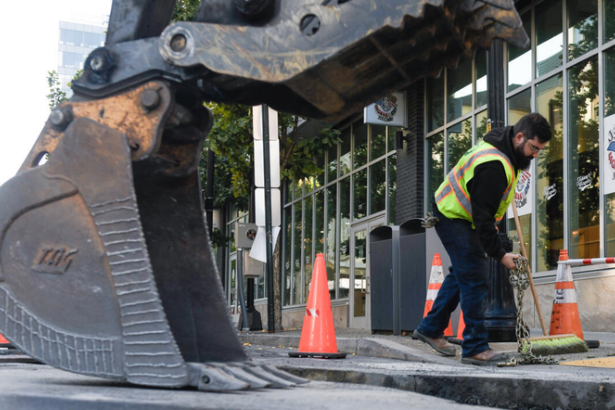
U.S. manufacturing hiring showed encouraging momentum in October 2026, as American factories added 19,000 jobs, according to the latest employment report from the U.S. Bureau of Labor Statistics (BLS).
The increase brings manufacturing employment gains to 101,000 since the sector’s recent low in December 2025. Computer and electronic product manufacturing, machinery production, and primary metals were among the industries contributing to October’s growth.
The numbers offer a positive signal for an industry that has faced considerable uncertainty over the past several years. Manufacturers are navigating changing customer demand, higher operating expenses, technology investments, international competition, and pressure to strengthen domestic production.
However, one month of stronger hiring does not necessarily mean the entire manufacturing sector has entered a sustained recovery.
The more important question is whether businesses can turn improving demand into long-term production growth while finding the skilled workers needed to operate increasingly sophisticated factories.
For manufacturers, suppliers, industrial distributors, and investors, October’s employment figures provide an important indication of where American industry may be heading.
Background and Context: Understanding the U.S. Manufacturing Employment Recovery
Manufacturing remains one of the most important parts of the American economy.
From semiconductor production and industrial machinery to automotive components, pharmaceuticals, food processing, and aerospace equipment, manufacturers support businesses across nearly every major economic sector.
The industry also plays an important role in domestic supply chains, infrastructure development, national security, and technological innovation.
Yet manufacturing employment has experienced significant changes.
Automation has transformed production processes. Global competition has influenced where companies establish factories. Businesses have reconsidered overseas sourcing strategies, while growing demand for advanced technology has encouraged new investments in domestic industrial capacity.
These developments have changed the types of workers manufacturers need.
Modern factories increasingly depend on employees who understand:
- Industrial automation and robotics.
- Computer-controlled production equipment.
- Electrical and mechanical systems.
- Quality assurance and testing.
- Manufacturing software and digital systems.
- Supply chain and inventory management.
- Preventive maintenance and equipment reliability.
This means manufacturing employment growth is no longer simply about hiring more factory-floor workers.
It is also about finding people with the technical capabilities required to support modern industrial operations.
Why Manufacturing Hiring Matters to the U.S. Economy
Manufacturing employment has implications far beyond factory payrolls.
When manufacturers expand their workforce, the effects can extend to suppliers, transportation providers, industrial equipment companies, construction contractors, and local communities.
A new production facility can create demand for raw materials, packaging, machinery, maintenance services, and freight transportation.
Similarly, expanding an existing factory may require additional warehouse capacity, distribution infrastructure, and transportation partnerships.
Manufacturing employment is therefore an important indicator of broader industrial activity.
Latest Update: U.S. Manufacturing Hiring Adds 19,000 Jobs in October 2026
The most important development came from the Bureau of Labor Statistics’ October 2026 Employment Situation report, released on November 6, 2026.
According to the BLS, manufacturing employment increased by 19,000 during October.
The sector has now added 101,000 jobs since reaching a recent employment low in December 2025.
The October report identified three manufacturing industries that contributed to the increase:
| Manufacturing Industry | Jobs Added in October 2026 |
|---|---|
| Computer and electronic product manufacturing | 7,000 |
| Machinery manufacturing | 4,000 |
| Primary metal manufacturing | 4,000 |
| Other manufacturing industries | Net remaining change of 4,000 |
The figures show that hiring gains were concentrated in several important industrial segments rather than distributed evenly across the entire manufacturing sector.
Source: U.S. Bureau of Labor Statistics, Employment Situation, November 6, 2026.
Computer and Electronics Manufacturing Leads Hiring Gains
Computer and electronic product manufacturing added 7,000 jobs in October, making it the largest contributor among the three specifically identified industries.
The development highlights the importance of advanced technology production within the American manufacturing landscape.
Computer and electronics manufacturing supports a broad range of industries, including:
- Semiconductor and electronic component production.
- Computer hardware.
- Industrial control systems.
- Communications equipment.
- Electronic instruments.
- Specialized technology components.
As manufacturers invest in more sophisticated equipment and production systems, demand for technical expertise becomes increasingly important.
However, employment growth alone does not establish which individual technologies or projects are responsible for the increase.
Machinery Manufacturing Adds 4,000 Jobs
Machinery manufacturers added another 4,000 positions in October.
The sector supports industries ranging from construction and agriculture to manufacturing, energy, and transportation.
Machinery production requires a combination of engineering, machining, assembly, quality control, and equipment maintenance.
Growing employment in this category suggests additional opportunities for companies supplying industrial equipment and manufacturing services.
It also reinforces the importance of skilled technical workers in maintaining production capacity.
Primary Metal Manufacturing Also Expands
Primary metal manufacturing recorded an increase of 4,000 jobs.
This category includes industrial activities involving the production and processing of basic metals.
Steel, aluminum, and other primary metals support automotive manufacturing, construction, machinery, infrastructure, and industrial equipment production.
Employment growth in this segment matters because metal production is an important upstream activity for many American manufacturers.
Changes in primary metal production can influence material availability, industrial procurement, and downstream manufacturing costs.
All three industry figures are based on the BLS October 2026 employment release. The remaining 4,000 represents the net difference across other manufacturing industries, not a separately reported industry category.
The Broader Labor Market Provides Additional Context
Manufacturing was not the only industry adding workers in October.
The BLS reported that total U.S. nonfarm payroll employment increased by 165,000, while the unemployment rate changed little at 4.1%.
Transportation and warehousing added 25,000 jobs, while healthcare added 42,000.
This broader employment picture is important because manufacturers depend on a network of supporting industries to move raw materials, distribute finished goods, and maintain production operations.
The BLS also reported that manufacturing’s average workweek remained at 40.5 hours in October, while overtime increased slightly to 3.1 hours.
These figures provide additional context for understanding manufacturing labor utilization alongside employment growth.
Source: BLS October 2026 Employment Situation.
Expert Analysis: What Is Driving Manufacturing Hiring Growth?
October’s employment figures are encouraging, but several larger developments help explain why manufacturers may be increasing their workforce requirements.
1. Growing Demand for Advanced Manufacturing
American manufacturing is becoming increasingly technology-intensive.
Factories are investing in automated production systems, robotics, industrial sensors, machine vision, and connected equipment.
These technologies can improve production consistency, reduce manual processes, and support more efficient manufacturing operations.
However, they also create new workforce requirements.
Manufacturers need employees who can operate, program, maintain, and troubleshoot advanced equipment.
This creates opportunities for industrial technicians, automation specialists, electricians, engineers, and maintenance professionals.
2. Domestic Production Investment
Manufacturers are also reconsidering the structure of their supply chains.
Businesses have become increasingly interested in improving supply chain resilience, reducing exposure to disruptions, and strengthening access to critical components.
Domestic production investments can create additional employment opportunities in industries such as:
- Pharmaceuticals.
- Semiconductor manufacturing.
- Aerospace and defense.
- Industrial machinery.
- Electrical equipment.
- Advanced materials.
Recent investment announcements have reinforced this trend.
For example, IndustrySelect reported on October 29, 2026, that Eli Lilly, Bayer, and GSK announced a combined $8 billion in new U.S. manufacturing commitments across Virginia, Ohio, and Pennsylvania within three weeks.
These commitments illustrate the scale of investment activity in selected life sciences manufacturing projects.
However, announced investment commitments should not be confused with completed construction, operating facilities, or jobs already created.
Source: IndustrySelect: New U.S. Manufacturing Operations Announced in October.
3. Improving Manufacturing Activity and New Orders
Employment decisions are closely connected to production expectations.
When manufacturers receive stronger customer orders, they may need additional workers to meet production schedules.
The Institute for Supply Management’s October 2026 Manufacturing PMI report provides another useful indicator.
The Manufacturing PMI registered 55.5% in October, compared with 54.5% in September.
A reading above 50 indicates expansion.
The Production Index increased to 59.0%, while the New Orders Index reached 55.5%.
These readings indicate that manufacturing activity, production, and new orders were expanding.
The Employment Index stood at 52.4%, indicating continued growth in manufacturing employment activity according to the survey, although its reading declined slightly from September’s 52.7%.
The findings provide a useful complement to the BLS payroll data.
The BLS measures actual payroll employment changes, while ISM surveys purchasing and supply management professionals about business conditions.
Together, these indicators suggest that October brought improving industrial activity, although employment momentum remained somewhat slower than production growth.
Source: Institute for Supply Management: October 2026 Manufacturing PMI.
4. Demand for Skilled Manufacturing Workers
The manufacturing workforce is changing.
Many employers need people with technical capabilities that were less common in traditional factory environments.
For example, a modern production facility may require:
- Robotics maintenance technicians.
- CNC machine operators.
- Industrial electricians.
- Quality control specialists.
- Mechanical engineers.
- Automation engineers.
- Production supervisors.
- Industrial maintenance professionals.
This creates a challenge for manufacturers.
Even when hiring activity increases, companies may struggle to find candidates with the appropriate technical training and experience.
The issue is not simply how many workers are available.
It is whether the available workforce has the skills required by modern industrial operations.
Broader Implications: What Manufacturing Employment Growth Means for American Businesses
Manufacturing employment growth creates opportunities and challenges across the industrial economy.
Impact on Manufacturing Companies
For manufacturers, increasing employment can help expand production capacity and respond to stronger customer demand.
However, additional hiring also creates financial responsibilities.
Companies must account for wages, benefits, training, workplace safety, equipment, and employee retention.
Businesses that expand too quickly without sustainable demand may face unnecessary labor expenses.
The most effective approach is to connect hiring plans with realistic production forecasts and customer requirements.
Impact on Industrial Suppliers
Manufacturing growth can create opportunities for industrial suppliers.
As factories expand operations, they may require additional:
- Machinery and production equipment.
- Electronic components.
- Steel and aluminum.
- Electrical systems.
- Industrial packaging.
- Maintenance supplies.
- Automation technologies.
Suppliers should pay attention to which manufacturing sectors are expanding rather than treating the entire industrial market as one uniform opportunity.
For example, stronger employment in computer and electronic product manufacturing may create different purchasing requirements than growth in primary metals.
Impact on Transportation and Logistics
Manufacturing employment also has implications for transportation companies.
More production activity can generate additional movement of raw materials, components, intermediate products, and finished goods.
Manufacturers need reliable inbound transportation to maintain production schedules.
They also require outbound freight solutions to distribute finished products to warehouses, retailers, distributors, and customers.
This makes transportation planning an important part of manufacturing growth.
Companies should evaluate:
- Supplier delivery schedules.
- Inbound freight capacity.
- Inventory positioning.
- Warehouse availability.
- Truckload and LTL requirements.
- Carrier reliability.
- Delivery performance.
When manufacturing activity increases, transportation networks must be prepared to support additional demand.
Impact on Local Economies
Manufacturing facilities are often major employers in their communities.
When companies expand production, additional hiring can support household income, local spending, and demand for nearby services.
Manufacturing investments can also attract suppliers and industrial service providers to surrounding regions.
However, the economic benefits depend on whether employment growth is sustained and whether local businesses have the infrastructure and workforce required to support expansion.
Manufacturing Workforce Challenges That Could Slow Future Growth
Despite October’s positive employment numbers, manufacturers still face several obstacles.
The Skilled Labor Gap
Technical manufacturing positions often require specialized education, certification, or experience.
Employers may compete for a relatively limited pool of qualified workers.
Businesses can address this challenge through partnerships with technical colleges, apprenticeship programs, vocational schools, and workforce development organizations.
Wage and Operating Cost Pressure
Hiring more employees increases labor expenses.
The BLS reported that average hourly earnings across private nonfarm payrolls reached $38.00 in October, up 3.1% over the previous 12 months.
For private-sector production and nonsupervisory employees, average hourly earnings reached $32.75.
These figures cover the broader private-sector workforce rather than manufacturing alone.
Manufacturers must evaluate compensation alongside productivity, employee retention, and overall operating costs.
Automation and Workforce Transition
Automation can improve production efficiency, but it also changes the skills required from employees.
Workers may need additional training to operate new machinery, maintain robotics systems, or interpret production data.
Manufacturers that invest in technology without investing in workforce development may struggle to achieve the expected operational benefits.
Uncertainty in Industrial Demand
Hiring decisions depend on future demand.
Manufacturers must consider customer orders, raw material costs, pricing pressures, trade conditions, and economic uncertainty before expanding their workforce.
The October ISM report showed manufacturing prices continuing to increase, with the Prices Index at 75.2%.
This indicates that cost pressures remain an important consideration even as manufacturing activity expands.
Related History: How American Manufacturing Has Changed
The American manufacturing sector has experienced several major transformations.
During the twentieth century, factory employment was heavily associated with large-scale production, assembly lines, and labor-intensive industrial operations.
Over time, globalization, technological advancement, and automation reshaped manufacturing employment.
The growth of computerized machinery, robotics, and digital production systems changed how factories operate and what employers expect from workers.
More recently, investment in semiconductors, pharmaceuticals, aerospace, electric infrastructure, and advanced industrial technologies has brought renewed attention to domestic production capacity.
The current employment recovery should be understood within this broader transition.
Manufacturing is not simply returning to an earlier model.
It is evolving toward a more technology-intensive industrial environment that requires different skills, investment priorities, and operational capabilities.
What Happens Next: The Outlook for U.S. Manufacturing Hiring
The next several months will help determine whether October’s employment gains represent a temporary improvement or the beginning of a stronger manufacturing labor market.
Several indicators deserve attention.
November and December Employment Reports
The next BLS employment releases will help show whether manufacturing employment continues to increase.
Businesses should monitor changes in total manufacturing employment and individual subsectors rather than relying on a single monthly figure.
Monthly estimates are preliminary and can be revised as additional information becomes available.
Manufacturing PMI and New Orders
ISM’s monthly manufacturing survey will remain important for assessing industrial demand.
New orders, production, employment, and prices provide useful information about changing manufacturing conditions.
If new orders and production remain in expansion territory, manufacturers may have greater confidence in future hiring.
New Factory Investments
Manufacturing investment announcements will also matter.
New facilities and factory expansions can create employment opportunities, although the timing between an announcement and actual hiring may vary considerably.
Companies should distinguish announced investment commitments from projects that have entered construction or commercial production.
Workforce Training and Technical Education
Manufacturers will need to strengthen relationships with educational institutions and training organizations.
Technical education, apprenticeships, and on-the-job training can help develop the workforce needed to support increasingly sophisticated production environments.
Technology and Automation Investments
Automation will continue to influence hiring requirements.
Manufacturers that combine technology investments with workforce development may be better positioned to improve production efficiency and maintain competitive operations.
Conclusion: American Manufacturing Hiring Shows Encouraging Signs, but the Recovery Is Still Developing
The addition of 19,000 manufacturing jobs in October 2026 provides an encouraging signal for American industry.
With manufacturing employment increasing by 101,000 since December 2025, the sector is showing signs of renewed workforce momentum.
Computer and electronic product manufacturing, machinery manufacturing, and primary metal manufacturing contributed to October’s gains.
The broader manufacturing environment also showed signs of expansion, with the ISM Manufacturing PMI reaching 55.5%.
However, the industry still faces important challenges.
Skilled labor shortages, rising operating expenses, technological change, and uncertainty around future demand will influence hiring decisions in the months ahead.
For manufacturers, the opportunity lies in building a workforce that can support modern production while maintaining operational efficiency.
For suppliers and industrial service providers, understanding where employment and investment are increasing can help identify new business opportunities.
American manufacturing is changing, and October’s employment figures offer another indication of how that transformation is unfolding.
The next stage will depend on whether stronger production activity translates into sustained hiring, investment, and long-term industrial growth.
FREQUENTLY ASKED QUESTIONS
1. How many manufacturing jobs were added in October 2026?
U.S. manufacturing added 19,000 jobs in October 2026, according to the Bureau of Labor Statistics’ November 6 employment report.
2. How much has U.S. manufacturing employment increased since December 2025?
Manufacturing employment has increased by 101,000 since its recent low in December 2025.
3. Which manufacturing industries added the most jobs in October 2026?
Computer and electronic product manufacturing added 7,000 jobs. Machinery manufacturing and primary metal manufacturing each added 4,000.
4. Is U.S. manufacturing expanding in 2026?
The October 2026 ISM Manufacturing PMI registered 55.5%, indicating expansion in manufacturing activity for the tenth consecutive month.
5. Why is manufacturing hiring increasing?
Contributing factors include improving production activity, stronger new orders, investment in advanced manufacturing, and demand for industrial equipment and technical workers.
6. What skills are most important in modern manufacturing?
Important skills include industrial automation, robotics, CNC operation, electrical systems, mechanical maintenance, quality control, engineering, and production technology.
7. How does manufacturing hiring affect the supply chain?
Manufacturing expansion can increase demand for raw materials, industrial components, transportation, warehousing, packaging, and distribution services.
8. What challenges could slow manufacturing employment growth?
Potential challenges include skilled labor shortages, rising wages, higher production costs, automation-related workforce transitions, and uncertain customer demand.
9. Where can businesses find reliable U.S. manufacturing employment data?
The U.S. Bureau of Labor Statistics publishes monthly employment reports. The Institute for Supply Management also provides manufacturing activity and employment indicators through its PMI reports.
SOURCES & REFERENCES
1. U.S. Bureau of Labor Statistics
The Employment Situation, October 2026. Published November 6, 2026.
2. Institute for Supply Management
October 2026 ISM Manufacturing PMI Report.
3. Indeed Hiring Lab
US Labor Market Snapshot, October 2026. Published October 22, 2026.
4. IndustrySelect
New U.S. Manufacturing Operations Announced in October. Published October 29, 2026.
5. U.S. Bureau of Labor Statistics
Current Employment Statistics and manufacturing employment data.