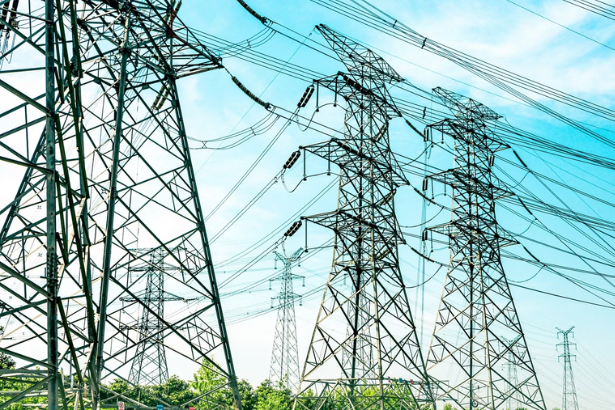
America’s AI boom is running into a constraint that has little to do with GPUs: there may not be enough power and grid infrastructure to deploy all the chips being ordered.
The U.S. chip supply chain is facing a new kind of bottleneck. Instead of a shortage of advanced processors themselves, the problem is increasingly whether data centers can get enough electricity to put those processors to work.
A Morgan Stanley analysis cited by Reuters on October 5 says Nvidia and Broadcom are relatively insulated from the worsening U.S. data-center power crunch. But delays in AI infrastructure deployment could create problems further down the semiconductor chain, particularly for suppliers of memory, optical components, power-management chips and analog components. Reuters
That distinction could become increasingly important.
The AI infrastructure race has spent years focusing on GPUs, advanced packaging and semiconductor fabrication. Now another layer is becoming impossible to ignore: the electricity and physical grid infrastructure required to operate all that hardware.
Background and Context
The U.S. AI boom has created extraordinary demand for data centers.
Hyperscalers and AI companies are building facilities filled with increasingly powerful computing systems. Those systems require enormous amounts of electricity, not only to run the processors but also to cool the equipment and support the surrounding infrastructure.
That creates a dependency between two industries that historically operated somewhat separately.
The semiconductor industry can manufacture more chips, but those chips ultimately need somewhere to run.
If a data center cannot secure sufficient power, its computing capacity cannot be deployed on schedule.
Morgan Stanley estimates that U.S. data-center developers could face a 34% net power shortfall through 2028, equivalent to approximately 32 gigawatts, even after accounting for measures such as behind-the-meter generation and fuel cells. Investing.com
That does not mean America is literally running out of electricity everywhere.
The problem is more localized and structural.
Power generation, transmission capacity, substations, transformers and other grid equipment must be available in the right locations and on the right timelines.
The U.S. Department of Energy says grid technology supply chains are a critical vulnerability and specifically identifies distribution transformers as a major constraint. DOE says transformer lead times increased from roughly three to six months in 2019 to 12 to 30 months in 2023, the latest data cited on its supply-chain page. The Department of Energy’s Energy.gov
That creates a potentially uncomfortable equation for the AI industry:
More chips + more data centers + insufficient power infrastructure = delayed AI deployment.
Latest Update: AI Power Constraints Move Into the Chip Supply Chain
The latest warning came Monday, October 5.
According to Reuters, Morgan Stanley said Nvidia and Broadcom are relatively protected from the current U.S. data-center power crunch. The brokerage does not currently expect the infrastructure bottlenecks to put those companies’ 2027 forecasts at risk. Reuters
Why?
Nvidia and Broadcom have significant visibility into where their chips are being deployed. They can also coordinate with data-center developers, semiconductor suppliers and other parts of the power ecosystem.
But that protection does not necessarily extend throughout the semiconductor supply chain.
If a data-center project is delayed, customers may postpone or cancel orders for components that would otherwise be installed alongside AI accelerators.
Morgan Stanley identified memory, optical, power-management and analog components as areas that could be particularly exposed to inventory disruption if computing capacity cannot be deployed as planned. Investing.com
This is an important change in the way the AI supply chain should be understood.
The industry is no longer simply asking:
Can semiconductor manufacturers produce enough chips?
It is increasingly asking:
Can the U.S. infrastructure system deploy enough electricity, data centers and networking capacity to actually use those chips?
Why the U.S. Chip Supply Chain Is Vulnerable to a Power Bottleneck
The semiconductor industry operates as a network rather than a single manufacturing chain.
A modern AI server can involve:
- Advanced GPUs or AI accelerators
- CPUs
- High-bandwidth memory
- Networking chips
- Optical components
- Power-management systems
- Printed circuit boards
- Advanced cooling systems
- Storage
- Electrical infrastructure
If the data center itself cannot become operational, demand for every downstream component can shift.
That does not necessarily mean suppliers will suddenly lose business.
Instead, the timing of demand can change.
A project scheduled to consume thousands of servers this year could move into a later quarter. A data-center expansion planned for one region could be delayed while developers search for another power source.
For manufacturers, those changes matter.
Factories plan capacity around expected orders. Component suppliers build inventories around anticipated deployments. Logistics companies plan transportation around production schedules.
When a major infrastructure project moves, the effects can ripple backward.
The Grid Is Becoming Part of the AI Supply Chain
This may be the most important development for supply-chain executives.
Electricity is usually treated as an operating expense.
For AI infrastructure, it is becoming a strategic input.
The Department of Energy’s 2026 transmission study says additional transmission infrastructure is urgently needed because of load growth from data centers, expanding domestic manufacturing, large industrial loads and the broader growth of the U.S. economy. The Department of Energy’s Energy.gov
The grid itself therefore becomes part of America’s technology supply chain.
That creates several potential bottlenecks.
Transformers
Transformers are essential for moving electricity through the grid and delivering it at usable voltages.
DOE says distribution transformers face long lead times and component shortages. The agency is working with manufacturers, utilities and other stakeholders to address those constraints. The Department of Energy’s Energy.gov
Transmission
A region may have sufficient generation capacity on paper but still lack the transmission infrastructure required to move electricity where it is needed.
DOE’s 2026 draft National Transmission Needs Study specifically highlights data centers and domestic manufacturing as drivers of growing transmission requirements. The Department of Energy’s Energy.gov
Substations and electrical equipment
Data centers require major electrical systems before servers can even be installed.
DOE says transformers, circuit breakers, substation components and power electronics face significant supply-chain challenges, including limited domestic manufacturing capacity and dependence on imported components. Some critical equipment can have lead times of two years or more. The Department of Energy’s Energy.gov
The result is a supply chain within a supply chain.
The AI industry needs chips.
The chips need data centers.
The data centers need electricity.
The electricity requires generation, transmission, transformers and other infrastructure.
Every layer has to arrive on time.
Expert Insights and Analysis
The Reuters report offers an important distinction between chip demand and chip deployment.
AI demand can remain extremely strong even while physical infrastructure slows the rate at which chips are installed.
That is why Nvidia and Broadcom can remain relatively insulated while secondary component manufacturers become more exposed.
The core AI chip suppliers have enormous visibility because their products are strategically important and their customers are planning deployments years ahead.
But a memory supplier or optical component manufacturer may experience more volatility if a customer suddenly changes the timing of a data-center project.
That could create an unusual situation in the semiconductor industry.
The strongest AI demand does not necessarily translate into the smoothest supply chain.
Instead, bottlenecks can migrate.
First, the industry worried about GPU availability.
Then it worried about advanced packaging.
Then high-bandwidth memory became a critical constraint.
Now power and grid infrastructure are emerging as another limiting factor.
This does not mean the semiconductor shortage story is over.
It means the definition of capacity is getting broader.
A chip is only economically useful when it can be integrated into a functioning system.
Broader Implications
1. America’s AI Buildout Is Becoming an Energy Story
The AI industry increasingly depends on America’s ability to expand its electricity infrastructure.
That means utilities, semiconductor manufacturers, data-center operators and technology companies have a common interest that did not always exist at this scale.
The winners may not simply be companies producing the most powerful processors.
They may also include companies capable of solving the physical infrastructure problems surrounding those processors.
2. Domestic Manufacturing Could Face the Same Constraint
The issue extends beyond AI.
DOE’s transmission study identifies both data centers and expanding domestic manufacturing as major sources of electricity demand growth. The Department of Energy’s Energy.gov
That means America’s reshoring ambitions could compete for some of the same infrastructure needed by AI data centers.
A new semiconductor factory needs electricity.
A battery plant needs electricity.
An EV manufacturing facility needs electricity.
A hyperscale data center needs enormous amounts of electricity.
The United States is therefore entering a period in which access to power can influence where factories and data centers are built.
3. The U.S. Chip Supply Chain Could Become More Regional
Power availability could become another factor in deciding where semiconductor and AI infrastructure projects are located.
Companies may increasingly evaluate:
- Available generation
- Transmission capacity
- Grid connection timelines
- Transformer availability
- Local permitting
- Water availability
- Land
- Workforce
- Tax incentives
- Proximity to customers
This could make energy infrastructure a competitive advantage for U.S. manufacturing regions.
4. Component Suppliers Could See Uneven Demand
The biggest semiconductor companies may continue reporting strong AI demand even while smaller suppliers experience fluctuations.
That is because the supply chain does not move at exactly the same speed.
If an AI data center is delayed, the primary processor order may remain committed while installation of supporting components is pushed back.
That creates inventory risk.
Memory and optical suppliers could therefore face different conditions from Nvidia and Broadcom even though they are serving the same AI infrastructure boom. Morgan Stanley specifically highlighted these secondary components as more vulnerable to deployment delays. Reuters
5. Grid Equipment Is Becoming a Technology Bottleneck
This is perhaps the strangest part of the story.
The next constraint on AI may not be manufactured in a semiconductor fab.
It could be a transformer.
DOE says distribution-transformer lead times rose substantially during the past several years, while the agency continues working with industry to strengthen domestic supply. The Department of Energy’s Energy.gov
That turns traditional industrial manufacturing into an increasingly important part of America’s AI strategy.
Related History and Comparable Technologies
Technology booms have repeatedly encountered physical infrastructure constraints.
The internet required fiber networks.
Cloud computing required massive data centers.
Mobile computing required wireless networks.
Electric vehicles require charging infrastructure.
AI requires all of those layers, plus enormous amounts of computing power and electricity.
The difference today is scale.
Generative AI is causing hyperscalers to build increasingly large computing facilities at the same time that the United States is trying to expand domestic manufacturing.
That puts pressure on infrastructure that already has long development timelines.
Transformers, transmission lines and substations cannot necessarily be produced or installed as quickly as a software product can be launched.
That mismatch is becoming one of the central challenges of the AI economy.
What Happens Next
The next stage of the U.S. chip supply chain story will depend on whether infrastructure investment catches up with AI demand.
Several developments are worth watching.
Power procurement
Data-center developers are increasingly likely to secure power earlier in the development process rather than treating electricity as something that can be arranged after land and buildings are selected.
On-site generation
Morgan Stanley’s estimate already accounts for measures including behind-the-meter generation and fuel cells. Investing.com
That suggests companies are actively searching for alternatives to conventional grid connections.
Grid investment
DOE is pushing efforts to strengthen domestic production of critical grid components, while its 2026 transmission study highlights the need for additional infrastructure. The Department of Energy’s Energy.gov
Semiconductor inventory management
Component manufacturers may need to become more cautious about capacity expansion if data-center deployment schedules become less predictable.
Geographic diversification
AI infrastructure developers may increasingly favor regions where power can be secured quickly, even if those locations are not traditionally considered major technology hubs.
The central question is no longer whether America wants more AI infrastructure.
It is whether the physical infrastructure can arrive quickly enough.
Conclusion
The U.S. chip supply chain is entering a new phase of the AI boom.
The first phase was dominated by the race to manufacture advanced processors.
The second focused on memory, networking, packaging and server capacity.
Now electricity is becoming part of the equation.
Morgan Stanley’s warning is not that Nvidia or Broadcom are suddenly facing a semiconductor crisis. In fact, Reuters reports that both companies are relatively protected from the current power crunch. The bigger concern is what happens further down the chain when data-center projects are delayed. Reuters
Memory, optical, power-management and analog component suppliers could feel the effects first.
Meanwhile, DOE’s research shows that the physical grid has its own supply-chain problems, particularly around transformers and other critical equipment. The Department of Energy’s Energy.gov
That creates a powerful new reality for America’s AI strategy:
The semiconductor supply chain does not end at the chip factory. It ends when the chip can actually be powered and deployed.
And in 2026, that may be the bottleneck investors and manufacturers need to watch most closely.
FAQ
1. What is happening to the U.S. chip supply chain?
The U.S. chip supply chain is facing a new infrastructure constraint as data-center developers struggle to secure sufficient power. Morgan Stanley says Nvidia and Broadcom are relatively protected, but delays to AI deployments could affect suppliers of memory, optical, power-management and analog components. Reuters
2. Is there a shortage of Nvidia chips?
The latest Morgan Stanley analysis does not describe a new Nvidia chip shortage. Instead, it says Nvidia is relatively insulated from the U.S. data-center power crunch and does not currently expect the bottlenecks to threaten its 2027 forecasts. Investing.com
3. How much power could U.S. data centers be short of?
Morgan Stanley estimated that U.S. data-center developers face a 34% net power shortfall through 2028, equivalent to about 32 GW, after accounting for measures such as behind-the-meter generation and fuel cells. Investing.com
4. Which semiconductor companies could be most exposed?
Morgan Stanley specifically highlighted suppliers of memory, optical components, power-management chips and analog components as potentially more exposed if data-center deployment is delayed. Reuters
5. Why are transformers important to AI data centers?
Transformers are essential grid components used to deliver electricity at the appropriate voltage. DOE says distribution transformers are facing supply-chain constraints and long lead times, creating challenges for expanding and maintaining the U.S. electric grid. The Department of Energy’s Energy.gov
6. Could power shortages slow America’s AI expansion?
Yes. If new data centers cannot secure electricity or grid connections on schedule, AI infrastructure deployments can be delayed even when chips and servers are available. Morgan Stanley has identified power as one of the growing constraints on U.S. data-center expansion. Investing.com
7. Is the problem only about AI?
No. DOE’s 2026 transmission study says growing electricity demand is being driven by data centers, domestic manufacturing, large industrial loads and broader economic growth. The Department of Energy’s Energy.gov
8. What should manufacturers watch next?
Manufacturers should monitor data-center construction schedules, regional power availability, transformer lead times, transmission projects, semiconductor inventory levels and customer order timing. These factors could increasingly determine how quickly AI hardware demand translates into actual deployments.
Sources & References
- Reuters, “Nvidia, Broadcom shielded as AI power crunch hits chip supply chain, says Morgan Stanley,” October 5, 2026.
Read Reuters report - U.S. Department of Energy, “Supply Chain and Market Analysis.”
Read the Department of Energy analysis - U.S. Department of Energy, “DOE’s Office of Electricity Publishes 2026 Draft National Transmission Needs Study to Strengthen America’s Grid,” July 9, 2026.
Read the DOE transmission study announcement - U.S. Department of Energy, “Strengthening America’s Grid Supply Chain.”
Read the DOE grid supply-chain analysis - U.S. Department of Energy, “Distribution Transformers.”
Read the DOE transformer supply-chain information