Introduction
The ChatGPT login search term is suddenly getting attention for a reason. A Google Trends snapshot supplied for this story shows a sharp rise in searches, arriving just days after OpenAI unveiled Dots and a much broader platform strategy at DevDay 2026.
That timing matters. OpenAI’s September 29 announcements were not simply another model launch. The company introduced always-on Dots agents, expanded plugins, launched Sign in with ChatGPT, and announced an enterprise marketplace. OpenAI says its new platform is designed to let developers build experiences directly inside ChatGPT while giving users and agents a common place to discover and use software. OpenAI
The result is a subtle but important change in what the ChatGPT login represents. It is increasingly becoming an entry point into an ecosystem rather than merely a way to open a chatbot.
Background and Context
For years, ChatGPT’s basic interaction model was straightforward: log in, type a prompt, receive an answer.
That model is changing quickly.
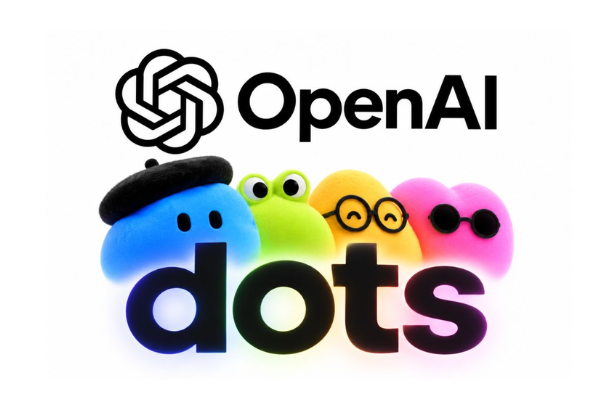
At DevDay 2026, OpenAI described Dots as always-on agents that can take responsibility for ongoing work, operate through connected applications, and continue making progress between conversations. The company says Dots are powered by GPT-6 Astra and have their own cloud computer. OpenAI
OpenAI is also opening its platform to developers through plugin extensions. Those extensions can give software a home inside ChatGPT, including interactive panels and support for files and connected applications. The company says improved discovery and recommendations will help users find relevant plugins from the directory and directly within conversations. OpenAI
Then there is Sign in with ChatGPT.
OpenAI announced that users can use their ChatGPT identity across participating services and, for eligible plans, potentially use included ChatGPT usage with supported third-party tools. The initial ecosystem includes services such as Devin, Notion, Vercel, T3, OpenClaw, and Dactyl. OpenAI
Put together, these changes make the login itself more strategically important.
Latest Update: Why ChatGPT Login Is Trending
The Google Trends screenshot associated with this story shows a relatively stable level of interest followed by a dramatic dip and then a steep climb toward the present.
That pattern is notable because it coincides with a burst of OpenAI product news.
On September 29, OpenAI announced Dots, its new always-on agent platform. OpenAI says Dots can work continuously toward user-defined goals, connect to more than 4,000 apps through its plugin ecosystem, and communicate through ChatGPT, Slack, and Teams. OpenAI
The Verge’s hands-on reporting adds an important reality check. Its testing found that Dots could be useful for structured business workflows and projects involving user-controlled data, while also encountering limitations with some public websites and purchasing-oriented tasks. The Verge
That distinction matters.
OpenAI is not simply promising an AI that answers questions faster. It is trying to build an AI that can remain involved after the initial prompt.
At the same time, OpenAI is positioning ChatGPT as a software distribution layer.
TechCrunch reported that the company’s DevDay announcements collectively point toward an alternative to the traditional app store model. Instead of searching an app store first, users could increasingly discover software through conversations and then use those services without leaving ChatGPT. TechCrunch
OpenAI’s own DevDay recap supports that broader direction. The company says developers can create native experiences inside ChatGPT and that the platform now serves as a shared surface where humans and agents can collaborate. OpenAI
This is why a ChatGPT login suddenly means more than authentication.
It can be the first step into an environment containing AI agents, third-party tools, connected data, business software and potentially automated workflows.
Expert Insights and Analysis
The most important development is not Dots by itself. It is the convergence of several pieces.
Think of the strategy as four layers.
First, there is identity.
Sign in with ChatGPT gives OpenAI a way to extend its account relationship beyond ChatGPT itself. OpenAI says users can use their ChatGPT identity with participating external applications, while additional permissions are separately controlled. OpenAI Help Center
Second, there is intelligence.
Dots are designed to operate continuously rather than waiting for every individual instruction. That moves ChatGPT closer to an agent platform.
Third, there is distribution.
Plugins and native experiences allow developers to bring software into ChatGPT. OpenAI says improved plugin discovery will help users find relevant tools through the directory and conversations. OpenAI
Fourth, there is commerce.
OpenAI’s new Marketplace lets eligible enterprise customers apply part of their OpenAI commitment toward approved partner software. The initial partner list includes companies across creative work, customer experience, legal services and cybersecurity. OpenAI
Those four pieces reinforce each other.
A user logs in once. The account becomes an identity layer. The AI recommends a tool. The tool operates inside the conversation. An agent can potentially use that tool repeatedly. And businesses can eventually pay for an ecosystem of services around the platform.
That is much closer to an operating environment than a traditional chatbot.
Broader Implications
ChatGPT Could Become the New Software Starting Point
The biggest implication is behavioral.
Today, many users begin with a search engine, an app store or a specific website. OpenAI wants more of those journeys to begin with a conversation.
Instead of asking, “Which application should I use?” a user could ask ChatGPT to complete a task and let the platform determine which connected service is appropriate.
That creates an enormous opportunity for software companies, but it also creates a new dependency.
Developers may gain access to ChatGPT’s enormous user base, while OpenAI gains influence over how those users discover software.
For businesses following this shift, our broader [technology and AI coverage at The Tech Marketer](/) can serve as an internal content hub for related platform and AI stories.
The Login Becomes a Strategic Asset
A ChatGPT login is traditionally just an authentication mechanism.
In this emerging model, it becomes an identity and access layer.
OpenAI says Sign in with ChatGPT can allow users to authenticate with participating external services and, where supported, use eligible ChatGPT plan usage for AI requests. Users can also set usage limits for participating applications. OpenAI Help Center
That creates an interesting dynamic.
The more services connect to the account, the more valuable the account becomes. But the more valuable it becomes, the more important permissions, privacy, security and account controls become.
OpenAI has already introduced security history in ChatGPT, giving users a way to review account security events including sign-ins, sign-outs and authentication changes. OpenAI Help Center
That is not a coincidence. A platform that increasingly acts on behalf of users needs stronger identity controls than a simple question-and-answer chatbot.
The App Store Model Faces a New Challenger
Apple and Google still control the dominant mobile operating systems and traditional app distribution channels.
OpenAI cannot simply replace those operating systems overnight.
But it does not necessarily need to.
If users increasingly discover software through ChatGPT, interact with applications through conversational interfaces and delegate tasks to agents, the most important discovery layer could move upward from the operating system to the AI assistant.
That is the bigger significance behind the recent announcements.
Related History and Comparable Technologies
The technology industry has repeatedly seen platforms evolve from individual products into ecosystems.
Microsoft Windows became a software distribution layer. The web browser became a gateway to online services. Smartphones turned app stores into powerful economic platforms.
ChatGPT could be attempting something similar, but with AI as the interface.
The difference is that an AI platform does not merely display applications.
It can select them.
That distinction is enormous.
A traditional app store presents thousands of options and asks the user to choose. An AI agent could potentially understand the task, select the appropriate tool, execute it and return the result.
The interface shifts from “Which app do you want?” to “What are you trying to accomplish?”
Dots fits directly into that transition.
OpenAI’s own description of the platform emphasizes ongoing responsibility, connected applications and agents that can continue work between conversations. OpenAI
What Happens Next
The immediate question is whether people actually use these capabilities regularly.
AI agents are easy to demonstrate and much harder to make dependable.
A useful agent must handle authentication, permissions, unexpected website behavior, ambiguous instructions and security boundaries. It also needs to know when to act independently and when to ask the user for approval.
The Verge’s early testing of Dots illustrates that gap. The system can handle meaningful structured work, but real-world websites and purchasing tasks remain less predictable. The Verge
The next phase will therefore be less about flashy demos and more about reliability.
OpenAI will need to prove that users trust Dots with recurring responsibilities.
Developers will need a reason to build inside ChatGPT rather than simply maintaining their own applications.
And users will need to understand what their AI is allowed to access.
If those pieces fall into place, the ChatGPT login could become one of the most important gateways in consumer and business software.
If they do not, ChatGPT may remain primarily a destination for conversations rather than a new operating layer for digital work.
Conclusion
The sudden interest around ChatGPT login is more interesting when viewed alongside OpenAI’s broader product strategy.
Dots turns ChatGPT toward persistent agents. Plugins bring third-party software into the conversation. Sign in with ChatGPT extends identity beyond OpenAI’s own interface. The Marketplace adds a business layer around partner software.
None of these developments alone replaces the traditional app store.
Together, however, they point toward something different.
OpenAI wants ChatGPT to become the place where users do more than ask questions. It wants the platform to understand the task, find the software, connect the necessary data and increasingly let agents carry the work forward.
That makes the humble login screen much more consequential.
The next major battle in AI may not be about who has the smartest chatbot.
It may be about who owns the place where people begin their digital work.
FAQ
1. Why are ChatGPT login searches increasing?
The recent rise in ChatGPT login interest coincides with OpenAI’s DevDay announcements, including Dots, plugins, Sign in with ChatGPT and a new enterprise marketplace. The supplied Google Trends screenshot shows a sharp increase in search interest around the same period.
2. What is OpenAI Dots?
Dots are OpenAI’s always-on AI agents. OpenAI says they can take on ongoing responsibilities, work through connected applications and continue making progress between conversations. They are powered by GPT-6 Astra and use their own cloud computer. OpenAI
3. Is ChatGPT becoming an app store?
OpenAI is moving in that direction, although it is more accurate to describe ChatGPT as an emerging software discovery and execution platform. The company is expanding plugins, native experiences, partner integrations and an enterprise marketplace. TechCrunch has characterized the combined strategy as a challenge to the traditional app store model. TechCrunch
4. What does Sign in with ChatGPT do?
Sign in with ChatGPT lets users authenticate with participating external applications using their ChatGPT account. Eligible users can also choose to let supported applications use included ChatGPT plan usage for AI requests. OpenAI Help Center
5. Can Dots use other applications?
Yes. OpenAI says Dots can connect through its plugin ecosystem, which provides access to more than 4,000 apps. Dots can also work through interfaces including ChatGPT, Slack and Teams. OpenAI
6. Are Dots available to everyone?
No. Availability is being rolled out gradually. OpenAI currently lists Dots for eligible Pro and Business Premium users in supported markets, with Enterprise, Edu and Healthcare access available through beta arrangements where administrators enable it. OpenAI
7. Is the ChatGPT login itself changing?
The basic act of signing in remains familiar, but its strategic role is changing. With Sign in with ChatGPT and connected applications, the same identity can increasingly provide access to services outside the core ChatGPT interface. OpenAI Help Center
Sources & References
- OpenAI, “Introducing dots”
OpenAI: Introducing dots - OpenAI, “DevDay 2026: Building the agentic internet”
OpenAI DevDay 2026 recap - The Verge, “OpenAI’s Dots hands-on: the agent that can work for you”
The Verge: OpenAI Dots hands-on - TechCrunch, “OpenAI’s latest features take direct aim at the app store model”
TechCrunch: OpenAI and the app store model - OpenAI Help Center, “Sign in with ChatGPT”
OpenAI Help: Sign in with ChatGPT - OpenAI Help Center, “Using your ChatGPT plan in other apps and sites”
OpenAI Help: Using ChatGPT plans in other apps - Google Trends, “ChatGPT login”
Google Trends: ChatGPT login