Introduction
SpaceX rocket hits Moon became a top Google Trends search after reports confirmed that a stray piece of a SpaceX Falcon 9 rocket struck the lunar surface, leaving behind a newly formed crater.
While the event poses no danger to Earth or future lunar missions, scientists view it as a rare opportunity to study impact physics and how the Moon’s surface responds to high-speed collisions.
Background and Context
Since the beginning of the Space Age, numerous spacecraft, boosters, and rocket stages have remained in deep space after completing their missions.
Occasionally, these objects drift into the Moon’s gravitational influence, eventually colliding with the lunar surface.
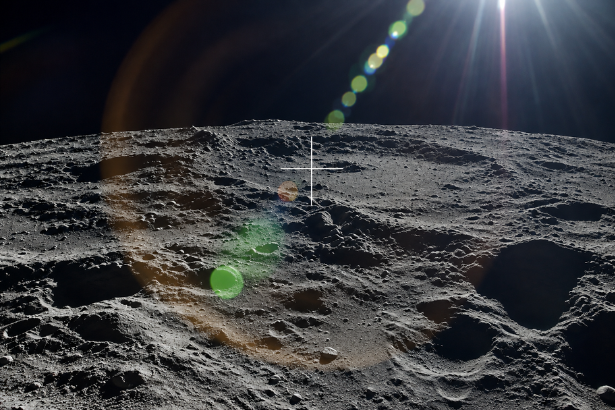
Unlike Earth, the Moon has virtually no atmosphere, meaning even relatively small pieces of space hardware strike the surface at extremely high speeds, excavating fresh craters.
The latest object was identified as debris associated with a SpaceX Falcon 9 launch vehicle.
Latest Update
According to Bloomberg, the stray Falcon 9 rocket component impacted the Moon after years drifting through space.
The collision is expected to have created a new lunar crater, although its exact size will be determined through follow-up observations.
CNN reports scientists had predicted the impact in advance, allowing researchers to prepare telescopes and spacecraft to monitor the event.
Meanwhile, NASA announced it will attempt to observe the impact site using lunar orbiters and other scientific assets to study the newly created crater and the material ejected during the collision.
Scientists hope the observations will provide valuable insights into the Moon’s geology and improve models used to understand natural asteroid impacts.
Why the Impact Matters
Although accidental, the impact provides a unique scientific opportunity.
Studying Lunar Craters
Fresh impacts expose previously buried material beneath the Moon’s surface, giving researchers an opportunity to examine relatively untouched lunar geology.
Understanding Impact Physics
Scientists can compare predicted crater models with actual observations, improving computer simulations used for planetary science.
Supporting Future Lunar Missions
Data from newly formed craters may help engineers better understand the lunar environment as NASA’s Artemis program prepares to return astronauts to the Moon.
NASA’s Observation Plan
NASA says it intends to analyze:
- The size of the new crater.
- The amount of material thrown from the impact.
- Changes to the surrounding terrain.
- Brightness differences around the fresh impact site.
- Long-term evolution of the crater.
Images from the Lunar Reconnaissance Orbiter and other spacecraft are expected to help identify the exact location.
Broader Implications
The incident highlights a growing challenge in deep-space exploration.
As more spacecraft travel beyond Earth orbit, the amount of abandoned hardware in cislunar space is expected to increase.
While accidental lunar impacts remain extremely rare, scientists and space agencies continue developing better tracking systems for inactive spacecraft and rocket stages.
The event also demonstrates how international space agencies can turn unexpected events into valuable scientific experiments.
What Happens Next
Researchers will spend the coming weeks searching for the fresh impact crater using high-resolution orbital imagery.
Once located, scientists will compare before-and-after images to estimate:
- Crater diameter.
- Ejecta distribution.
- Impact energy.
- Surface composition.
NASA is expected to release additional findings after detailed analysis of the impact site.
Conclusion
The SpaceX rocket hits Moon story is less about a dramatic accident and more about a rare scientific opportunity.
Although the Falcon 9 debris was no longer operational, its collision with the Moon offers researchers a chance to study crater formation in real time and improve our understanding of impacts across the Solar System.
With NASA already preparing detailed observations, the newly formed crater could provide valuable data for future lunar exploration.
Frequently Asked Questions
Did a SpaceX rocket really hit the Moon?
Yes. Reports indicate that a stray piece of a SpaceX Falcon 9 rocket impacted the lunar surface after drifting through space.
Was anyone in danger?
No. The collision occurred on the Moon and posed no threat to Earth or astronauts.
Why is NASA observing the impact?
NASA hopes to study the newly formed crater to better understand lunar geology and impact physics.
How big is the crater?
Scientists have not yet confirmed the crater’s exact size. It will be measured using orbital imagery.
Why is this event important?
Fresh lunar impacts are uncommon and provide scientists with valuable opportunities to study the Moon’s surface and improve models of asteroid impacts.
Sources & References
NASA – NASA Will Attempt to Observe Rocket Part’s Lunar Impact
https://www.nasa.gov/humans-in-space/commercial-space/nasa-will-attempt-to-observe-rocket-parts-lunar-impact/
CNN – New crater likely to form after SpaceX rocket slams into the Moon
https://www.cnn.com/2026/08/04/science/spacex-rocket-moon-impact
Bloomberg – Stray Piece of SpaceX Falcon 9 Rocket Slams Into the Moon
https://www.bloomberg.com/news/articles/2026-08-05/stray-piece-of-spacex-falcon-9-rocket-slams-into-the-moon