Introduction
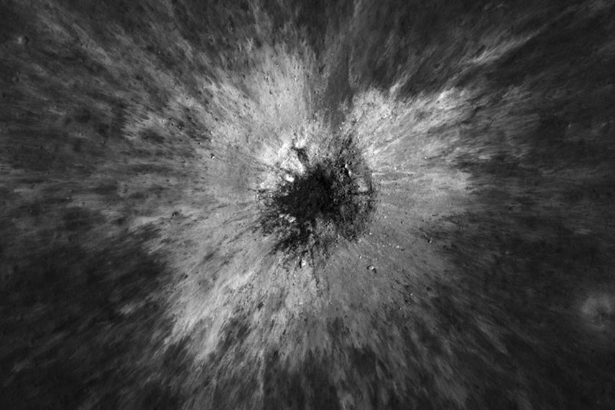
NASA has discovered a huge new crater on the Moon, created by a powerful asteroid or comet fragment impact that initially went undetected by telescopes on Earth and in space.
The NASA moon crater discovery was made using images from the Lunar Reconnaissance Orbiter, which has been studying the lunar surface since 2009. The crater is approximately 728 feet, or 222 meters, wide and up to 141 feet, or 43 meters, deep. <Cite refs={[“turn1view0″,”turn1view2”]}/>
Scientists describe the event as an exceptionally rare opportunity to study how impacts reshape the Moon’s surface. The findings also have implications for NASA’s plans to establish a sustained human presence on the lunar surface. <Cite refs={[“turn1view0″,”turn1view2”]}/>
Background and Context
The Moon’s surface is covered with impact craters formed over billions of years by asteroids, comets, and smaller space debris.
Unlike Earth, the Moon has no substantial atmosphere to burn up incoming objects. Its surface also lacks the active geological processes that continually erase many impact features on Earth.
That makes the Moon a valuable natural record of impacts in the solar system.
NASA’s Lunar Reconnaissance Orbiter, or LRO, has been mapping the Moon in detail since its launch in 2009. The spacecraft’s cameras have helped scientists identify new craters and study how lunar soil and rock are redistributed after impacts. <Cite refs={[“turn1view0”]}/>
Latest Update: NASA’s New Moon Crater Discovery
The newly identified crater is located on the Moon’s near side. Scientists named it the Thomas McGetchin crater after the late Thomas McGetchin, a former director of Houston’s Lunar and Planetary Institute. <Cite refs={[“turn1view0″,”turn1view2”]}/>
Key facts about the discovery
| Detail | Information |
|---|---|
| Crater name | Thomas McGetchin crater |
| Location | Moon’s near side |
| Width | Approximately 728 feet, or 222 meters |
| Depth | Up to 141 feet, or 43 meters |
| Formation | Impact by a fragment of an asteroid or comet |
| Approximate impact period | Between April 11 and May 22, 2024 |
| Discovery in LRO data | May 2024 images identified in August 2025 |
| Confirmation | Early 2026 |
| Research publication | Two studies in Science Advances |
Source: Associated Press and NASA. <Cite refs={[“turn1view0″,”turn1view2”]}/>
The impact was larger than scientists expected
The crater is the largest newly formed impact crater identified in the solar system in recent times, according to researchers cited by AP.
Scientists estimate that an impact of this scale occurs approximately once every 132 years. That makes the event an unusual opportunity to observe the aftermath of a large lunar collision. <Cite refs={[“turn1view0″,”turn1view2”]}/>
Sky News reported that the incoming object may have been a fragment as large as a six-story building. The exact size of the impactor is an estimate, and the crater’s dimensions provide more direct evidence than the object’s original size. <Cite refs={[“turn1view2”]}/>
How NASA Found the Crater
The discovery began with a routine examination of data from the Lunar Reconnaissance Orbiter.
In May 2024, NASA scientist Robert Wagner noticed an unusual bright spot surrounded by a dark halo while examining a large lunar map. The pattern suggested that the surface had been disturbed. <Cite refs={[“turn1view2”]}/>
The LRO’s wide-angle images were not identified as evidence of a new crater until August 2025. NASA then gathered more detailed images, leading to confirmation of the discovery early in 2026. <Cite refs={[“turn1view0″,”turn1view2”]}/>
Why the impact was initially missed
The impact was not detected in real time by telescopes on Earth or in space.
The discovery shows how difficult it can be to identify individual impacts across the Moon’s vast surface. Even with continuous spacecraft observations, important changes may only become apparent when scientists compare images collected at different times. <Cite refs={[“turn1view0″,”turn1view2”]}/>
Expert Insights and Analysis
What the crater reveals about lunar soil
The impact churned lunar soil and rock across a region extending more than 100 kilometers, according to researchers cited by AP. Material was thrown away from the crater at a higher angle than expected. <Cite refs={[“turn1view0”]}/>
A separate study identified a cold spot approximately 7 kilometers wide around the crater. Scientists said the feature is consistent with changes in the Moon’s upper soil, known as regolith. <Cite refs={[“turn1view0”]}/>
David Paige of UCLA compared the process to gardening, because impacts mix surface material and bring material from below to the top. <Cite refs={[“turn1view0”]}/>
The Moon’s surface changes over time
The LRO’s observations suggest that the top 2 centimeters of lunar soil may be overturned by ejected material approximately every 80,000 years.
That process is faster than previously thought, according to Mark Robinson, chief scientist for the LRO’s cameras and lead author of one of the studies. <Cite refs={[“turn1view0”]}/>
The finding also challenges the idea that footprints left by Apollo astronauts will remain unchanged indefinitely. Robinson said those footprints will eventually disappear as lunar soil is redistributed. <Cite refs={[“turn1view0”]}/>
Broader Implications for NASA’s Lunar Exploration
Potential risks to future lunar bases
NASA is preparing for future lunar exploration, including plans for sustained activity near the Moon’s south pole.
The newly discovered crater offers scientists a chance to study how far impact debris travels and how the lunar surface responds to collisions. Researchers say the next step is to calculate the risk of ejected material striking a planned lunar base. <Cite refs={[“turn1view0″,”turn1view2”]}/>
Engineering structures for the lunar environment
Understanding impact debris could help engineers design structures that better withstand the lunar environment.
The Moon’s surface is exposed to space debris, radiation, and extreme temperature changes. Detailed observations of fresh craters can help scientists understand the physical processes that future equipment and habitats may encounter. <Cite refs={[“turn1view0”]}/>
Why fresh impact craters are valuable
Ancient lunar craters provide evidence of the Moon’s long history, but a newly formed crater gives researchers a rare opportunity to examine the results of a known recent event.
The Thomas McGetchin crater is therefore valuable not only because of its size, but also because scientists can compare before-and-after images to study the impact’s effects. <Cite refs={[“turn1view0″,”turn1view2”]}/>
Related History and Comparable Technologies
The Lunar Reconnaissance Orbiter
NASA launched the Lunar Reconnaissance Orbiter in 2009. The spacecraft has produced detailed maps and images of the Moon, supporting scientific research and future exploration planning. <Cite refs={[“turn1view0”]}/>
Earlier LRO crater discoveries
The Thomas McGetchin crater is approximately three times larger than the previous record-holder identified by the LRO about a decade earlier. <Cite refs={[“turn1view0″,”turn1view2”]}/>
The Moon’s ancient impact history
The Moon contains some of the largest impact craters in the solar system. One ancient lunar impact basin stretches more than 1,500 miles, or 2,400 kilometers, across. <Cite refs={[“turn1view0”]}/>
Spacecraft image analysis
The discovery demonstrates the importance of comparing images captured at different times. Scientists can identify changes in the lunar surface that are not immediately obvious in individual observations.
What Happens Next?
Researchers will continue studying the Thomas McGetchin crater and the debris it produced.
The next major goal is to better understand how impact material spreads across the Moon and what that means for future lunar infrastructure. <Cite refs={[“turn1view0”]}/>
NASA’s continued use of the Lunar Reconnaissance Orbiter will also provide opportunities to identify additional changes on the lunar surface.
Conclusion
NASA’s discovery of the Thomas McGetchin crater offers a rare look at how a powerful asteroid or comet fragment can reshape the Moon.
The crater measures approximately 222 meters across and was created during an impact in 2024. Scientists say the event provides valuable information about lunar soil, impact debris, and the risks that future lunar bases may face.
As NASA prepares for continued exploration of the Moon, discoveries like this will help improve understanding of the environment beyond Earth.
FAQ
What is the new NASA moon crater?
The Thomas McGetchin crater is a newly identified impact crater on the Moon’s near side. It measures approximately 222 meters wide and up to 43 meters deep. <Cite refs={[“turn1view0″,”turn1view2”]}/>
When did the asteroid hit the Moon?
Researchers estimate that the impact occurred between April 11 and May 22, 2024. <Cite refs={[“turn1view2”]}/>
How did NASA discover the crater?
NASA’s Lunar Reconnaissance Orbiter captured images of the area. Scientists identified the crater in archived data and later collected more detailed images to confirm the discovery. <Cite refs={[“turn1view0″,”turn1view2”]}/>
How large was the object that hit the Moon?
Sky News reported that the incoming fragment may have been as large as a six-story building. The precise size of the object remains an estimate. <Cite refs={[“turn1view2”]}/>
Why is the crater important?
The crater provides scientists with an opportunity to study a relatively recent, large impact and its effects on lunar soil and surrounding terrain. <Cite refs={[“turn1view0”]}/>
Could the impact affect future moon bases?
Researchers are studying how impact debris spreads across the lunar surface. This work may help engineers assess potential risks to future lunar structures. <Cite refs={[“turn1view0”]}/>
Will the Apollo astronauts’ footprints disappear?
Researchers cited by AP said lunar soil is redistributed over time, meaning the footprints will eventually be erased by natural surface processes. <Cite refs={[“turn1view0”]}/>