


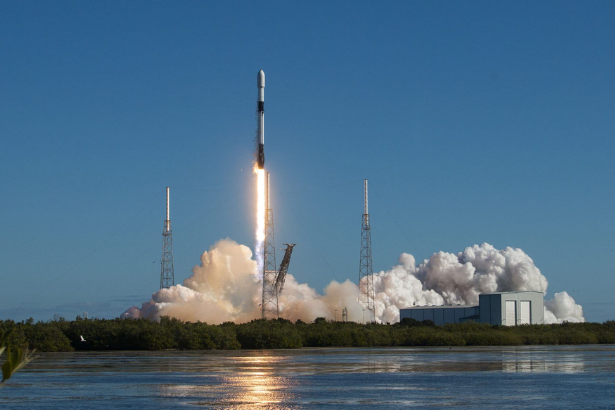
SpaceX continues to redefine reusable rocketry as a Falcon 9 booster completed its record-breaking 36th mission while deploying another batch of Starlink satellites into orbit.
Introduction
Rocket launch today quickly became one of the top-trending Google searches after SpaceX successfully launched a Falcon 9 rocket from Cape Canaveral Space Force Station in Florida. The mission carried additional Starlink internet satellites into low Earth orbit while achieving another historic milestone for the company’s reusable launch system.
The flight marked the 36th mission for the same Falcon 9 first-stage booster, extending SpaceX’s own record for rocket reusability and reinforcing its dominance in commercial spaceflight.
Background and Context
Since introducing reusable first-stage boosters, SpaceX has fundamentally changed the economics of space launches.
Instead of discarding rockets after a single mission, Falcon 9 boosters routinely return to Earth, land vertically on drone ships or landing zones, undergo inspections, and fly again.
This approach has dramatically reduced launch costs while enabling SpaceX to maintain one of the world’s busiest launch schedules.
The latest mission continues the rapid expansion of the Starlink satellite constellation, which provides high-speed broadband internet to millions of users worldwide.
Latest Launch Update
Early Thursday morning, SpaceX lifted off from Cape Canaveral, sending another group of Starlink satellites into orbit.
Mission highlights include:
- Successful Falcon 9 liftoff
- Record-breaking 36th flight for the reusable first-stage booster
- Deployment of additional Starlink satellites
- Successful booster landing following stage separation
Weather conditions were favorable for launch, allowing SpaceX to maintain its accelerated mission cadence throughout 2026.
Observers across parts of Florida also reported seeing the spectacular “space jellyfish” phenomenon shortly after launch.
Expert Analysis
Why the 36th Flight Matters
Each additional booster reuse demonstrates the long-term durability of Falcon 9 hardware.
What once seemed impossible in orbital launch operations has now become routine.
By flying the same booster dozens of times, SpaceX significantly lowers launch costs while increasing mission frequency for commercial, government, and scientific customers.
Expanding the Starlink Network
Every successful Starlink mission strengthens SpaceX’s growing broadband infrastructure, improving global internet coverage in remote regions and supporting future direct-to-cell communication services.
Broader Implications
Reusable Rockets Continue to Transform Spaceflight
The Falcon 9 program has become the benchmark for reusable launch systems worldwide.
Other launch providers are now developing similar reusable technologies in response to SpaceX’s success.
Growing Demand for Satellite Internet
Starlink continues expanding capacity as demand for satellite-based broadband increases across residential, enterprise, maritime, and aviation markets.
Public Fascination With Space Launches
The launch also produced the stunning “space jellyfish” effect visible across parts of Florida.
The phenomenon occurs when sunlight illuminates exhaust plumes at high altitude while observers on the ground remain in darkness, creating an ethereal glowing cloud in the sky.
Internal Link Suggestion:
Read more of our coverage on reusable rockets, satellite technology, and commercial space innovation at The Tech Marketer.
Related History
Falcon 9 first flew in 2010 and has since become one of the most reliable launch vehicles ever built.
Its reusable design has enabled hundreds of successful missions, including:
- NASA Crew Dragon launches
- Cargo missions to the International Space Station
- National security launches
- Commercial satellite deployments
- Starlink constellation expansion
The program continues setting new records for launch frequency and booster reuse.
What Happens Next
SpaceX is expected to continue launching Starlink satellites at a rapid pace throughout 2026.
Upcoming missions may include:
- Additional Starlink deployments
- NASA science payloads
- Commercial communications satellites
- Human spaceflight missions
As reusable technology matures further, Falcon 9’s record may continue to climb beyond 40 flights for individual boosters.
Conclusion
Today’s rocket launch showcased how routine yet remarkable orbital launches have become under SpaceX’s reusable rocket program.
The Falcon 9’s record-breaking 36th flight highlights the maturity of reusable launch technology while supporting the continued growth of the Starlink satellite network.
With launch cadence accelerating and booster lifespans extending, SpaceX is reshaping expectations for the future of commercial spaceflight.
Frequently Asked Questions
Why is “Rocket Launch Today” trending?
The search surged after SpaceX successfully launched a Falcon 9 carrying Starlink satellites and set a new booster reuse record.
What made today’s Falcon 9 launch historic?
The first-stage booster completed its 36th successful flight, extending SpaceX’s record for rocket reuse.
What is Starlink?
Starlink is SpaceX’s global satellite internet network designed to provide broadband connectivity worldwide.
What causes the “space jellyfish” effect?
The phenomenon occurs when sunlight illuminates rocket exhaust at high altitude while the ground below remains dark, creating a glowing cloud-like appearance.
Where did today’s rocket launch take place?
The Falcon 9 launched from Cape Canaveral Space Force Station in Florida.
Sources & References
- Spaceflight Now — Live coverage: SpaceX to launch Falcon 9 rocket on record-breaking 36th flight
https://spaceflightnow.com/2026/07/09/live-coverage-spacex-to-launch-falcon-9-rocket-on-record-breaking-36th-flight/ - Florida Today — SpaceX plans early morning Starlink rocket launch from Cape Canaveral
https://www.floridatoday.com/story/tech/science/space/2026/07/08/spacex-plans-early-morning-starlink-rocket-launch-from-cape-canaveral-florida-what-to-know–live/90845035007/ - WKMG / ClickOrlando — Florida SpaceX launch makes ‘space jellyfish’ effect in sky. Here’s the science behind it.
https://www.clickorlando.com/weather/2026/07/09/florida-spacex-launch-makes-space-jellyfish-effect-in-sky-heres-the-science-behind-it/