The courtroom showdown that could reshape the AI industry for decades has officially begun.
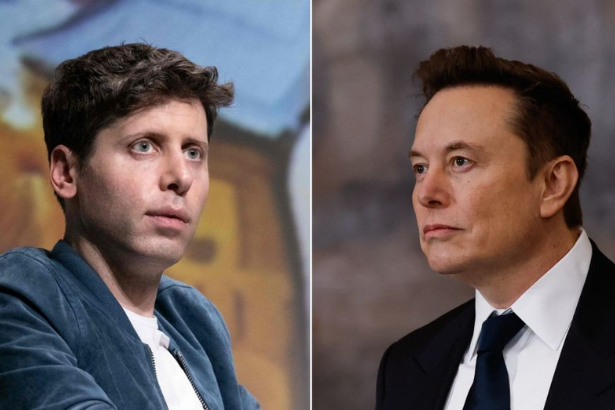
Musk Altman OpenAI trial jury selection opened Monday, April 27, 2026, at the federal courthouse in Oakland, California, before Judge Yvonne Gonzalez Rogers. Elon Musk is suing Sam Altman, Greg Brockman, and Microsoft, demanding up to $150 billion over OpenAI’s transformation from a nonprofit research lab into what Musk calls an illegally converted for-profit juggernaut now valued at $852 billion. Opening arguments begin Tuesday. Both Musk and Altman are expected to testify. Microsoft CEO Satya Nadella, former OpenAI CTO Mira Murati, and co-founder Ilya Sutskever are also on the witness list. This is not a routine tech lawsuit. It is a trial about whether the most transformative AI company in history was built on a broken promise.
Background and Context
OpenAI was founded in 2015 by Musk, Altman, and a small group of others as a charity with a specific, stated mission: develop artificial intelligence for the benefit of humanity, openly, free from the pressures of shareholders and profit. Musk contributed more than $38 million in early funding, which he says represented roughly 60% of the nonprofit’s seed capital.
Musk left OpenAI’s board in 2018 after disagreements with Altman and Brockman about the company’s direction, including a failed effort to merge the startup with Tesla. How-To Geek
In 2022, OpenAI launched ChatGPT and grew to become one of the most valuable AI companies in the world, with major investment from Microsoft. Then in 2025, OpenAI restructured its main business to become a for-profit company. Tom’s Hardware
Musk filed his lawsuit in 2024, alleging that Altman and Brockman accepted his money and time under the pretense of creating a public-spirited enterprise, only to later convert that work into billions in personal equity. OpenAI counters that Musk was fully aware of and involved in early discussions about the need for a for-profit structure, and that he left when the company refused to give him full control.
Why Musk Altman OpenAI Trial Is Happening Now
Latest Update
Jury selection opened Monday in Oakland with all the hallmarks of the most consequential tech trial in years.
Full coverage from today’s opening:
- Musk vs. Altman: A High-Stakes AI Clash Goes to Court on Monday — The New York Times
- Elon Musk, Sam Altman OpenAI Trial Begins in Oakland — Quartz
- Can Sam Altman Be Trusted? Elon Musk Wants a Jury to Answer Big Tech’s Hottest Question — Politico
Key confirmed details from today:
- Jury selection begins Monday at the federal courthouse in Oakland. Opening arguments are expected Tuesday. Witnesses on the disclosed list include Microsoft CEO Satya Nadella, former OpenAI CTO Mira Murati, former board member Shivon Zilis, and co-founder Ilya Sutskever. Tom’s Guide
- Of the 26 counts Musk filed in November 2024, only two remain: breach of charitable trust and unjust enrichment. Judge Gonzalez Rogers dropped the fraud and constructive fraud counts Friday at Musk’s own request to streamline the case. Tom’s Guide
- Musk is seeking between $65.5 billion and $109.43 billion disgorged from OpenAI, plus $13.3 billion to $25.06 billion from Microsoft, totaling roughly $150 billion. He also wants Altman and Brockman removed from their roles, and any monetary award redirected to OpenAI’s nonprofit arm rather than to himself personally. Tom’s Guide
- If OpenAI is found liable, the remedies phase begins May 18. The jury is advisory only, meaning Judge Gonzalez Rogers alone will decide damages and structural remedies. Tom’s Guide
- The most damaging piece of evidence may be Greg Brockman’s 2017 diary entry calling the nonprofit commitment a lie. Tbreak Media
Expert Insights and Analysis
The two surviving claims, breach of charitable trust and unjust enrichment, are deliberately chosen for their evidentiary advantage.
Musk’s decision to drop the fraud claims on Friday was strategic, not a concession. Fraud requires proving intentional deception, a higher evidentiary bar that would have diverted the trial into arguments about Altman’s state of mind. Unjust enrichment and breach of charitable trust focus on outcomes rather than intent: did the conversion enrich insiders at the expense of the charitable mission, and did it violate the trust under which the nonprofit’s assets were held? These claims are easier to prove because the facts are largely undisputed. OpenAI was founded as a nonprofit. It converted to a for-profit. Its leaders hold equity in the for-profit entity. The question is whether that sequence constitutes a legal violation, not whether anyone intended it to be one. Tbreak Media
OpenAI’s defense rests on two pillars. First, that Musk himself was part of early conversations about the need for a for-profit structure to attract the capital necessary to build frontier AI. OpenAI released a trove of emails in 2024 showing Musk supported plans to create a for-profit company, which he wanted to lead, with board control, and potentially merged with Tesla. Tom’s Hardware Second, that the conversion ultimately serves the original mission better than the nonprofit structure could have, given the capital requirements for frontier AI development.
At least 12 senior executives have left OpenAI since its conversion, with only two original co-founders remaining. Decisions that include the dismantling of OpenAI for Science and the shutdown of Sora reinforce the argument that the conversion prioritized commercial revenue over the original research mission. Tbreak Media
The Musk Altman OpenAI trial also lands at a specific moment of vulnerability for OpenAI’s public image. The company is projecting $14 billion in losses this year, is planning an IPO at a potential $1 trillion valuation, and needs public market credibility that a fraud verdict would severely undermine.
Broader Implications
The Musk Altman OpenAI trial is not just about two powerful individuals and their grievances. It is about a legal question that the entire AI industry depends on: can a company founded as a charity, built on charitable donations and a stated public mission, convert its assets into private equity without violating the legal trust under which those assets were accumulated?
The question the Oakland courtroom will address over the next month is whether the people who built OpenAI with charitable donations and a stated commitment to benefit humanity can legally convert that work into an $852 billion for-profit enterprise and keep the equity. It is about whether the nonprofit-to-profit conversion model is legally sustainable in AI. Tbreak Media
A powerful segment of AI practitioners, including some staffers at OpenAI and Anthropic, share Musk’s concerns about the potential of the technology to upend society. Many of these safety advocates want their employers to be transparent and honest with the public about the risks AI poses to the economy and global democracy, even as these same workers stand to become very rich if their companies go public. Hacker News
The timing relative to OpenAI’s IPO plans is not incidental. A ruling in Musk’s favor that orders the conversion unwound, or that requires Altman and Brockman to disgorge their equity, would create a legal cloud over the offering that underwriters and institutional investors would find extremely difficult to price around.
For deeper coverage of the Musk Altman OpenAI trial and its implications for AI governance, corporate law, and the future of frontier AI development, The Tech Marketer tracks the legal and business stories defining the AI industry in 2026.
The Musk Altman OpenAI trial also drew violent undertones from outside the courtroom. An AI-averse Texas man threw a Molotov cocktail at Altman’s San Francisco home this month, a reminder that the tensions being litigated in Oakland are felt far beyond Silicon Valley.
Related History and Comparable Cases
There is no direct legal precedent for a case of this scale and specificity. The closest comparable situations involve charitable organizations whose assets were converted to private use, a category of law that has existed for centuries but has never been tested against a technology company of OpenAI’s scope and speed of growth.
When OpenAI leaders decided to split off the nonprofit OpenAI Foundation in 2019 and develop their core products under a corporate structure, Microsoft backed that decision with a $1 billion investment. That 2019 restructuring, which Musk claims cut him out of a profitable piece of the future, is the central event the trial will re-examine. Hacker News
OpenAI was not the first technology organization to start as a nonprofit and accumulate enormous value. Mozilla did. Wikipedia resisted. What makes OpenAI different is the speed and scale of the value creation, the personal equity stakes of its leadership, and the explicit language in its founding documents about the primacy of the charitable mission.
The highly litigious Musk, no stranger to the halls of justice, is expected to be present and likely to testify. Altman is also likely to be in court, as are OpenAI cofounder Ilya Sutskever, OpenAI President Greg Brockman, and Microsoft CEO Satya Nadella. “Billionaires versus billionaires,” observed Judge Gonzalez Rogers in a prior hearing. DigitrendZ
What Happens Next
The trial is scheduled to run through mid-May for the liability phase, with the advisory jury delivering its verdict before the remedies phase begins on May 18 if OpenAI is found liable.
It is not the only litigation Musk has brought against OpenAI. X, formerly Twitter, along with xAI sued OpenAI and Apple in 2025 for alleged anticompetitive behavior. A hearing in that case is scheduled for May in Texas. And in February, a federal judge in California dismissed a separate lawsuit from xAI that accused OpenAI of stealing its trade secrets. Gizmodo
OpenAI’s IPO trajectory will be one of the most closely watched subplots. The company has reportedly been planning a public offering for late 2026 or 2027. A finding of liability in the trial, even without a specific damages number attached, would likely delay those plans significantly and force a restructuring of the corporate documents underpinning the offering.
For Musk, the trial serves dual purposes. It is a genuine legal claim rooted in his belief that he was deceived. It is also a competitive weapon: a trial that consumes OpenAI’s management bandwidth, generates negative publicity, and creates legal uncertainty over the company’s structure is tactically useful for xAI regardless of the outcome.
Conclusion
The Musk Altman OpenAI trial is the most consequential AI legal proceeding in history. At $150 billion in potential damages and with OpenAI’s entire corporate structure on the line, the stakes are not abstract. The outcome will determine whether Altman remains in control of the most valuable AI company in the world, whether OpenAI can proceed with its IPO, and whether the nonprofit-to-profit conversion model is legally sustainable for future AI labs that follow the same path.
The Musk Altman OpenAI trial will run for weeks, but its verdict will define how AI companies are structured, governed, and held accountable for years. Oakland’s federal courthouse may be an unlikely venue for a decision of this magnitude. It is, nonetheless, where the decision will be made.
FAQ
1. What is the Musk Altman OpenAI trial about? The Musk Altman OpenAI trial is a federal lawsuit in which Elon Musk alleges that OpenAI CEO Sam Altman and president Greg Brockman violated the founding promise to keep OpenAI a nonprofit benefiting humanity. Musk claims the company’s conversion to a for-profit structure in 2019 and its subsequent $852 billion valuation constitute breach of charitable trust and unjust enrichment. He is seeking up to $150 billion in damages and the removal of Altman and Brockman.
2. Where and when is the Musk Altman OpenAI trial taking place? Jury selection opened Monday, April 27, 2026, at the US District Court for the Northern District of California in Oakland. Judge Yvonne Gonzalez Rogers is presiding. Opening arguments begin Tuesday, April 28. The liability phase runs through mid-May, with a remedies phase scheduled to begin May 18 if OpenAI is found liable.
3. What claims remain in the Musk Altman OpenAI trial? Two claims remain: breach of charitable trust and unjust enrichment. Musk dropped his fraud and constructive fraud counts on Friday before trial to streamline the case. The jury is advisory only, meaning Judge Gonzalez Rogers will make the final decision on liability, damages, and structural remedies.
4. Who are the witnesses in the Musk Altman OpenAI trial? The disclosed witness list includes Elon Musk, Sam Altman, Greg Brockman, Microsoft CEO Satya Nadella, former OpenAI CTO Mira Murati, co-founder Ilya Sutskever, and former board member Shivon Zilis. Both Musk and Altman are expected to testify personally.
5. What happens if Musk wins the Musk Altman OpenAI trial? If OpenAI is found liable, Judge Gonzalez Rogers could order between $65.5 billion and $109.43 billion disgorged from OpenAI, plus $13.3 billion to $25.06 billion from Microsoft, with all funds redirected to OpenAI’s nonprofit arm. The judge could also order Altman and Brockman removed from their roles and OpenAI’s for-profit conversion unwound, which would fundamentally alter the company’s structure and likely derail its planned IPO.
Sources & References
- Musk vs. Altman: A High-Stakes AI Clash Goes to Court on Monday — The New York Times
- Elon Musk, Sam Altman OpenAI Trial Begins in Oakland — Quartz
- Can Sam Altman Be Trusted? Elon Musk Wants a Jury to Answer Big Tech’s Hottest Question — Politico
- Musk v. Altman Trial Opens With $150B at Stake — Implicator.ai
- Musk v. Altman Heads to Court: What’s at Stake — CNBC
- Musk vs. Altman: Tech CEOs Head to Court Over the Fate of OpenAI — NPR