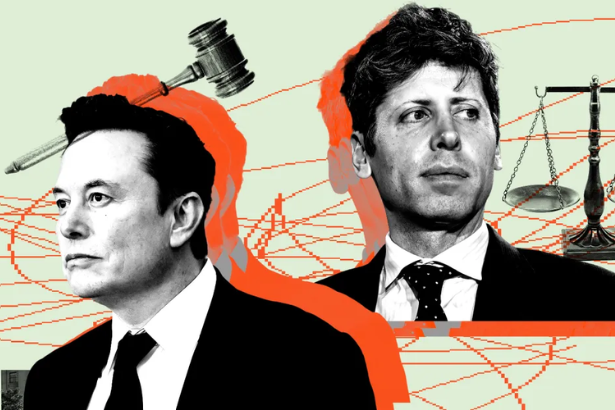
The Musk vs OpenAI trial entered its third week in federal court in Oakland, California, with the two most consequential witnesses yet — Microsoft CEO Satya Nadella and OpenAI CEO Sam Altman — both taking the stand within 24 hours of each other. The testimony that emerged from both men is the most detailed public account yet of how OpenAI was actually built, how it nearly fractured during Altman’s 2023 ouster, and what Elon Musk actually wanted in the early days before he left the board. With closing arguments approaching and deliberations expected by Thursday, here is everything that happened.
What Musk Is Actually Asking For
Before the testimony, the stakes: Musk wants the judge to order OpenAI to revert to a nonprofit and for Altman and Brockman to lose their board positions. He is also asking that more than $130 billion go back into OpenAI’s nonprofit arm. Engadget
A ruling in Musk’s favor could scramble OpenAI’s plans for an initial public offering later this year. He is seeking $150 billion in damages from OpenAI and Microsoft, one of its principal investors. EngadgetEngadget
Those numbers frame everything that follows. This is not a theoretical dispute about nonprofit governance. It is a case that could force one of the world’s most valuable private companies to restructure entirely, remove its CEO and president, and potentially cancel an IPO that would be among the largest in technology history. The jury is deciding this.
Sam Altman’s Opening Testimony: “It Feels Difficult to Wrap My Head Around That Framing”
Altman rejected Musk’s central claim that OpenAI and Microsoft had effectively tried to “steal a charity.” “It feels difficult to even wrap my head around that framing,” Altman said. He argued that shifting to a for-profit structure was the only way to raise the amount of money needed to develop safe and powerful artificial intelligence. TechCrunch
Altman described the 2023 events as an “incredible betrayal” that was “very public” and “very painful.” “If I knew how difficult and painful this was going to be, I never would have tried,” Altman said of his decade at OpenAI. “I’m very grateful I didn’t, because other than my family, this has been the most meaningful thing in my life I could imagine.” House of Marketers
That emotional framing — painful betrayal, deep personal meaning — was the tone Altman set before Musk’s lawyers got anywhere near him with a single question. He was establishing himself not as a CEO defending a corporate decision but as a person who genuinely believed in what he was building.
Altman’s Bombshell: Musk Demanded 90% of OpenAI
The most significant factual disclosure from Altman’s testimony is the one that directly undermines Musk’s narrative that he was a disinterested philanthropist who simply wanted OpenAI to remain a nonprofit.
Altman argued that Musk knew of the plans to develop OpenAI into a for-profit enterprise when he invested, and asserted that Musk even petitioned to have a majority stake in the company. Engadget
Altman testified that Musk wanted “total control” of any for-profit OpenAI entity to start, with a promise to reduce that control over time. But Altman wasn’t convinced Musk would step back, citing his experience working with startups where leaders rarely give up power over a successful company. House of Marketers
“An early number that Mr. Musk threw out was that he should have 90 percent of the equity to start,” Altman told the jury. “It then softened, but it always was a majority.” Engadget
Ninety percent is not an ambiguous figure. A founder demanding 90% of a for-profit entity’s equity is not someone who objects to the for-profit structure in principle. Altman’s testimony, if accepted by the jury, dismantles the philosophical core of Musk’s case: that he was motivated by altruism and mission preservation rather than by a failed attempt to control one of the most powerful technology companies ever built.
The “Hair-Raising Moment”: What Happens to OpenAI When Musk Dies
OpenAI’s co-founders once asked Musk an important question: If he were to control OpenAI, what would happen to the company on his death? Musk responded that he hadn’t thought about it much and that he might pass it on to his children. Musk’s reply was a “hair-raising moment” in the early days of OpenAI, Altman said. “I didn’t feel comfortable with that,” Altman said. House of Marketers
That exchange — Musk casually suggesting he might pass control of an AGI company to his children as an inheritance — is the kind of testimony that lands differently in a courtroom than it would in a private conversation. Altman’s description of it as “hair-raising” was delivered to a jury deciding whether Musk’s claims about protecting the public interest have merit.
Cross-Examination: “Are You Completely Trustworthy?”
Elon Musk’s lawyer Steven Molo began his cross-examination of OpenAI CEO Sam Altman with a brief question: “Are you completely trustworthy?” Musk attorney Steven Molo cited earlier testimony from OpenAI board members and former executives that Altman was dishonest and created a toxic culture of lying. Altman called himself “an honest and trustworthy business person” but said he wasn’t aware of some specific accusations. House of Marketers
Molo asked about concerns about honesty from several people Altman has interacted with, including employees of startup Loopt, Anthropic CEO Dario Amodei, and former OpenAI board members Tasha MacCauley and Sue Yoon. Molo also referred to a New Yorker magazine article with the title “Sam Altman May Control Our Future — Can He Be Trusted?” “Are you completely trustworthy?” Molo asked Altman. “I believe I’m a truthful person,” Altman answered. ChannelX
Musk’s lawyers also highlighted OpenAI’s dealings with companies in which Altman holds a financial stake, including payments giant Stripe, chip startup Cerebras, and fusion energy company Helion, where Altman holds a significant stake and was, until recently, board chair. ChannelX
The conflict of interest portrait Molo was painting — an AI CEO who directs business to companies where he holds personal financial stakes — is the kind of argument that resonates with juries even when the individual transactions are legally defensible.
Satya Nadella: “Amateur City” and the $135 Billion Stake
The day before Altman’s testimony, Microsoft CEO Satya Nadella took the stand. His appearance was notable for both what he said and how he said it.
Microsoft CEO Satya Nadella took the stand in the Musk v. Altman trial on Monday, where he testified that Elon Musk never contacted him with concerns that Microsoft’s investments in OpenAI were in violation of any special terms or commitments. He answered questions about the early days of Microsoft’s strategic partnership with OpenAI, his understanding of the companies’ relationship, and his role during the chaotic few days when Sam Altman was briefly ousted as CEO of OpenAI. Engadget
There must have been instances of jealousy or miscommunication that could have justified pushing out Altman, Nadella said. He wanted more depth from the board members after the remark about candor, but no such information was available. “It was sort of amateur city, as far as I’m concerned,” Nadella testified. Engadget
In October, OpenAI completed a recapitalization that cemented its structure as a nonprofit with an equity stake in its for-profit business. As part of that announcement, Microsoft disclosed that it held a roughly 27% stake in OpenAI’s for-profit unit valued at around $135 billion. Engadget
“Amateur city” is the kind of phrase that becomes the headline of a day’s testimony because it captures both the condescension and the honest assessment of a $3 trillion market cap company CEO watching a nonprofit board self-immolate over a personnel decision.
Musk’s Courtroom Demeanor vs. Altman’s
Altman’s cross-examination has looked much different from Musk’s. Musk testified late last month, and he was very combative while OpenAI’s lawyer William Savitt asked him questions. Musk accused Savitt of lying, asking misleading questions and questions that were designed to trick him. The pair argued back and forth on several occasions, and both men raised their voices. ChannelX
Altman has been much less argumentative during his testimony. He seemed nervous as the cross-examination kicked off, especially while Musk’s lawyer Steven Molo was seemingly trying to paint him as untrustworthy. He has not yelled or raised his voice substantially. By the time the proceedings paused, he seemed more comfortable. ChannelX
The behavioral contrast between the two principals matters in a jury trial. A combative, voice-raising plaintiff who accuses opposing counsel of lying reads differently to twelve jurors than a defendant who answers questions quietly and admits when he is uncertain. How each man presents himself in court is as much evidence to a jury as the documents entered into the record.
What Altman Said About Musk Leaving the Board
Altman testified that Musk wanted to profit from OpenAI and also to control it, citing Musk’s early push for a controlling stake or a merger with Tesla. “Mr. Musk did try to kill it,” he said, adding that Musk launched a competitor called xAI, tried to poach its talent, and alleged that he engaged in “business interference.” TechCrunch
Musk left the board in 2018, and Altman called that a morale boost for employees who did not like his “hardcore” approach. “I don’t think Mr. Musk understood how to run a good research lab,” Altman said. “He had demotivated some of our most key researchers.” Engadget
Broader Implications: What the Musk vs OpenAI Trial Verdict Will Determine
The Musk vs OpenAI trial is entering its final stretch with closing arguments imminent and jury deliberations expected by Thursday. The verdict will determine whether OpenAI can proceed with its for-profit structure, whether Altman and Brockman retain their leadership positions, whether $130-plus billion returns to the nonprofit arm, and whether the IPO that OpenAI has been building toward can proceed on its current timeline.
Beyond the specific parties, the trial is producing the most detailed public record ever assembled of how the most consequential AI company in history was actually built — the power struggles, the financial demands, the governance failures, and the decisions that shaped AI development for billions of people. Whatever the jury decides, that record is now permanent. For more on the biggest stories in AI and technology, visit The Tech Marketer.
Latest Updates
The Musk vs OpenAI trial is in its third week with Altman’s cross-examination continuing. Here is where to follow the full story:
- The Verge has the complete coverage of Microsoft’s role in the Musk vs OpenAI trial, including Nadella’s testimony and what the Microsoft-OpenAI partnership means for the outcome. Read more at The Verge
- CNBC has live trial updates including the full account of Sam Altman’s testimony, Nadella’s “amateur city” quote, the cross-examination by Steven Molo, and the SoftBank investment comparison. Read more at CNBC
- CNN has the full account of Musk’s lawyer pressing Altman on trustworthiness, the Loopt and Helion conflict-of-interest angle, Altman’s description of Musk’s 2023 board ouster as an “incredible betrayal,” and the AGI control testimony. Read more at CNN
FAQ: Musk vs OpenAI Trial
1. What is the Musk vs OpenAI trial about? Elon Musk is suing OpenAI, Sam Altman, Greg Brockman, and Microsoft, alleging they breached OpenAI’s charitable trust by converting it from a nonprofit to a for-profit structure. Musk is seeking $150 billion in damages and wants the court to force OpenAI to revert to nonprofit status and remove Altman and Brockman from their leadership positions.
2. What did Sam Altman reveal about Musk’s equity demands in the Musk vs OpenAI trial? Altman testified that Musk initially demanded 90% of OpenAI’s equity in any for-profit structure, which later softened but always remained a majority stake. Altman said he did not believe Musk would actually reduce his control over time, based on his experience watching startup founders retain power over successful companies.
3. What did Satya Nadella say in the Musk vs OpenAI trial? Microsoft CEO Satya Nadella testified that Elon Musk never contacted him with concerns about Microsoft’s investments violating any terms or commitments. He described the OpenAI board’s handling of Sam Altman’s 2023 ouster as “amateur city,” saying he wanted more substantive information from board members but none was forthcoming.
4. How did Sam Altman respond to being called untrustworthy in the Musk vs OpenAI trial? When Musk’s lawyer Steven Molo opened cross-examination by asking “Are you completely trustworthy?”, Altman responded “I believe I’m a truthful person.” Molo cited criticism from former OpenAI board members, employees of Loopt, and Anthropic CEO Dario Amodei. Altman said he was not aware of some specific accusations and maintained he was “an honest and trustworthy business person.”
5. What happens next in the Musk vs OpenAI trial? With Altman’s cross-examination complete, the trial is progressing toward closing arguments. Jury deliberations are expected to begin by Thursday. The verdict will determine whether OpenAI must revert to nonprofit status, whether Altman and Brockman lose their positions, and whether the company’s planned IPO can proceed.