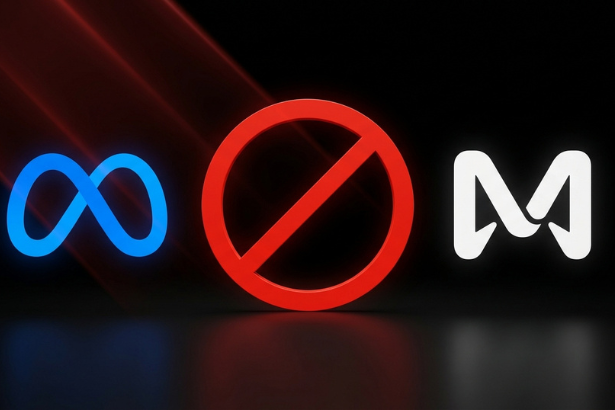
Beijing just ordered the unwinding of a nearly completed acquisition, banned its founders from leaving the country, and sent a message to every AI startup in China considering a US exit.
China blocks Meta Manus acquisition in a shock Monday announcement that has rattled Silicon Valley, Beijing’s startup ecosystem, and every venture capital firm that has funded a Chinese-founded AI company. The National Development and Reform Commission, China’s powerful state planning body, issued a one-line notice ordering the cancellation of Meta’s $2 billion acquisition of Manus, the agentic AI startup founded in China and later incorporated in Singapore. The statement cited “laws and regulations” without elaborating. The deal, announced in December 2025, had already been substantially completed: Manus employees had joined Meta, capital had been transferred, and existing investors including Tencent, ZhenFund, and Hongshan had received their proceeds. Beijing is now demanding it all be unwound. How exactly that happens is a question nobody has answered yet.
Background and Context
Manus was one of the most talked-about AI stories of 2025. Founded by Xiao Hong and Ji Yichao, both from China, it launched its AI agent product in March 2025 to immediate global attention. Manus is a general AI agent capable of autonomously executing complex multi-step tasks across different software applications, ranging from S&P 500 analysis to drafting sales pitches and conducting web research.
A month after launch, its parent company Butterfly Effect raised $75 million in a round led by Silicon Valley’s Benchmark, valuing it at $500 million. In July, Manus relocated its China-based staff to Singapore, cutting dozens of roles in the process. Travel Tourister
That relocation was the first signal that Manus was positioning itself for a US-friendly exit. Meta announced its acquisition in December after Manus surpassed $100 million in annualized revenue. Travel Tourister The deal was framed as a way for Meta to accelerate AI innovation for businesses and integrate advanced automation into its consumer and enterprise products, including the Meta AI assistant.
Initially hailed as a template for startups with global aspirations, critics quickly lamented the loss of valuable AI technology to a geopolitical rival. Many worried the deal would encourage other startups to follow suit. Travel Tourister
Beijing moved quickly. In January, China’s Ministry of Commerce said it would conduct an assessment and investigation into how the acquisition complied with laws and regulations concerning export controls, technology import and export, and overseas investment. Travel Tourister
Latest Update
The NDRC’s blocking order arrived Monday, April 27, 2026, with three major publications covering the story within hours of the announcement.
Full coverage from today’s breaking story:
- China Blocks Meta’s $2 Billion Takeover of AI Startup Manus — CNBC
- China Blocks Meta’s Acquisition of Chinese-Founded AI Startup Manus — CNN
- China Orders the Unwinding of Meta’s Acquisition of an AI Startup — The New York Times
Key confirmed details from today’s announcement:
- China’s National Development and Reform Commission ordered the deal’s cancellation in a brief statement Monday, saying it has decided to prohibit foreign investment in the startup in accordance with laws and regulations, without elaborating. It has asked the parties involved to withdraw the acquisition transaction. Travel And Tour World
- In response to Beijing’s decision, a Meta spokesperson told CNN that the transaction “complied fully with applicable law” and the company “anticipates an appropriate resolution to the inquiry,” without elaborating on how it expects to reach a solution with Beijing. Tom’s Hardware
- Manus employees have already joined Meta, capital has been transferred, and exiting investors including Tencent, ZhenFund, and Hongshan have received their proceeds. It remains unclear how Meta would unwind the deal in practice. Travel Tourister
- The Financial Times reported in March that Beijing had banned Manus co-founders Xiao Hong and Ji Yichao from leaving China as it carried out its investigation. Travel Tourister
- Meta shares fell 0.2% in premarket trading following the announcement
Expert Insights and Analysis
The NDRC’s one-line statement is remarkable for what it does not say as much as for what it does.
No specific legal basis was cited. No timeline for unwinding was provided. No mechanism for resolving the already-transferred capital was described. China’s state planner issued a directive and left every procedural and commercial question unanswered. That is a deliberate negotiating posture, not an administrative oversight.
The move reflects Beijing’s concerns that it could lose key technology to the United States amid an intensifying tech war. Beijing’s decision reinforces the bifurcation of global technology development as US-China tension heats up, and underscores the increasingly challenging environment for cross-border investments in critical sectors such as AI and semiconductors. Tom’s Hardware
The overarching intent of the restrictions is to prevent US investors from taking stakes in sensitive sectors where national security is a priority. The twin moves suggest that regulators are worried about a leakage of homegrown technology abroad as Chinese-founded startups and companies explore international opportunities. Travel Tourister
The ban on co-founders Xiao Hong and Ji Yichao leaving China is the sharpest tool Beijing has deployed. It converts the two individuals from executives who have technically already joined Meta into effective hostages of the dispute’s resolution. Whether that is leverage to force an unwinding, to extract concessions, or simply to send a warning signal to other founders considering similar exits is not yet clear.
It remains unclear what other action Beijing will take following its investigation. The buyout triggered a Beijing probe into illegal foreign investment and tech exports shortly after its December announcement. Travel Tourister
The Unwinding Problem
The practical challenge of unwinding this acquisition is substantial and has no clean precedent.
Manus employees have joined Meta. Capital has been transferred. The startup’s executives have joined Meta’s rapidly expanding AI team. Manus employees have already moved into Meta offices in Singapore. Exiting investors including Tencent, ZhenFund, and Hongshan have received their proceeds. Travel Tourister
Asking all of those things to be reversed is not simply a matter of canceling a contract. Employees who have relocated and integrated into Meta’s organizational structure would need to be separated. Capital that has been distributed to investors would need to be recalled. Intellectual property that has been shared with Meta’s engineering teams would need to be isolated and returned. None of this has a clear legal mechanism, particularly when Manus is incorporated in Singapore rather than mainland China.
Meta’s statement that it “anticipates an appropriate resolution” without specifying what that looks like is either a diplomatic holding position or an acknowledgment that the company is waiting to understand what Beijing actually wants before committing to any course of action. The two are not mutually exclusive.
The move came just weeks ahead of US President Donald Trump’s much anticipated summit with Chinese leader Xi Jinping in Beijing, where the two leaders are expected to address disputes on several key issues, ranging from trade to technology controls. Tom’s Hardware The timing makes the Manus blocking order a potential piece in a larger negotiation rather than an isolated regulatory action.
Broader Implications
The NDRC’s move is expected to have a chilling effect on China’s AI startup scene. Tom’s Hardware That chilling effect operates on multiple levels.
For Chinese-founded startups considering an international exit: the Manus case demonstrates that incorporating in Singapore or another jurisdiction does not insulate a deal from Chinese regulatory intervention if the founders are Chinese nationals and the technology originated in China. The NDRC’s jurisdiction claim was not limited by Manus’s Singaporean corporate structure.
For US technology companies attempting to acquire Chinese-founded AI talent and technology: the Manus case shows that even a substantially completed acquisition can be ordered unwound by Beijing. The risk calculation for similar deals has fundamentally changed.
For venture capital firms funding Chinese-founded AI startups: the precedent creates uncertainty about whether US exit options remain viable for portfolio companies with Chinese roots, regardless of where those companies are incorporated.
Beijing’s agencies have since moved to discourage a repeat of the Manus maneuver, which was completed with unusual speed. The decision may deal a setback to Meta as it looks to compete in AI against rivals from Microsoft, Google, OpenAI, and Anthropic. Manus was supposed to help Meta leapfrog into a leading position in the hot sphere of AI agents, services that use artificial intelligence to execute tasks. Travel Tourister
For Meta specifically, the blocked acquisition is a strategic setback in the AI agent race. Manus was not a talent acquisition or a product investment. It was the fastest-growing AI agent company in the world at the time of the deal, with $100 million in annualized revenue and technology that Meta believed would accelerate its agent capabilities by years rather than months.
For deeper analysis of how the US-China technology conflict is reshaping AI investment, startup strategy, and the global competitive landscape in 2026, The Tech Marketer covers the geopolitical and technology stories driving the most significant shifts in the industry.
Related History and Comparable Cases
China’s intervention in foreign acquisitions of domestically important technology companies has historical precedent, though the Manus case is unusual in the degree to which the deal had already been completed before the blocking order arrived.
The closest precedent involves China’s review of Nvidia’s attempted acquisition of British chip designer Arm Holdings, which China’s SAMR ultimately blocked in 2021 after an extended review. That deal failed at an earlier stage and involved different regulatory bodies, but it established the principle that China would use its merger review authority to protect technology it considered strategically important.
The Manus case is different because it involves an AI agent startup incorporated outside China, founded by Chinese nationals who had already moved to Singapore, and acquired by an American company that had already integrated the employees and technology. The NDRC’s willingness to issue a blocking order in that context represents a significant expansion of how Beijing interprets its jurisdiction over technology that originated in China regardless of its current corporate domicile.
What Happens Next
The immediate unknown is whether Meta will comply with the NDRC order and how the unwinding would be structured. CNBC has contacted Meta for comment. Meta’s existing statement that the transaction “complied fully with applicable law” does not address the NDRC order directly and leaves open whether Meta considers itself legally obligated to unwind. Travel Tourister
The Trump-Xi summit timeline creates a specific diplomatic window. If the Manus deal is being used as a bargaining chip in the broader technology and trade negotiation, a resolution could emerge as part of a larger package agreement rather than through the NDRC’s stated regulatory process.
For the two founders currently banned from leaving China, their situation is the most immediate human dimension of the dispute. Their travel restrictions will persist until Beijing determines the investigation is resolved, which may be weeks, months, or longer depending on how the unwinding discussions progress.
The venture capital market reaction will also be worth watching closely in the days ahead. Every VC firm with Chinese-founded AI startups in its portfolio is now reassessing the risk profile of US exit strategies for those companies.
Conclusion
China blocking Meta’s acquisition of Manus is one of the most significant regulatory interventions in the AI industry’s brief history. It demonstrates that Beijing is willing to order the unwinding of a substantially completed $2 billion acquisition, ban founders from leaving the country, and accept the diplomatic and commercial fallout of all of those actions to prevent what it considers the leakage of strategic AI technology to the United States.
For Meta, it is a significant setback in the AI agent race. For Chinese-founded AI startups, it is a warning that the US exit path is more complicated than previously understood. For the global AI investment community, it is the clearest demonstration yet that AI technology is now fully in the category of assets that US-China geopolitical competition actively shapes.
The deal that was supposed to help Meta leapfrog into AI agent leadership is now a diplomatic dispute with no clear resolution timeline. And the two founders at the center of it are not allowed to leave China.
FAQ
1. Why did China block Meta’s acquisition of Manus? China’s National Development and Reform Commission blocked the deal citing concerns about the leakage of strategically important AI technology to the United States. Beijing launched a probe in January 2026 into whether the acquisition complied with export controls, technology transfer regulations, and overseas investment rules. The NDRC’s formal statement cited “laws and regulations” without elaborating on specific grounds.
2. What is Manus and why was Meta acquiring it? Manus is an agentic AI startup founded by Chinese nationals Xiao Hong and Ji Yichao, incorporated in Singapore, that launched a general AI agent capable of autonomously executing complex tasks in March 2025. Meta announced its $2 billion acquisition in December 2025 after Manus surpassed $100 million in annualized revenue, aiming to accelerate its AI agent capabilities and compete against Google, OpenAI, and Microsoft in the rapidly growing AI agent market.
3. Has the Meta Manus deal already closed and how can it be unwound? Yes. When the blocking order arrived, Manus employees had already joined Meta, capital had been transferred, and existing investors including Tencent, ZhenFund, and Hongshan had received their proceeds. Manus executives had joined Meta’s AI team and employees had moved into Meta offices in Singapore. How Beijing expects the deal to be unwound in practice given this degree of completion has not been explained.
4. What happened to Manus co-founders Xiao Hong and Ji Yichao? The Financial Times reported in March 2026 that Beijing banned both co-founders from leaving China as part of its investigation into the acquisition. Their travel restrictions remain in place following the NDRC’s blocking order, and their situation will depend on how the unwinding process and broader diplomatic resolution progress.
5. What does China blocking the Meta Manus acquisition mean for other AI startups? The case establishes that Chinese regulatory jurisdiction can extend to companies incorporated outside China if the founders are Chinese nationals and the technology originated in China. It creates significant uncertainty for Chinese-founded AI startups considering US exits and for venture capital firms funding those companies. Beijing’s agencies have also moved separately to discourage repeat situations, making the Manus case a deliberate warning signal to the broader startup ecosystem.
Sources & References
- China Blocks Meta’s $2 Billion Takeover of AI Startup Manus — CNBC
- China Blocks Meta’s Acquisition of Chinese-Founded AI Startup Manus — CNN
- China Orders the Unwinding of Meta’s Acquisition of an AI Startup — The New York Times
- China Blocks Meta’s $2 Billion Acquisition of AI Startup Manus — Bloomberg
- China Blocks Meta’s $2 Billion Manus AI Deal Over Tech Transfer Concerns — Business Standard