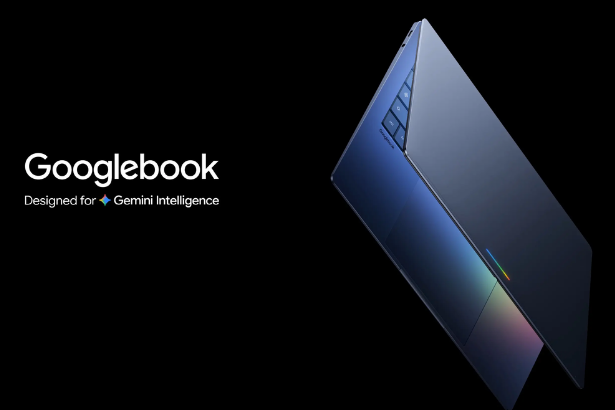
The Googlebook laptop 2026 is official. Google revealed its Chromebook successor on May 12, 2026, at The Android Show: I/O Edition — an event that doubled as a preview of Android 17. The new category is called Googlebook. It runs a unified platform built on Android and ChromeOS, integrates Gemini AI from the ground up, and will launch this fall through five major hardware partners: Acer, ASUS, Dell, HP, and Lenovo. After 15 years of Chromebooks, Google is rethinking what a laptop should be. Here is everything announced, everything still unknown, and why this launch matters more than a typical product reveal.
What the Googlebook Actually Is
Google introduced the Chromebook over 15 years ago as a laptop built for a cloud-first world. Now, moving from an operating system to an intelligence system, Google sees an opportunity to rethink laptops again. The result is Googlebook: a new category of laptops built with Gemini’s helpfulness at its core, designed to work seamlessly with the devices in your life and powered by premium hardware. Social Media Today
The devices run a unified platform that merges Android and ChromeOS. The OS pulls in Google Play, native Android app support, and tight phone integration. Googlebook isn’t simply ChromeOS with a fresh coat of paint — Google is positioning it as an entirely new machine category, calling them the first laptops built for Gemini Intelligence. House of Marketers
The software has previously been reported under the codename “Aluminium OS,” but Google told The Verge this is not the official name. The company says final OS branding will be shared later this year. That detail matters for anyone following the years-long discussion about how Google would eventually unify Android and ChromeOS. The answer is now public — and it is called Googlebook. Engineering News-Record
Magic Pointer: The Most Innovative Feature Announced
The single most distinctive feature of the Googlebook laptop 2026 is something Google calls the Magic Pointer — a reimagining of the most fundamental interaction element on any laptop.
It all starts with the cursor. For being the most often used tool on a laptop, it really hasn’t seen much change since the right-click was added. Google is changing that with Magic Pointer on Googlebook, a feature built with the Google DeepMind team, that brings Gemini’s helpfulness right to your fingertips. Just wiggle your cursor and watch it come alive with Gemini, offering quick, contextual suggestions every time you point at something on your screen. Point at a date in an email to set up a meeting, or select two images — like your living room and a new couch — to instantly visualize them together. It lets you go from idea to done in just a few clicks. Social Media Today
The Magic Pointer is essentially like a smart mouse pointer that is context-aware and understands what it is hovering over. Using Gemini, you can ask it to blend two images together just by putting your cursor on top. EnergyNow
The DeepMind collaboration is the detail that signals how seriously Google is treating this. Magic Pointer is not a marketing feature that happens to use Gemini’s API. It is a DeepMind-built capability that required genuine model innovation to make a cursor context-aware in real time. If it works as demonstrated, it is one of the most consequential changes to laptop interaction design since the trackpad replaced the pointing stick.
Create Your Widget: Gemini as Your Personal Dashboard Builder
The second major software feature announced for the Googlebook laptop 2026 is a widget creation system that replaces the static desktop with a dynamic, AI-assembled personal dashboard.
Create Your Widget lets you create custom widgets just by prompting. Gemini can search the internet or connect to your Google apps like Gmail and Calendar to create one personalized dashboard. Planning a family reunion in Berlin? Gemini can organize your flight and hotel information, restaurant reservations and even a countdown in a single, helpful spot on your desktop, making your desktop your truly personalized home. Social Media Today
The example shown combines calendar events, hotel reservations, and an airplane ticket along with a cover photo into a single widget. You can simply ask Gemini to make you a widget specifically according to your needs, and it will pull data from your connected Google apps to build one. EnergyNow
The difference between Create Your Widget and existing desktop customization tools is the input mechanism. Traditional widgets require users to configure them manually — choosing data sources, setting refresh intervals, arranging display options. Googlebook’s approach requires only a natural language prompt. Gemini handles the configuration and pulls from live Google data sources automatically. That is the gap the feature is designed to eliminate.
Android Integration: Cast My Apps and Quick Access
The Googlebook laptop 2026’s Android foundation enables two phone integration features that directly address the most common friction point of multi-device workflows.
Googlebook is all about keeping you in the flow, not just on your laptop, but also when you’re switching between your laptop and your phone. You can tap a phone app, get that order out quickly, and get back to work. Or if you get a reminder for your daily Duolingo language lesson, you can pop over and finish it without ever leaving your screen. Social Media Today
Android users can mirror apps from their phone directly onto the laptop screen via a feature called Cast My Apps, and quickly pull up files through Quick Access. House of Marketers
With Quick Access, you can easily view, search or insert your phone’s files on your laptop’s file browser — no transfers needed. Social Media Today
Cast My Apps and Quick Access together represent a meaningful advance over what Apple offers in the MacBook-iPhone integration space. Apple’s Continuity features require both devices to be Apple hardware. Google’s Android integration is available to every Android user regardless of phone manufacturer — a potential billion-device ecosystem advantage over the Apple ecosystem.
The Glowbar: Design Language, Identity, and What It Actually Does
Every Googlebook laptop 2026 will have a physical design element that Google is using as the visual identifier for the entire product category.
You will know it’s a Googlebook by the unique glowbar — a statement that is both functional and beautiful. Social Media Today
Google has added a glowbar on the lid that is a direct nod to the Chromebook Pixel that the company released back in 2013. On that computer, you could tap the lid and the bar would indicate how much battery life you had left. It is not yet clear what trick the glowbar will perform in 2026. Fortune
The Glowbar is likely a hardware implementation of the glow animation that Gemini already has on phones. It looks like an LED strip embedded at the bottom of the top lid, similar to the navigation bar that sits on Android. The Glowbar will probably react to commands when interacting with Gemini, playing different animations based on what it is doing. EnergyNow
The Chromebook Pixel reference from Engadget is significant. The Pixel was Google’s most premium and most beloved laptop hardware — a critical and commercial failure that nevertheless became legendary among tech enthusiasts for its build quality and that original glowbar. Bringing it back as the defining visual identity of a new category is a deliberate signal to that audience.
The Hardware Partners and What We Still Don’t Know
Google says it is working with Acer, ASUS, Dell, HP and Lenovo on the first Googlebooks, with devices planned for this fall. Google has not confirmed chip platforms, model names, pricing or launch regions. Engineering News-Record
Google made it clear that when Googlebooks roll out this fall, it will not involve any first-party laptops. As usual, Google will be working with a variety of manufacturers. All of these companies have made Chromebooks in the past. Google said it is starting with a focus on premium craftsmanship and materials, so this is not low-end Chromebook hardware. Fortune
The absence of pricing and chip specifications is the most significant gap in what Google has shared. Googlebooks are positioned as premium devices competing against Apple’s MacBook lineup and the growing wave of Windows AI PCs powered by Snapdragon X-series chips. Where Google prices these will determine whether they succeed in the enterprise and consumer markets that Chromebooks cultivated over 15 years.
What Happens to Chromebooks
Googlebook does not appear to replace Chromebooks immediately. Google told The Verge that Chromebooks will continue to launch after Googlebook, while existing Chromebooks will remain supported through their current update commitments. For Chromebooks released in 2021 or later, that means up to 10 years of automatic security updates. Engineering News-Record
The 10-year update commitment for 2021-and-later Chromebooks is a meaningful consumer protection guarantee and a signal that Google is not abandoning the hundreds of millions of people who currently use those devices. Googlebook is a new lane, not an abrupt exit from the existing ecosystem.
Broader Implications: Why the Googlebook Laptop 2026 Changes the PC Industry
The Googlebook laptop 2026 is the most significant challenge to the Windows laptop duopoly since Chromebooks disrupted the education market over a decade ago. Where Chromebooks succeeded by being cheap and cloud-dependent, Googlebooks are positioned as premium, AI-first devices that compete on capability rather than price.
The Magic Pointer alone represents a different philosophical approach to laptop AI than what Microsoft is building into Windows Copilot PCs. Microsoft’s approach layers AI onto an existing Windows interaction model. Google’s approach starts with Gemini and redesigns the most fundamental interaction element — the cursor — around AI assistance. That is a bolder bet, and it will either redefine what laptop users expect from their machines or remain a feature that sounds better in a keynote than it works in daily life. For more on the biggest stories in AI and consumer technology, visit The Tech Marketer.
Latest Updates
The Googlebook laptop 2026 was officially revealed on May 12, 2026. Here is where to follow the full story:
- The Google Blog has the official introduction of Googlebook from Senior Director Alex Kuscher, including full details on Magic Pointer, Create Your Widget, Quick Access, the Glowbar design, and the five hardware partners building the first devices. Read more at Google Blog
- The Verge has the full Googlebook announcement coverage including the Chromebook successor context, the Aluminium OS naming clarification, and analysis of what Google still has not revealed about the device lineup. Read more at The Verge
- Ars Technica has the complete technical breakdown of the Android-powered Googlebook platform, what the merger of Android and ChromeOS means for developers and consumers, and what comes next before the fall launch. Read more at Ars Technica
FAQ: Googlebook Laptop 2026
1. What is the Googlebook laptop 2026? Googlebook is Google’s new laptop category announced May 12, 2026, designed to succeed the Chromebook. It runs a unified platform merging Android and ChromeOS, integrates Gemini AI throughout the experience, and will launch in fall 2026 through hardware partners Acer, ASUS, Dell, HP, and Lenovo.
2. What is the Magic Pointer on the Googlebook? Magic Pointer is a Gemini-powered cursor feature developed with Google DeepMind that makes the laptop’s pointer context-aware. Wiggling the cursor activates Gemini suggestions based on what is on screen — point at a date to schedule a meeting, or select two images to have Gemini blend them together visually.
3. What is the Googlebook Glowbar? The Glowbar is an LED strip embedded in the lid of every Googlebook device, serving as the visual identifier for the product category. It is likely connected to Gemini — reacting with animations when Gemini is active — and is a nod to the original glowbar on the 2013 Chromebook Pixel.
4. Will Chromebooks be discontinued when Googlebooks launch? No. Google confirmed to The Verge that Chromebooks will continue to be released after Googlebook launches. Existing Chromebooks made in 2021 or later will receive up to 10 years of automatic security updates. Googlebook is a new premium category, not a replacement for the existing Chromebook ecosystem.
5. When and where can I buy a Googlebook laptop? Google has confirmed Googlebooks will be available through hardware partners Acer, ASUS, Dell, HP, and Lenovo in fall 2026. No pricing, processor specifications, screen sizes, or confirmed retail partners have been announced. Google says more details will be shared before the fall launch window opens.