Introduction
The iPhone Ultra has become the breakout search term ahead of Apple’s September 9, 2026 launch event, with Google Trends showing sustained interest and a sharp spike in searches during the final hours before the keynote.
The timing is significant. This is not just another annual iPhone refresh. It is the first major iPhone launch under new CEO John Ternus, who succeeded Tim Cook on September 1. The centerpiece is expected to be Apple’s first foldable iPhone, reportedly carrying a starting price around $2,000.
If Apple delivers what has been reported, the company will be entering a smartphone category that Samsung, Huawei, Google and others have spent years developing.
The question is whether Apple’s version can turn foldables from an expensive niche into the next major phase of the iPhone.
Background and Context
Apple has been conspicuously absent from the foldable-phone market while competitors experimented with different designs.
Samsung introduced its Galaxy Fold line years ago. Huawei has developed increasingly sophisticated foldable and tri-fold devices. Google entered the category with the Pixel Fold before pulling back from the format. Reuters estimates that foldables still account for only a single-digit percentage of the global smartphone market.
That makes Apple’s timing interesting.
The company has a long history of entering markets after competitors have established the basic technology. The original iPhone did not invent the touchscreen smartphone, but Apple helped turn the category into a mass-market phenomenon.
The iPhone Ultra could be an attempt to repeat that playbook.
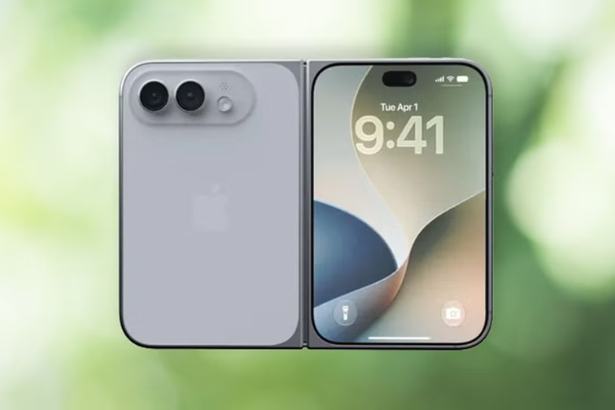
According to reporting ahead of the event, the device is expected to use a passport-style folding design, similar to Samsung’s Galaxy Z Fold series. Bloomberg reporting cited by Yahoo Finance puts the expected starting price at more than $2,000, while The Verge reported a potential $1,999 starting price for a 256GB model.
That would make it one of Apple’s most expensive mainstream consumer devices.
Latest Update: The iPhone Ultra Is Set to Take Center Stage
Apple’s September event begins at 1 p.m. Eastern Time, or 10 a.m. Pacific Time, at Apple Park in Cupertino. It is also John Ternus’s first major product keynote as CEO.
The Yahoo Finance live coverage says the foldable iPhone is expected to be the biggest story of the event, alongside the iPhone 18 Pro and iPhone 18 Pro Max. The standard iPhone 18 is reportedly being pushed to early 2027.
The Bloomberg report supplied for this article similarly points to a roughly $2,000 foldable iPhone Duo, alongside Apple Watch Series 12 updates.
The name remains one of the biggest uncertainties.
The device has frequently been called iPhone Ultra in leaks and pre-event coverage. Bloomberg reporting has instead pointed toward iPhone Duo, a name that would distinguish the folding device from Apple’s existing Pro and Pro Max hierarchy.
The rumored hardware concept is straightforward but ambitious: a phone that opens into a much larger display, effectively combining a conventional smartphone with a compact tablet.
Reports have suggested support for side-by-side applications, iPad-style multitasking and Apple Pencil functionality.
Shipping is reportedly expected to begin in October if the device is announced as anticipated.
The Reuters preview describes the foldable as Apple’s biggest iPhone design change since the iPhone X arrived in 2017.
That is a considerable claim for a company whose flagship design has evolved incrementally for years.
Expert Insights or Analysis
The real test for the iPhone Ultra is not whether Apple can build a foldable phone.
It is whether Apple can make consumers believe they need one.
Foldable phones have spent years fighting the same problem. They are technologically impressive, but the benefits have not always justified the compromises.
A foldable can provide a larger display without requiring a larger device when closed. But buyers have historically had to contend with thicker hardware, higher prices, hinge concerns, display creases and compromises in battery life or camera systems.
Reuters notes that durability, camera performance and battery life have been among the reasons foldables have struggled to move beyond a niche audience.
Apple’s advantage is that it can control the entire experience.
The company designs the hardware, operating system, chips and much of the software ecosystem. That could allow Apple to build multitasking and large-screen applications into iOS more deeply than a simple hardware redesign would suggest.
There is also the ecosystem effect.
A customer who already owns an iPhone, Apple Watch, AirPods and Mac has a strong reason to remain inside Apple’s platform. A foldable iPhone therefore does not need to win every hardware comparison against Samsung or Google. It needs to offer enough additional utility to make existing Apple customers consider upgrading.
That is a much narrower challenge.
Broader Implications
The iPhone Ultra could have implications beyond Apple’s own product lineup.
A successful Apple foldable would give the category an enormous marketing boost.
Foldable smartphones have remained a relatively small segment despite years of investment from Samsung and Chinese manufacturers. Reuters cited an IDC forecast that foldable smartphone shipments could grow nearly 30% in 2026, even while conventional smartphone sales decline.
Apple’s arrival could accelerate that trend.
It could also force competitors to rethink pricing.
If Apple successfully sells a foldable above $2,000, the company could establish a new premium tier rather than compete primarily on price. Samsung’s Galaxy Z Fold 8 starts around $1,899, while its higher-end Z Fold 8 Ultra is reported at about $2,099.
That puts Apple in an unusual position.
It would not be the cheapest foldable. It would be selling the idea that Apple’s version is the one worth paying more for.
The leadership transition makes the launch even more consequential.
John Ternus became CEO on September 1, meaning the September iPhone event is effectively the first major public product test of his tenure.
For more analysis of how hardware companies use product launches to redefine their strategy, internal link suggestion: The Tech Marketer’s consumer technology coverage.
Related History or Comparable Technologies
The history of foldables is a story of companies trying to solve a very old problem: how to put a larger screen into a device that still fits in a pocket.
Samsung helped establish the modern foldable category, while Huawei pushed the hardware in different directions. Motorola revived the vertically folding clamshell concept with the Razr.
Google also attempted to make foldable software more mainstream with the Pixel Fold.
Yet none has transformed the smartphone market in the way the iPhone did in 2007.
That distinction is important.
Apple is not entering an empty category. It is entering a category that has already spent years discovering what works and what does not.
That could be precisely the point.
Reuters describes Apple’s strategy as a potential second-mover advantage: let competitors absorb the early engineering problems, then enter once the technology is mature enough for a mass-market product.
The original iPhone similarly arrived after smartphones already existed.
The difference is that Apple made the smartphone easier to understand.
The iPhone Ultra will have to do something similar for foldables.
What Happens Next
The immediate milestone is Apple’s September 9 keynote.
Until Apple officially confirms the product, several details remain unverified, including the final name, exact specifications, final price and regional availability.
The rumored starting price is roughly $2,000, with reports suggesting that higher-storage versions could approach $3,000. The Verge reported a possible 256GB entry configuration and up to 2TB of storage.
That pricing creates a fascinating test.
At $2,000, the iPhone Ultra is no longer simply another smartphone upgrade. It becomes a major consumer purchase competing with laptops, tablets and premium televisions.
Apple will therefore need to demonstrate that the foldable display changes how people use their phones.
Multitasking will matter.
Large-screen productivity will matter.
Gaming, video, photography and creative applications will matter.
And perhaps most importantly, the transition between folded and unfolded states needs to feel natural.
Apple’s hardware reputation gives the company a significant head start in consumer trust. But the category itself remains unproven at mass-market scale.
Conclusion
The iPhone Ultra represents a much bigger bet than another annual iPhone refresh.
Apple is potentially betting that consumers are ready to pay around $2,000 for a phone that transforms into a larger-screen computing device.
The timing could hardly be more important.
John Ternus is beginning his tenure as CEO. Apple’s competitors have already spent years refining foldable hardware. The broader smartphone market is mature. And Google Trends shows consumers are clearly curious about what Apple is about to reveal.
The company now has to turn that curiosity into demand.
If Apple succeeds, the iPhone Ultra could make foldable phones a mainstream category.
If it fails, the device could become an expensive demonstration of how difficult it is to reinvent a product that already dominates the smartphone market.
Either way, September 9 marks the beginning of a new chapter for the iPhone.
FAQ
1. What is the iPhone Ultra?
The iPhone Ultra is the name widely used in pre-launch reporting for Apple’s expected first foldable iPhone. Bloomberg reporting has also referred to the device as the iPhone Duo.
2. How much will the iPhone Ultra cost?
Reports indicate a starting price around $2,000, with higher-storage configurations potentially approaching $3,000. The exact price had not been officially confirmed by Apple before the September 9 event.
3. Is the iPhone Ultra Apple’s first foldable iPhone?
Yes. Apple has not previously released a foldable iPhone, while Samsung, Huawei, Motorola and Google have already introduced foldable smartphones.
4. When will the iPhone Ultra be available?
Pre-event reports suggested that shipments could begin as early as October 2026 if Apple announces the device at its September event.
5. Why is Apple launching a foldable iPhone now?
Apple appears to be entering the category after competitors have spent years developing foldable displays and hinge technology. Analysts believe Apple’s late entry could let it benefit from improvements in durability and user experience.
6. Will the iPhone Ultra replace the regular iPhone?
Not immediately. Reports indicate Apple is maintaining its conventional iPhone lineup, while the foldable would occupy a premium position above the standard models.
Sources & References
- Yahoo Finance, “Apple event live updates: Foldable iPhone and watches expected”
Read the Yahoo Finance live coverage - Bloomberg, “Apple Event Details: $2,000 iPhone Duo, Apple Watch Series 12 Recording Feature”
Read the Bloomberg report - Reuters, “Apple expected to unveil first folding phone, with new CEO Ternus in command”
Read the Reuters report - Reuters, “As Apple prepares to make a splash, a brief history of foldable phones”
Read the Reuters foldable-phone history - The Verge, “Apple’s foldable ‘iPhone Duo’ will reportedly start at $2,000”
Read The Verge report