Introduction
The NASA SLS rocket upper atmosphere hole discovery is raising fascinating questions about how powerful space launches interact with Earth’s atmosphere and the technology people rely on every day.
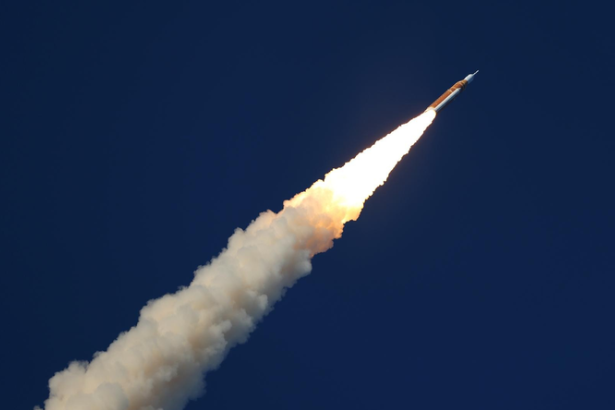
NASA’s Artemis II mission made history in April 2026 when four astronauts travelled around the Moon aboard the Orion spacecraft. But a new scientific study has uncovered something unexpected about the mission’s journey into space.
Researchers found that the Space Launch System (SLS) rocket created enormous disturbances in Earth’s ionosphere, an electrically charged region of the upper atmosphere that plays an important role in satellite navigation.
The disturbances extended approximately 3,100 miles (5,000 kilometres) across North America. Measurements from ground-based GPS receivers indicated changes equivalent to positioning errors of several metres.
That matters because GPS technology supports far more than smartphone navigation. It is used in aviation, autonomous vehicles, drone operations, precision agriculture, surveying and telecommunications.
The discovery does not mean NASA’s rocket destroyed part of Earth’s atmosphere or caused a nationwide GPS outage. Instead, it reveals how powerful rocket engines can temporarily change the charged particles through which satellite navigation signals travel.
And as humanity prepares for more frequent missions to the Moon and eventually Mars, understanding these atmospheric effects could become increasingly important.
Background and Context: What Is NASA’s Artemis II Mission?
To understand the discovery, it helps to look at the spacecraft responsible.
NASA’s Artemis II mission launched on April 1, 2026, from Kennedy Space Center in Florida.
It was the first crewed flight of NASA’s Artemis programme and the first mission to send astronauts around the Moon in more than 50 years.
The four-person crew included:
- Reid Wiseman, NASA commander.
- Victor Glover, NASA pilot.
- Christina Koch, NASA mission specialist.
- Jeremy Hansen, Canadian Space Agency astronaut.
The astronauts travelled aboard Orion, powered into space by NASA’s Space Launch System rocket.
According to NASA’s official Artemis II mission record, the mission lasted 9 days, 1 hour and 32 minutes, launching on April 1 and ending with splashdown on April 10, 2026.
The mission demonstrated critical systems needed for future human lunar exploration.
However, the rocket’s interaction with Earth’s upper atmosphere has now become another important subject of scientific investigation.
What Makes the SLS Rocket So Powerful?
The Space Launch System is one of the most powerful rockets ever developed for human spaceflight.
Its enormous thrust allows it to lift the Orion spacecraft and crew beyond Earth’s atmosphere and place them on a trajectory toward the Moon.
The rocket combines a large central core stage, four RS-25 engines and two solid rocket boosters.
At liftoff, NASA’s SLS generates approximately 8.8 million pounds of thrust.
That enormous energy is necessary to overcome Earth’s gravity and accelerate the spacecraft toward deep space.
But rocket engines also produce powerful shock waves, exhaust gases and disturbances as they move through different atmospheric layers.
Those interactions are especially interesting when they occur inside the ionosphere.
Latest Update: NASA SLS Rocket Upper Atmosphere Hole Discovery
The latest development comes from researchers at National Cheng Kung University in Taiwan.
Their study examined GPS measurements collected around the time of the Artemis II launch.
The research team used data from high-precision ground-based GPS receiver networks to investigate changes in the ionosphere following the rocket’s passage.
According to Space.com’s November 4 report, researchers identified two major disturbances associated with the rocket’s core stage and subsequent upper-stage engine burns.
Both extended approximately 3,100 miles across the American continent.
The findings are particularly interesting because the disturbances were more intense than those previously observed following other rocket launches discussed in the study.
1. Two Enormous Disturbances Appeared in the Ionosphere
The researchers identified two major regions of reduced electron density.
The first disturbance was associated with the passage of the SLS core stage through the atmosphere.
The second followed two subsequent engine burns by the rocket’s upper stage.
These disturbances stretched approximately 5,000 kilometres from east to west across North America.
The upper-stage activity produced the more prominent disturbance.
This is an important detail because it demonstrates that the altitude and location of rocket-engine activity can matter as much as the overall power of a launch.
The upper-stage burns occurred approximately 115 miles (185 kilometres) above Earth, directly within the ionosphere.
2. What Does a Hole in Earth’s Atmosphere Actually Mean?
The phrase sounds dramatic, but the scientific explanation is more specific.
The ionosphere is an electrically charged region containing free electrons and ions.
These charged particles influence how radio waves and satellite navigation signals travel through the atmosphere.
When a powerful rocket moves through the atmosphere, shock waves and exhaust gases can disturb the distribution of those particles.
The resulting regions of reduced electron density are sometimes described as ionospheric holes or plasma disturbances.
They are not literal openings in the atmosphere.
Earth’s air does not escape into space, and the discovery does not indicate damage to the ozone layer.
Instead, scientists are observing changes in the electrical properties of the upper atmosphere.
This distinction is essential when interpreting the NASA SLS rocket upper atmosphere hole headlines.
3. GPS Signals Experienced Potential Positioning Errors
One of the most important implications involves satellite navigation.
GPS receivers calculate their positions by measuring signals transmitted from satellites orbiting Earth.
Those signals must travel through the ionosphere before reaching receivers on the ground.
When electron concentrations change, the signals can travel at slightly different speeds.
This can affect the calculations receivers use to determine their positions.
The Artemis II measurements indicated changes equivalent to positioning errors of several metres.
That may sound insignificant, but precision navigation systems depend on accurate positioning.
Even relatively small errors can matter when a technology relies on knowing exactly where a vehicle or aircraft is located.
4. The Disturbance Was More Intense Than Previous Starship Comparisons
The research also produced an interesting comparison with SpaceX’s Starship test launches.
According to Space.com’s reporting, the ionospheric disturbances associated with Artemis II were up to ten times more intense than those observed following the Starship test launches discussed in the research.
That comparison is particularly interesting because Starship produces approximately twice the liftoff thrust of NASA’s SLS.
The difference highlights an important scientific point.
Rocket power alone does not determine atmospheric effects.
The altitude, trajectory, engine activity and location of the exhaust release can all influence how a rocket interacts with the ionosphere.
5. The Research Is Not Evidence of a Nationwide GPS Outage
There is another distinction worth emphasizing.
The study identified atmospheric changes that could translate into temporary, localized positioning errors.
It did not establish that GPS stopped working across the United States.
Nor did it document widespread navigation failures, vehicle accidents or permanent damage to satellite systems.
The findings describe a measurable atmospheric disturbance and its potential implications for navigation technology.
That is already significant without exaggerating the consequences.
Expert Insights and Analysis: Why This Discovery Matters for GPS Technology
The discovery offers an important reminder that satellite navigation depends on conditions far beyond the satellites themselves.
GPS technology is often treated as an incredibly reliable service. But its accuracy depends on several interconnected systems.
These include satellite positioning, atmospheric conditions, receiver quality, signal processing and correction technologies.
The ionosphere is one of the most important environmental variables.
Why the Ionosphere Matters to GPS
The ionosphere begins roughly 50 kilometres above Earth’s surface and extends hundreds of kilometres into space.
It contains charged particles created primarily by solar radiation.
These particles influence radio signals passing through the region.
During solar storms, sudden changes in ionospheric electron density can affect GPS accuracy and radio communication.
Rocket launches can create another type of disturbance.
Unlike solar storms, which can affect large areas for extended periods, rocket-induced disturbances are generally more localized and shorter-lived.
The Artemis II research demonstrates that powerful spacecraft launches can create measurable changes on a surprisingly large geographical scale.
Why a Few Metres Can Matter
For ordinary smartphone navigation, a positioning error of several metres might simply place a user on the wrong side of a road.
But the consequences can be more significant for precision-dependent systems.
Consider an autonomous vehicle approaching a busy intersection.
Its navigation software combines satellite positioning with cameras, radar, lidar and other sensors.
A sudden GPS positioning error could complicate location estimates, particularly if other systems are also experiencing difficulties.
Drones face similar challenges because accurate positioning is important for flight planning, navigation and automated operations.
Charles Lin, an Earth science professor at National Cheng Kung University and a co-author of the research, warned in comments to Space.com that errors of a couple of metres could affect autonomous vehicle lane decisions and drone positioning.
However, this represents a potential technological risk, not evidence that Artemis II caused actual accidents.
Why Future Moon and Mars Missions Could Make This More Important
Artemis II is part of a much larger change in human space exploration.
NASA wants to establish a sustained presence around and eventually on the Moon.
Future missions will require powerful rockets, upper-stage propulsion systems and spacecraft manoeuvres.
Commercial launch companies are also developing increasingly capable vehicles.
As launch frequency increases, scientists will have more opportunities to study the interaction between rocket engines and the ionosphere.
Understanding these effects could help improve atmospheric models and navigation systems.
The discovery therefore has implications extending well beyond one historic Moon mission.
Broader Implications: Could Rocket Launches Affect Everyday Technology?
The NASA SLS rocket upper atmosphere hole discovery raises questions about how space exploration could influence technology on Earth.
Several industries could benefit from a better understanding of ionospheric disturbances.
1. Autonomous Vehicles
Self-driving vehicles rely on multiple positioning and sensing technologies.
GPS provides important location information, particularly for navigation and route planning.
Temporary atmospheric disturbances could affect positioning accuracy.
However, autonomous vehicles also use cameras, radar, lidar and other sensors to understand their surroundings.
These systems provide additional information when GPS positioning becomes less reliable.
Future vehicle technology will need to account for multiple sources of positioning uncertainty.
2. Drone Navigation
Commercial drones depend on accurate positioning for delivery operations, surveying, mapping and inspection.
A few metres of positioning error can become important when drones operate near buildings, power lines or other infrastructure.
Understanding rocket-induced ionospheric disturbances could help drone operators improve navigation reliability.
3. Aviation and Satellite Navigation
Aircraft navigation systems rely on multiple technologies, including satellite-based positioning.
Atmospheric conditions can influence signal accuracy, particularly when precision approaches or other high-accuracy operations are required.
The Artemis II findings may encourage additional research into how large rocket launches interact with navigation systems.
However, the study does not establish that commercial aviation experienced disruption from this particular mission.
4. Telecommunications and Critical Infrastructure
Satellite navigation systems provide timing signals used in telecommunications, financial networks and other critical infrastructure.
Accurate timing is essential for synchronizing complex digital systems.
Changes in the ionosphere can affect radio propagation, making atmospheric monitoring valuable for industries that depend on reliable satellite signals.
5. Space Weather Research
The discovery also demonstrates why space weather research is becoming increasingly important.
Scientists already monitor solar storms and geomagnetic disturbances because they can affect satellite communications and navigation.
Rocket launches add another factor that researchers must understand.
As the number of commercial and government launches increases, atmospheric monitoring could become a more important part of spaceflight planning.
For more coverage of emerging space technology, see The Tech Marketer’s science and technology reporting: https://thetechmarketer.com/
Related History: How Previous Rocket Launches Disturbed Earth’s Atmosphere
The Artemis II findings are not the first time scientists have observed atmospheric disturbances associated with rocket launches.
Rocket engines produce powerful exhaust plumes and shock waves.
As rockets travel through different atmospheric layers, these interactions can change the distribution of charged particles.
SpaceX’s Starship test flights have provided researchers with additional opportunities to study these effects.
However, the Artemis II findings stand out because researchers identified substantial disturbances associated with both the rocket’s ascent and its later upper-stage engine activity.
There is also an important difference between rocket-induced disturbances and solar storms.
Solar storms can inject energy and charged particles into Earth’s upper atmosphere, sometimes creating GPS and radio communication problems lasting for days.
Rocket-induced effects are generally shorter-lived.
The latest discovery therefore expands scientific understanding of how human spaceflight can influence the near-Earth environment.
What Happens Next: Five Things Scientists Will Be Watching
The Artemis II findings could influence how researchers study future space missions.
Here are five important developments to watch.
1. Further Scientific Examination of the Research
The findings have been reported from a research preprint. Further scientific review and independent analysis will help establish how robust the measurements and conclusions are.
2. Future NASA Artemis Missions
Future Artemis launches will provide additional opportunities to monitor the ionosphere and compare atmospheric effects across different mission profiles.
3. SpaceX Starship and Other Heavy-Lift Rockets
As commercial launch vehicles become more powerful and launch activity increases, scientists will have additional data for comparing rocket-induced atmospheric disturbances.
4. Better GPS and Navigation Monitoring
Ground-based receiver networks and satellite navigation systems could help researchers identify atmospheric disturbances more quickly.
5. Improved Space Weather Forecasting
Scientists may eventually incorporate rocket-launch information into broader atmospheric and navigation-risk monitoring systems.
The objective would be to understand when and where atmospheric disturbances could affect precision-dependent technologies.
Conclusion: NASA’s Moon Rocket Reveals an Unexpected Side Effect of Space Exploration
The NASA SLS rocket upper atmosphere hole discovery provides a fascinating look at how powerful space launches can influence Earth’s near-space environment.
The Artemis II mission was designed to test the systems needed to send humans back toward the Moon.
But researchers have now identified another important consequence of the mission: substantial disturbances in the ionosphere that extended approximately 3,100 miles across North America.
The measurements suggest potential GPS positioning errors of several metres, highlighting how atmospheric conditions can influence technologies used in everyday life.
The discovery does not mean Earth’s atmosphere was physically torn open or that GPS suffered a nationwide outage.
Instead, it demonstrates that rocket engines can temporarily change the charged environment through which navigation signals travel.
As NASA, SpaceX and other organizations prepare for more ambitious missions, understanding these effects will become increasingly important.
Space exploration is no longer just about reaching distant destinations.
It is also about understanding how the technologies that take us there interact with the planet we call home.
Frequently Asked Questions
1. Did NASA’s SLS rocket really create a hole in Earth’s atmosphere?
Not a literal hole. Researchers identified temporary regions of reduced electron density in the ionosphere following the Artemis II rocket launch and subsequent upper-stage burns.
2. How big were the atmospheric disturbances created by Artemis II?
The two reported disturbances extended approximately 3,100 miles, or 5,000 kilometres, across North America.
3. Did NASA’s Artemis II launch disrupt GPS signals?
Ground-based GPS measurements detected changes equivalent to potential positioning errors of several metres. However, the study did not establish a widespread GPS outage.
4. What is the ionosphere?
The ionosphere is an electrically charged region of Earth’s upper atmosphere containing free electrons and ions. It influences radio communications and satellite navigation signals.
5. When did NASA launch Artemis II?
NASA launched Artemis II on April 1, 2026, from Kennedy Space Center in Florida. The mission returned to Earth on April 10, 2026.
6. Why did the Artemis II rocket affect the ionosphere?
The rocket generated shock waves and released exhaust gases during its flight and upper-stage engine burns. These processes disturbed the distribution of charged particles in the ionosphere.
7. Were the Artemis II disturbances stronger than SpaceX Starship launches?
According to the Space.com report, the measured disturbances were up to ten times more intense than those observed following the Starship test launches discussed in the research.
8. Could rocket launches affect self-driving cars?
Potentially. Temporary GPS positioning errors could affect systems that depend on precise location information. However, autonomous vehicles also use cameras, radar and other sensors to support navigation.
9. Is the atmospheric disturbance permanent?
No permanent atmospheric damage was reported. The research describes ionospheric disturbances, not a lasting opening in Earth’s atmosphere.
10. Why is this discovery important for future Moon missions?
Future missions could involve more frequent rocket launches and upper-stage engine burns. Understanding their atmospheric effects could help improve GPS reliability, navigation monitoring and space weather research.
3. SOURCES & REFERENCES
- Space.com: NASA’s Artemis II moon launch tore a hole in Earth’s upper atmosphere so huge it disrupted GPS signals. November 4, 2026.
https://www.space.com/space-exploration/launches-spacecraft/nasas-artemis-ii-moon-launch-tore-a-hole-in-earths-upper-atmosphere-so-huge-it-disrupted-gps-signals - Newsweek: Artemis II Tore ‘Hole’ in Earth’s Atmosphere, Raising GPS Concerns. November 5, 2026.
https://www.newsweek.com/artemis-ii-atmosphere-hole-gps-12669403 - The Economic Times: NASA’s Artemis II rocket punched 3,100-mile-long holes in Earth’s atmosphere, disrupted GPS signals: Study. November 5, 2026.
https://m.economictimes.com/news/international/world-news/nasas-artemis-ii-rocket-punched-3100-mile-long-holes-in-earths-atmosphere-disrupted-gps-signals-study/articleshow/135568331.cms - NASA: Artemis II: NASA’s First Crewed Lunar Flyby in 50 Years.
https://www.nasa.gov/mission/artemis-ii/ - NASA: Liftoff! NASA Launches Astronauts on Historic Artemis Moon Mission. April 1, 2026.
https://www.nasa.gov/news-release/liftoff-nasa-launches-astronauts-on-historic-artemis-moon-mission/ - European Space Agency: Artemis II mission begins. April 2, 2026.
https://www.esa.int/Science_Exploration/Human_and_Robotic_Exploration/Artemis_II_mission_begins