Introduction
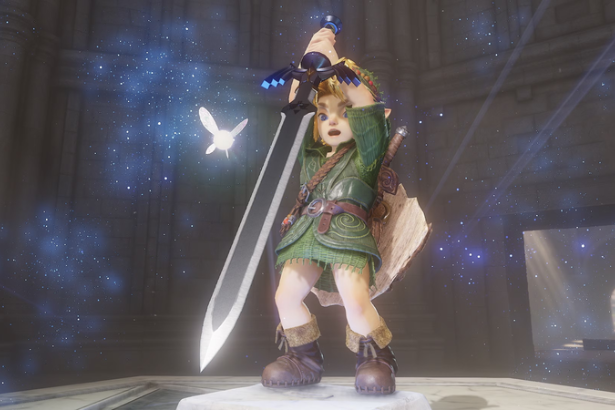
The Zelda Ocarina of Time Switch 2 remake is now out, bringing one of Nintendo’s most celebrated adventures to its newest console. Released on November 5, 2026, the updated game revisits Link’s journey through Hyrule with redesigned visuals, voiced cutscenes, expanded dialogue and a symphonic soundtrack.
The timing is deliberate. Nintendo is bringing back a game that helped define 3D adventure gaming just as the holiday shopping season begins. It is also arriving during the franchise’s 40th anniversary year, giving the company a powerful combination of nostalgia, new hardware and renewed attention around one of its most recognizable properties.
The early signs of interest are visible beyond the launch announcement. Google Trends shows a sharp rise in searches for the game, while reports from the United States describe fans waiting outside Best Buy stores for midnight openings. The question now is whether a familiar classic can become a meaningful reason for people to buy or spend more time with the Switch 2.
Background and Context: Why Ocarina of Time Still Matters
Nintendo originally released The Legend of Zelda: Ocarina of Time for the Nintendo 64 in 1998. It moved the Zelda formula into a fully 3D world, following Link as he travels through Hyrule, solves dungeon puzzles and tries to stop Ganondorf from taking the Triforce.
Its influence has lasted well beyond its original console generation. The game has been re-released on several Nintendo platforms, including the GameCube, Wii U and Nintendo 3DS. Each version gave another audience a chance to experience the adventure, but the Switch 2 edition is a more extensive update than a simple reissue.
Nintendo is also approaching the release during the series’ 40th anniversary celebrations. The company has paired the game with special-edition Switch 2 hardware and related accessories, turning the launch into a broader franchise moment rather than an isolated software release.
That matters because Nintendo’s strongest properties are not just individual games. Mario, Zelda and Pokémon are long-running entertainment brands that can bring players back across multiple generations of hardware.
Latest Update: The Zelda Ocarina of Time Switch 2 Remake Is Here
Nintendo’s official release information confirms that the game launched on November 5, exclusively for Nintendo Switch 2. The company describes it as a rebuilt version of Link’s 1998 adventure, with substantial changes to its presentation and controls.
The updated edition includes:
- Overhauled visuals: Hyrule and its characters have been refreshed for modern hardware.
- Voiced cutscenes: Story scenes now include voice performances, alongside expanded character dialogue.
- Symphonic orchestral music: The soundtrack has been reworked with a fuller orchestral sound.
- Updated camera and movement: Nintendo has modernized how players move through and interact with the world.
- Ocarina microphone features: Players can hum or play learned melodies into the Switch 2 microphone to trigger in-game responses.
- Hall of Fallen Heroes: A new area lets players revisit defeated enemies and challenge them again.
Nintendo has also promoted ZELDA NOTES, a companion service within the Nintendo Switch App. It offers additional support and activities, including daily accomplishment tracking and image-based location challenges.
The full product details are available on Nintendo’s official Ocarina of Time page.
Midnight launch events bring fans back to stores
The launch has generated activity beyond digital storefronts. Best Buy announced late-night openings for the release, with participating U.S. stores opening at midnight Eastern time on November 5. The retailer also planned limited availability of the Zelda 40th Anniversary Edition Switch 2 system and matching Pro Controller.
Local coverage suggests that the nostalgia factor is real. WSYX reported that thousands of Nintendo fans stayed up late for the release, including customers lining up at Best Buy locations in Columbus, Ohio. In South Philadelphia, 6abc reported that the queue wrapped around a Best Buy store before its doors opened.
These scenes are a reminder that major game launches can still create physical retail events, even in a market where digital downloads are increasingly common.
Read the local reports:
- WSYX: Fans line up overnight at Best Buy for midnight release of Zelda remake on Switch 2
- 6abc: Fans line up at South Philly Best Buy for midnight release
Nintendo’s holiday strategy goes beyond one game
CNN’s November 4 report framed the remake as part of Nintendo’s effort to strengthen its holiday lineup. The company is relying on recognizable franchises to give Switch 2 owners reasons to keep playing and to encourage people who have not upgraded to consider the newer system.
The strategy comes with pressure. Nintendo has to keep the Switch 2 library compelling after the initial excitement around a new console fades. A high-profile Zelda release can help, but the company is also dealing with competition for players’ time, rising hardware costs and a crowded entertainment market.
CNN’s report also points to Nintendo’s broader approach: taking familiar characters and extending their reach through games, films, concerts and other experiences. The company’s 40th anniversary announcement places the remake within that larger celebration.
Expert Insights and Analysis: Nostalgia Is the Hook, Modernization Is the Test
A remake of a famous game has a built-in advantage: people already know the characters, setting and story. But recognition alone does not guarantee that players will pay full price or return to an adventure they may have completed more than once.
The real test is whether the new edition makes the experience feel worthwhile on current hardware.
Nintendo has addressed that challenge through a combination of visual upgrades, voice acting, orchestral music and control changes. Those improvements can make the game more accessible to players who are used to contemporary adventure titles, while preserving the structure that longtime fans remember.
The microphone-based ocarina feature is particularly interesting. It connects the game’s central musical mechanic to the Switch 2’s hardware, rather than treating the remake as a purely graphical refresh. The Hall of Fallen Heroes also adds a new activity without replacing the original adventure.
Early reviews have been positive about the presentation and modernization. Nintendo Life praised the updated experience while noting that the remake remains close to the original and that longtime players may find its challenge familiar. That distinction is important: a faithful remake can be a strong introduction for newcomers, but veterans may want more substantial new content.
The broader lesson for game publishers is that nostalgia works best when it is supported by meaningful improvements. A familiar title can attract attention, but players still expect the new version to justify its place in a modern library.
Broader Implications: What the Remake Means for Nintendo and the Gaming Industry
1. Established franchises remain powerful hardware sellers
Nintendo does not need to introduce an entirely new character or universe every time it wants to create excitement. A major Zelda release can draw on decades of recognition and an existing global audience.
That creates a commercial advantage. Players who already love the series may be more willing to consider a console upgrade when a new version of a favorite game is exclusive to that hardware.
2. Remakes can bridge generations
The original Ocarina of Time belongs to the Nintendo 64 era. The Switch 2 version gives older fans a reason to revisit it while offering younger players a more accessible way to experience a historically important game.
This approach can help publishers extend the life of valuable intellectual property without relying entirely on sequels.
3. Hardware features are becoming part of the remake pitch
The microphone interaction and companion-app features show how a remake can be connected to the capabilities of a newer console. These additions may be small compared with a full gameplay redesign, but they help distinguish the new release from earlier versions.
4. Nintendo is competing for attention, not just sales
The holiday gaming market is crowded. Nintendo’s challenge is to keep players engaged while other publishers compete for the same time and entertainment spending.
For more coverage of gaming platforms, hardware launches and the business of interactive entertainment, see the suggested internal destination: The Tech Marketer’s gaming and technology coverage.
Related History: From Nintendo 64 Landmark to Switch 2 Showcase
The original Ocarina of Time arrived in 1998, when moving a large adventure world into 3D was still a major design challenge. Its targeting system, world structure and puzzle-driven dungeons helped establish conventions that many later action-adventure games would build on.
Nintendo has returned to the title several times. The 3DS version, released in 2011, updated the visuals and adapted the experience to a handheld system. Earlier re-releases also made the original available through Nintendo’s later platforms.
The Switch 2 remake takes a different route. Rather than simply making the old game available on another system, Nintendo has rebuilt major parts of its presentation and added features that connect to the newer console.
It is part of a wider industry pattern. Publishers regularly revisit well-known titles because established franchises can reduce the uncertainty involved in launching a completely new property. The challenge is balancing familiarity with enough new material to make the purchase feel worthwhile.
What Happens Next
The first major measure of success will be how well the remake performs during its opening weeks. Retail queues and a spike in online searches indicate strong attention, but they do not reveal final sales or how many players will remain engaged after launch.
Several developments are worth watching:
- Early sales performance: Nintendo’s holiday results will show whether the remake can translate interest into software sales.
- Switch 2 hardware demand: The game may encourage existing Switch owners to upgrade, particularly among Zelda fans.
- Player response to the changes: Reviews and community discussion will reveal whether the new controls, visuals and features satisfy longtime fans.
- Anniversary momentum: Nintendo has more Zelda-related activity planned around the franchise’s 40th anniversary, giving the company additional opportunities to maintain interest.
- Future remake expectations: A successful launch could strengthen the case for more substantial updates to other classic Nintendo games.
Nintendo has made the release date clear and the feature set substantial. The remaining question is whether players see this as the definitive way to experience Ocarina of Time, or simply another version of a game they already own.
Conclusion
The Zelda Ocarina of Time Switch 2 remake is more than a return to a familiar adventure. It is a strategic holiday release built around one of Nintendo’s most enduring franchises, arriving during the series’ 40th anniversary year.
The updated visuals, voiced scenes, orchestral soundtrack and modern controls give the 1998 classic a fresh presentation. Midnight launch lines suggest that the title still carries considerable emotional weight for longtime fans.
But nostalgia is only the beginning. The remake’s long-term value will depend on whether the new features bring enough to the experience for both returning players and newcomers. If Nintendo gets that balance right, Hyrule could become one of the Switch 2’s defining holiday destinations.
FAQ
1. When did the Zelda Ocarina of Time Switch 2 remake release?
The remake launched on November 5, 2026, exclusively for Nintendo Switch 2.
2. Is the Switch 2 version a remaster or a full remake?
Nintendo describes it as a rebuilt version of the original adventure, with overhauled visuals, voiced cutscenes, expanded dialogue, orchestral music and updated controls. It retains the central story and world of the 1998 game.
3. What new features are included in the remake?
The updated game adds modernized camera and movement controls, fully voiced cutscenes, expanded dialogue, symphonic music, microphone-based ocarina interactions and a Hall of Fallen Heroes area for rematches against defeated enemies.
4. Can players use the Switch 2 microphone to play the ocarina?
Yes. Nintendo says players can hum a learned melody or play one on an actual instrument near the Switch 2 microphone to make Link’s in-game ocarina respond.
5. Is the Zelda Ocarina of Time Switch 2 remake exclusive to the new console?
Yes. Nintendo lists the November 5 release as exclusive to Nintendo Switch 2.
6. Why is Nintendo releasing Ocarina of Time again?
The remake gives longtime fans a modern way to revisit a landmark game and introduces its story to new players. It also supports Nintendo’s holiday software lineup and the Zelda franchise’s 40th anniversary activities.
7. Did Best Buy hold midnight launch events?
Yes. Best Buy announced late-night openings at participating U.S. stores for the November 5 launch. Some locations also had limited quantities of anniversary-edition hardware and accessories.
8. Is the remake worth playing for people who finished the original?
That depends on what players want. The updated visuals, audio and controls offer a more modern presentation, but the core adventure remains familiar. Players seeking a substantially different story or a completely new campaign may find the changes more conservative.
Sources & References
- Nintendo: The Legend of Zelda: Ocarina of Time for Nintendo Switch 2
- CNN: Why Nintendo is betting on a nearly 30-year-old game remake to win the holiday
- Nintendo: The Legend of Zelda 40th anniversary celebration revealed
- WSYX / ABC6: Fans line up overnight at Best Buy for midnight release of Zelda remake on Switch 2
- 6abc Philadelphia: Fans line up at South Philly Best Buy for midnight release of The Legend of Zelda: Ocarina of Time
- Best Buy: Late-night openings for The Legend of Zelda: Ocarina of Time launch
- Nintendo Life: The Legend of Zelda: Ocarina of Time Review for Switch 2
- TODAY: Nintendo gives out Switch 2s and Zelda games on TODAY