Introduction
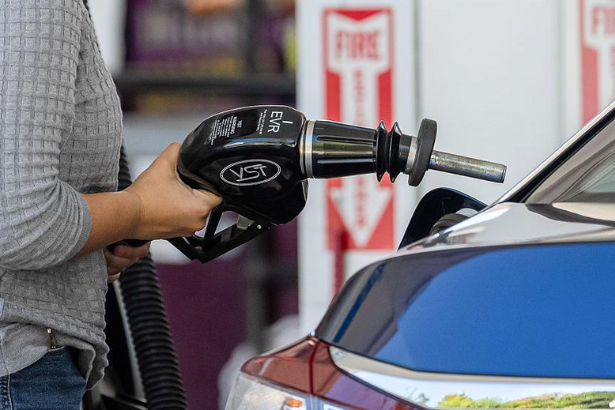
Gas prices are surging again, with the national average moving above $4 a gallon and reaching a new record for the Labor Day period. AAA’s national average stood at $4.2245 per gallon on September 9, 2026, while gasoline had already reached $4.15 around Labor Day, according to reporting from Fox News and other outlets.
The timing is particularly painful for American households. The traditional summer driving season is ending, yet fuel costs are moving in the wrong direction. Nearly 40 million Americans were expected to drive over Labor Day weekend, turning the price at the pump into a highly visible measure of economic pressure.
The latest jump is not simply about Americans driving more. It reflects a combination of crude oil prices, disruptions around the Strait of Hormuz, refinery constraints and a wider geopolitical crisis that is now feeding directly into household budgets.
Background and Context
Gasoline prices are heavily influenced by the cost of crude oil, but the path from an oil barrel to a driver’s local pump is more complicated.
Refinery capacity, transportation costs, regional fuel formulations, taxes, inventories and seasonal demand all affect what consumers ultimately pay.
This year, those factors have been moving in the same direction.
AAA reported that the national average reached $4.14 ahead of Labor Day, the highest price ever recorded for the holiday period. The previous Labor Day record was $3.82, set in 2012.
The comparison with 2025 is even more striking. AAA’s September 3 data showed an average of $4.1436 versus $3.1903 a year earlier.
That means the typical driver is dealing with a fuel market dramatically more expensive than it was just one year ago.
The pressure is not limited to gasoline. Diesel reached a record national average of approximately $5.85 per gallon in early September, creating a second channel through which energy costs can reach consumers because diesel powers much of the country’s trucking, agricultural and industrial transportation system.
Latest Update: Gas Prices Are Moving Higher as Oil Breaks Above $100
The latest market move has added another layer of pressure.
Brent crude climbed above $100 a barrel on September 9, while U.S. benchmark crude also moved sharply higher as tensions in the Middle East intensified. Reuters reported that Brent reached as high as $100.95, while the conflict was simultaneously pushing financial markets lower and Treasury yields higher.
The relationship is straightforward: when crude becomes more expensive, refiners generally face higher input costs. Those costs can eventually reach gasoline and diesel consumers.
But this market is facing more than an oil-price problem.
The Associated Press report on record Labor Day fuel prices points to several simultaneous pressures, including disruption around the Strait of Hormuz, U.S. refinery constraints caused by extreme weather and hurricane risks, Ukrainian attacks on Russian refineries and reduced refinery output elsewhere.
The result is a market where supply is less flexible precisely when crude and refined-fuel prices are already elevated.
The Fox News report on record gas prices puts the consumer impact in sharper focus. Nearly 40 million Americans were expected to drive over Labor Day, with the national average around $4.15 per gallon.
And the pressure did not disappear when the holiday ended.
AAA’s September 9 figure of $4.2245 shows the national average moving even higher.
Expert Insights or Analysis
The most important question now is whether this is a temporary spike or the beginning of a longer period of elevated energy prices.
There are reasons to expect continued volatility.
First, crude oil markets remain extremely sensitive to developments in the Middle East. The Strait of Hormuz is a critical energy-shipping route, so any sustained disruption can rapidly change expectations about global supply.
Second, refining capacity matters. Even if crude oil becomes available, gasoline and diesel still have to be processed, transported and distributed. AP reported that U.S. refineries were already operating under pressure during the Labor Day period.
Third, diesel deserves particular attention.
Gasoline is highly visible because consumers see its price every time they fill up. Diesel can be less visible, but it is deeply embedded in the economy. Trucks move consumer goods, agricultural equipment relies on diesel and industrial supply chains depend on diesel-powered transportation.
That means a prolonged diesel spike could eventually affect prices far beyond the gas station.
The latest oil move is already raising inflation concerns. Reuters reported that the surge above $100 a barrel came just before important U.S. inflation and Federal Reserve decisions, increasing the risk that energy costs could complicate monetary policy.
That creates an uncomfortable feedback loop.
Higher oil prices can raise inflation. Higher inflation can keep interest rates elevated. Higher interest rates can increase borrowing costs for consumers and businesses. Meanwhile, households are already paying more to drive.
Broader Implications
The rise in gas prices is becoming an economic story rather than simply a transportation story.
For a household that drives 1,000 miles a month, the difference between $3.20 gasoline and $4.20 gasoline can become significant, particularly for larger vehicles with lower fuel economy.
Long-distance travelers are feeling the difference even more sharply.
An MS NOW road-trip analysis tracked a cross-country journey in 2026 and compared it with a similar trip in 2023. The travelers recorded a $642.38 gasoline bill for 4,964 miles, compared with $578.99 for their 2023 journey. The analysis estimated the same 2026-distance trip would have cost roughly $750 at the higher fuel-price environment.
That is the human-scale version of the national energy story.
The same analysis found dramatic regional differences. The travelers encountered gasoline below $2.50 a gallon at one Richmond, Virginia, station, while prices above $6 appeared in California.
This regional spread matters because national averages can hide how differently households experience fuel inflation.
Technology is increasingly part of the response. Drivers use fuel-price apps to compare stations, navigation platforms can optimize routes around cheaper fuel and newer vehicles can reduce fuel consumption through hybridization or electrification.
But those tools can only mitigate the problem. They cannot eliminate the underlying cost of crude oil.
For more coverage of technology’s role in energy, transportation and consumer economics, internal link suggestion: The Tech Marketer’s energy and technology coverage.
Related History or Comparable Technologies
The United States has experienced several major gasoline-price shocks before.
The 1970s oil crises demonstrated how geopolitical disruptions could spread through the global energy system and eventually reshape consumer behavior, industrial policy and vehicle design.
The 2008 oil-price spike offered another lesson. Crude prices reached extraordinary levels, and fuel costs became a major economic concern before the global financial crisis transformed the market.
The 2022 energy shock provided a more recent example. Russia’s invasion of Ukraine disrupted global energy markets, pushing gasoline and diesel prices sharply higher in the United States and other economies.
Today’s environment has similarities to each episode, but it also has a modern technological dimension.
Consumers now have access to real-time price maps and fuel-tracking applications. Automakers offer hybrid and electric vehicles that can reduce exposure to gasoline prices. Logistics companies increasingly use software to optimize routes, fuel consumption and delivery schedules.
The underlying vulnerability, however, remains the same: transportation still depends heavily on liquid fuels.
Until that dependency changes materially, geopolitical disruptions in major oil-producing regions can continue to show up at American gas stations.
What Happens Next
The immediate direction of gas prices will depend heavily on crude oil, refinery operations and the trajectory of the Middle East conflict.
If crude remains above $100, gasoline prices could face further upward pressure. If oil retreats and refinery availability improves, pump prices could stabilize or decline.
There is also a seasonal factor.
Gasoline demand normally weakens after the summer driving season, which can provide some downward pressure. AAA noted that this seasonal pattern has not been enough to overcome the unusually high cost of crude this year.
The next major question is whether demand destruction begins to matter.
Consumers eventually respond to high prices by driving less, consolidating trips, using public transportation, switching vehicles or postponing discretionary travel. Businesses can also reduce fuel consumption when costs become too high.
That process can eventually help rebalance the market.
But it takes time.
The more immediate concern is that elevated fuel prices could become embedded in consumer expectations just as policymakers are trying to control inflation.
Conclusion
The latest gas prices surge is becoming one of the clearest signs that geopolitical instability can quickly become a household-budget problem.
The national average has moved above $4.20, Labor Day produced a record for the holiday period and crude oil has now pushed back above $100 a barrel.
The biggest risk is not necessarily a single expensive fill-up. It is the possibility that elevated gasoline and diesel costs begin spreading through transportation, food, manufacturing and other parts of the economy.
For consumers, the practical response is increasingly familiar: compare stations, reduce unnecessary driving, monitor local prices and pay attention to vehicle efficiency.
For policymakers and businesses, the challenge is considerably larger.
The United States is discovering once again that energy security is not an abstract geopolitical concept. It shows up every time someone looks at the price on a gas pump.
FAQ
1. What are gas prices today?
The AAA national average was $4.2245 per gallon on September 9, 2026. Prices vary significantly by state and local market.
2. Why are gas prices so high in 2026?
Several factors are contributing, including elevated crude oil prices, disruption around the Strait of Hormuz, refinery constraints and geopolitical instability involving Iran and other oil-producing regions.
3. Are gas prices expected to fall?
They could decline if crude oil prices fall, refinery supply improves and seasonal demand weakens. However, continued geopolitical disruption could keep prices elevated for longer.
4. Why is diesel more expensive than gasoline?
Diesel markets are facing their own supply constraints, including global refinery disruptions. Diesel is also essential to freight, agriculture and industrial transportation, making its price particularly important for the broader economy.
5. How much have gas prices increased compared with 2025?
AAA reported a national average of $4.1436 on September 3, 2026, compared with $3.1903 a year earlier.
6. How do high gas prices affect inflation?
Higher fuel costs directly raise transportation expenses and can indirectly increase the cost of goods because businesses pay more to move products. Persistent energy inflation can therefore make it harder for central banks to bring overall inflation down.
Sources & References
- AAA, “Labor Day On Track to Set Record at the Pump”
Read the AAA fuel-price report - Associated Press, “Fuel prices at record Labor Day high in US thanks to Iran war and refinery issues”
Read the AP report - Reuters, “Americans hit with record-high Labor Day weekend gasoline prices”
Read the Reuters report - Fox News, “Record gas prices squeeze Americans as summer travel season ends, midterms loom and Iran war wages on”
Read the Fox News report - Reuters, “Middle East tensions drive oil over $100, Wall Street drops”
Read the latest Reuters oil-market update - MS NOW, “We drove across the country twice, and kept the receipts. Here’s what it cost.”
View the MS NOW story reference