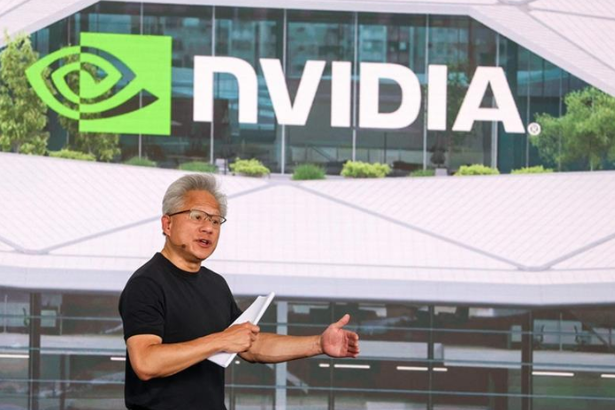
Nvidia CEO Jensen Huang says Taiwan is becoming the global center of artificial intelligence infrastructure as Nvidia ramps up massive AI-related spending.
Jensen Huang Taiwan investment headlines surged across financial and technology media this week after the Nvidia CEO announced plans tied to as much as $150 billion annually in AI infrastructure spending connected to Taiwan’s semiconductor ecosystem.
Speaking during appearances in Taiwan, Huang described the island as the “epicenter of the AI revolution,” reinforcing Nvidia’s growing dependence on Taiwanese manufacturing partners as global demand for AI chips continues accelerating. (Reuters)
The comments immediately boosted semiconductor-related stocks across Taiwan and reignited discussions about how central the region has become to the future of artificial intelligence.
Background and Context
Jensen Huang has spent the last several years transforming NVIDIA from a graphics chip manufacturer into the dominant infrastructure provider powering the global AI boom.
Nvidia’s GPUs now serve as the backbone for:
- AI training systems
- Hyperscale data centers
- Autonomous systems
- Large language models
- Enterprise AI deployments
Much of that hardware ecosystem depends heavily on Taiwan’s semiconductor manufacturing leadership, especially advanced chip fabrication capabilities provided by:
- Taiwan Semiconductor Manufacturing Company
- Foxconn
- Quanta Computer
As AI demand exploded over the past two years, Taiwan’s strategic importance to the global tech industry increased dramatically.
Latest Update: Nvidia Expands AI Spending Ambitions
During his latest Taiwan visit, Huang outlined the scale of infrastructure spending expected across the AI ecosystem, with Nvidia-linked investment potentially reaching $150 billion annually. (CNBC)
The investment wave includes:
- AI data centers
- Advanced GPU manufacturing
- AI networking infrastructure
- Server manufacturing
- Power and cooling systems
- Enterprise AI deployment infrastructure
Huang emphasized that Taiwan remains central to nearly every major AI supply chain globally.
“Taiwan is the epicenter of the AI revolution,” Huang said during remarks covered by Reuters and Yahoo Finance. (Reuters)
Taiwanese semiconductor and electronics stocks climbed following the announcement as investors reacted to the scale of anticipated spending.
Expert Insights and Industry Analysis
The significance of the Jensen Huang Taiwan investment comments goes far beyond a single corporate announcement.
Industry analysts increasingly view Taiwan as one of the most strategically important regions in the world economy because advanced AI systems cannot currently scale without its semiconductor manufacturing infrastructure.
Modern AI chips require:
- Advanced packaging
- High-bandwidth memory integration
- Cutting-edge fabrication nodes
- Complex supply chain coordination
Taiwan dominates many of those capabilities.
Nvidia’s reliance on Taiwan also reflects a broader industry reality: there is currently no easy replacement for Taiwan’s semiconductor manufacturing ecosystem at scale.
That dependency has elevated geopolitical tensions surrounding semiconductor supply chains and intensified global competition around AI infrastructure leadership.
Broader Implications
For Global AI Infrastructure
The scale of Nvidia-linked AI spending signals that the artificial intelligence boom is still accelerating rather than slowing down.
Despite concerns about AI valuation bubbles, hyperscalers and governments continue investing aggressively in next-generation infrastructure.
For Taiwan’s Economy
The Jensen Huang Taiwan investment narrative further strengthens Taiwan’s position as the world’s most important semiconductor hub.
The country’s chipmakers, manufacturers, and AI infrastructure suppliers are likely to remain critical beneficiaries of long-term AI demand growth.
For Geopolitics
Taiwan’s central role in AI manufacturing is also becoming a major geopolitical issue.
The United States, China, and Europe are all attempting to reduce semiconductor dependency risks through domestic manufacturing investments and supply chain diversification strategies.
Still, analysts note that replicating Taiwan’s ecosystem could take many years and hundreds of billions of dollars.
The Tech Marketer recently examined how AI infrastructure spending is reshaping semiconductor geopolitics and triggering a new global technology arms race.
Historical Context
Nvidia’s rise has closely mirrored the explosion of generative AI adoption worldwide.
Over the last several years:
- Nvidia surpassed a multi-trillion-dollar market valuation
- AI chip demand outpaced supply
- Hyperscale cloud providers dramatically increased capex
- Governments accelerated AI infrastructure investments
Jensen Huang himself became one of the most influential executives in global technology as Nvidia emerged as the dominant supplier of AI computing infrastructure.
Meanwhile, Taiwan’s semiconductor sector transformed from a critical manufacturing industry into arguably the most strategically valuable technology ecosystem in the world.
What Happens Next
Investors are now closely monitoring several developments following Huang’s Taiwan remarks:
- Expansion of AI data center infrastructure
- Nvidia Blackwell production ramps
- Taiwan semiconductor capacity growth
- AI-related capital expenditures from hyperscalers
- U.S.-China semiconductor policy changes
Analysts also expect Taiwan-based suppliers to continue benefiting from multi-year AI infrastructure spending trends.
At the same time, governments worldwide will likely intensify efforts to secure domestic semiconductor production capabilities amid rising geopolitical risks.
Conclusion
The latest Jensen Huang Taiwan investment announcement underscores how deeply artificial intelligence has become tied to semiconductor manufacturing power.
Nvidia’s projected AI spending wave highlights not only the scale of future AI infrastructure growth, but also Taiwan’s increasingly irreplaceable role at the center of the global technology economy.
As AI demand continues expanding, the relationship between Nvidia and Taiwan’s semiconductor ecosystem may become one of the defining strategic partnerships of the next decade.
FAQ
What did Jensen Huang say about Taiwan?
Jensen Huang described Taiwan as the “epicenter of the AI revolution” during remarks tied to Nvidia’s expanding AI infrastructure investments.
How much is Nvidia expected to spend on AI infrastructure?
Reports suggest Nvidia-linked AI ecosystem spending could reach up to $150 billion annually.
Why is Taiwan important to Nvidia?
Taiwan is home to critical semiconductor manufacturing partners including TSMC, which produces many of Nvidia’s advanced AI chips.
Which companies benefit from Nvidia’s Taiwan investments?
Taiwanese suppliers including TSMC, Foxconn, and Quanta Computer could benefit significantly from growing AI infrastructure demand.
Why are semiconductor stocks rising?
Investors are betting that continued AI spending growth will drive long-term demand for advanced chips and infrastructure systems.
What is Nvidia’s role in AI?
Nvidia supplies GPUs and AI computing infrastructure used for large language models, cloud computing, autonomous systems, and enterprise AI deployments.