Introduction
The Rebel Creamery bankruptcy filing has put a nationally distributed ice cream brand into Chapter 11 just weeks after a federal judge ordered the company to pay rival Van Leeuwen Ice Cream $23.785 million over an alleged trade-dress infringement involving its packaging. Rebel filed for Chapter 11 protection on August 14 in the U.S. Bankruptcy Court for the District of Utah, according to court records cited by Fox Business and TheStreet.
The timing is striking.
Rebel Creamery sells its low-carb, keto-focused ice cream through major retailers including Walmart, Target, Kroger and Safeway. Its bankruptcy filing reported approximately $13.78 million in assets and $23.85 million in liabilities, according to Fox Business.
But the bankruptcy did not arrive in isolation. It followed a long-running legal dispute with Van Leeuwen that began in 2021 and culminated in a July ruling finding that Rebel had intentionally infringed and diluted Van Leeuwen’s trade dress.
Rebel has appealed that ruling.
That means the story is not simply about an ice cream company running out of money. It is also about what happens when branding becomes a central legal asset, a court orders a company to change its packaging and a multimillion-dollar judgment lands while an appeal is still pending.
Background and Context
Rebel Creamery built its business around a specific niche in the crowded frozen-dessert market.
According to TheStreet, the company sells low-carb, high-fat, no-sugar-added keto ice cream in 20 flavors through grocery stores.
That positioning gave Rebel a way to compete in a market dominated by much larger names. Instead of competing solely on traditional flavors or price, the company targeted consumers looking for a particular nutritional profile.
The broader ice cream market remains sizable. TheStreet, citing IBISWorld, reported that the ice cream store industry grew 5.8% to $7.4 billion over the five years through 2025, while the industry grew 0.9% in 2025 alone.
Yet growth in an industry does not guarantee that every brand will survive.
Food companies face ingredient costs, distribution expenses, retailer requirements, marketing costs and intense competition for shelf space. For a packaged-food company, the visual identity on the shelf can be nearly as important as the product inside the container.
That is precisely where Rebel’s legal dispute with Van Leeuwen became consequential.
Latest Update: Rebel Creamery Files Chapter 11
The latest development came on August 14, when Rebel Creamery LLC filed for Chapter 11 protection in Utah.
Fox Business reported that Rebel listed approximately $13.78 million in assets and $23.85 million in liabilities. The company listed Van Leeuwen as an unsecured creditor with a $23.785 million claim stemming from the federal judgment. Rebel disputed the claim and noted that the judgment is under appeal.
TheStreet reported that Rebel’s bankruptcy petition estimated its assets and liabilities between $10 million and $50 million. The filing puts the company’s litigation into the federal bankruptcy process, with litigation against Rebel subject to an automatic stay while the bankruptcy case proceeds.
That does not mean the lawsuit has disappeared.
The underlying judgment remains a major issue in the restructuring, and Rebel has already filed an appeal.
Read the Fox Business report on Rebel Creamery’s Chapter 11 filing
The $23.8 Million Judgment
The financial pressure stems from a ruling issued July 16 by U.S. District Judge Eric Komitee in the Eastern District of New York.
The case centered on Van Leeuwen’s claim that Rebel’s packaging copied distinctive elements of its branding.
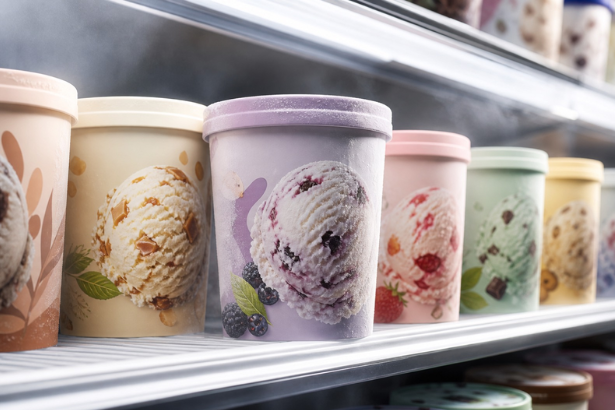
The court described Van Leeuwen’s trade dress as including monochromatic cardboard pints with matching lids, a pastel color palette, black script lettering and an overall minimalist aesthetic.
The judge found that Rebel’s packaging was sufficiently similar and that there was evidence of actual consumer confusion.
The court also concluded that Rebel had intentionally infringed and diluted Van Leeuwen’s trade dress. Rebel was ordered to stop selling products bearing the infringing trade dress and redesign its packaging.
Van Leeuwen had sought $36.4 million in Rebel’s profits.
The judge ultimately awarded Van Leeuwen $23.785 million. Fox Business reported that the court reduced the requested amount by 33%, finding that some Rebel sales were attributable to consumer demand for keto and better-for-you ice cream rather than the packaging itself.
That distinction is important.
The judgment was not simply a $23.8 million fine for copying a package. It represented the court’s determination regarding profits associated with sales of the infringing products.
The Lawsuit Began Years Before the Bankruptcy
The dispute has been developing for years.
Van Leeuwen filed its lawsuit against Rebel in April 2021, seeking an injunction requiring Rebel to repackage its products and account for profits allegedly generated through infringement.
The packaging history became central to the case.
Van Leeuwen was founded in 2008 and redesigned its packaging in 2014 and again in August 2016. Rebel Creamery was founded in September 2017, and its products began appearing in grocery stores in August 2018. A Van Leeuwen employee discovered similarities in the packaging in late 2018 or early 2019, according to court-related reporting cited by TheStreet.
The timing ultimately became part of the court’s reasoning.
The Independent reported that Rebel denied the allegations and maintained that its designers were unaware of Van Leeuwen’s packaging. The court rejected that explanation after considering the evidence presented at trial.
Read TheStreet’s full report on the lawsuit and bankruptcy
Expert Insights or Analysis
This Is a Trade-Dress Case, Not Just a Logo Dispute
The most important concept in the Rebel case is trade dress.
Trade dress generally concerns the visual appearance and overall commercial presentation that identifies a product or business to consumers. It can extend beyond a traditional word mark or logo.
In Rebel’s case, the dispute focused on the overall appearance of the ice cream containers.
That included the color palette, typography, container design and broader minimalist presentation.
The court found that these combined elements created a protectable commercial identity and that Rebel’s packaging created actual confusion in the marketplace.
For food brands, the implications are significant.
A company can create a distinctive product, build distribution and establish a customer base, only to discover that the visual system used to sell that product creates serious legal exposure.
Packaging is not decoration. In a crowded grocery aisle, it is part of the product’s identity.
The Judgment Was Enormous Relative to Rebel’s Reported Assets
The numbers make the bankruptcy filing easier to understand.
Fox Business reported roughly $13.78 million in Rebel’s assets against $23.85 million in liabilities. The Van Leeuwen claim alone was $23.785 million.
That creates an obvious financial imbalance.
The company also reported approximately $5.22 million in cash and cash equivalents, $2.59 million in accounts receivable and $5.65 million in inventory.
Those figures do not automatically establish that the judgment caused the bankruptcy.
Fox Business specifically noted that court filings do not establish the Van Leeuwen judgment as the sole cause of the Chapter 11 filing.
That is an important distinction.
The bankruptcy came shortly after the judgment, but the available reporting does not establish that litigation was the only financial pressure facing Rebel.
The Appeal Changes the Equation
Rebel filed a notice of appeal on August 12, two days before its Chapter 11 petition, according to TheStreet and The Independent.
That means the company is attempting to preserve its legal challenge while simultaneously seeking protection through bankruptcy.
The appeal could ultimately affect the financial picture.
If the judgment is changed, reduced or overturned, the company’s obligations could look materially different. If the judgment stands, Rebel will still have to deal with the consequences inside the bankruptcy process.
For now, the legal outcome remains unresolved.
Broader Implications
What the Rebel Creamery Bankruptcy Means for Grocery Brands
The case illustrates how difficult it can be to build a recognizable consumer brand without stepping too close to an existing competitor’s identity.
Food packaging often follows visual trends.
Minimalist labels, muted colors, bold typography and distinctive containers can become popular across an entire category. But when multiple brands converge on a similar visual language, the boundary between a market trend and protected trade dress can become complicated.
The Rebel case shows that the combination of design elements can matter more than any single feature.
Grocery Shelf Space Makes Branding Critical
Rebel is not a small local ice cream shop.
Its products are sold through major retailers including Walmart, Target, Kroger and Safeway.
That distribution makes packaging especially important.
Consumers often make frozen-food purchasing decisions quickly. They see a pint, recognize a color scheme or design language and decide whether the product belongs in their basket.
If a court determines that one company’s visual identity is too close to another’s, the consequences can reach far beyond a legal bill.
A redesign can affect:
- Packaging inventory
- Retail displays
- Consumer recognition
- Marketing materials
- Product photography
- Advertising
- Distribution
- Brand equity
For a company already under financial pressure, those changes can become expensive.
Bankruptcy Does Not Automatically Mean the Ice Cream Disappears
The word “bankruptcy” can make consumers assume a product is immediately gone.
Chapter 11 is different from an immediate liquidation.
A Chapter 11 case is generally designed to give a business an opportunity to reorganize under court supervision. TheStreet reported that litigation against Rebel is subject to an automatic stay while the bankruptcy case proceeds.
The future of Rebel’s products, retailers and operations will depend on what happens during the restructuring.
That could include negotiations with creditors, decisions about inventory and operations, the appeal, and potentially changes to the company’s packaging strategy.
At this stage, the sources do not establish that Rebel’s products have been removed from every retailer.
Google Trends: Rebel Creamery Bankruptcy Search Interest Spikes
The supplied Google Trends screenshot shows a pronounced surge in searches for “Rebel Creamery ice cream lawsuit”, alongside related searches including:
- Rebel Creamery Chapter 11 filing
- Rebel ice cream
- Rebel Ice Cream
- Rebel Creamery bankruptcy
- Rebel Creamery lawsuit
The chart rises sharply before reaching a high point and then gradually declines, with a smaller uptick near the latest point shown.
That pattern fits the structure of a breaking business story.
Consumers discover the bankruptcy headline first. They then search for the lawsuit, the product, the company and the reason behind the filing.
The search spike also suggests that the story is reaching beyond bankruptcy watchers. People who recognize Rebel from grocery freezers may be searching because they want to know whether the brand is disappearing.
Google Trends Tags and Keywords
Rebel Creamery bankruptcy
Rebel Creamery Chapter 11
Rebel Creamery lawsuit
Rebel Ice Cream
Van Leeuwen lawsuit
Rebel Creamery packaging
Rebel Creamery judgment
ice cream bankruptcy
Exactly 3 Reference Links Tied to the Trend
- Fox Business: Rebel Creamery files for bankruptcy while appealing $23.8M judgment
- TheStreet: Major ice cream brand seeks Chapter 11 after lawsuit
- The Independent: Popular ice cream brand sold at Walmart and Target files for bankruptcy
Related History or Comparable Technologies
The Rebel case belongs to a broader pattern of consumer brands using distinctive packaging to stand out in crowded categories.
Packaging has become an increasingly important part of digital and physical commerce.
In a physical supermarket, packaging has to communicate a product’s identity from several feet away. Online, the same package appears in search results, delivery apps, retailer websites and social media posts.
That makes a recognizable visual identity valuable across multiple channels.
But the same visibility can increase the stakes when a competitor claims that a brand has crossed a legal line.
The Rebel dispute is particularly notable because the court’s analysis did not revolve around a simple allegation that Rebel used Van Leeuwen’s exact name or logo. Instead, the dispute centered on the overall presentation of the product.
That is a useful lesson for modern consumer brands.
Before launching a product, companies need to consider not only whether a name is available, but whether the complete visual identity could create confusion with an established competitor.
What Happens Next
The immediate future of Rebel Creamery now depends on two interconnected processes: bankruptcy and appeal.
1. The Chapter 11 Case
Rebel will proceed through the bankruptcy process in Utah.
The company will need to address its creditors, assets, liabilities and operating strategy under court supervision. The filing reported $10 million to $50 million in assets and liabilities in the petition, while Fox Business provided more specific figures from Rebel’s schedules.
2. The Van Leeuwen Appeal
Rebel filed its appeal shortly before entering bankruptcy protection.
The appeal is significant because the $23.785 million judgment is the largest individual claim highlighted in the bankruptcy reporting.
3. Packaging Could Have to Change
The original court ruling ordered Rebel to stop selling products bearing the infringing trade dress and redesign its packaging.
If that ruling ultimately remains in effect, packaging changes could become a central part of Rebel’s restructuring strategy.
4. Retail Customers Will Be Watching
Because Rebel products are sold through major grocery retailers, the bankruptcy will likely raise questions about product availability.
The sources reviewed for this article do not establish a nationwide discontinuation of Rebel products.
That means consumers should not assume that the bankruptcy filing automatically means Rebel ice cream has vanished from store shelves.
Conclusion
The Rebel Creamery bankruptcy is an unusually revealing case of how a legal dispute over packaging can become a business crisis.
The Utah-based ice cream maker entered Chapter 11 on August 14 after a federal judge awarded rival Van Leeuwen $23.785 million in a trade-dress case. Rebel reported approximately $13.78 million in assets and $23.85 million in liabilities, according to Fox Business.
The legal fight dates back to 2021.
Van Leeuwen argued that Rebel’s packaging copied distinctive elements of its own brand identity. The court ultimately found intentional infringement and dilution, concluded that there was evidence of actual consumer confusion and ordered Rebel to redesign its packaging.
Rebel has appealed.
That makes the company’s bankruptcy more than a simple retail failure story. It is now a test of whether a consumer brand can reorganize while challenging a major judgment that could reshape its finances and its visual identity.
For shoppers, the immediate question is whether Rebel ice cream will remain available.
For other food companies, the bigger question is more uncomfortable: how much of a brand’s packaging can look familiar before familiarity becomes a legal liability?
Rebel Creamery may provide one of the clearest answers yet.
FAQ
1. Why did Rebel Creamery file for bankruptcy?
Rebel Creamery filed for Chapter 11 protection on August 14, shortly after losing a trade-dress lawsuit against Van Leeuwen and being ordered to pay $23.785 million. However, court filings do not establish that the judgment was the sole cause of the bankruptcy.
2. What is the Rebel Creamery bankruptcy about?
The Rebel Creamery bankruptcy is a Chapter 11 restructuring case filed in the U.S. Bankruptcy Court for the District of Utah. Rebel reported approximately $13.78 million in assets and $23.85 million in liabilities in its bankruptcy schedules.
3. What happened between Rebel Creamery and Van Leeuwen?
Van Leeuwen sued Rebel in 2021, alleging that Rebel’s ice cream packaging infringed its trade dress. A federal judge later ruled in Van Leeuwen’s favor and ordered Rebel to redesign its packaging and pay $23.785 million in disgorged profits.
4. Is Rebel Creamery going out of business?
The available reports do not establish that Rebel Creamery is immediately shutting down. Chapter 11 is a restructuring process, and the company’s bankruptcy case is ongoing. The future of its operations and products will depend on the court-supervised restructuring and related litigation.
5. Is Rebel Creamery still sold at Walmart and Target?
The reporting from Fox Business and The Independent says Rebel products are sold at major retailers including Walmart and Target, as well as Kroger and Safeway. The sources do not establish that all of those retailers have stopped carrying the products.
6. How much does Rebel Creamery owe Van Leeuwen?
The judgment awarded Van Leeuwen $23.785 million in Rebel’s profits from sales of the infringing ice cream pints. Rebel listed that amount as a disputed unsecured claim while appealing the judgment.
7. Why was Rebel’s packaging considered infringement?
The court found similarities involving elements such as monochromatic pint containers, matching lids, pastel colors, black script lettering and an overall minimalist design. The court also found evidence of actual consumer confusion.
8. Did Rebel appeal the $23.8 million judgment?
Yes. Rebel filed a notice of appeal on August 12, two days before its Chapter 11 filing, according to TheStreet and The Independent.
Sources & References
- Fox Business, “Maker of ice cream sold at grocery stores nationwide files for bankruptcy as it appeals $23.8M judgment.” Read the Fox Business report
- TheStreet, “Major ice cream brand seeks Chapter 11 bankruptcy after lawsuit.” Read TheStreet’s report
- The Independent, “Popular ice cream brand sold at Walmart and Target files for bankruptcy.” Read The Independent’s report