Introduction
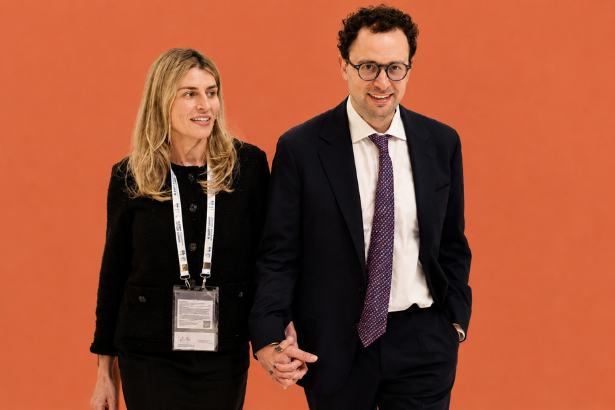
Cami Clark is suddenly one of the most searched names connected to Anthropic, despite having no formal position at the AI company.
The surge follows new reporting from The Wall Street Journal and The Information examining Clark’s background and her reported influence around Anthropic CEO and co-founder Dario Amodei. The WSJ describes her as a behind-the-scenes adviser and connector who has helped Amodei build relationships with influential figures in Silicon Valley.
The timing is significant.
Anthropic has grown into one of the world’s most important artificial intelligence companies, competing directly with OpenAI, Google and other frontier AI labs. The company is also moving toward a potential public offering that could put its valuation on an extraordinary scale.
That makes questions about who has influence around Anthropic increasingly relevant to investors, technology executives and policymakers.
Background and Context
Cami Clark has largely maintained a low public profile.
That changed dramatically this week after profiles from The Wall Street Journal and The Information brought renewed attention to her relationship with Amodei and her connections within Silicon Valley.
The WSJ reports that Clark does not hold a formal role at Anthropic, but has nevertheless played an informal advisory and networking role around the company. The report specifically highlights her connection to former Google CEO Eric Schmidt and says she helped introduce Schmidt to Amodei during Anthropic’s early development.
That distinction is important.
Clark is not being presented as an Anthropic executive. Rather, the reporting describes someone operating outside the company’s official organizational chart who nonetheless has access to important people and conversations surrounding its leadership.
The Information has similarly framed her as an unusual figure in Anthropic’s rise, focusing on the winding path that eventually brought her into Amodei’s inner circle.
Read The Information’s profile of Cami Clark
Latest Update: Why Cami Clark Is Trending
The immediate reason for the Cami Clark search spike is a wave of coverage about her connection to Anthropic.
The supplied Google Trends screenshot shows searches for her rising sharply during the past 24 hours. The news results include a Wall Street Journal video and article, a report from The Information and a Yahoo Finance segment discussing why the wife of Anthropic’s founder is suddenly attracting attention.
Watch the Yahoo Finance discussion of Cami Clark
The WSJ’s reporting focuses less on Clark’s public profile and more on the unusual gap between her lack of a formal Anthropic title and the access and influence the newspaper says she has developed around Amodei.
According to the report, Clark helped connect Amodei with influential investors and technology figures during Anthropic’s early years.
That makes her story relevant beyond celebrity curiosity.
It raises a broader question about how informal networks can shape major technology companies.
Cami Clark and Anthropic’s Early Network
Anthropic was founded in 2021 by former OpenAI employees, including Dario Amodei and his sister Daniela Amodei. The company positioned itself around AI safety and research while building increasingly capable Claude models.
As Anthropic expanded, relationships with major technology investors became increasingly important.
Amazon, Google and other technology companies have committed billions of dollars to the AI company, while Anthropic has developed partnerships across cloud computing and enterprise AI.
That makes the people surrounding the company’s founders more consequential.
The WSJ reports that Clark helped facilitate Amodei’s relationship with Eric Schmidt, who became an important early investor and supporter of Anthropic.
The significance is not that one personal connection explains Anthropic’s success.
It does not.
Anthropic’s growth has depended on researchers, infrastructure, capital, customers and increasingly capable AI systems.
But the story illustrates how personal networks can matter during the formative years of a technology startup.
A Role Without a Job Title
The most intriguing element of the reporting is Clark’s informal status.
She is not listed as an Anthropic executive.
Yet the WSJ describes her as someone whose advice and relationships have mattered to Amodei and the company.
That creates a familiar Silicon Valley dynamic.
Technology companies are often shaped not only by people whose names appear on organizational charts, but also by investors, advisers, spouses, former executives, researchers and personal networks.
The difference at Anthropic is that the company has become unusually prominent.
What might have remained an ordinary founder-network story at a smaller startup becomes far more interesting when the company in question is one of the world’s leading AI labs.
Why Anthropic’s IPO Makes the Story Bigger
The renewed attention comes at a particularly important moment for Anthropic.
The company is reportedly preparing for a potential IPO at a valuation that could reach extraordinary levels. Recent reporting has put the potential valuation around $2 trillion, although any eventual offering valuation would depend on market conditions and the company’s financial performance.
That changes the stakes surrounding governance and influence.
When a private AI company is valued in the hundreds of billions or potentially trillions of dollars, investors naturally become interested in how decisions are made.
They want to understand:
- Who advises the CEO?
- Who has access to senior leadership?
- How are investment relationships formed?
- Who influences strategic decisions?
- How does the company’s culture develop?
- What happens when informal influence overlaps with formal corporate governance?
Clark’s story sits directly inside those questions.
Expert Analysis: Informal Influence Is a Silicon Valley Tradition
The idea of an influential person operating outside an official corporate role is hardly unique to Anthropic.
Silicon Valley has always relied heavily on informal networks.
Founders seek advice from former executives. Investors introduce entrepreneurs to other investors. Friends become advisers. Spouses sometimes become sounding boards. Researchers move between companies and bring professional relationships with them.
The important distinction is between influence and authority.
A person can influence a founder without having the ability to make a corporate decision.
That appears to be the distinction readers should keep in mind when evaluating the current Cami Clark coverage.
The WSJ reports influence and access. It does not establish that Clark formally controls Anthropic’s business operations.
That difference becomes especially important as the story spreads across social media.
The Anthropic Connection to Eric Schmidt
One of the most notable aspects of the reporting is Clark’s connection to Eric Schmidt.
Schmidt, the former Google CEO, has been an influential figure in the technology industry for decades.
The WSJ reports that Clark introduced Schmidt to Amodei and helped create a relationship that became important to Anthropic’s early financing and network.
The episode illustrates how startup financing can depend on introductions that never appear in a funding announcement.
A press release might identify the investor.
It rarely explains the chain of personal relationships that resulted in the investment.
For Anthropic, those relationships became increasingly valuable as the company competed for enormous amounts of computing power, talent and capital.
Why Cami Clark’s Story Is Resonating Now
There are several reasons the story has attracted so much attention.
First, Anthropic itself has become enormously important.
Claude is now a major competitor in the generative AI market, and Anthropic has positioned itself as a safety-focused alternative to OpenAI and other frontier labs.
Second, Amodei has become one of the industry’s most prominent technology executives.
His public comments about AI safety, regulation and the future impact of advanced AI regularly attract attention.
Third, Anthropic’s potential IPO gives every aspect of the company’s leadership structure greater significance.
And finally, Clark’s low public profile creates a striking contrast with the scale of the company around her.
That combination is naturally compelling to readers.
Broader Implications
For AI Company Governance
The Cami Clark story highlights a governance question that could become more important as AI startups mature.
Early-stage companies frequently rely on personal networks and founder relationships.
Public companies cannot operate entirely that way.
As Anthropic approaches a potential IPO, investors will expect clearer distinctions between formal management, board oversight, external advisers and personal relationships.
That does not mean informal advice disappears.
It means the company’s formal governance structure becomes more important.
For Silicon Valley’s Influence Networks
The story also offers a glimpse into how concentrated technology networks can be.
A relatively small group of founders, investors and executives can have connections across multiple generations of Silicon Valley companies.
Those relationships can accelerate investment, hiring and partnerships.
They can also create questions about transparency.
The larger the company becomes, the more closely outsiders examine those relationships.
For AI Investors
Anthropic’s potential valuation means investors will increasingly evaluate not just its models but its leadership structure.
The company’s technical performance matters enormously.
So do revenue growth, computing costs, competition and regulatory exposure.
But governance becomes another piece of the investment story when a private AI company begins approaching public-market scale.
For The Tech Marketer
The story is a useful reminder that technology companies are ultimately human organizations.
AI models may dominate the headlines, but companies such as Anthropic are built through relationships among founders, researchers, investors, customers and advisers.
For more coverage of artificial intelligence, technology business and the people shaping the industry, visit The Tech Marketer.
Related History and Comparable Technology Networks
Anthropic’s story has echoes of earlier technology companies where informal relationships became strategically important.
Google’s early growth was shaped by relationships among Stanford researchers, venture investors and technology executives.
OpenAI itself emerged from a network of technology entrepreneurs, researchers and investors who shared concerns about advanced artificial intelligence.
Anthropic grew from a similar ecosystem.
Several of its founders previously worked at OpenAI before leaving to establish a company centered more heavily on AI safety and research.
The difference today is scale.
The AI industry has moved from an experimental research field into a multibillion-dollar commercial race.
Relationships that once affected small startup decisions can now influence companies building systems with global economic and geopolitical implications.
What Happens Next
The biggest question is not whether Cami Clark will suddenly become an Anthropic executive.
There is no evidence in the reporting that such a change is imminent.
Instead, the more important development will be whether the attention surrounding her changes how outsiders understand Anthropic’s leadership and governance.
As the company moves toward a potential IPO, scrutiny of its leadership circle is likely to increase.
Investors will want greater visibility into decision-making.
Employees will care about corporate culture.
Policymakers will continue examining Anthropic’s role in AI safety and national security.
And journalists will keep looking beyond official titles to understand who has access to the people making consequential decisions.
That makes Clark’s story unlikely to disappear immediately.
Conclusion
Cami Clark has become an unexpected name in the AI news cycle because her personal connection to Anthropic CEO Dario Amodei intersects with the extraordinary rise of one of the world’s most important AI companies.
She does not hold a formal position at Anthropic.
But new reporting from The Wall Street Journal says she has acted as an informal adviser and connector around Amodei, including helping establish relationships with influential technology figures such as Eric Schmidt.
That does not make Clark the person responsible for Anthropic’s success.
The company was built by researchers, engineers, executives and investors over years of intense competition in artificial intelligence.
But it does make her an interesting case study in how personal networks operate behind the scenes in Silicon Valley.
With Anthropic approaching a potential historic IPO and its technology playing an increasingly important role in the AI race, even informal relationships around its leadership are receiving unprecedented scrutiny.
The bigger story is not simply who Cami Clark is.
It is how much influence the people surrounding the leaders of frontier AI companies can have when those companies become powerful enough to shape the future of technology itself.
FAQ
Who is Cami Clark?
Cami Clark is the wife of Anthropic CEO and co-founder Dario Amodei. Recent reporting has examined her background and her informal influence around Amodei and Anthropic.
Does Cami Clark work for Anthropic?
The Wall Street Journal reports that Clark does not hold a formal position at Anthropic. The newspaper describes her instead as an informal adviser and connector around Amodei.
Why is Cami Clark trending?
The Google Trends screenshot supplied for this article shows a sharp increase in searches for Cami Clark following new reporting about her relationship with Amodei and her connections to Anthropic’s early development.
What is Cami Clark’s connection to Dario Amodei?
Clark is married to Dario Amodei, the CEO and co-founder of Anthropic. Recent reporting focuses on how her personal and professional networks intersected with Amodei’s rise and Anthropic’s development.
What is Cami Clark’s connection to Eric Schmidt?
The Wall Street Journal reports that Clark helped introduce Amodei to former Google CEO Eric Schmidt, who became an important early supporter and investor in Anthropic.
What does Cami Clark do at Anthropic?
There is no reported formal executive role for Clark at Anthropic. The current reporting instead describes informal advising, networking and influence around Amodei.
Why does Cami Clark’s story matter to the AI industry?
Anthropic has grown into a major frontier AI company. As its valuation and influence increase, questions about leadership, governance and informal networks become more significant to investors and the broader technology industry.
Is Anthropic preparing for an IPO?
Anthropic is widely reported to be moving toward a potential public offering. Current reporting has discussed a possible valuation around $2 trillion, although the eventual valuation and timing remain subject to market conditions.
SOURCES & REFERENCES
- The Wall Street Journal, “Even Claude Is in the Dark About Dario Amodei’s Wife, and Her Influence at Anthropic”
Read the Wall Street Journal report - The Information, “Anthropic’s First Lady Took a Winding Road to the Top”
Read The Information profile - Yahoo Finance, “Why the Wife of Anthropic’s Founder Is in the News Right Now”
Watch the Yahoo Finance segment - Fortune, “Anthropic’s $2 Trillion Problem”
Read the Fortune analysis