By using this site, you agree to the Privacy Policy and Terms of Use.
Accept
The Tech MarketerThe Tech MarketerThe Tech Marketer
  • Home
  • Technology
  • Entertainment
    • Memes
    • Quiz
  • Marketing
  • Politics
  • Visionary Vault
    • Whitepaper
Reading: Artemis II Launch Ignites Global Interest as NASA Returns to the Moon
Share
Notification Show More
Font ResizerAa
The Tech MarketerThe Tech Marketer
Font ResizerAa
  • Home
  • Technology
  • Entertainment
  • Marketing
  • Politics
  • Visionary Vault
  • Home
  • Technology
  • Entertainment
    • Memes
    • Quiz
  • Marketing
  • Politics
  • Visionary Vault
    • Whitepaper
Have an existing account? Sign In
Follow US
© The Tech Marketer. All Rights Reserved.
The Tech Marketer > Blog > Space > Artemis II Launch Ignites Global Interest as NASA Returns to the Moon
Space

Artemis II Launch Ignites Global Interest as NASA Returns to the Moon

Last updated:
2 months ago
Share
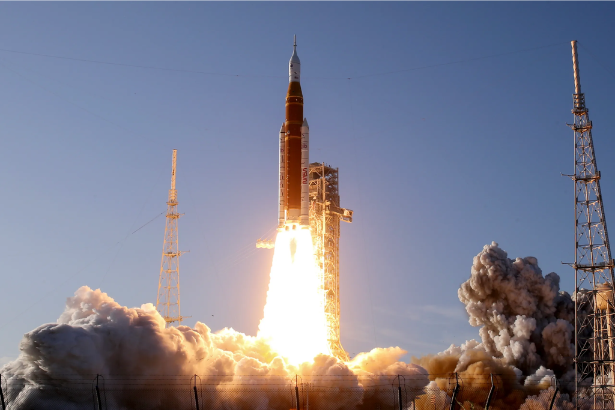
Artemis II launch rocket liftoff NASA moon mission
Artemis II lifts off marking first crewed lunar mission in decades
SHARE

NASA’s historic Artemis II launch sparks a global search surge and signals a new era of human space exploration

Introduction

The Artemis II launch has triggered a massive spike in global search interest, reflecting renewed public fascination with human spaceflight as NASA begins its first crewed lunar mission in over half a century. Within hours of liftoff, search trends surged as millions tracked the mission in real time, signaling a cultural and technological moment that extends far beyond a single rocket launch.

Contents
NASA’s historic Artemis II launch sparks a global search surge and signals a new era of human space explorationIntroductionBackground and ContextLatest Update or News BreakdownExpert Insights or AnalysisBroader ImplicationsFor Space ExplorationFor Technology and IndustryFor Public EngagementRelated History or Comparable TechnologiesWhat Happens NextConclusionFAQWhat is the Artemis II launch?Why is the Artemis II launch important?How long is the Artemis II mission?When will humans land on the Moon again after Artemis II launch?Why did Artemis II launch trend on Google?Sources & ReferencesOh hi there 👋It’s nice to meet you.Sign up to receive awesome content in your inbox, every week.

Background and Context

NASA’s Artemis program represents the agency’s long-term strategy to return humans to the Moon and eventually reach Mars. Artemis II is the first crewed mission in the program, following the uncrewed Artemis I test flight.

Unlike the Apollo era, Artemis is designed for sustainability. NASA is building infrastructure for repeated lunar missions, including the Lunar Gateway space station and long-duration surface operations.

The Artemis II mission specifically focuses on sending astronauts on a multi-day journey around the Moon without landing. It serves as a critical systems test before Artemis III attempts a lunar landing.

Latest Update or News Breakdown

According to CNN, four astronauts have officially begun a 10-day mission looping around the Moon, marking the first crewed lunar voyage since Apollo 17 in 1972.

Coverage from Reuters confirms that this is the first time in more than 50 years that humans are traveling toward the Moon, highlighting the scale of the milestone.

Meanwhile, BBC described the launch as “spectacular,” capturing the emotional and visual impact of the event as it unfolded live.

The surge shown in Google Trends reflects this momentum. Searches for terms like “Artemis II tracker,” “NASA launch today,” and “how long to the Moon” spiked sharply, peaking immediately after liftoff.

Expert Insights or Analysis

The Artemis II launch is not just symbolic. It is a validation of NASA’s modern deep space capabilities.

Experts point to three critical elements:

  • The Orion spacecraft’s life-support systems are being tested under real human conditions
  • The Space Launch System proves NASA can deliver heavy payloads beyond low Earth orbit
  • International collaboration is central, with partners contributing to future mission components

The mission also reflects a shift toward commercial partnerships, with companies like SpaceX expected to play major roles in upcoming Artemis phases.

Broader Implications

For Space Exploration

The Artemis II launch marks the transition from experimental missions to operational deep space travel. This is the beginning of a sustained human presence beyond Earth orbit.

For Technology and Industry

The mission is accelerating innovation in propulsion, materials science, and AI-driven navigation systems.

For deeper analysis on how space technology intersects with emerging markets, see coverage on https://thetechmarketer.com/ exploring AI and infrastructure trends.

For Public Engagement

Search spikes indicate something deeper than curiosity. There is renewed emotional investment in space exploration, similar to the Apollo era but amplified by real-time digital access.

Related History or Comparable Technologies

The natural comparison is Apollo 8, the first crewed mission to orbit the Moon in 1968.

But Artemis differs in key ways:

  • Apollo was a race driven by geopolitics
  • Artemis is a long-term infrastructure play
  • Modern systems rely heavily on automation and advanced computing

Where Apollo proved it was possible, Artemis aims to make it routine.

What Happens Next

Artemis II will complete its lunar flyby and return to Earth after approximately 10 days.

The next major milestone is Artemis III, which aims to land astronauts on the Moon’s south pole. That region is believed to contain water ice, a key resource for future missions.

NASA is also planning sustained lunar operations through the late 2020s, including habitat construction and resource utilization experiments.

Conclusion

The Artemis II launch is more than a mission. It is a signal that human space exploration has entered a new phase.

The combination of technological readiness, global collaboration, and public interest suggests that this time, humanity is not just visiting the Moon. It is preparing to stay.

The surge in search trends confirms it. Space is back at the center of global attention.

FAQ

What is the Artemis II launch?

The Artemis II launch is NASA’s first crewed mission of the Artemis program, sending astronauts around the Moon to test systems for future landings.

Why is the Artemis II launch important?

The Artemis II launch proves that NASA can safely send humans beyond low Earth orbit again, paving the way for lunar landings and Mars missions.

How long is the Artemis II mission?

The mission lasts about 10 days, including a lunar flyby and return to Earth.

When will humans land on the Moon again after Artemis II launch?

NASA plans to land astronauts during Artemis III, expected later this decade.

Why did Artemis II launch trend on Google?

The Artemis II launch trended due to global interest in the first crewed lunar mission in over 50 years, combined with real-time media coverage and public excitement.

Sources & References

  1. CNN – NASA Artemis II launch coverage
    https://www.cnn.com/2026/04/02/world/video/nasa-artemis-ii-launch-muntean-lok-040201aseg1-cnni-space-fast
  2. Reuters – NASA launches first crewed lunar mission in half a century
    https://www.reuters.com/science/nasa-launches-first-crewed-lunar-mission-half-century-2026-04-01/
  3. BBC – Artemis II launch reaction video
    https://www.bbc.com/news/videos/c05d6pprdleo

Oh hi there 👋
It’s nice to meet you.

Sign up to receive awesome content in your inbox, every week.

We don’t spam! Read our privacy policy for more info.

Check your inbox or spam folder to confirm your subscription.

You Might Also Like

Where Is Artemis II Now? Live Updates on NASA’s Moon Mission

NASA Moon Base Plan: Inside the $20 Billion Lunar South Pole Strategy

NASA Artemis Rocket Launch Targets April 1 as Artemis II Begins Rolling to Launch Pad 39B

Ohio Meteor Shakes St. Patrick’s Day Morning With Successive Sonic Booms in a Once-in-a-Lifetime Fireball

NASA Satellite Crashing: Van Allen Probe A Set for Fiery Reentry Years Ahead of Schedule

Share This Article
Facebook LinkedIn Email Copy Link Print
Share
What do you think?
Love0
Sad0
Happy0
Sleepy0
Angry0
Dead0
Wink0
Previous Article April Fools Day 2026 tech prank concept digital humor April Fools Day 2026: Best and Worst Tech Pranks Ranked
Next Article Indonesia earthquake damaged buildings aftermath Indonesia Earthquake Triggers Tsunami Alerts and Global Search Surge
Leave a comment

Leave a Reply Cancel reply

Your email address will not be published. Required fields are marked *

Latest News

  • Microsoft and OpenAI broke up — now they’re ready to fight

    At Microsoft's annual Build conference on Tuesday, the company announced a slew of new or expanded AI initiatives, including a super app, in-house reasoning models, a cybersecurity tool, and OpenClaw-esque AI agents. All this news added up to a clear message: Microsoft is positioned to be one of the biggest players in AI, and it's

  • A first look at Microsoft’s Surface Laptop Ultra and Surface Dev Box

    Microsoft has two new Surface devices arriving later this year, both powered by Nvidia's RTX Spark chips. I got a chance to take a closer look at both the Surface Laptop Ultra and Surface RTX Spark Dev Box at Microsoft's Build conference this week, and while both have the same chip inside, they're utilizing Nvidia's

  • SwitchBot’s acquisition of Nanoleaf is about more than lighting

    Smart lighting company Nanoleaf has been acquired by OneRobotics, the parent company of SwitchBot. In an exclusive interview with The Verge, Nanoleaf CEO Gimmy Chu says the company will remain independent and that he and his cofounder and COO, Christian Yan, will continue to run it. "Nothing is changing operationally," says Chu, adding that there

  • Trans teens have something to say

    By the time the Children's Hospital closed its doors to trans patients, Sage had already stopped taking testosterone. A nonbinary high school student, they originally received treatment for the rapid onset of puberty. The changes their body experienced felt frightening and sudden. They developed PMOS, a relatively common hormonal disorder that can lead to hair

  • AI has a water problem. Google thinks it has a fix

    In the face of widespread backlash to the AI data center buildout throughout the US, Google is touting its efforts to minimize the environmental impact by actually increasing water for local communities. The company laid out five commitments around water use in a new blog post published Wednesday, including a goal to replenish more water

- Advertisement -
about us

We influence 20 million users and is the number one business and technology news network on the planet.

Advertise

  • Advertise With Us
  • Newsletters
  • Partnerships
  • Brand Collaborations
  • Press Enquiries

Top Categories

  • Artificial Intelligence
  • Technology
  • Bussiness
  • Politics
  • Marketing
  • Science
  • Sports
  • White Paper

Legal

  • About Us
  • Contact Us
  • Privacy Policy
  • Affiliate Disclaimer
  • Legal

Find Us on Socials

The Tech MarketerThe Tech Marketer
© The Tech Marketer. All Rights Reserved.
Welcome Back!

Sign in to your account

Lost your password?