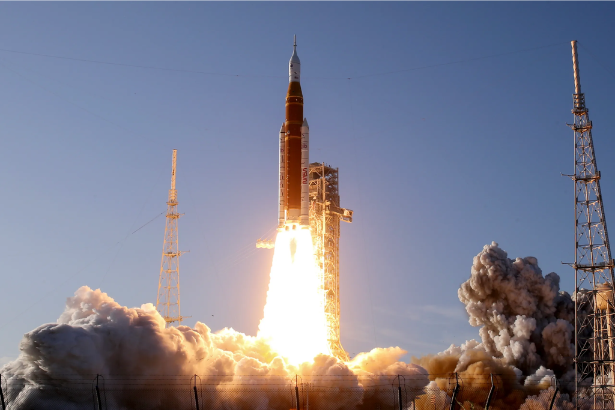
NASA’s historic Artemis II launch sparks a global search surge and signals a new era of human space exploration
Introduction
The Artemis II launch has triggered a massive spike in global search interest, reflecting renewed public fascination with human spaceflight as NASA begins its first crewed lunar mission in over half a century. Within hours of liftoff, search trends surged as millions tracked the mission in real time, signaling a cultural and technological moment that extends far beyond a single rocket launch.
Background and Context
NASA’s Artemis program represents the agency’s long-term strategy to return humans to the Moon and eventually reach Mars. Artemis II is the first crewed mission in the program, following the uncrewed Artemis I test flight.
Unlike the Apollo era, Artemis is designed for sustainability. NASA is building infrastructure for repeated lunar missions, including the Lunar Gateway space station and long-duration surface operations.
The Artemis II mission specifically focuses on sending astronauts on a multi-day journey around the Moon without landing. It serves as a critical systems test before Artemis III attempts a lunar landing.
Latest Update or News Breakdown
According to CNN, four astronauts have officially begun a 10-day mission looping around the Moon, marking the first crewed lunar voyage since Apollo 17 in 1972.
Coverage from Reuters confirms that this is the first time in more than 50 years that humans are traveling toward the Moon, highlighting the scale of the milestone.
Meanwhile, BBC described the launch as “spectacular,” capturing the emotional and visual impact of the event as it unfolded live.
The surge shown in Google Trends reflects this momentum. Searches for terms like “Artemis II tracker,” “NASA launch today,” and “how long to the Moon” spiked sharply, peaking immediately after liftoff.
Expert Insights or Analysis
The Artemis II launch is not just symbolic. It is a validation of NASA’s modern deep space capabilities.
Experts point to three critical elements:
- The Orion spacecraft’s life-support systems are being tested under real human conditions
- The Space Launch System proves NASA can deliver heavy payloads beyond low Earth orbit
- International collaboration is central, with partners contributing to future mission components
The mission also reflects a shift toward commercial partnerships, with companies like SpaceX expected to play major roles in upcoming Artemis phases.
Broader Implications
For Space Exploration
The Artemis II launch marks the transition from experimental missions to operational deep space travel. This is the beginning of a sustained human presence beyond Earth orbit.
For Technology and Industry
The mission is accelerating innovation in propulsion, materials science, and AI-driven navigation systems.
For deeper analysis on how space technology intersects with emerging markets, see coverage on https://thetechmarketer.com/ exploring AI and infrastructure trends.
For Public Engagement
Search spikes indicate something deeper than curiosity. There is renewed emotional investment in space exploration, similar to the Apollo era but amplified by real-time digital access.
Related History or Comparable Technologies
The natural comparison is Apollo 8, the first crewed mission to orbit the Moon in 1968.
But Artemis differs in key ways:
- Apollo was a race driven by geopolitics
- Artemis is a long-term infrastructure play
- Modern systems rely heavily on automation and advanced computing
Where Apollo proved it was possible, Artemis aims to make it routine.
What Happens Next
Artemis II will complete its lunar flyby and return to Earth after approximately 10 days.
The next major milestone is Artemis III, which aims to land astronauts on the Moon’s south pole. That region is believed to contain water ice, a key resource for future missions.
NASA is also planning sustained lunar operations through the late 2020s, including habitat construction and resource utilization experiments.
Conclusion
The Artemis II launch is more than a mission. It is a signal that human space exploration has entered a new phase.
The combination of technological readiness, global collaboration, and public interest suggests that this time, humanity is not just visiting the Moon. It is preparing to stay.
The surge in search trends confirms it. Space is back at the center of global attention.
FAQ
What is the Artemis II launch?
The Artemis II launch is NASA’s first crewed mission of the Artemis program, sending astronauts around the Moon to test systems for future landings.
Why is the Artemis II launch important?
The Artemis II launch proves that NASA can safely send humans beyond low Earth orbit again, paving the way for lunar landings and Mars missions.
How long is the Artemis II mission?
The mission lasts about 10 days, including a lunar flyby and return to Earth.
When will humans land on the Moon again after Artemis II launch?
NASA plans to land astronauts during Artemis III, expected later this decade.
Why did Artemis II launch trend on Google?
The Artemis II launch trended due to global interest in the first crewed lunar mission in over 50 years, combined with real-time media coverage and public excitement.
Sources & References
- CNN – NASA Artemis II launch coverage
https://www.cnn.com/2026/04/02/world/video/nasa-artemis-ii-launch-muntean-lok-040201aseg1-cnni-space-fast - Reuters – NASA launches first crewed lunar mission in half a century
https://www.reuters.com/science/nasa-launches-first-crewed-lunar-mission-half-century-2026-04-01/ - BBC – Artemis II launch reaction video
https://www.bbc.com/news/videos/c05d6pprdleo