


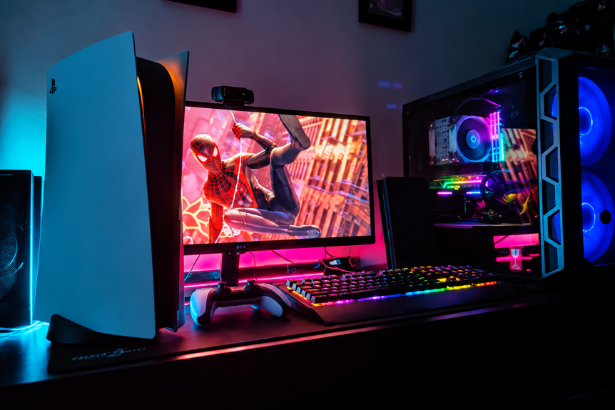
What if playing PlayStation 5 games on a PC did not require a traditional emulator, a dedicated console, or waiting for an official port? That is the idea behind AnyPS5, an experimental open-source project that is making progress toward running PS5 software on Windows and Linux.
The project attracted fresh attention after reports highlighted approximately 96% coverage of its tracked PlayStation 5 GPU shader instructions. The milestone suggests that developers are making headway on one of the technical obstacles to running console software on standard computers.
But there is an important distinction between translating nearly all instructions in a tracked graphics instruction set and getting an entire game to work. System libraries, graphics behavior, audio, input, memory management, and countless game-specific details still have to cooperate.
For PC gamers, preservation advocates, and anyone following the future of console exclusivity, AnyPS5 is an intriguing development. It is not yet evidence that the PlayStation 5 library is about to become universally playable on desktop computers.
Background and Context: What Is AnyPS5?
AnyPS5 is an open-source project designed to adapt PlayStation 5 executables for Windows and Linux. Its approach differs from conventional console emulation.
A traditional emulator generally recreates important aspects of a console’s hardware and software environment so that software designed for that system can run elsewhere. AnyPS5 instead focuses on translating executable code into a format suitable for a target operating system, while implementing the system libraries games need to function.
According to the project’s GitHub repository, its components include an executable relinker and implementations of PlayStation system libraries. Its shader recompiler can also translate supported GPU instructions into SPIR-V, an intermediate representation used in graphics programming.
The distinction matters because the PS5 already uses an x86-64 processor architecture based on AMD’s Zen 2 design. That creates a different starting point from consoles built around fundamentally different CPU architectures.
However, sharing a processor architecture does not make PlayStation software automatically compatible with Windows or Linux. Games still rely on platform-specific libraries, operating-system services, graphics interfaces, and other features that a PC does not provide in the same way.
AnyPS5 is attempting to bridge those gaps rather than simply pretending that a PC is a PS5.
Latest Update: AnyPS5’s 96% Shader Coverage Milestone
Recent reporting from TweakTown highlighted a development snapshot showing support for 1,118 of 1,166 tracked GPU shader instructions. That works out to approximately 95.88%.
The reported progress was substantial compared with an earlier snapshot that showed 609 implemented instructions, or about 52.23%.
Shaders are small programs that help graphics hardware render scenes, calculate lighting, process textures, and produce the visual effects players see on screen. Translating the instructions used by a console’s graphics software is therefore an important part of making its games work on another platform.
AnyPS5’s shader recompiler targets SPIR-V, helping translate supported instructions into a representation that can be used in a compatible graphics pipeline.
Yet the 96% figure needs context. It refers to the project’s tracked GPU shader instruction set, not 96% of the PlayStation 5 game catalogue. Nor does it mean that 96% of all graphics operations in every game are guaranteed to work correctly.
There is also a reason to treat fast-moving development statistics carefully. The project’s live development progress page can show different totals as its implementation changes. The figure should therefore be understood as a reported development snapshot, not a permanent compatibility rating.
The other number that matters: system library support
Graphics instructions are only one piece of the puzzle.
PlayStation games call system libraries to access services and platform features. If a game requests a function that AnyPS5 has not implemented correctly, it may fail to launch, crash during gameplay, or behave unpredictably.
The project has been expanding its collection of known system library functions, but its own documentation makes clear that the tracked total represents functions known to the project so far. It does not represent every function in the PS5 system software.
That creates two separate engineering challenges:
- Graphics translation: Supporting the instructions required to process a game’s shaders.
- Platform compatibility: Providing the system functionality a game needs to launch, render correctly, play audio, accept input, and progress through gameplay.
Improving the first does not automatically solve the second.
Expert Analysis: Why Running PS5 Games Natively Is Difficult
AnyPS5’s appeal is its potential to avoid some of the overhead associated with traditional emulation. Translating executable code and providing compatible system interfaces could offer a practical route to running supported console software on ordinary computers.
The approach also benefits from the PS5’s x86-64 processor architecture. That makes translating certain aspects of its CPU code more straightforward than it might be for a system using an entirely different instruction set.
Still, native execution does not guarantee a native-quality experience.
A game may start successfully but encounter problems when loading another level, compiling a shader, playing a cutscene, or calling a missing operating-system function. Even a game that reaches interactive gameplay may suffer from incorrect graphics, freezes, audio problems, or severe performance drops.
The best way to evaluate AnyPS5 is therefore to look at actual game-level evidence rather than one headline statistic.
The project’s GitHub repository provides its technical foundations and documented status. Its progress dashboard distinguishes early milestones from confirmed playable results, a distinction that is essential when assessing experimental compatibility software.
A first frame, a successful boot, a playable opening sequence, and a complete game are four very different achievements.
What does 96% shader coverage actually mean?
It means that a reported development build could recognize or implement nearly all instructions in a particular tracked set. It does not establish that nearly all PS5 graphics features are fully functional in every game.
It also says nothing definitive about frame rates, stability, controller support, or whether a game can be completed from beginning to end.
For a project at this stage, the remaining unsupported instructions may be disproportionately difficult to implement. The final few percentage points can involve edge cases and behaviors that require extensive testing.
Broader Implications: What AnyPS5 Could Mean for PC Gaming
A potential shift in console exclusivity
PlayStation exclusives have traditionally given Sony a reason for players to purchase its hardware. If projects like AnyPS5 eventually become mature and broadly compatible, some players could gain another way to access software originally developed for the PS5.
That could change how gamers think about platform ownership. A powerful gaming PC might eventually serve as a more flexible home for software from multiple ecosystems.
However, that scenario remains speculative. AnyPS5’s current development status does not establish broad support for Sony’s first-party catalogue, and technical compatibility is only one part of the business equation.
Licensing, distribution, intellectual property rights, and publishers’ commercial decisions would still matter.
Game preservation could benefit
Preservation is another important potential use case.
Console hardware becomes harder to maintain as components age, repairs become expensive, and original systems disappear from circulation. Software that can run on widely available hardware may be easier for researchers and preservationists to study over the long term.
A reliable compatibility layer could eventually help preserve access to games beyond the lifespan of their original hardware.
That outcome depends on sustained engineering work, lawful access to game files, and a careful approach to proprietary software. It is a possible long-term benefit, not an achievement that the current shader milestone proves.
Why developers and publishers will be watching
Compatibility projects can influence expectations around how long games remain tied to particular devices. They may also encourage more discussion about software ownership, backward compatibility, and the role of unofficial tools in game preservation.
For more coverage of how software platforms and hardware ecosystems are changing, see The Tech Marketer’s technology coverage.
Related History: From Console Emulation to Compatibility Translation
Running console games on PCs is not a new idea. Emulators have made older gaming systems accessible on modern hardware for decades, although compatibility and performance vary widely by platform and title.
The challenge becomes more demanding with current-generation consoles. Modern games depend on complex graphics pipelines, sophisticated operating-system services, and hardware features that may not have straightforward equivalents on a PC.
AnyPS5’s approach is interesting because it focuses on executable translation and system-library implementations rather than presenting itself as a conventional emulator.
Projects such as KytyPS5 have also explored PS5 software compatibility through different technical approaches. These efforts demonstrate that there is no single shortcut to supporting an entire modern console library.
Every title introduces its own combination of dependencies, graphics behavior, performance requirements, and edge cases.
What Happens Next?
The next meaningful milestones for AnyPS5 will be practical rather than numerical.
First, developers need to continue implementing missing system functions and improving the reliability of the shader recompiler. Then comes broader testing across different games, graphics hardware, Windows and Linux configurations, and controller setups.
The community will also need clearer evidence about which titles can run without experimental patches, which require workarounds, and which remain blocked by missing functionality.
A useful way to track the project is to follow three indicators:
- Verified game compatibility: More titles reaching stable gameplay, with transparent test records.
- System library coverage: Continued implementation of functions required by real games, not just growth in the number of declared functions.
- Reliability and performance: Fewer crashes, correct rendering, working audio, and consistent behavior across longer play sessions.
The project’s official repository and game progress records are better indicators of these developments than shader coverage alone.
A mature tool would need to make installation and configuration manageable, document supported hardware, and provide reproducible results. It would also need to avoid giving users the impression that every PS5 game will work simply because a major engineering milestone has been reached.
Conclusion: AnyPS5 Is Promising, but Compatibility Is the Real Test
AnyPS5 is pursuing an ambitious goal: adapting PlayStation 5 software to run on Windows and Linux without relying on a traditional emulator. The reported 96% shader instruction milestone demonstrates meaningful progress on one part of that challenge.
But the distinction between instruction coverage and playable games remains crucial. Missing system functions, graphics inaccuracies, crashes, and game-specific dependencies can all stand between a successful translation and a reliable gaming experience.
For now, AnyPS5 is best viewed as an experimental compatibility project worth watching, rather than a ready-made replacement for a PlayStation 5.
If its developers can turn progress in the underlying technology into a growing catalogue of stable, verified games, the project could become increasingly important to PC gaming and digital preservation. Until then, the most meaningful number is not the percentage of shader instructions supported. It is how many games people can actually play from start to finish.
Frequently Asked Questions
1. What is AnyPS5?
AnyPS5 is an open-source project that aims to adapt PS5 executables for Windows and Linux through executable translation, system-library implementations, and shader recompilation.
2. Can AnyPS5 run PS5 games on a PC?
It is designed to make that possible for compatible games, but support remains experimental. Compatibility depends on the individual title, the software build, and the PC configuration.
3. Does 96% shader coverage mean 96% of PS5 games work?
No. The reported figure measures coverage of a tracked set of GPU shader instructions. It does not measure the percentage of games that launch or are playable.
4. Is AnyPS5 an emulator?
The project’s developers describe it as a native executable-porting tool rather than a conventional emulator. It uses executable relinking, system-library implementations, and shader translation.
5. Can AnyPS5 run on Windows and Linux?
The project targets both Windows and Linux. Actual compatibility depends on the specific build, supported components, and the game being tested.
6. Will AnyPS5 make PlayStation exclusives available on PC?
It could eventually allow some PS5 software to run on PCs, but broad compatibility with PlayStation exclusives has not been established. Technical, legal, and distribution considerations remain relevant.
7. Is AnyPS5 ready for everyday gaming?
It should be treated as experimental software. Users should check the project’s current documentation and game-specific test reports before expecting a stable experience.
8. Where can I follow AnyPS5 development?
Start with the AnyPS5 GitHub repository for source code and technical documentation, and consult the development progress dashboard for game-specific testing updates.
Sources & References
- TweakTown: PS5 Games Running Natively on PC Edge Closer as Tool Hits 96% Shader Coverage. Reporting on the shader instruction milestone and its limitations.
- AnyPS5 GitHub Repository: Tool for Automatic PS5 Executable Porting to Linux and Windows. Primary technical documentation for the project’s design, build requirements, and implementation.
- AnyPS5 Development Progress: Development Milestones and Game Testing. Game-level reports that distinguish experimental milestones from confirmed playable status.
- AnyPS5 Shader Progress: GPU Shader Instruction Implementation Statistics. Tracked instruction counts and implementation details.
- Futurism: Sony in Trouble as It Turns Out It’s Pretty Easy to Get PlayStation 5 Games to Run on PC. Broader reporting on the implications of the project and native PC compatibility.