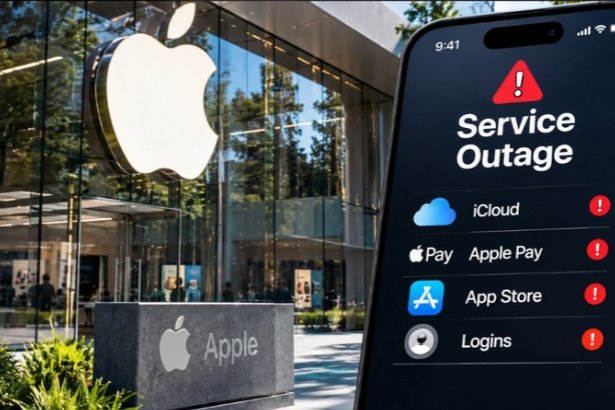
The Apple outage on November 17, 2026, left thousands of users reporting problems with essential Apple services, including iCloud, Apple Pay, the App Store and Apple Support. The disruption followed an internal software update that affected several of the company’s systems, forcing Apple to work on restoring normal operations.
The incident was particularly concerning because it affected services that millions of people rely on for everyday activities. Users reported difficulties accessing their Apple accounts, downloading applications, making payments and using cloud-based services.
Apple acknowledged the problem and said many systems had returned to normal while engineers worked to restore the remaining services.
Importantly, Apple said the incident was not caused by a cyberattack.
The disruption also attracted attention because it followed several other major technology problems involving Microsoft, United Airlines, the Federal Aviation Administration and JPMorgan Chase.
According to Reuters’ November 17 report, Downdetector recorded approximately 2,300 reports of Apple Pay problems and 1,800 reports involving iCloud at the peak of the disruption in the United States.
Those figures represent user-submitted reports, not a confirmed count of affected customers. Reuters+1
Apple’s AI Turnaround Plan: Robots, Lifelike Siri, Home Security Cameras (AAPL) – Bloomberg
How to create a new Apple ID on your iPhone or iPad | iMore
US grocery store Publix is getting contactless payment support | iMore
5
Background and Context: Why the Apple Outage Matters
Apple operates an interconnected ecosystem of hardware, software and online services.
For many customers, an Apple account is the gateway to multiple everyday activities.
It connects iPhones, iPads and Macs to services such as iCloud, the App Store, Apple Music, Apple Pay and device support.
This integration makes Apple’s ecosystem convenient, but it also means that problems affecting shared systems can have consequences across several products.
For example, difficulties with Apple account authentication can prevent users from signing in to iCloud or accessing applications that depend on their Apple credentials.
Similarly, disruptions affecting payment services can interfere with transactions that customers normally complete using their iPhones or Apple Watches.
The November 17 incident demonstrated how an internal systems update can create problems across a large technology ecosystem.
It also highlighted a broader challenge facing technology companies: maintaining reliability across services that depend on interconnected infrastructure.
Latest Update: What Happened During the November 17 Apple Outage?
Apple acknowledged the disruption
Apple confirmed that an internal update had caused problems affecting some of its systems.
The company issued a statement explaining that many systems were already operating again while work continued to restore the remaining services.
The disruption affected multiple parts of Apple’s ecosystem.
Which Apple services were affected?
Apple: every day more, a services company | by Enrique Dans | Enrique Dans | Medium
Reports and Apple’s system status information identified problems involving several services.
| Apple service | Reported problem |
|---|---|
| iCloud | Account sign-in and access problems |
| Apple Pay | Payment-related disruptions reported |
| App Store | Access and purchasing difficulties |
| Apple Music | Service availability problems |
| Apple Support | Users reported access difficulties |
| AppleCare on Device | Purchase-related service interruption |
| Apple Business | Business service disruption |
| Apple School Manager | Service availability problems |
| Schoolwork | Service interruption |
| iCloud Mail | Email access problems reported |
Not every service experienced the same level of disruption, and the affected-service list changed as Apple’s status information was updated.
The Associated Press report confirmed that Apple acknowledged outages affecting Apple Music, the App Store and AppleCare, alongside problems with iCloud sign-in.
Users also reported issues with Apple Pay through outage-monitoring platforms. AP News+2
Apple Pay problems raised concerns for customers
Pay in the blink of an eye with Apple Pay – business – ABN AMRO
Apple Pay is an important part of Apple’s digital payment ecosystem.
It allows customers to make contactless payments using compatible iPhones and Apple Watches.
When the outage began, users reported difficulties accessing or using the service.
Downdetector recorded approximately 2,300 Apple Pay problem reports in the United States around 12:20 p.m. Eastern Time.
That created concerns for customers who rely on their phones as their primary payment method.
However, an outage report does not necessarily mean that every Apple Pay transaction failed. The impact can vary depending on the service component involved, the payment terminal and the user’s individual circumstances.
Customers experiencing payment problems could use an alternative payment method while checking the status of Apple’s services.
iCloud sign-in problems affected the Apple ecosystem
Deployment of an iOS mobile device covered by centralised administration | HELPDESK
The iCloud disruption was particularly significant because account authentication connects many Apple services.
Some users reported being signed out of their accounts or encountering verification problems when attempting to sign back in.
For people who use iCloud to synchronize photos, files, contacts and other information across devices, authentication problems can create significant inconvenience.
The disruption also affected the experience of users trying to access services through their Apple accounts.
At the peak, Downdetector recorded approximately 1,800 reports involving iCloud problems in the United States.
Apple’s system status information identified issues with iCloud Account and Sign In, while other related services experienced separate interruptions. Reuters+1
Why the App Store and Apple Music were affected
The App Store and Apple Music are also dependent on Apple’s online infrastructure.
The App Store allows customers to download applications, update existing software and manage purchases.
Apple Music provides access to streamed music and associated account services.
During the November 17 disruption, both services appeared on Apple’s list of affected systems.
For customers, this meant that downloading applications, completing purchases or accessing music could become difficult or temporarily unavailable.
The incident illustrated how a problem involving internal infrastructure can affect services that otherwise appear completely separate to consumers.
Expert Analysis: What Caused the Apple Outage?
The most important detail is Apple’s explanation that an internal update triggered the disruption.
This points toward an operational or software-related problem rather than an external cyberattack.
However, Apple has not publicly provided a detailed technical explanation identifying the exact component that failed.
That distinction matters. An internal update can affect different systems in different ways, and the available reporting does not establish whether the underlying issue involved authentication, configuration, deployment infrastructure or another technical component.
1. An internal update triggered the disruption
Software updates are a routine part of maintaining large technology platforms.
Companies regularly introduce changes to improve performance, security, compatibility and infrastructure.
However, updates can also introduce unexpected problems.
A configuration change, deployment error or dependency failure can affect systems that rely on shared infrastructure.
In Apple’s case, the company directly attributed the November 17 disruption to an internal update.
Without a detailed engineering postmortem, it would be premature to identify the specific technical failure.
2. Apple’s interconnected ecosystem increases operational complexity
Apple’s ecosystem is built around close integration between devices and services.
This creates significant benefits for customers, but it also creates dependencies.
For example:
- Apple accounts connect users to multiple services.
- iCloud synchronizes information across devices.
- The App Store handles downloads and purchases.
- Apple Pay supports digital payment transactions.
- Apple Support connects customers to troubleshooting and assistance.
When shared systems encounter problems, several services can experience disruptions at the same time.
This does not necessarily mean that every service uses the same infrastructure. It demonstrates why maintaining a large interconnected ecosystem requires extensive testing and monitoring.
3. The outage was not attributed to a cyberattack
Apple said the disruption was not caused by a cyberattack.
This is an important distinction because the incident occurred during a period of heightened concern about technology infrastructure failures.
The company attributed the problem to an internal update, and Reuters reported Apple’s statement confirming that position.
There is currently no verified evidence in the cited reporting that the Apple outage was caused by hackers or a coordinated attack. Reuters+1
How the Apple Outage Fits Into the Wider Wave of Technology Disruptions
Apple was not the only major technology company experiencing problems during the week of November 17.
The outage followed several disruptions involving different companies and critical services.
Microsoft experienced a global service disruption
Microsoft experienced a significant outage on November 13 that affected services used by businesses, schools and government organizations.
The disruption highlighted the dependence of modern workplaces on cloud-based productivity platforms.
United Airlines experienced operational problems
United Airlines experienced a technology disruption on November 16 that lasted more than 90 minutes and caused delays to departing flights.
The incident demonstrated how technology problems can affect transportation operations.
FAA network problems disrupted air travel
Earlier in the week, a failure involving the Federal Aviation Administration’s communications infrastructure prompted a nationwide ground stop.
Hundreds of flights were delayed, affecting travelers across the country.
JPMorgan Chase experienced banking problems
Also on November 16, customers reported difficulties accessing certain banking services following a technical problem involving JPMorgan Chase.
The disruption affected online transactions and other banking functions.
Were these outages connected?
No confirmed common cause
Despite the timing, there is no verified evidence that these incidents were connected.
The Associated Press reported that the Apple outage followed a series of unrelated technology problems affecting the FAA, United Airlines, Microsoft and other companies.
The TODAY report also discussed officials’ position that the recent disruptions were not connected.
The distinction is important because several outages occurring close together do not automatically indicate a coordinated cyberattack or common infrastructure failure. AP News+1
Broader Implications: What the Apple Outage Means for Technology Companies and Users
Documentação de redes e Automação com IA
Reliability is becoming a major competitive advantage
Technology companies compete on more than hardware specifications and software features.
Service reliability is increasingly important.
Customers expect their accounts, cloud storage, payment systems and applications to work whenever they need them.
A short disruption can affect millions of user experiences, damage confidence and create additional pressure on customer support teams.
For Apple, maintaining reliability across its ecosystem is essential to its broader customer experience.
Businesses increasingly depend on third-party technology platforms
Companies use cloud services, digital payments and authentication systems to operate their businesses.
When these services become unavailable, employees and customers can experience immediate disruption.
Retailers may struggle with payments. Businesses may lose access to shared files. Schools may encounter problems with digital learning platforms.
The November outages demonstrate why organizations need contingency plans that do not depend entirely on a single technology provider.
Digital payment alternatives remain important
The Apple Pay disruption also highlights the importance of payment flexibility.
Consumers who rely exclusively on digital wallets may encounter problems when payment infrastructure becomes unavailable.
Keeping an alternative payment method available can reduce inconvenience during unexpected service interruptions.
Cloud infrastructure needs stronger resilience
Cloud-based platforms provide enormous convenience, but they also require sophisticated operational safeguards.
Companies must consider:
- Automated testing before software deployment.
- Gradual rollout of internal updates.
- Redundant infrastructure.
- Continuous system monitoring.
- Reliable backup and recovery procedures.
- Clear communication during service interruptions.
These measures cannot eliminate every outage, but they can reduce the likelihood and impact of failures.
Related History: Apple’s Previous Service Disruptions
Apple has experienced service interruptions before.
Like other major technology companies, it operates a large global infrastructure that supports cloud storage, digital media, account authentication and software distribution.
iCloud outages
iCloud has experienced intermittent service disruptions over the years.
Because it synchronizes information across multiple Apple devices, even temporary authentication problems can affect a large number of everyday activities.
App Store disruptions
App Store interruptions have also affected users trying to download applications, update software and complete purchases.
For developers, App Store availability is particularly important because it supports application distribution and customer access.
Apple Music and other services
Apple’s digital services business has become an increasingly important part of its overall ecosystem.
Apple Music, Apple TV+, iCloud and other subscription services create recurring relationships with customers.
Service interruptions can therefore affect both customer satisfaction and the perceived reliability of Apple’s subscription offerings.
Why November 2026 stands out
The November 17 disruption attracted additional attention because it occurred during a broader period of technology-related interruptions.
The combination of banking problems, flight disruptions, Microsoft service issues and Apple’s internal update failure created a wider conversation about the reliability of modern digital infrastructure.
The important takeaway is not that all these systems were failing for the same reason.
It is that modern society depends on a relatively small number of large technology and infrastructure providers to keep essential services operating.
What Happens Next? What Apple Users Should Expect
Apple’s immediate priority is ensuring that all affected services operate normally and that customers can access their accounts without further disruption.
The November 17 incident also raises questions about how the company manages internal software updates and communicates service problems.
Here are five developments worth watching.
1. Continued monitoring of Apple System Status
Users can check Apple’s official System Status dashboard to see whether individual services are operating normally.
2. Better visibility into internal updates
Apple may face questions about the testing and deployment procedures behind the update that triggered the incident.
3. Continued attention to account authentication
Because iCloud sign-in problems can affect several connected services, authentication reliability will remain important.
4. Improved communication during outages
Clearer updates can help customers understand which services are affected and whether they should use alternative payment or access methods.
5. Greater scrutiny of technology infrastructure
The recent sequence of disruptions may encourage businesses to review their dependency on cloud platforms, payment providers and centralized digital systems.
What should Apple users do during an outage?
If Apple services stop working, users can take several practical steps:
- Check Apple System Status before changing account settings.
- Avoid repeatedly entering passwords when authentication systems are experiencing problems.
- Use another payment method if Apple Pay is unavailable.
- Avoid unnecessary account resets or device restoration attempts.
- Wait for Apple’s confirmation that affected services have recovered before attempting complicated troubleshooting.
These steps can help prevent an ordinary service interruption from turning into a more complicated account or device problem.
Conclusion
The November 17 Apple outage demonstrated how quickly problems involving internal technology systems can affect services used by millions of customers.
An internal update disrupted parts of Apple’s ecosystem, including iCloud, Apple Pay, the App Store and Apple Music.
Although many systems returned to operation, the incident raised important questions about software deployment, cloud infrastructure and service reliability.
The timing made the disruption even more noticeable because other major technology and infrastructure problems had occurred earlier in the same week.
However, there is no confirmed evidence connecting these incidents or indicating that Apple’s disruption was caused by a cyberattack.
For Apple, the priority is restoring customer confidence and maintaining the reliability of its interconnected ecosystem.
For consumers and businesses, the broader lesson is straightforward: digital convenience depends on infrastructure that must remain reliable, secure and resilient.
Frequently Asked Questions
1. Why was Apple down on November 17, 2026?
Apple said an internal update caused outages affecting some of its systems. The company confirmed that many services had returned to operation while engineers worked on restoring the remaining systems.
2. Which Apple services were affected by the outage?
Reportedly affected services included iCloud, Apple Pay, the App Store, Apple Music, Apple Support, AppleCare and several business and education services.
3. Was the Apple outage caused by hackers?
Apple said the disruption was not caused by a cyberattack. The company attributed the incident to an internal update.
4. Was Apple Pay down during the outage?
Users reported problems with Apple Pay. Downdetector recorded approximately 2,300 reports of issues in the United States around 12:20 p.m. Eastern Time.
5. Why was iCloud not working?
Users reported authentication and sign-in problems. Apple acknowledged issues affecting iCloud Account and Sign In during the disruption.
6. Was the App Store affected?
Yes. Apple’s system status information identified App Store service problems during the November 17 incident.
7. Were the Apple, Microsoft and banking outages connected?
There is no confirmed evidence that these incidents shared a common cause. Reporting from the Associated Press and other outlets described them as separate technology disruptions.
8. How can I check whether Apple services are working?
Visit Apple’s official System Status page for current information about iCloud, Apple Pay, the App Store, Apple Music and other services.
Sources & References
1. The New York Times: Apple Addresses Outages Affecting Apple Pay, iCloud and Apps
Covers Apple’s statement, the internal update and customer reports involving iCloud and Apple Pay.
2. TODAY: Series of Major Tech Outages Are Not Connected, US Officials Say
Provides context on the wider series of technology disruptions and officials’ assessment that they were unrelated.
3. Associated Press: Apple Joins a Parade of Technology Hiccups in Recent Days
Covers Apple’s outage alongside recent disruptions involving Microsoft, United Airlines, the FAA and Marriott.
4. Reuters: Apple Works to Restore Services After Outage Caused by Internal Update
Provides Apple’s explanation and Downdetector reporting figures.
5. TechCrunch: Apple Services, Including iCloud, App Store and Apple Music, Hit by Outage
Details the affected services and problems reported by customers.
6. CBS News: Apple Says Some Services Remain Disrupted After Internal Update Caused Outages
Additional reporting on Apple’s system status and restoration efforts.
7. Apple: Official System Status Dashboard
Primary reference for checking the operational status of Apple’s services.