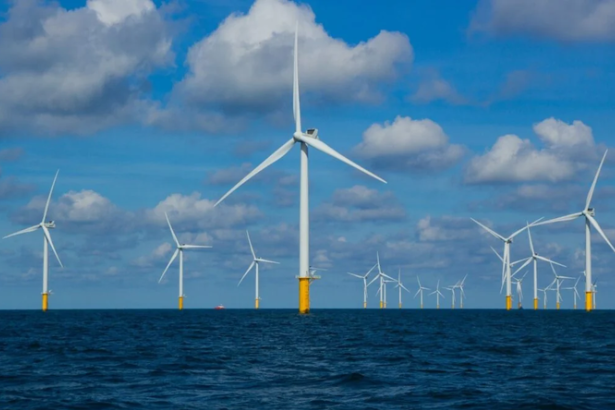
The future of renewable energy may depend on something engineers have not fully accounted for: clouds.
A new study published in the Journal of Renewable and Sustainable Energy has revealed a fascinating two-way relationship between offshore wind farms and low-level clouds. The research suggests that clouds can influence how much electricity wind turbines generate, while the turbines themselves can change the structure and water content of nearby clouds.
It is an important finding for an industry increasingly dependent on large offshore installations.
Wind farms are typically evaluated using atmospheric models that account for wind speed, temperature, turbulence and other environmental conditions. However, many existing simulations simplify the atmosphere by assuming cloud-free conditions.
That assumption could leave an important piece of the renewable energy equation missing.
Researchers from the University of Twente in the Netherlands used high-resolution computer simulations to investigate how stratocumulus clouds interact with offshore wind farms.
Their findings reveal that atmospheric moisture, cloud-top cooling and turbine-induced turbulence can influence the amount of energy available to wind turbines.
The research also suggests that large wind farms can partially reduce low-level cloud cover under certain atmospheric conditions.
As ScienceAlert reported on November 18, 2026, the discovery could have implications for wind farm design, site selection and energy production forecasts.
This is not evidence that wind farms are changing global weather patterns. Rather, it reveals a previously underappreciated interaction between renewable energy infrastructure and the atmosphere.
And as offshore wind projects continue expanding, understanding that relationship could become increasingly important.
Background and Context: Why Clouds Matter to Wind Energy
Progression and perspectives on the ramp-up of offshore wind – Erneuerbare Energien Hamburg | EEHH
8
Wind energy sounds relatively straightforward.
Wind moves turbine blades, the blades rotate a generator, and electricity enters the power grid.
But the atmosphere surrounding a wind farm is considerably more complicated.
Wind speed changes with altitude. Atmospheric stability influences how quickly energy moves between different layers of air. Turbine wakes create turbulence, while temperature and moisture influence the structure of the atmospheric boundary layer.
Clouds add another variable.
Low-level clouds, particularly stratocumulus, are common over oceans. These clouds often form extensive layers near the top of the atmospheric boundary layer.
That matters because wind turbines extract energy from the same region of the atmosphere.
The atmospheric boundary layer is the lowest part of the atmosphere, where surface conditions influence air movement through friction, heating and other processes.
When atmospheric conditions change, the amount of kinetic energy transported toward turbine height can also change.
Clouds influence this process through radiation.
In particular, the tops of stratocumulus clouds lose heat through longwave radiation. This cooling can cause air to sink and increase turbulent mixing within the atmospheric boundary layer.
That mixing can transport momentum from higher-altitude winds toward the turbines.
In other words, clouds can influence the amount of wind energy available to a farm without directly changing the turbine itself.
The researchers wanted to understand exactly how this relationship works.
Latest Research: Wind Farms and Clouds Are Influencing Each Other
This atlas wants to map every solar and wind source in your country
The study, titled Effect of Tropospheric Moisture and Temperature on the Interaction Between Wind Farms and Low-Level Clouds, was conducted by Davide Selvatici, Thijs van den Ham and Richard J.A.M. Stevens of the University of Twente.
Published on November 17, 2026, the paper appeared in volume 18 of the Journal of Renewable and Sustainable Energy.
The researchers used high-resolution large-eddy simulations to examine interactions between atmospheric conditions, low-level clouds and offshore wind farms.
The central finding was that the relationship works in both directions.
Clouds influence wind farm performance through their radiative properties, while wind farms can modify cloud structure through turbine-induced turbulence and atmospheric mixing.
The American Institute of Physics explains the findings in its research announcement.
1. Clouds can help offshore wind farms harvest more energy
One of the study’s most interesting findings concerns the relationship between cloud-top cooling and atmospheric moisture.
The researchers found that the amount of moisture in the air above stratocumulus clouds can influence how much energy reaches wind turbines.
Consider a layer of relatively dry air sitting above a low-level cloud.
The cloud loses heat through longwave radiation. When the air above it is dry, the difference in radiative conditions can strengthen cooling at the cloud top.
That cooling makes the air heavier, encouraging it to sink.
As the air moves downward, it helps stir the atmospheric boundary layer and increase turbulent mixing.
The resulting circulation can deepen the boundary layer and transport more kinetic energy toward the turbines.
This can improve the wind energy available to the farm.
However, when the air above the cloud is more humid, the cooling effect can become weaker.
The atmospheric mixing process changes, potentially reducing the amount of energy transported downward toward the turbines.
The practical implication is significant: two offshore wind farms experiencing similar wind conditions may not necessarily produce the same amount of electricity if their surrounding atmospheric conditions differ.
2. Wind turbines can thin or partially break up low-level clouds
The second finding is perhaps even more surprising.
Wind turbines do not simply respond to atmospheric conditions. They can also change them.
As turbine blades extract energy from the wind, they generate wakes and turbulent air movement.
Across a large offshore wind farm, these effects can influence the surrounding atmospheric boundary layer.
The researchers found that turbine-induced mixing can bring warmer, drier air from above into low-level clouds.
Under certain conditions, this process increases evaporation and reduces the amount of liquid water within the cloud layer.
If the cloud is sufficiently shallow and its base is close to the top of the turbine rotor, the effect can become strong enough to produce partial cloud dissipation downstream.
The simulations reproduced cloud patterns resembling gaps observed in satellite imagery over North Sea wind farms.
This is an important distinction.
The researchers did not establish that wind farms routinely eliminate clouds. The effect depends on atmospheric stability, cloud height, moisture and other environmental conditions.
It is a conditional interaction rather than a universal outcome.
3. Satellite observations provided an important clue
The research was partly motivated by satellite images showing gaps in low-level cloud cover behind offshore wind farm installations.
These patterns raised questions about whether turbine arrays were influencing the surrounding cloud layer.
The research team used numerical simulations to investigate the physical mechanisms that could explain those observations.
The full paper published by AIP includes satellite imagery from the North Sea and detailed analysis of the simulated interactions.
The findings suggest that the interaction is strongest when clouds are relatively shallow and their base approaches the upper part of the turbine rotor-swept region.
That provides a more specific explanation of when and why offshore wind farms may influence cloud cover.
Expert Insights: What the Research Actually Reveals
The significance of this study goes beyond the observation that turbines can influence clouds.
It challenges an important assumption in how offshore wind farms are modelled.
The problem with traditional wind farm simulations
Many wind energy models simplify atmospheric conditions to reduce computational complexity.
Cloud processes are sometimes excluded, even though clouds are common over offshore wind farm locations.
This creates a potential blind spot.
If clouds influence atmospheric stability, turbulent mixing and the transport of kinetic energy, ignoring them could lead to less accurate estimates of wind farm performance.
Richard Stevens, one of the study’s co-authors, told Gizmodo that accounting for cloud processes provides a more realistic picture of the atmosphere and therefore better estimates of wind farm production.
Read Gizmodo’s detailed explanation of the research.
Three important mechanisms explained
1. Cloud-top radiative cooling
Clouds lose heat through longwave radiation, influencing atmospheric circulation and mixing.
Offshore wind clusters ‘to lower energy production’ – study | Windpower Monthly
2. Turbine-induced turbulence
Large turbine arrays generate wakes and atmospheric disturbances that affect air movement.
Vattenfall builds Denmark’s largest offshore wind farm – Vattenfall
3. Moisture exchange
Warmer, drier air can mix into shallow clouds, increasing evaporation and reducing cloud water.
The 11% finding: Why atmospheric moisture matters
One of the more important quantitative findings concerns the sensitivity of wind farm output to atmospheric moisture.
The researchers found that including moisture-dependent radiative effects could produce variations of up to approximately 11% in row-averaged power output under the simulated conditions.
That is a meaningful difference.
For a large offshore wind farm, even relatively modest changes in estimated production can influence financial projections, grid planning and operational decisions.
However, the 11% figure should not be interpreted as a universal increase or decrease in electricity generation.
It represents a variation across the specific simulation conditions investigated by the researchers.
Why this matters for offshore wind developers
The research has several potential practical applications.
| Industry area | Potential implication |
|---|---|
| Wind farm design | Better understanding of atmospheric conditions around turbine arrays |
| Energy forecasting | More realistic production estimates |
| Site selection | Improved assessment of local cloud and moisture conditions |
| Turbine positioning | Better modelling of interactions between turbine rows |
| Grid management | More accurate expectations of offshore renewable electricity supply |
The research provides a reason to improve atmospheric models rather than treating cloud cover as a secondary consideration.
Broader Implications: Could Wind Farms Change Local Weather?
Atlas Transmanche – Espace Manche
atlas-transmanche.certic.unicaen.fr
This is where the story becomes particularly interesting.
Wind farms are large physical structures placed inside a constantly moving atmospheric system.
As offshore projects expand, their combined influence on air movement, turbulence and moisture could become increasingly relevant to climate and weather research.
But it is important not to overstate the findings.
The study does not demonstrate that offshore wind farms are causing large-scale weather changes, changing rainfall patterns across entire regions or altering the global climate.
It investigates specific interactions between low-level clouds and wind farms using numerical simulations.
Still, those interactions raise several important questions.
1. Offshore wind development may require better atmospheric planning
Wind farm developers already consider wind resources, ocean depth, construction costs and environmental constraints when selecting locations.
The new research suggests that atmospheric moisture and cloud characteristics could also deserve greater attention.
This is especially relevant for regions with frequent low-level cloud cover.
The North Sea is an important example because it has extensive existing and planned offshore wind development.
2. Renewable energy forecasting could become more accurate
Electricity grids need reliable estimates of how much energy renewable installations will generate.
Cloud-related atmospheric processes could influence offshore wind output, meaning models that ignore them may miss important variations.
More realistic simulations could help grid operators anticipate changes in energy production.
That becomes particularly important as countries increase their dependence on variable renewable energy.
3. Environmental assessments may need more detailed modelling
Wind farm construction already involves environmental assessments covering marine ecosystems, birds, noise and other factors.
The interaction between turbine arrays and atmospheric conditions presents another area worth investigating.
Researchers may need to examine how large offshore developments influence local atmospheric structures under different weather conditions.
The goal should be better understanding, not assuming that every atmospheric change represents an environmental problem.
4. The future of climate technology is becoming more interconnected
The wider renewable energy industry is increasingly dependent on sophisticated modelling.
Artificial intelligence, satellite observations, high-performance computing and advanced atmospheric simulations are changing how energy infrastructure is designed.
This study is a good example of how seemingly unrelated disciplines can influence one another.
Wind engineering, cloud physics and climate science are no longer completely separate areas of research.
For more developments in this space, readers can explore The Tech Marketer’s renewable energy and technology coverage.
Related History: What We Already Know About Wind Turbine Wakes
Last of 150 turbines installed for Dutch offshore wind farm
Wind turbine wakes are not a new discovery.
When a turbine extracts energy from moving air, the wind behind it becomes slower and more turbulent.
This creates a wake that can affect turbines positioned further downstream.
For large offshore installations, the cumulative effect of multiple turbine rows can influence the overall performance of the wind farm.
Engineers have spent years studying these effects to improve turbine placement and reduce energy losses.
The new research adds another dimension.
Instead of examining turbine wakes only as a wind engineering problem, it investigates how those disturbances interact with clouds and the wider atmospheric boundary layer.
A particularly relevant earlier study, published in PRX Energy on September 2, 2026, examined how low-level cloud radiative forcing can enhance wind farm wake recovery.
The work highlights how cloud-top cooling can create a deeper and less stable boundary layer, improving vertical momentum transport toward turbines. APS Journals+1
Traditional wind farm research versus the new findings
| Research area | Traditional emphasis | New research contribution |
|---|---|---|
| Turbine wakes | Reduced wind speed behind turbines | Wake interactions with cloud structure |
| Atmospheric stability | Temperature and wind profiles | Cloud-top radiative cooling |
| Energy production | Wind speed and turbulence | Moisture-dependent energy transport |
| Cloud behaviour | Often simplified or excluded | Turbine-induced cloud water reduction |
| Forecasting | Idealized atmospheric models | More realistic cloud-aware simulations |
This does not replace existing wind farm engineering models.
It expands the physical processes those models may need to consider.
What Happens Next: Five Questions Researchers Need to Answer
The study provides an important starting point, but the research is not finished.
The authors have identified several areas where further work is needed.
1. Can the findings be reproduced under different weather conditions?
The research focused on specific atmospheric conditions, particularly stratocumulus clouds.
Future simulations need to examine a broader range of cloud types, temperatures, humidity levels and wind conditions.
2. What happens when wind farms become much larger?
The simulations provide insight into the interaction between clouds and turbine arrays.
However, future offshore projects may involve larger clusters of wind farms operating across extensive ocean regions.
Understanding interactions at those scales will require more computational resources.
3. Can real-time weather data improve energy forecasting?
Combining satellite observations, atmospheric measurements and high-resolution simulations could help improve predictions of offshore wind production.
This is an important opportunity for energy technology companies and research institutions.
4. Do cloud changes have measurable local weather consequences?
The researchers demonstrated changes in cloud water content and cloud cover under specific simulated conditions.
Whether these changes produce meaningful effects on precipitation or other local weather conditions requires additional observations and modelling.
The current study does not establish such consequences.
5. Will wind farm design eventually account for cloud interactions?
This may be the most commercially relevant question.
If future research confirms that cloud-related processes materially affect offshore wind production, developers could incorporate these variables into site selection, turbine spacing and operational forecasts.
That could make renewable energy infrastructure more efficient.
Conclusion: Wind Energy Has a New Atmospheric Variable to Consider
The relationship between wind farms and clouds is more complicated than previously assumed.
New research from the University of Twente shows that low-level clouds can influence offshore wind energy production through radiative cooling and atmospheric mixing. At the same time, turbine arrays can change cloud structure by generating turbulence and mixing warmer, drier air into shallow cloud layers.
The implications are significant for renewable energy developers.
More accurate atmospheric modelling could improve energy forecasts, support better wind farm designs and help engineers understand the environmental conditions surrounding large offshore installations.
But there is still plenty to investigate.
The researchers need to test their findings under a wider range of weather conditions and determine how these interactions behave across larger wind farm clusters.
The biggest takeaway is simple: wind turbines do not operate independently of the atmosphere around them.
As renewable energy infrastructure grows, understanding that relationship could become an increasingly important part of building a more reliable clean energy system.
FAQ: Wind Farms and Cloud Interactions
1. Can wind farms really affect clouds?
Yes. Research published in the Journal of Renewable and Sustainable Energy found that offshore wind farms can influence shallow, low-level clouds through turbine-induced turbulence and atmospheric mixing under certain conditions.
2. How do clouds affect wind farm energy production?
Clouds influence atmospheric stability through radiative cooling. This can change turbulent mixing and the amount of kinetic energy transported toward wind turbines, potentially affecting electricity generation.
3. Can offshore wind turbines break up clouds?
Under certain atmospheric conditions, turbine-induced mixing can introduce warmer, drier air into shallow clouds, increasing evaporation and reducing cloud water content. This can produce partial cloud dissipation downstream.
4. What type of clouds were studied?
The researchers focused on stratocumulus clouds, which are low-level clouds commonly found over oceans.
5. Who conducted the wind farm cloud research?
The research was conducted by Davide Selvatici, Thijs van den Ham and Richard J.A.M. Stevens from the University of Twente in the Netherlands.
6. Where was the study published?
The study appeared in the Journal of Renewable and Sustainable Energy, published by AIP Publishing, on November 17, 2026.
7. Do wind farms cause climate change or major weather disruptions?
The study does not establish that wind farms cause large-scale climate or weather changes. It investigates specific interactions between turbine arrays and low-level clouds using computer simulations.
8. Could this research improve renewable energy production?
Potentially. Better atmospheric modelling could help developers predict wind farm performance more accurately, improve site assessments and optimize offshore turbine layouts.
9. What is the atmospheric boundary layer?
It is the lowest part of the atmosphere, directly influenced by the Earth’s surface. Its turbulence, temperature and wind patterns affect how much kinetic energy reaches wind turbines.
10. What happens next in wind farm cloud research?
Researchers want to investigate additional atmospheric conditions, larger wind farm configurations and more detailed real-world weather scenarios.
Sources & References
1. ScienceAlert: Something in The Sky Is Affecting How Much Energy Wind Farms Can Harvest. November 18, 2026.
2. Gizmodo: Offshore Wind Farms Are Messing With Low-Lying Clouds, and the Clouds Are Messing Back. November 17, 2026.
3. AIP Publishing: How Wind Farms Affect Clouds and Vice Versa. November 17, 2026.
4. Journal of Renewable and Sustainable Energy: Effect of Tropospheric Moisture and Temperature on the Interaction Between Wind Farms and Low-Level Clouds. November 17, 2026.
5. PRX Energy: Low-Level Cloud Radiative Forcing Enhances Wind-Farm Wake Recovery. September 2, 2026.
6. Open Access Government: The Relationship Between Offshore Wind Farms and Low-Level Clouds. November 18, 2026.