

Introduction
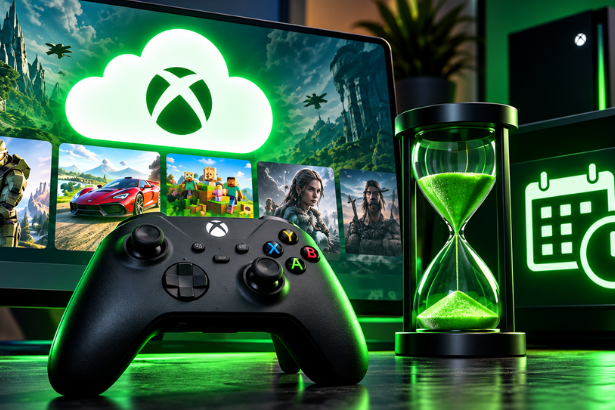
The Xbox Cloud Gaming limits announced by Microsoft are reshaping one of the most attractive parts of Game Pass. Beginning in November 2026, Game Pass subscribers will receive a fixed number of cloud gaming hours each month instead of unlimited cloud streaming. Ultimate subscribers get 15 hours, Premium subscribers get 10 hours and Essential subscribers get 5 hours.
The announcement has landed at an interesting moment for Xbox. Microsoft is simultaneously pushing cloud gaming onto more screens, including select TCL smart TVs, and preparing a new option that will allow people to buy cloud gaming time without subscribing to Game Pass.
That makes the change more than a simple subscription downgrade. Microsoft appears to be trying to turn Xbox Cloud Gaming into a more flexible, metered platform while controlling the infrastructure costs associated with heavy usage.
And gamers are paying attention. The supplied Google Trends screenshot shows a major spike in searches for “xbox game pass cloud gaming limits” over the past 24 hours.
Background and Context
Xbox Cloud Gaming has long been one of the defining features of Microsoft’s Game Pass strategy.
Instead of downloading and installing a game locally, players can stream supported titles from Microsoft’s servers. That makes it possible to play on devices that might not otherwise run modern Xbox games, including smartphones, tablets, PCs and supported televisions.
The model also reduces the importance of having an Xbox console.
Microsoft has increasingly promoted the idea that Xbox is an ecosystem rather than a single piece of hardware. Your games, friends, achievements and saves can move between supported devices, and cloud gaming extends that ecosystem to hardware that is not traditionally associated with console gaming.
The latest moves push that strategy further.
But they also expose a fundamental problem with cloud gaming: streaming a game continuously requires substantial server capacity, networking infrastructure and energy.
Microsoft now says the cost of providing cloud gaming increases as people use the service more and play for longer.
That is the central argument behind the new limits.
Latest Update or News Breakdown
Microsoft announced the changes on September 3.
Starting in November, the Game Pass cloud gaming allowances will be:
| Game Pass Plan | Monthly Cloud Gaming Time |
|---|---|
| Ultimate | 15 hours |
| Premium | 10 hours |
| Essential | 5 hours |
Microsoft says the change will affect approximately 4 percent of Game Pass subscribers.
Once subscribers use their included hours, they will be able to purchase additional cloud playtime through the Xbox Store. Microsoft has not yet disclosed the pricing for those additional hours and says availability and options may vary by market.
Read Microsoft’s official Xbox Cloud Gaming announcement
The change applies specifically to cloud gaming. Players who download and play games locally on Xbox consoles or PCs are not suddenly receiving a monthly playtime limit.
That distinction matters.
For a player who uses Game Pass primarily as a traditional download library, the change may barely register. For someone who treats Xbox Cloud Gaming as their primary way to play, 15 hours a month could be a major reduction.
BBC reporting highlighted the impact on Ultimate subscribers, who will be able to stream for up to 15 hours a month before purchasing additional cloud playtime.
BBC coverage of Xbox’s cloud gaming limits
Microsoft Is Expanding Cloud Gaming at the Same Time
The timing makes Microsoft’s strategy particularly interesting.
Just days after announcing the new limits, Xbox announced a partnership with TCL that will bring the Xbox app to select TCL smart TVs in the coming months.
The company says the rollout will reach millions of TCL television users across more than 25 countries. Players will need a supported TV, compatible controller and cloud playtime included with Game Pass or purchased separately.
Read the official Xbox and TCL announcement
That means Microsoft is simultaneously expanding the number of people who can access cloud gaming while introducing tighter controls on how heavily subscribers can use it.
That is not necessarily contradictory.
It could be a sign that Microsoft wants cloud gaming to reach a much larger audience while shifting heavy users toward additional paid usage.
Expert Insights or Analysis
The most important question is whether the new Xbox Cloud Gaming limits represent a temporary cost-control measure or a permanent change in Microsoft’s business model.
The answer may be a little of both.
Microsoft’s explanation is straightforward. More users and longer sessions mean higher infrastructure costs. A subscription that promises effectively unlimited streaming becomes increasingly difficult to manage when the underlying service has significant variable costs.
Cloud gaming is fundamentally different from downloadable games.
When a player downloads a game, much of the computational workload happens on their own hardware. With cloud gaming, Microsoft’s infrastructure is doing the rendering and sending the video stream to the player in real time.
A two-hour gaming session therefore consumes considerably more server resources than simply allowing someone to download a game once.
Microsoft says the new model will allow it to continue investing in cloud gaming’s reliability and performance.
The more controversial part is what happens after those hours run out.
The company is moving toward a model where heavy cloud users can pay for additional playtime.
That creates a new economic structure for Game Pass. The subscription remains the gateway to a large game library, but cloud access becomes partially metered.
It resembles the broader shift already occurring across the cloud industry, where computationally expensive services are increasingly priced according to consumption.
Broader Implications
For Game Pass Subscribers
For most subscribers, the practical impact may depend entirely on how they use Game Pass.
A player who occasionally streams a game while traveling may never reach the monthly allowance.
A player who uses Xbox Cloud Gaming every evening could burn through 15 hours very quickly.
That creates a particularly important distinction between Game Pass as a game library and Game Pass as a cloud gaming platform.
The subscription increasingly provides both, but Microsoft is now putting different economic boundaries around those experiences.
For Cloud Gaming
The announcement could become an important moment for the wider cloud gaming market.
Microsoft is one of the industry’s biggest companies pushing game streaming as a mainstream alternative to console hardware.
Yet the new limits highlight a challenge that the industry has not completely solved: cloud gaming can be expensive to operate at scale.
If Microsoft can successfully combine subscriptions, pay-as-you-go hours and partnerships with television manufacturers, it could create a more sustainable model.
If customers view the change as simply paying more for something they previously considered included, however, the strategy could create significant backlash.
For Xbox Hardware
There is also an interesting hardware implication.
Microsoft says cloud gaming can give Xbox One owners access to eligible games built for Xbox Series X|S without requiring an immediate hardware upgrade. It also says the service can provide an option in regions where consoles are less available or affordable.
That makes cloud gaming an important part of Microsoft’s strategy for reaching players who do not own current-generation hardware.
The company therefore has an incentive to keep the service attractive even while limiting its cost.
For Smart TVs
The TCL partnership could be more significant than it initially appears.
If Xbox becomes an app on televisions, the traditional relationship between a console and a game starts to weaken.
A customer could potentially buy a controller, open an Xbox app on a supported TV and start playing without buying an Xbox console.
That is precisely the kind of hardware-independent future Microsoft has been building toward.
Related History or Comparable Technologies
The shift toward metered cloud gaming is not unique to Microsoft.
Cloud computing businesses have long operated on usage-based economics. The more computing, storage or bandwidth a customer consumes, the more infrastructure is required.
Gaming presents a particularly difficult version of that problem because interactive video streaming requires continuous processing.
Other cloud gaming services have also experimented with different restrictions and pricing models.
The difference with Xbox is the relationship with Game Pass.
Game Pass has historically been marketed around access to a large library of games for a recurring subscription. Cloud gaming became an additional benefit of that package.
Now Microsoft is drawing a clearer line between access to games and the infrastructure required to stream them.
That could influence how other subscription gaming platforms price their own cloud services.
What Happens Next
The next major milestone is November, when the new cloud gaming limits take effect.
Microsoft says it will provide more information before then about:
- Additional cloud playtime pricing
- Purchasing options
- Eligible games
- Market availability
- How users can check their remaining hours
- Cloud gaming features
The company also says it will listen to player feedback and could make adjustments after the rollout.
Meanwhile, Xbox is expanding its reach through TCL televisions.
That combination creates a fascinating test for Microsoft’s cloud strategy.
If the company can attract millions of new users through smart TVs and pay-as-you-go access while keeping infrastructure costs under control, the changes could ultimately strengthen Xbox Cloud Gaming.
If heavy users abandon the service because the included hours are too restrictive, Microsoft could discover that cloud gaming’s biggest challenge is not technology.
It is pricing.
Conclusion
The new Xbox Cloud Gaming limits mark a significant change in the relationship between Game Pass and cloud streaming.
Ultimate subscribers will receive 15 hours of cloud gaming per month, Premium subscribers 10 hours and Essential subscribers 5 hours starting in November. Additional time will be available for purchase, although Microsoft has not yet revealed the pricing.
At the same time, Microsoft is putting the Xbox app on select TCL smart TVs and opening cloud gaming to people who do not have Game Pass through a pay-as-you-go model.
That tells us something important about where Xbox is heading.
Microsoft still believes cloud gaming has a major future. But it increasingly wants that future to operate on Microsoft’s economic terms.
For casual users, the change may barely matter.
For dedicated cloud gamers, 15 hours could feel like a very short clock.
FAQ
What are the new Xbox Cloud Gaming limits?
Starting in November 2026, Game Pass Ultimate will include 15 hours of cloud gaming per month, Premium will include 10 hours and Essential will include 5 hours.
When do Xbox Cloud Gaming limits begin?
Microsoft says the new monthly limits begin in November 2026.
What happens when I use all my cloud gaming hours?
Subscribers will be able to purchase additional cloud playtime through the Xbox Store. Microsoft has not yet announced the pricing.
Will Xbox Game Pass still let me download games?
Yes. The new limits specifically concern cloud gaming. The announcement does not impose a monthly gaming-hour limit on locally downloaded games.
How many cloud gaming hours does Game Pass Ultimate get?
Game Pass Ultimate subscribers will receive 15 hours of cloud gaming per month under the new system.
Why is Microsoft limiting Xbox Cloud Gaming?
Microsoft says the cost of providing cloud gaming increases as more people use the service and play for longer. The company says monthly limits will help it continue investing in reliability and performance.
Can I use Xbox Cloud Gaming without Game Pass?
Beginning in November, Microsoft says players will be able to purchase cloud playtime through the Xbox Store without a Game Pass subscription and stream eligible games they own on supported devices.
Is Xbox Cloud Gaming coming to TCL TVs?
Yes. Xbox has announced a partnership with TCL that will bring the Xbox app to select TCL smart TVs in the coming months, giving supported users access to Xbox Cloud Gaming.
Sources & References
- Xbox Wire, “Upcoming Changes to XBOX Cloud Gaming.” September 3, 2026.
Read the official Xbox announcement - BBC, “Xbox caps cloud gaming at 15 hours a month for Game Pass subscribers.” September 4, 2026.
Read the BBC report - Xbox Wire, “XBOX and TCL Partner to Bring XBOX App to TCL Smart TVs.” September 4, 2026.
Read the Xbox and TCL announcement - ExtremeTech, “Microsoft to Cap Xbox Cloud Gaming Hours Starting This November.” September 2026.
Read the ExtremeTech report