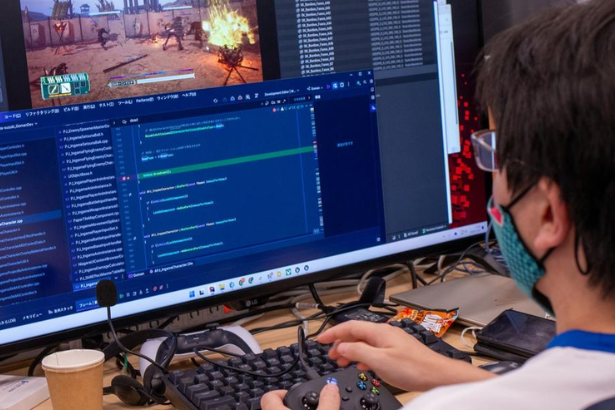
The Brandon Stirrup Xbox AI comments have sparked fresh discussion about how artificial intelligence is being used inside the video game industry. Stirrup, identified in reports as a senior business strategy manager at Microsoft, argued on social media that gaming companies are already using AI, even as some players remain skeptical of the technology.
In posts reported by Windows Central and Pure Xbox, Stirrup said the industry should be more candid about AI adoption. He also described building a rudimentary game with AI-assisted coding tools in a short period, using the experiment to argue that the barrier to making games is falling.
The comments landed amid broader questions about how Xbox will approach AI under its current leadership and how game studios should balance experimentation with player expectations. But one employee’s public views should not automatically be treated as a complete statement of Microsoft policy. The distinction between personal commentary, internal practices, and official company direction is central to understanding the story.
Background and Context: Why AI in Game Development Is Controversial
AI is not new to video games. Traditional game AI has long powered enemy behavior, pathfinding, matchmaking, and other systems that shape how games respond to players. The current debate is more specifically about generative AI, which can produce or help create text, images, audio, code, and other content.
That shift raises different questions. Developers may use AI assistants to help write code, prototype mechanics, troubleshoot bugs, or speed up repetitive tasks. Generative systems can also produce dialogue, concept art, textures, voice performances, and other creative material. The implications depend heavily on the tool and how it is used.
Some developers see these systems as a way to reduce repetitive work and make prototyping accessible to smaller teams. Others worry about training-data consent, ownership, attribution, job security, quality control, and the possibility that AI-generated content will be used to replace creative work rather than support it.
Those concerns are particularly visible in gaming because players often value the human authorship, distinctive visual style, and crafted performances behind their favorite titles. A studio’s decision to use AI can therefore become a question of trust, not simply a production choice.
Latest Update: What Brandon Stirrup Actually Said
The reports linked to this story describe a series of social media posts published on October 18 and 19, 2026. Stirrup argued that AI use is already part of the gaming industry and that companies should speak more openly about it.
According to Windows Central’s report, Stirrup described creating a basic game with little prior game-development experience and said a simple prompt could help people build customized games. He also suggested that resistance to AI in gaming is partly driven by negative user sentiment.
Pure Xbox’s coverage highlights his claim that Xbox and the wider industry are using AI, as well as his argument that gaming leaders are reluctant to discuss it openly.
A third report from GamesRadar+ focuses on Stirrup’s more forceful argument that developers who refuse to engage with AI risk falling behind commercially. The headline captures the sharpest version of the debate, but the broader issue is how AI tools are used and what they contribute to a finished game.
A few distinctions matter:
- His comments are not a full corporate policy statement. The reports identify Stirrup as a Microsoft employee, but his posts alone do not establish a company-wide mandate for AI use.
- A prototype is not a finished commercial game. A short AI-assisted experiment can demonstrate how quickly an idea can be made playable, but it does not prove that a game is ready for production, launch, or long-term support.
- AI use is not one single practice. Assisting with code, generating final artwork, creating voice performances, and designing game systems have different creative and legal implications.
The central question is not whether AI can generate a playable prototype. It is what role these tools should have in professional game development, and how studios should communicate that role to their teams and audiences.
Expert Insights and Analysis: Does Vibe Coding Change Game Development?
Stirrup’s experiment speaks to the growing popularity of “vibe coding,” a term commonly used for building software by describing desired outcomes in natural language and letting AI tools generate much of the underlying code.
The appeal is straightforward. A person with a game idea can ask an AI coding assistant to create a basic mechanic, produce a simple interface, or help fix errors without first mastering every part of a traditional development workflow. That can make experimentation faster and lower the initial barrier for newcomers.
But a quick prototype and a polished game are very different things.
Commercial development involves far more than making something run. Teams need to test performance, fix edge cases, secure user data where relevant, maintain code, build accessible interfaces, balance gameplay, and make sure the experience remains reliable across different hardware configurations. A generated prototype can still contain fragile architecture, inconsistent design decisions, or bugs that become harder to fix as the project grows.
Windows Central also points to the importance of human review when AI-generated code is involved. The practical lesson is that AI can speed up parts of development, but someone still needs to understand, test, and take responsibility for the resulting software.
Where AI Could Help Game Studios
Rapid prototyping
Developers can explore a gameplay idea or build a rough demo before committing a large amount of engineering time.
Debugging and routine coding
AI assistants can suggest fixes, explain unfamiliar code, and help with repetitive implementation tasks. Developers still need to verify the suggestions.
Creative exploration
Teams may use generative tools to explore variations, mock up concepts, or test ideas before producing final assets.
Accessibility for new creators
Natural-language tools may help people with limited coding experience build prototypes and learn through experimentation.
These are potential uses, not proof that every AI workflow improves productivity. Results depend on the task, the model, the development environment, and the time spent checking its output.
Broader Implications: Xbox, Creative Labor, and Player Trust
For Xbox, the debate reaches beyond whether an employee can build a basic game with AI. It touches how Microsoft communicates its technology strategy to developers, publishing partners, and players.
The company has already been associated with discussions about AI in gaming, and the linked reports place Stirrup’s comments in the context of the wider industry’s response to generative tools. However, the comments should not be read as confirmation that all Xbox studios are required to use generative AI or that AI-generated content is planned for every game.
The transparency question
Players may react differently to AI used behind the scenes than to AI-generated art, dialogue, or voices appearing in a finished release. Studios that explain what tools they use, why they use them, and how humans review the results may be better placed to have a meaningful conversation with their audiences.
Transparency does not automatically resolve every concern. Developers and players may still disagree about consent, compensation, originality, and acceptable uses. But vague claims about AI being inevitable do not answer those specific questions.
The labor question
AI-assisted production may reduce the time needed for certain tasks, but the effect on employment is not predetermined. Some roles may change, some repetitive work may shrink, and new responsibilities may emerge around verification, tool integration, and production oversight. The impact will vary by studio, project, and workflow.
The industry also needs to distinguish between making a prototype more accessible and replacing the skilled people needed to deliver a complete game. Faster code generation does not automatically produce stronger storytelling, more original art direction, better level design, or a more satisfying player experience.
Internal link suggestion: Add a related article on The Tech Marketer titled How Generative AI Is Changing Software Development. Link the phrase “AI-assisted game development” to that article once its published URL is available.
Related History: From Traditional Game AI to Generative Tools
The word “AI” has meant different things in games over the years.
Traditional game AI includes systems that control non-player characters, calculate routes through environments, adjust difficulty, or respond to a player’s actions. These systems are usually designed for specific functions rather than asked to generate broad new content from a natural-language prompt.
Generative AI introduces another layer. Models can help create code, dialogue, images, sounds, and other material, potentially changing both how games are produced and how players interact with them.
This is why the industry’s current discussion can become confusing. A studio saying it uses AI might mean it has long relied on pathfinding and behavior systems, that developers use coding assistants, or that generative content appears in the game itself. Those are materially different practices.
For a useful wider perspective, GamesRadar+’s examination of why some game developers resist generative AI covers concerns about creative work, the origins of training data, and the effect of AI on production. It also illustrates that there is no single industry-wide consensus.
The debate is therefore not simply a contest between people who embrace technology and people who reject it. It is a disagreement over which uses are valuable, which risks are acceptable, and who should decide.
What Happens Next?
The next phase of the debate will likely be shaped by how game companies turn broad statements about AI into concrete policies and production practices.
Several developments are worth watching:
- Clearer company guidance: Whether Xbox explains how AI tools may be used across development, publishing, and internal workflows.
- More disclosure: Whether studios tell players when generative AI materially contributes to a game’s visible or audible content.
- Evidence from real projects: Whether AI-assisted workflows produce measurable improvements in quality, development time, accessibility, or cost.
- Human review and accountability: How teams check generated code and assets, resolve rights questions, and maintain quality.
- Developer and player response: Whether studios can adopt useful tools without damaging trust among the people who make and play their games.
Stirrup’s comments have brought these questions into sharper focus, but they do not settle them. More informative evidence will come from documented studio practices, specific game releases, and clear statements about how AI-generated work is reviewed and disclosed.
Conclusion
The Brandon Stirrup Xbox AI comments have reopened a difficult conversation about generative AI and the future of game development. His central argument is that AI is already being used and that the industry should discuss it more openly. His short game-building experiment also reflects how natural-language coding tools can make basic prototypes accessible to more people.
Still, a playable prototype is not the same as a finished game, and an employee’s comments are not a complete statement of Xbox policy. The more useful debate focuses on the details: which tasks AI should handle, how developers verify its output, how creative work is credited and compensated, and how players are informed.
AI may become a more common part of game production. Whether that change benefits the industry will depend on how studios use it, not simply on how quickly they adopt it.
Frequently Asked Questions
1. Who is Brandon Stirrup at Xbox?
The linked reports identify Brandon Stirrup as a senior business strategy manager at Microsoft associated with Xbox. His October 2026 social media posts discussed AI use in gaming and the potential for AI-assisted game creation.
2. What did Brandon Stirrup say about AI at Xbox?
He argued that gaming companies are already using AI and should be more open about it. He also described creating a basic game with AI-assisted tools and suggested that the technology lowers the barrier to making games.
3. Do Brandon Stirrup’s comments mean all Xbox games will use AI?
No. His public comments do not establish a company-wide requirement or prove that all Xbox games will include generative AI. Specific company policies and individual game disclosures are needed to establish how AI is used.
4. What is vibe coding?
Vibe coding describes a software development approach in which a person uses natural-language prompts to ask AI tools to generate or modify code. The developer still needs to test the result and address reliability, security, and maintenance issues.
5. Can AI create a complete video game?
AI tools can help produce playable prototypes and assist with many development tasks. Creating a polished commercial game typically also requires testing, design, optimization, debugging, accessibility work, and ongoing maintenance. The degree of AI involvement varies by project.
6. Why are some game developers concerned about generative AI?
Concerns include training-data consent, intellectual property, attribution, compensation, employment, creative originality, and quality control. Different developers have different views depending on how the tools are used.
7. Is traditional game AI the same as generative AI?
No. Traditional game AI commonly governs behaviors such as pathfinding and enemy decision-making. Generative AI can create new material, including code, text, images, and audio. The distinction matters when evaluating a studio’s claims about AI use.
8. What should players look for as AI use grows in gaming?
Look for clear statements about where AI was used, whether generated material appears in the finished game, how human review is handled, and how the studio addresses rights and quality concerns. Specific disclosures are more informative than broad claims that AI is either inevitable or universally harmful.
Sources & References
1. “‘We’re using AI’: Xbox business strategist claims he could be fired ‘because I told you the truth that nobody wants you to know’” Windows Central https://www.windowscentral.com/gaming/xbox/were-using-ai-xbox-brandon-stirrup
2. “Microsoft Employee Shares Their ‘Truth’ About AI Usage At Xbox & Beyond” Pure Xbox https://www.purexbox.com/news/2026/10/microsoft-employee-shares-their-truth-about-ai-usage-at-xbox-and-beyond
3. “Xbox business manager says devs not using AI shouldn’t ‘be in the business of being a business’ because he vibe-coded a ‘bad but improvable’ game in 2 days” GamesRadar+ https://www.gamesradar.com/games/xbox-business-manager-says-devs-not-using-ai-shouldnt-be-in-the-business-of-being-a-business-because-he-vibe-coded-a-bad-but-improvable-game-in-2-days/
4. “Why so many game developers don’t want to use generative AI” GamesRadar+ https://www.gamesradar.com/games/why-so-many-game-developers-dont-want-to-use-generative-ai/
5. “‘AI is not a shiny new feature’: Xbox AI lead says the games industry has been building AI systems for decades” GamesRadar+ https://www.gamesradar.com/games/ai-is-not-a-shiny-new-feature-xbox-ai-lead-says-and-our-games-industry-has-been-building-ai-systems-for-decades-from-cheat-detection-to-pathfinding/