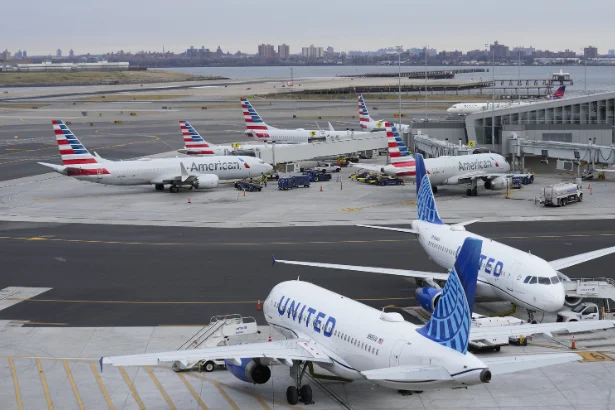
This is not a bad weather week. It is a broken system finally showing its cracks — and millions of spring travelers are paying the price.
US airports flight disruptions have reached a breaking point in April 2026, with over 4,200 delayed flights recorded in a single day and thousands of passengers stranded across Atlanta, Chicago, New York, Detroit, Houston, and beyond. The numbers are staggering. The causes are multiple. And the fixes are nowhere near fast enough for the tens of millions of Americans flying this spring and summer.
This is not a one-day story. It is the result of months of compounding pressure on an aviation system that has been running out of buffer, staff, and margin for error all at the same time. Here is what is actually happening, why it matters, and what you need to do before your next flight.
Background and Context
The US aviation system moves roughly 2.9 million passengers per day. To do that reliably, it depends on a precise chain of interconnected variables: enough TSA officers to clear security quickly, enough fuel at stable prices for airlines to operate full schedules, enough air traffic controllers to manage arrivals and departures at capacity, and enough aircraft and crew in the right places at the right times.
In April 2026, every single one of those variables is under pressure simultaneously.
A prolonged Department of Homeland Security partial funding lapse that stretched beyond a month has been directly hitting the front lines of airport security. Thousands of TSA officers worked without full pay, with many reporting financial strain and seeking temporary work elsewhere. The Traveler
The DHS partial government shutdown that began February 14 led to over 500 TSA officer resignations, with security checkpoints at every major US airport running below optimal staffing. Travel Tourister
Meanwhile, jet fuel prices have spiked sharply. United CEO Scott Kirby confirmed that the airline’s fuel cost burden from Middle East instability adds approximately $400 million to operating costs, directly reducing the scheduling redundancy that would normally absorb disruption days. Travel Tourister United has responded by cutting 5% of its flights for the next six months.
And then the weather arrived.
Latest Update
The crisis peaked on April 20 and 21, 2026, generating some of the highest disruption numbers of the year so far.
The full picture from today’s reporting:
- Thousands of Passengers Stranded Across Atlanta, Boston, Houston, San Francisco and More as 3,002 Flights Delayed and 105 Cancelled — Travel and Tour World
- US Flight Chaos Intensifies as $11B Fuel Spike and Staffing Gaps Force Massive Airline Schedule Cuts — International Business Times
- Over 4,200 Flights Delayed Across US Today: Here’s Why — NewsBytes
Key takeaways from the current disruption wave:
- Severe thunderstorms, high winds, and poor visibility caused more than 4,300 flight disruptions across the United States on April 20, 2026, including 4,231 delays and 79 cancellations AirHelp
- Detroit Metropolitan Wayne County Airport was the worst hit with 121 delays and 13 cancellations, while Chicago O’Hare followed with 337 delays and six cancellations newsbytesapp
- Southwest Airlines recorded 730 delays and American Airlines posted 542 delays on the same day newsbytesapp
- The FAA issued a ground stop at San Francisco International Airport, halting inbound traffic and sending ripples across the national network AirHelp
- Over 15,000 to 30,000 flights have been delayed or cancelled nationwide since Easter weekend alone International Business Times
Expert Insights and Analysis
Understanding why this crisis is so persistent requires understanding how airline networks actually function.
The interconnected nature of air travel means that a delay in one hub can have a cascading effect on other cities. newsbytesapp When Chicago O’Hare experiences a ground stop due to thunderstorms, it does not just delay Chicago flights. It displaces aircraft across the entire country. Planes that were supposed to rotate through O’Hare to Dallas, Atlanta, or New York never arrive on time. Crews hit duty limits. Connections are missed. And the ripple spreads for hours.
The TSA staffing deficit is the background condition that converts a 2,000-disruption day into a 4,651-disruption day. Slower security means later boarding, later departure, missed connection windows, and further cascade. Travel Tourister
The fuel situation is compounding airline scheduling decisions in a way that removes the safety margin the system used to have. When fuel costs spike, airlines cut routes, reduce spare aircraft, and operate with tighter rotations. That means there is no slack aircraft sitting at a hub ready to cover a disruption. When one plane goes late, the delay has nowhere to absorb.
Republic Airways, a regional carrier serving hundreds of small and mid-sized cities including Albany, Syracuse, Rochester, and Indianapolis, is reportedly considering a second Chapter 11 bankruptcy filing or liquidation if Q2 2026 performance does not improve. Travel Tourister If a regional carrier of that size fails, the communities it serves lose their only air connections.
Broader Implications
The scale of what is happening in US aviation right now extends well beyond individual flight delays. It is exposing a systemic fragility that has been building for years.
March and April are among the busiest months of the year for US airports, with family vacations, spring breaks, and early-season business conferences generating strong demand. Airlines had already upgraded aircraft and added frequencies on popular leisure routes before the funding impasse intensified. The Traveler That means more passengers are competing for fewer functioning security lanes and a reduced number of operating flights.
The timing relative to the FIFA World Cup, which the US is co-hosting in summer 2026, is particularly concerning. TSA faces a staffing crisis with less than 60 days until the tournament begins, and major hub airports are already operating at capacity. The international travel volumes that the World Cup will generate will stress a system that is already failing under current demand.
As the spring and summer travel seasons approach, airport officials and TSA leaders are calling on lawmakers to pass a funding bill that would relieve the current staffing crisis and allow for better preparation ahead of peak travel periods. Travel And Tour World
For travelers navigating this environment, real-time awareness and flexible planning are no longer optional. The Tech Marketer tracks technology and infrastructure stories that affect daily life, including how digital tools are reshaping how we manage travel disruptions.
Related History and Comparable Crises
The last time US aviation experienced disruptions of this sustained scale was during the 2022 holiday season, when a combination of Southwest Airlines’ internal software failures and severe winter weather produced thousands of cancellations over ten days. Congress investigated. Airlines were fined. Process changes were promised.
The difference in 2026 is that the causes are structural rather than operational. A software failure can be patched. A workforce that has lost 500+ officers to resignation because of unpaid wages cannot be rebuilt in weeks. Fuel prices driven by geopolitical instability do not resolve because an airline wants them to. And weather systems do not consult airline scheduling software before producing thunderstorms over O’Hare.
On a single major disruption day this spring, storms contributed to more than 900 cancellations and around 2,600 delays nationwide. At airports such as Chicago O’Hare, thunderstorms and strong winds forced FAA restrictions that reduced landing capacity for several hours. Even after the storms passed, delays continued because aircraft and crew were already out of position across the network. Indian Eagle
What Happens Next
The FAA has already taken one significant structural step. On April 16, 2026, the FAA finalized a historic order requiring airlines at Chicago O’Hare to cut their summer schedules by more than 300 flights per day Travel Tourister, acknowledging that the airport has been operating beyond sustainable capacity.
Whether Congress acts on TSA funding before summer travel peaks is the defining question for the next 60 days. The FAA has assured the public that strategic planning and new staffing models will be rolled out to ease congestion and improve the travel experience, while the Department of Homeland Security has vowed to continue working with airlines to create better solutions for travelers. Travel And Tour World
For individual travelers, the practical advice is straightforward. Book morning flights. Arrive early. Use airline apps for rebooking rather than customer service lines. Check the MyTSA app for real-time checkpoint wait times before leaving for the airport. And build buffer into every itinerary through at least the end of May.
Conclusion
US airports flight disruptions in April 2026 are not a weather story or a staffing story or a fuel story. They are all three at once, compounding each other in a system that was already running without enough margin to absorb any one of them.
The 4,231 delays recorded on a single day this week are a number. Behind that number are missed weddings, lost business deals, stranded families, and passengers sleeping on airport floors who did everything right and still could not get home.
The fixes exist. They require funding TSA properly, stabilizing fuel costs, and giving the FAA the authority to manage hub capacity before the system breaks rather than after. Whether Washington delivers any of that before summer is a question that 171 million spring and summer travelers are now watching very closely.
FAQ
1. Why are US airports flight disruptions so severe in April 2026? The crisis is driven by three overlapping factors: severe spring weather causing cascading delays across the national network, a TSA staffing shortage resulting from a prolonged DHS funding lapse and 500+ officer resignations, and a sharp spike in jet fuel prices forcing airlines to cut schedule slack and reduce buffer capacity.
2. Which US airports are most affected by flight disruptions right now? Chicago O’Hare, Hartsfield-Jackson Atlanta, Detroit Metropolitan, John F. Kennedy, LaGuardia, and San Francisco International have been the worst-hit airports. O’Hare is consistently the most disrupted hub due to its size and its role as a national network chokepoint.
3. What should I do if my flight is delayed due to US airports flight disruptions? Check your airline’s app immediately for rebooking options. Avoid the customer service counter during major disruption days, as queues can stretch across entire concourses. Use the MyTSA app for real-time checkpoint wait times. If your flight is cancelled, you are entitled to a full refund under DOT rules.
4. How long will US airports flight disruptions continue? The TSA staffing deficit will persist until Congress passes a funding resolution and new officers are hired and trained. The FAA’s summer schedule cap at O’Hare takes effect for the summer season. Travelers should expect elevated disruption risk through at least May 2026.
5. Are airlines cutting flights because of US airports flight disruptions? Yes. United Airlines has cut 5% of its flights for the next six months in response to fuel cost increases. The FAA has also mandated that airlines at O’Hare reduce their summer schedules by more than 300 flights per day to bring capacity in line with what the airport can reliably handle.
6. How does the TSA staffing shortage make flight delays worse? When delays cause mass rebooking, large numbers of passengers simultaneously surge through security checkpoints. With fewer TSA officers available, those checkpoints back up, slowing boarding and pushing departures later. A disruption that would have been manageable with full staffing becomes a multi-hour crisis at understaffed checkpoints.
7. Is it safe to book summer flights given the current US airport disruption crisis? Summer bookings remain generally viable, but travelers should build more buffer into itineraries than usual, book morning departures where possible, purchase travel insurance that covers delay-related expenses, and monitor airline and TSA communications closely in the weeks before travel.
Sources & References
- Thousands of Passengers Stranded Across Atlanta, Boston, Houston, San Francisco and More — Travel and Tour World
- US Flight Chaos Intensifies as $11B Fuel Spike and Staffing Gaps Force Massive Airline Schedule Cuts — International Business Times
- Over 4,200 Flights Delayed Across US Today: Here’s Why — NewsBytes
- US Flight Disruptions in 2026: What’s Really Happening — Indian Eagle
- US Travel Chaos April 2026: TSA Crisis, Jet Fuel and Flights — Travel Tourister
- TSA Turmoil and Shutdown Snarls Spring 2026 US Travel — The Traveler