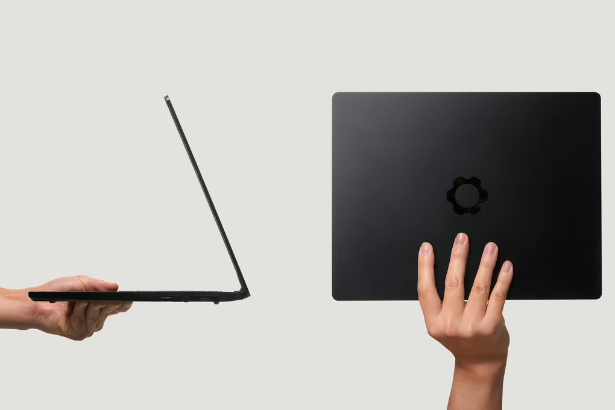
Framework just redesigned everything. The result is a modular laptop that goes after Apple’s most loyal professional audience with a straight face.
Framework Laptop 13 Pro is here, and it is the most ambitious product the company has ever built. Announced on April 21, 2026, the new machine is a ground-up redesign of Framework’s flagship 13-inch laptop, and it arrives with Intel Core Ultra Series 3 processors, a custom touchscreen display, LPCAMM2 memory, a haptic touchpad, and a 74Wh battery that Framework claims will outlast the 14-inch MacBook Pro M5. It also ships with Ubuntu Linux preloaded — a first for the company, and a deliberate signal about exactly who this machine is built for.
Framework is calling it “the MacBook Pro for Linux users.” That is a bold line. The question is whether the hardware backs it up.
Background and Context
Framework launched its original Laptop 13 in 2021 with a single, radical premise: a laptop where every component could be removed, replaced, or upgraded by the owner. No soldered RAM. No glued battery. No proprietary screws hiding behind warranty stickers. At a time when the entire industry was moving toward thinner, lighter, and increasingly unrepairable devices, Framework went the opposite direction.
The bet paid off. The company found a passionate audience among developers, Linux users, and hardware enthusiasts who had grown tired of treating laptops as disposable. And it turned out that audience skewed heavily toward one operating system.
Framework CEO Nirav Patel revealed that on the Framework Laptop 13, Linux users actually outnumber Windows users, with an internal split of approximately 55 to 45 percent — a striking contrast to the broader market where general Linux adoption remains steady in the low single digits. DigitrendZ
That data point shaped the Framework Laptop 13 Pro directly. This is not a machine that tolerates Linux. It is a machine designed with Linux users as the primary audience.
Latest Update
The Framework Laptop 13 Pro was announced today, April 21, 2026, and coverage from the top tech publications landed within hours.
Full details from today’s announcement:
- Framework Has a Better, More Take-Apartable Laptop — WIRED
- Framework’s CEO on the RAM Crisis and Creating a MacBook Pro for Linux Users — Ars Technica
- Framework Announces Laptop 13 Pro, the MacBook Pro for Linux Users — The Verge
Key specs and details confirmed today:
- The Framework Laptop 13 Pro can be configured with Intel Core Ultra Series 3 CPUs: the Core Ultra 5, Core Ultra X7, and Core Ultra X9, with LPCAMM2 memory in 16GB, 32GB, and 64GB configurations Tom’s Guide
- Battery life has more than doubled from 12 to over 20 hours, with Framework claiming it will slightly outlast Apple’s 14-inch MacBook Pro M5 How-To Geek
- The display measures 13.5 inches with a 2880×1920 resolution, 30-120Hz variable refresh rate, and full touch support — a first for the Framework 13 line Tom’s Guide
- Pre-orders are open now, with DIY Edition pricing starting at $1,199 and pre-built configurations starting at $1,499. The machine ships in June 2026 How-To Geek
- It is Framework’s first computer to ship with Ubuntu Linux preloaded, with full Ubuntu Certification How-To Geek
Expert Insights and Analysis
The Framework Laptop 13 Pro is not just an iterative upgrade. It is a structural rethinking of what a modular laptop can be at the pro tier.
The most technically significant change is the shift to LPCAMM2 memory. Traditional laptops use LPDDR5 RAM soldered directly to the motherboard, which is why you cannot upgrade RAM on a MacBook or most modern ultrabooks. LPCAMM2 is a new memory module standard that delivers the same low-power, high-performance profile as soldered LPDDR5, but in a removable, upgradeable form. It is the missing piece that lets a thin, premium laptop remain modular without sacrificing memory bandwidth.
Framework CEO Nirav Patel told Tom’s Hardware that the company expects to have plenty of LPCAMM2 modules in its store, noting this is especially important as the modules are not easy to buy from typical storefronts right now. Tom’s Hardware That supply chain awareness matters for buyers planning to upgrade RAM after purchase.
The system features a fully custom display, a larger battery, and a haptic touchpad, with a machined 6000-series aluminum chassis that Framework says makes the system rigid while keeping outer dimensions identical to the regular Framework Laptop 13 at 15.86mm thick. Tom’s Hardware
The haptic touchpad deserves specific mention. Framework’s previous trackpads were functional but noticeably inferior to Apple’s glass haptic surfaces. That gap has been a consistent criticism from reviewers. Closing it is not a cosmetic upgrade. For users who spend hours per day on the trackpad, it is a quality-of-life improvement that changes whether the machine feels premium or merely good.
Battery life of 20-plus hours, if it holds in real-world workloads, would challenge current ultrabook champions. Apple’s M5 MacBook Pro typically manages 15-17 hours in real-world usage. Tbreak Media That is a meaningful gap, though battery claims tested under Netflix streaming conditions should always be treated as ceiling figures rather than typical-use expectations for developers running virtual machines or compilation tasks.
Broader Implications
Framework’s positioning of the Laptop 13 Pro as a MacBook Pro rival for Linux users is commercially and culturally significant in ways that extend beyond one product launch.
Apple’s silicon advantage has made the MacBook Pro the default recommendation for professional developers for the past four years. The M-series chips deliver industry-leading performance-per-watt, exceptional battery life, and a premium build that few Windows machines have matched. The problem for a significant slice of that developer audience is macOS itself. Apple’s control over the software environment, restrictions on running certain workloads, and the general trajectory toward a more locked-down ecosystem have pushed a growing number of technical users back toward Linux.
Until now, those users had limited options. Linux laptop support has historically been inconsistent. Driver issues, sleep/wake problems, and hardware compatibility gaps have made running Linux on most consumer notebooks a project in itself rather than a plug-and-play experience.
Framework is emphasizing Linux support, with the Laptop 13 Pro being its first model to ship with Linux preinstalled and Ubuntu Certified, targeting its technically oriented user base despite Linux’s small overall market share. DigitrendZ
Framework is not trying to win the mass market. It is trying to own a specific, high-value segment of the market that has been consistently underserved. That is a defensible strategy, and one that the company’s own customer data validates.
For a deeper look at how modular hardware and open-source software are reshaping the professional computing landscape in 2026, The Tech Marketer tracks the technology trends that matter to developers, builders, and power users.
Related History and Comparable Technologies
The Framework story fits inside a broader pattern of hardware companies rediscovering repairability after a decade of the industry moving in the opposite direction.
Right-to-repair legislation has been advancing in multiple US states and at the EU level, pushing manufacturers to provide spare parts, repair manuals, and accessible designs. Framework got ahead of that curve by making repairability the product’s core feature from day one rather than a compliance checkbox.
The LPCAMM2 memory standard itself is a consortium effort involving multiple manufacturers. It represents the industry’s attempt to reconcile the efficiency gains of soldered LPDDR5 with the upgrade demands of professional users. Framework is among the first consumer laptop makers to adopt it at scale.
The Google Trends screenshot for “framework” shows a sharp spike peaking around 16 hours ago and sustaining elevated interest through the current moment — driven by the “macbook pro” and “macbook” related queries visible in the trend breakdown. The comparison to Apple is clearly the angle driving the broadest search interest, which tells you exactly what audience Framework’s marketing has activated.
What Happens Next
Framework plans to ship the Laptop 13 Pro in June 2026. DIY editions start at $1,199, while pre-built configurations start at $1,499. Tom’s Hardware
Between now and June, expect hands-on reviews from major publications that will test the 20-hour battery claim under real developer workloads, evaluate Linux compatibility in practice, and benchmark the Intel Core Ultra Series 3 chips against AMD Ryzen AI 300 alternatives. Those reviews will determine whether the “MacBook Pro for Linux users” framing holds up under scrutiny or softens into “a very good Linux laptop.”
Framework is also launching new accessories alongside the 13 Pro, including a 10 GBps Expansion Card for faster networking. The Framework Laptop 16 is also getting new modules, including a single-piece haptic touchpad and keyboards to reduce seam count, plus a new Ryzen 5 processor option. Tom’s Hardware
The LPCAMM2 supply situation is worth monitoring. If Framework can consistently stock the modules it has promised, it removes a major barrier to the DIY Edition’s appeal. If the global supply remains constrained, some buyers may find themselves with a modular machine and no affordable upgrade path — at least in the near term.
Conclusion
The Framework Laptop 13 Pro is the clearest statement the company has made about what it wants to be. Not a budget alternative to premium laptops. Not a hobbyist project for people who like taking things apart. A serious professional machine with premium specs, a premium build, and a software experience that its core audience actually wants to use.
Whether it fully delivers on the MacBook Pro comparison depends on reviews that have not landed yet. But the spec sheet alone makes this the most credible Linux laptop challenger to Apple’s professional line that has ever existed. For the 55% of Framework’s existing customers already running Linux, the upgrade calculus is not complicated. For everyone else who has been watching and waiting, April 21, 2026 is the day the conversation got serious.
FAQ
1. What is the Framework Laptop 13 Pro and when does it launch? The Framework Laptop 13 Pro is a redesigned modular laptop running Intel Core Ultra Series 3 processors, featuring a touchscreen display, LPCAMM2 upgradeable memory, a haptic touchpad, and Ubuntu Linux preloaded. It is available for pre-order now and ships in June 2026.
2. How much does the Framework Laptop 13 Pro cost? The DIY Edition starts at $1,199, where buyers supply their own RAM, storage, and OS. Pre-built configurations with everything included start at $1,499.
3. Does the Framework Laptop 13 Pro support Linux out of the box? Yes. The Framework Laptop 13 Pro is the first Framework machine to ship with Ubuntu Linux preloaded and is fully Ubuntu Certified, meaning all hardware components are officially supported and tested with Linux.
4. How does the Framework Laptop 13 Pro compare to the MacBook Pro? Framework claims the 13 Pro will slightly outlast Apple’s 14-inch MacBook Pro M5 on battery life, targeting 20-plus hours in streaming tests. It matches the MacBook Pro’s haptic touchpad and high-resolution display, while adding full repairability and upgradeable RAM that the MacBook Pro does not offer.
5. What is LPCAMM2 memory and why does it matter for the Framework Laptop 13 Pro? LPCAMM2 is a new memory module standard that delivers the low-power, high-speed performance of soldered LPDDR5 RAM in a removable, upgradeable format. It allows Framework to offer premium battery life and memory performance without permanently locking in the RAM at purchase — a key differentiator from most thin and light laptops including the MacBook Pro.
6. Can I upgrade my existing Framework Laptop 13 to the new specs? Yes. Framework’s modular design means many of the new components, including the new display, keyboard, and chassis pieces, are available as upgrades for existing Framework Laptop 13 owners. The new motherboard with Core Ultra Series 3 processors can also be installed in current machines.
7. What chip options are available in the Framework Laptop 13 Pro? The 13 Pro is available with Intel Core Ultra Series 3 processors including the Core Ultra 5, Core Ultra X7, and Core Ultra X9. AMD Ryzen AI 300 series configurations are also available for buyers who prefer AMD.
Sources & References
- Framework Has a Better, More Take-Apartable Laptop — WIRED
- Framework’s CEO on the RAM Crisis and Creating a MacBook Pro for Linux Users — Ars Technica
- Framework Announces Laptop 13 Pro, the MacBook Pro for Linux Users — The Verge
- Framework Laptop 13 Pro Brings a Redesigned Chassis — Tom’s Hardware
- Framework Laptop 13 Pro Revealed — Tom’s Guide
- Framework Finally Has a Modular Laptop With a Touchscreen — How-To Geek