Introduction
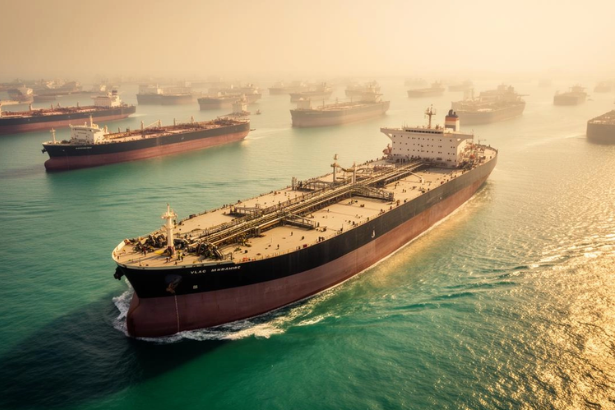
U.S. logistics is entering another period of cost pressure as a global shortage of oil tankers sends shipping rates to unprecedented levels and American diesel prices reach records. A very large crude carrier, or VLCC, moving oil from the Persian Gulf to Asia has recently commanded more than $1 million per day, according to reporting based on tanker-market data.
The impact extends well beyond the oil industry.
Higher maritime transportation costs can affect refiners, fuel suppliers and manufacturers, while record diesel prices are directly raising expenses for trucking and other freight operations. U.S. diesel reached $6.45 per gallon in recent reporting, according to AAA data cited by MarketWatch and other outlets.
For logistics companies, the central issue is no longer simply the price of crude. It is the cost and availability of moving that crude, refined fuel and other goods through a transportation network under pressure.
Background and Context
The current disruption is centered on the Middle East and, particularly, the Strait of Hormuz, one of the world’s most important maritime chokepoints.
The waterway connects the Persian Gulf with the Gulf of Oman and the Arabian Sea. Before the current disruption, it handled a substantial share of global oil and liquefied natural gas flows.
Recent shipping data shows how sharply activity has changed.
Reuters reported that only 17 commodity vessels transited the Strait of Hormuz over one recent weekend, compared with 37 the previous week and an estimated pre-conflict average of about 125 vessels per day.
Other shipping data also shows vessels continuing to move through the waterway, sometimes with transponders switched off. That makes the actual flow of commodities difficult to measure in real time.
The result is a logistics market where available tanker capacity has become increasingly valuable.
Latest Update or News Breakdown
Oil Tanker Rates Have Crossed $1 Million a Day
The headline number is striking.
Very large crude carriers are now commanding more than $1 million per day on some Persian Gulf to Asia routes. The Wall Street Journal reported that the daily hiring cost for VLCCs had reached more than $1 million, while the cost of transporting the oil alone could represent roughly $26 per barrel.
A separate analysis citing Baltic Exchange data put the Ras Tanura to Ningbo benchmark at approximately $1.099 million per day on September 15, compared with around $700,000 at the beginning of the month.
This is important because crude oil has two distinct costs:
- The price of the commodity itself.
- The cost of transporting it.
The second component has suddenly become much more expensive.
Why Are Tankers So Expensive?
The problem is partly about geography.
Disruptions to Saudi Arabia’s East-West pipeline have forced more crude toward maritime routes through the Strait of Hormuz. That puts additional demand on a tanker fleet that is already operating in a difficult security environment.
Saudi Arabia has also turned to ship-to-ship transfers near Oman as an alternative way to keep crude moving.
Reuters reported that these transfers reached approximately 2.5 million barrels per day in September, compared with 1.4 million barrels per day in August.
The workaround keeps oil moving, but it also adds complexity.
Instead of a straightforward voyage from a loading terminal to a destination refinery, cargoes may require additional vessel movements, transfers and routing decisions.
Every additional step can add time, fuel consumption, insurance exposure and vessel demand.
The Strait of Hormuz Is Still Operating, But Below Normal Levels
It is important not to describe the Strait of Hormuz as completely closed.
Oil and other commodity vessels continue to transit the waterway.
Reuters reported that Saudi Arabia was still exporting significant volumes through the strait, with 22 tankers carrying approximately 42 million barrels exiting during the week of September 13.
Saudi Aramco has also been using ship-to-ship transfers near Oman’s Sohar port to maintain exports.
Reuters reported that Aramco planned to move approximately 60 million barrels through these transfers during September and October, equivalent to roughly 1 million to 1.5 million barrels per day.
So the story is not simply “oil stopped moving.”
It is a story about oil moving through a much more complicated and expensive logistics network.
U.S. Diesel Prices Are Creating a Second Logistics Shock
The tanker crisis is occurring alongside a major increase in U.S. diesel costs.
The national diesel average recently reached approximately $6.45 per gallon, according to AAA data cited by MarketWatch and Yahoo Finance. That compares with roughly $3.71 per gallon a year earlier.
Diesel is particularly important for logistics because it powers much of the country’s trucking and freight infrastructure.
Trucks move goods between:
- Ports and warehouses
- Distribution centers and retailers
- Manufacturers and suppliers
- Rail terminals and customers
- Farms and food-processing facilities
When diesel becomes substantially more expensive, carriers face higher operating costs on every mile.
Trucking Companies Are Already Feeling the Pressure
The effect is showing up inside the transportation industry.
J.B. Hunt warned that its third-quarter earnings could decline 5% to 10% from the second quarter because of unprecedented diesel-price volatility, according to Barron’s reporting.
Meanwhile, Reuters reported that rising diesel costs are encouraging some freight to shift from trucks toward rail because rail transportation is generally more fuel-efficient for appropriate long-haul shipments.
That creates an important change in freight economics.
When diesel is relatively cheap, trucking can compete aggressively on speed and flexibility.
When diesel becomes extremely expensive, companies have more incentive to consider rail and intermodal transportation for shipments where delivery times allow.
The U.S. Government Has Already Taken a Logistics Step
The pressure has also reached fuel transportation itself.
On September 17, the U.S. Department of Transportation announced a temporary 90-day waiver allowing certain fuel-truck drivers to work up to 16 hours within a 24-hour period, rather than the normal 14-hour limit, while maintaining required rest periods. Reuters reported that the measure was intended to help address fuel transportation disruptions.
The move highlights an important point.
The problem is not limited to the price of fuel.
The industry also needs enough trucks, drivers, tankers, rail capacity, terminals and storage infrastructure to move fuel where it is needed.
Expert Insights or Analysis
The Real Logistics Problem Is Capacity
The tanker market demonstrates what happens when transportation capacity becomes scarce.
Suppose global oil demand remains relatively stable but the number of vessels willing or able to operate on a particular route declines.
Shippers must compete for the remaining vessels.
That pushes charter rates higher.
The same basic principle applies across freight transportation.
If available trucking capacity falls while shipment demand remains steady, freight rates can rise.
If port capacity becomes constrained, containers spend longer waiting.
If rail networks become congested, shippers may pay more for alternative transportation.
The current oil tanker market is therefore an extreme example of a broader logistics principle:
Transportation capacity has a price, and that price can rise rapidly when routes become difficult to operate.
Longer Contracts Are Becoming More Valuable
Lloyd’s List Intelligence reported that crude tanker spot rates were surging across multiple vessel segments and that oil majors were increasingly seeking longer-term tanker contracts to secure vessel availability. Some charterers were reportedly seeking five-, seven- and even 10-year agreements.
That is significant for the logistics industry.
When transportation markets become volatile, companies often have to choose between:
- Buying transportation on the spot market
- Locking in capacity through longer contracts
- Diversifying suppliers and routes
- Holding additional inventory
- Changing transportation modes
There is no universal solution.
The correct approach depends on the product, delivery requirements, geography and cost structure.
Ship-to-Ship Transfers Are Becoming Part of the Supply Chain
Ship-to-ship transfers are another example of logistics adapting under pressure.
Instead of relying exclusively on conventional terminal-to-terminal transportation, producers are transferring crude between vessels near Oman.
Reuters reported that the scale of these transfers has expanded significantly in September.
This approach can preserve supply flows, but it introduces another operational layer.
More transfers mean more scheduling, coordination, vessel utilization and risk management.
In logistics, flexibility often comes at a price.
Broader Implications
The current U.S. logistics environment shows how quickly a geopolitical disruption can become a transportation-cost problem.
The chain looks something like this:
Regional disruption → fewer viable shipping routes → tighter tanker capacity → higher maritime freight costs → higher energy costs → higher diesel prices → higher trucking expenses → increased freight costs.
That chain can eventually reach manufacturers and consumers.
The Financial Times recently reported that U.S. manufacturers were facing renewed supply-chain cost inflation, including higher energy and freight costs.
The implications extend across several industries.
Retail
Retailers may face higher inbound transportation costs, particularly for goods moved by truck after arriving at U.S. ports.
Manufacturing
Factories can face higher costs for inbound components and outbound finished products.
Agriculture
Farm equipment, fertilizer, food transportation and refrigerated logistics all depend heavily on fuel.
E-commerce
The final-mile delivery network is particularly sensitive to fuel costs because packages often require multiple transportation stages.
Cold Chain
Refrigerated food and pharmaceutical logistics can face additional pressure because temperature-controlled transportation requires continuous energy use.
Internal link suggestion: Add an internal link to The Tech Marketer’s logistics, supply chain and technology coverage to connect this story with related manufacturing, transportation and automation reporting.
Related History or Comparable Technologies
Today’s logistics shock has similarities to previous periods when transportation networks faced sudden capacity constraints.
During major disruptions, companies often respond through the same broad strategies:
1. Route Diversification
Companies search for alternative ports, shipping lanes and transportation providers.
2. Intermodal Transportation
Cargo moves between truck, rail and ocean transportation to reduce dependence on one mode.
3. Inventory Buffers
Businesses may hold more inventory to protect against transportation delays.
4. Digital Visibility
Supply-chain technology can help companies track shipments, estimate arrival times and identify disruptions earlier.
5. Automation
Warehouses can use robotics and automated sorting systems to reduce the amount of labor required per shipment.
The current environment adds another layer: AI-powered logistics optimization.
AI systems can analyze freight rates, fuel costs, shipment locations and delivery requirements to identify potentially lower-cost transportation combinations.
That does not eliminate the physical constraints.
A software platform cannot create an additional tanker when the tanker fleet is already fully committed.
But better information can help companies react faster.
What Happens Next
Several indicators will determine how long the current logistics pressure lasts.
1. Strait of Hormuz Traffic
Shipping activity through the strait remains one of the most important indicators.
A sustained recovery in vessel traffic could reduce some transportation pressure. Continued disruption would keep capacity tight.
2. Tanker Rates
The $1 million-per-day VLCC benchmark is an important market signal.
If rates remain elevated, transportation costs could continue influencing the economics of global oil flows.
3. U.S. Diesel Prices
Diesel is one of the most important variables for trucking.
The national average recently reached $6.45 per gallon, while prices in some regions have moved substantially higher.
4. Rail Freight
Higher diesel prices are already encouraging some freight movement from trucks to rail.
The extent of that shift will depend on available rail capacity, shipment distances and delivery requirements.
5. Saudi Export Routes
Saudi Arabia’s ability to restore alternative pipeline capacity could reduce pressure on maritime transportation.
At the same time, ship-to-ship transfers near Oman are providing another route for maintaining exports.
6. Fuel Transportation Capacity
The U.S. government’s temporary hours-of-service waiver for fuel-truck drivers demonstrates that moving fuel domestically has become an operational concern as well.
Conclusion
The current U.S. logistics challenge is bigger than a temporary increase in fuel prices.
A combination of disrupted maritime routes, limited tanker availability and record diesel costs is putting pressure on nearly every stage of the freight network.
VLCC rates on some Middle East to Asia routes have crossed $1 million per day, while U.S. diesel prices have reached approximately $6.45 per gallon.
The response is already visible.
Oil producers are using ship-to-ship transfers. Freight companies are looking more closely at rail. Trucking companies are dealing with much higher fuel bills. Governments are adjusting transportation rules to keep fuel moving.
For U.S. companies, the lesson is straightforward: transportation resilience is becoming a financial issue, not just an operational one.
The companies best positioned to manage the disruption will be those able to combine multiple transportation modes, secure capacity, maintain supply-chain visibility and react quickly when the economics of one route change.
The immediate question for the logistics industry is how long these extraordinary transportation costs can remain elevated before companies fundamentally change the way they move goods and energy.
FAQ
1. What is happening with U.S. logistics right now?
U.S. logistics is facing higher transportation costs as record diesel prices pressure trucking and a global shortage of oil tankers pushes maritime freight rates sharply higher.
2. Why are oil tanker rates so high?
Tanker rates have risen because disruptions around the Middle East have altered oil-export routes and increased demand for a limited number of vessels capable of operating on affected routes. Some VLCC rates have exceeded $1 million per day.
3. How does expensive oil shipping affect U.S. logistics?
Higher oil transportation costs can contribute to higher energy costs, while expensive diesel directly increases operating expenses for trucking and other freight transportation.
4. How much is U.S. diesel costing?
The national diesel price recently reached approximately $6.45 per gallon, according to AAA data cited by MarketWatch.
5. Are companies moving freight from trucks to rail?
There are signs of such a shift. Union Pacific has said high diesel prices are encouraging some shippers to move freight from trucks to rail, where appropriate.
6. Is the Strait of Hormuz completely closed?
No. Vessels continue to transit the Strait of Hormuz, although traffic has been significantly below historical levels and some vessels have reportedly used measures such as turning off transponders.
7. How are oil producers keeping exports moving?
Producers including Saudi Aramco have increased the use of ship-to-ship transfers near Oman. Reuters reported that these transfers reached approximately 2.5 million barrels per day in September.
GOOGLE TRENDS SECTION
Google Trends Image Suggestion
Suggested Google Trends query: logistics
Suggested visual: A Google Trends 24-hour screenshot showing search interest for “logistics,” ideally captured on the publication date. The visual should show the latest spike and associated news stories around freight, fuel prices, tanker rates and supply-chain disruption.
Associated Tags and Keywords
- logistics
- U.S. logistics
- logistics industry
- freight
- freight rates
- supply chain
- trucking
- diesel prices
- tanker rates
- oil shipping
- transportation
- shipping
- Strait of Hormuz
- VLCC
- intermodal
- rail freight
- fuel costs
- supply chain disruption