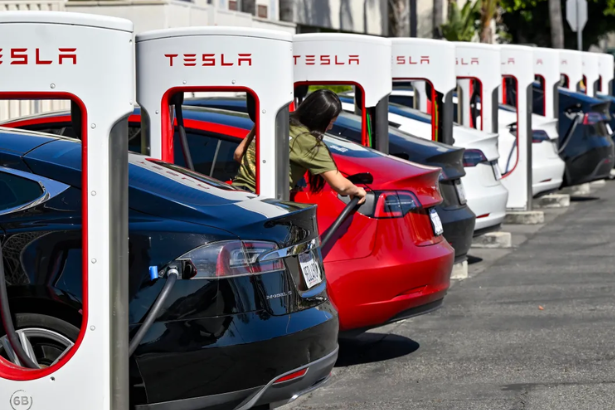
Tesla Emergency Drive Away feature that allows drivers to move their vehicles while still connected to a Supercharger, giving drivers a new escape option during a life-threatening emergency.
The feature arrives after a mass shooting at a Tesla Supercharger location in Twin Falls, Idaho, in August. The incident left four people dead and seven wounded, according to The Verge’s report. Tesla owners subsequently pushed for a way to quickly escape a charging stall without first disconnecting the vehicle manually.
Tesla’s solution is unusual because it deliberately allows the charging connection to break. The company warns that activating the feature and driving away will damage both the vehicle and the Supercharger, making it a function intended strictly for emergencies.
Background and Context
Charging an electric vehicle normally creates a simple but important restriction.
When a Tesla is connected to a Supercharger, the charging connector is locked to the vehicle and the car cannot normally be shifted into Drive. A driver who wants to leave must first release the charging connector through the vehicle touchscreen, Tesla app or charging handle, then wait for the connector to disengage.
That process is designed to prevent drivers from accidentally driving away while connected.
Under ordinary circumstances, it makes sense.
During an emergency, however, those extra seconds can become a safety issue.
The new feature changes that equation by allowing the vehicle to override the normal charging lock.
Latest Update: Tesla Adds Emergency Drive Away
Tesla’s new Emergency Drive Away feature is being introduced through software update 2026.38.3.
Once the update is installed, a Tesla driver can shift into Drive while the vehicle is still connected to a Supercharger. The system then displays an emergency confirmation prompt. If the driver confirms, the vehicle can pull away with the charging handle still attached.
The connector is designed to break away during the process.
That means the feature is not intended to provide a clean or damage-free disconnect.
Tesla explicitly warns that using it will damage the vehicle and the Supercharger. The company has also said deliberate misuse will result in additional penalties, although it has not publicly specified what those penalties will be.
The Feature Is Currently U.S.-Only
Tesla says the capability applies to U.S. Superchargers for now.
Additional reporting indicates that the feature works across Tesla’s U.S. Supercharger network and does not require new charger hardware.
The software requirement is important, however.
Tesla vehicles need software version 2026.38.3 or later, while Model S and Model X vehicles built before 2021 are not supported according to Tesla’s reported compatibility information.
Why Tesla Added the Feature
Tesla did not explicitly cite the Idaho shooting in its announcement.
But the timing is significant.
The Verge reported that Tesla owners began requesting a quick-release solution after the Twin Falls shooting, where people at a Supercharger station were among those targeted.
A driver who is trapped inside a vehicle while it is charging faces a specific problem: the car’s normal software protections prevent it from being driven away until the charging connection is released.
Tesla’s new system essentially gives the driver a last-resort override.
It sacrifices the charging hardware connection in exchange for immediate mobility.
How Tesla Emergency Drive Away Works
The process represents a major change from normal Supercharger behavior.
Normal charging
Under normal circumstances:
Vehicle connected → Charging connector locked → Vehicle remains in Park → Driver releases connector → Cable disconnects → Vehicle can drive
Emergency Drive Away
With the new feature:
Emergency detected → Shift into Drive → Emergency confirmation → Charging connection breaks away → Vehicle escapes
The difference is intentional.
Tesla is effectively treating the charging connector as a component that can be sacrificed when remaining at the charging station could present a greater danger.
The Verge reports that both the vehicle and charging handle can sustain damage during the process.
This Is Not a Convenience Feature
One of the most important points about the update is that Tesla is not presenting it as a faster way to finish charging.
It is an emergency-only function.
Tesla’s warning makes that distinction explicit. Deliberate misuse can result in additional penalties, while using the feature itself can damage the vehicle and Supercharger equipment.
That makes the feature fundamentally different from ordinary vehicle software improvements.
Tesla is using software to override a physical safety and charging constraint when the driver determines that immediate departure is necessary.
What Happens to the Charging Equipment?
The charging connector is designed to break away when the vehicle moves.
That means the driver does not simply pull the cable out of the charger in the traditional sense.
Instead, the connection is sacrificed.
Tesla’s warning is important because the cost of that event can extend beyond the charging handle.
The vehicle’s charging hardware can also be damaged, while the Supercharger may require inspection or repair afterward. Electrek reported that Tesla has indicated the damage could be substantial, with the company discussing potential damage of up to $25,000 per incident.
Tesla has not publicly clarified in the cited reporting exactly who would ultimately be responsible for every repair cost following an emergency activation.
The Feature Has a History
Tesla’s new software solution did not emerge in isolation.
After the Idaho shooting, attention returned to aftermarket products designed to solve the same basic problem.
One company, EVject, developed a breakaway adapter intended to allow EV drivers to leave a charging station without first manually disconnecting the charging cable.
Tesla sued EVject in 2024 after testing raised safety concerns involving the adapter’s operating temperature.
The company later dropped the lawsuit, while EVject continued to maintain that its product was safe.
Tesla’s new feature therefore brings a previously aftermarket concept into the vehicle’s native software.
Expert Insights and Analysis
The most interesting part of Tesla’s approach is that it solves a very specific safety problem without requiring a new generation of charging hardware.
The change is primarily software-based.
That matters because Tesla controls both the vehicle software and its Supercharger ecosystem. Instead of asking drivers to purchase a third-party accessory, Tesla can integrate the emergency function directly into the car.
The tradeoff is physical damage.
A conventional emergency disconnect system could theoretically cut power and release the connector cleanly. Tesla’s current implementation instead allows the driver to move with the connector attached and accepts the resulting damage.
That makes the feature a last-resort escape mechanism, rather than a redesigned charging architecture.
The decision also highlights an unusual challenge for EV manufacturers.
Charging stations are designed around stationary vehicles. Cars are expected to remain connected until charging is complete.
Tesla is now acknowledging that there are rare situations where remaining connected is not the safest option.
Broader Implications for EV Charging Safety
The Tesla Emergency Drive Away feature raises broader questions about the design of public EV charging stations.
As EV adoption grows, charging stations are becoming routine stops for millions of drivers.
That means charging locations increasingly function like parking lots, fuel stations and roadside infrastructure.
Safety considerations therefore extend beyond electrical protection.
They can include:
- Physical site design
- Lighting
- Visibility
- Emergency exits
- Surveillance
- Location selection
- Access to emergency services
- Vehicle escape options
Tesla has previously said it considers safety when selecting charging locations, and the company has relocated some sites that it considered unsafe, according to reporting on the new feature.
The new software capability is only one part of that larger conversation.
For more coverage of EV technology, transportation and emerging mobility systems, visit The Tech Marketer.
Related History and Comparable Technologies
Traditional gasoline vehicles have long had emergency fuel-system breakaway mechanisms at gas stations.
If a vehicle accidentally drives away while still connected to a fuel hose, the hose can disconnect at a designed breakaway point, limiting the damage and reducing the risk of a larger fuel-system failure.
EV charging systems have generally taken a different approach.
The charging connector locks into place while power is flowing, and the vehicle prevents normal driving until the connection is released.
Tesla’s new feature introduces a different philosophy for extreme circumstances.
Rather than preventing movement under all circumstances, the system creates an explicit emergency exception.
The driver can override the normal restriction, but the physical consequence is damage to the charging connection.
That approach could influence how future EV charging systems think about emergency disconnects.
What Happens Next?
Tesla’s immediate challenge will be monitoring how the feature performs in real-world emergencies.
Several questions remain open.
Will Tesla expand it internationally?
The company currently limits the feature to U.S. Superchargers. Whether it will eventually reach other markets remains unclear.
Will Tesla redesign the hardware?
The current feature accepts damage as part of the escape process.
A future system could potentially provide a cleaner emergency disconnect that automatically cuts power and releases the connector without damaging the vehicle.
How will Tesla handle misuse?
Tesla says deliberate misuse will trigger additional penalties, but the precise policy has not been publicly detailed in the cited reporting.
Will other automakers adopt similar systems?
The problem is not unique to Tesla.
Other EV manufacturers also rely on charging connectors that lock during charging.
If emergency escape becomes an established safety consideration, other automakers and charging-network operators could eventually introduce comparable functionality.
Could charging stations become safer by design?
The longer-term question may be larger than the software itself.
Better lighting, charger placement, cameras, emergency communications and site design could reduce the need for a driver to use an emergency escape function in the first place.
Conclusion
Tesla’s Emergency Drive Away feature is one of the more unusual safety updates to arrive through an over-the-air vehicle software update.
It gives drivers a way to escape a Supercharger station during an emergency even when the charging cable is still connected. The feature overrides the normal charging lock, prompts the driver for confirmation and allows the vehicle to move away while the connector breaks free.
The tradeoff is significant.
Tesla warns that the process will damage both the vehicle and the Supercharger, and the company says deliberate misuse will result in additional penalties.
The feature currently applies to U.S. Superchargers and requires the appropriate software update.
More broadly, Tesla’s decision highlights a new consideration for EV infrastructure: what happens when a vehicle needs to leave a charging station immediately, before charging can be safely disconnected in the normal way?
For now, Tesla’s answer is deliberately destructive but potentially useful in a genuine emergency.
FAQ
What is Tesla Emergency Drive Away?
Tesla Emergency Drive Away is a software feature that allows a Tesla driver to shift into Drive and leave a Supercharger while the charging cable is still connected during an emergency.
Does Tesla Emergency Drive Away damage the car?
Tesla warns that using the feature will damage the vehicle and the Supercharger. The charging connector is designed to break away when the vehicle moves.
Why did Tesla introduce Emergency Drive Away?
The feature was introduced after a mass shooting at a Supercharger location in Twin Falls, Idaho, in August 2026. Tesla owners subsequently requested a way to escape a charging station quickly during an emergency.
Is Tesla Emergency Drive Away available everywhere?
No. Tesla has introduced the capability for U.S. Superchargers for now.
Which Tesla software update adds the feature?
The feature is associated with software update 2026.38.3. Pre-2021 Model S and Model X vehicles are reportedly not supported.
Can drivers use Emergency Drive Away whenever they want?
Tesla says the feature is intended for emergencies only. The company warns that deliberate misuse can result in additional penalties.
How much can the Supercharger damage cost?
Tesla has warned about damage to the vehicle and charging equipment. Electrek reported that Tesla has indicated potential Supercharger damage could reach $25,000, although responsibility for those costs has not been fully clarified in the cited reports.
SOURCES & REFERENCES
- Tesla will now let you drive off mid-charge if there’s an emergency, The Verge
Read the original The Verge report - Tesla might charge you up $25,000 if you use its latest feature, Electrek
Read the Electrek report - Tesla adds ‘Emergency Drive Away’ at Superchargers after deadly shooting, Electrek
Read the Electrek report - Teslas can now drive off with a charging cable connected, electrive
Read the electrive report