Introduction
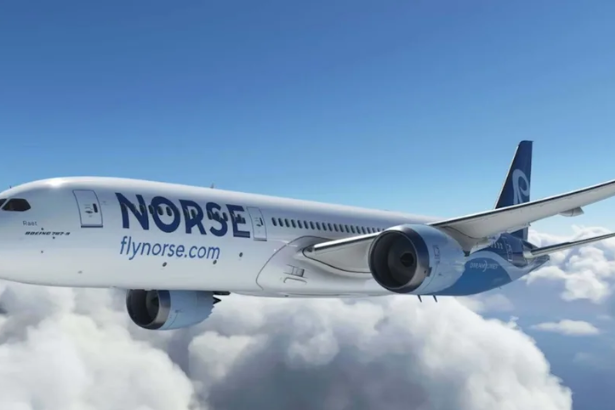
Norse Atlantic Airways route cuts are reshaping the airline’s U.S. network ahead of the 2026-27 winter season. The airline has removed its planned New York JFK services to London Gatwick and Rome Fiumicino from the winter schedule, leaving London Gatwick-Orlando as its only scheduled transatlantic route to the United States during the season.
The change is significant because Norse was created around a low-cost long-haul model heavily focused on transatlantic flying. In its launch season in 2022, seven of its eight routes served the U.S.
Now the airline’s network is moving in a different direction.
Its winter schedule is increasingly concentrated on leisure routes between Europe and Thailand, while the company is also managing high fuel prices, aircraft redeployment, ACMI operations and a broader strategic review.
The result is a much smaller U.S. footprint for Norse, at least for the coming winter.
Background and Context
Norse Atlantic Airways entered the market with a relatively straightforward proposition: operate Boeing 787 Dreamliners on long-haul routes while offering lower fares than traditional full-service carriers.
The airline began operations in 2022, initially placing substantial emphasis on North American routes.
According to Aviation Week, seven of Norse’s eight routes during its launch season served the United States, including services from Oslo to New York, Fort Lauderdale, Orlando and Los Angeles, along with Berlin-New York, Berlin-Los Angeles and London Gatwick-New York.
That network has since been progressively reduced and reshaped.
The latest change removes New York from the airline’s winter network altogether.
This is not the same as an immediate permanent cancellation of the routes.
The London Gatwick-New York JFK and Rome Fiumicino-New York JFK services are scheduled to continue through the closing weeks of the summer season before being suspended from October 25, 2026, through March 27, 2027.
That distinction matters for travelers with bookings in the current season.
Latest Update: Norse Atlantic Airways Route Cuts Remove New York for Winter
Aviation Week reported on September 22 that Norse had removed its planned New York flights from the winter schedule.
The two affected routes are:
| Route | Winter 2026-27 status | Planned frequency |
|---|---|---|
| London Gatwick (LGW) to New York JFK | Suspended Oct. 25, 2026 to Mar. 27, 2027 | 3x weekly |
| Rome Fiumicino (FCO) to New York JFK | Suspended Oct. 25, 2026 to Mar. 27, 2027 | 3x weekly |
| London Gatwick to Orlando (MCO) | Scheduled to continue | Remaining U.S. route |
AeroRoutes independently reported the same October 25 suspension date and three-weekly winter frequency for the two JFK routes.
Aviation Week’s analysis of OAG schedule data found that the two New York routes represented approximately 83,200 two-way seats that were removed from Norse’s winter schedule.
The airline’s planned winter network consequently fell from roughly 552,000 two-way seats in an earlier OAG filing to approximately 446,500.
That is a substantial schedule adjustment.
New York Loses Both Norse Routes
The New York change is particularly notable because JFK had been one of the airline’s important gateways.
The airline’s London route connected New York with London Gatwick, while its Rome service provided another European option from JFK.
Both are now scheduled to disappear for the winter.
The current schedule therefore leaves no Norse service from New York during the core winter period.
For passengers, that means travelers who had been looking at Norse for lower-cost nonstop flights from JFK to London or Rome will need to consider alternative carriers or connecting itineraries once the suspension begins.
The change is scheduled rather than an immediate end to service.
That gives the airline flexibility to maintain the routes during the remaining summer period while adjusting its winter capacity.
Why Is Norse Cutting U.S. Routes?
The airline has not publicly described the New York suspensions in the supplied reports as being caused by a single factor.
Instead, the schedule change comes within a much broader capacity and strategy adjustment.
Aviation Week reports that Norse has been cautious about capacity while fuel prices remain elevated. The airline’s CEO, Eivind Roald, said the company’s deliberate capacity reductions reflect persistently high fuel prices.
Norse’s own August traffic update provides additional context.
The airline said its capacity reductions were driven by elevated fuel prices while reporting that its own network continued to achieve strong unit revenue and very high load factors.
That creates an important distinction.
Norse is not simply saying that fewer people want to fly.
It is reducing capacity while attempting to maintain stronger economics on the flights it does operate.
The Numbers Behind Norse’s Capacity Strategy
Norse’s August figures illustrate just how dramatically its operating model has changed.
In August 2026, the airline reported:
- 238 flights in its own scheduled network, down from 607 a year earlier
- 253 ACMI and charter flights, up from 52
- 139,367 passengers, down 32% year over year
- 98.5% combined load factor
- 6.9 U.S. cents TRASK, up 30% from 5.3 cents
- 100% scheduled-flight completion
- 80% of own-network flights departing within 15 minutes
The shift is striking.
Norse’s own scheduled flying declined sharply, while ACMI and charter operations expanded.
ACMI stands for aircraft, crew, maintenance and insurance. In this model, an airline supplies the aircraft and operating services to another carrier.
That gives Norse another way to generate revenue from its Boeing 787 fleet without relying entirely on its own branded passenger network.
Nearly Full Aircraft, But Fewer Flights
One of the most interesting aspects of the current strategy is the combination of shrinking capacity and high load factors.
Norse reported a 98.5% load factor across its network and ACMI/charter operations in August, compared with 94.9% a year earlier.
At the same time, total passengers fell 32%.
Those figures are not contradictory.
When an airline substantially reduces the number of available seats, passenger numbers can fall even if the remaining flights are very full.
Norse explicitly linked its capacity reduction to elevated fuel prices.
The company said it was maintaining flexibility in capacity allocation while fuel prices remained high.
That helps explain why the airline can simultaneously report strong demand and reduce flights.
The Thailand Shift
The biggest strategic clue may be where Norse is putting its capacity instead.
Aviation Week found that routes linking Europe with Thailand account for approximately 313,000 seats in Norse’s winter 2026-27 schedule.
That represents around 70% of the airline’s planned winter capacity.
The Thailand network includes flights involving:
- London Gatwick
- Manchester
- Oslo
- Stockholm
- Bangkok
- Phuket
This represents a significant shift from Norse’s original emphasis on transatlantic flying.
Instead of spreading aircraft across numerous U.S. routes, the airline is concentrating capacity on a smaller number of long-haul leisure markets.
Why Thailand Matters to Norse
The Thailand strategy fits the airline’s broader move toward routes where it sees strong leisure demand.
Norse has previously reported strong demand for Europe-to-Thailand flying.
Its 2025 annual report said the company was considering shifting future capacity away from the transatlantic market toward destinations with stronger growth and less competition, particularly as it observed strong demand for Southeast Asia.
That provides important historical context for the current schedule.
The New York reductions therefore appear alongside a longer-term network strategy rather than representing an isolated route decision.
The airline is attempting to focus its own network on markets where it sees attractive demand and fare potential.
What Happens to Norse’s Boeing 787 Fleet?
Fleet flexibility is another important part of the story.
Norse operates a fleet of 12 Boeing 787 Dreamliners.
Six aircraft had been operating under an ACMI agreement with Indian carrier IndiGo.
That arrangement is scheduled to end on November 1, 2026, with the remaining five aircraft returning to Norse after one aircraft had already been scheduled for return.
The return of those aircraft gives Norse more capacity to allocate.
But having more aircraft available does not necessarily mean the airline needs to add more scheduled routes.
The current New York decision shows the opposite approach.
The airline is balancing its own network against ACMI opportunities, charter operations and changing market economics.
Norse Is Looking for More ACMI Opportunities
The aircraft returning from IndiGo also give Norse another potential source of revenue.
Aviation Week reports that the airline is in discussions with several airlines over ACMI and charter placements for as many as five of the returning aircraft.
That matters because ACMI flying can change the economics of operating a long-haul aircraft.
Instead of selling individual seats directly to passengers, Norse can provide the aircraft and operating service to another airline.
This can potentially give the company more flexibility when its own network opportunities are less attractive.
The strategy also reduces the need to keep every aircraft committed to a fixed schedule of branded passenger routes.
Norse’s Financial Pressure
The route cuts are also happening while Norse is dealing with financial pressure.
Aviation Week reported that Norse’s second-quarter net loss reached $70.6 million, compared with $5.9 million a year earlier.
Revenue declined 34.8% to $132 million.
Norse’s own second-quarter reporting also showed negative EBITDAR of $8.4 million, while the company said elevated fuel prices and lower aircraft utilization were affecting profitability.
The company is responding with a cost-reduction program called Project Falcon.
Norse has targeted $50 million in annual savings from 2027. It has also secured $52 million in senior secured financing maturing in 2027.
These financial considerations help explain why capacity discipline has become a central part of the airline’s strategy.
Strategic Review Adds Another Layer
Norse is also conducting a strategic review.
According to Aviation Week, the process could result in a sale, merger or partnership, and multiple parties have signed nondisclosure agreements.
Norse itself described the strategic review as having advanced into a more formal process following interest from potential partners.
That means the airline is making network decisions while simultaneously considering its longer-term corporate structure.
The eventual outcome could influence how the fleet is deployed, how much capacity remains in the airline’s own network, and how much emphasis Norse places on ACMI and charter flying.
What the Route Cuts Mean for Travelers
For travelers, the most immediate impact is straightforward.
From October 25, 2026, Norse’s scheduled winter network will no longer include:
- New York JFK to London Gatwick
- New York JFK to Rome Fiumicino
London Gatwick-Orlando is expected to remain the airline’s only scheduled U.S. transatlantic service during the winter season.
Travelers with plans for London or Rome from New York should therefore check the status of their bookings carefully as the schedule transition approaches.
The supplied sources do not establish specific passenger rebooking or refund procedures, so those details should be confirmed directly with Norse for individual bookings.
The Bigger Question for Low-Cost Transatlantic Travel
Norse’s network changes raise a broader question about the economics of low-cost long-haul aviation.
Operating long-haul aircraft requires substantial spending on fuel, aircraft leases, maintenance, airport fees, crews and other costs.
A low-cost airline can offer cheaper fares, but the economics still depend on filling enough seats at fares that cover those expenses.
Norse’s latest strategy suggests that the company sees more attractive opportunities in selected leisure markets than in maintaining a broad transatlantic network.
That does not mean low-cost transatlantic flying is disappearing.
But it does show how sensitive the model can be to fuel prices, competition, demand patterns and aircraft utilization.
Upgraded Points noted that Norse’s withdrawal from two New York routes comes after earlier reductions elsewhere in the U.S. market, including the end of Los Angeles service in April.
The U.S. Network Has Contracted Dramatically
The contrast with Norse’s launch network is striking.
In summer 2022, the airline had seven U.S.-serving routes among its eight total routes.
By winter 2026-27, the scheduled U.S. network is expected to consist of one route.
That is a substantial change in just a few years.
The airline’s operating model has evolved from a broad low-cost transatlantic network toward a more flexible combination of:
Selective scheduled routes + ACMI + charter + leisure-focused long-haul flying.
That combination gives Norse more ways to use its aircraft, although it also means the airline’s identity as a dedicated low-cost transatlantic carrier is becoming less pronounced.
Expert Insights and Analysis
The current schedule suggests that Norse is prioritizing capacity discipline over network breadth.
Several data points support that interpretation.
First, the airline has sharply reduced its own scheduled flying.
Second, it has increased ACMI and charter activity.
Third, it is concentrating much of its winter capacity on Thailand.
Fourth, it is reducing U.S. routes while continuing to report high load factors and increased unit revenue.
Fifth, management continues to emphasize elevated fuel prices when discussing capacity decisions.
The airline’s August TRASK figure of 6.9 cents was 30% higher than a year earlier.
That suggests the company is attempting to improve the economics of its remaining scheduled operation rather than simply maximizing the number of flights.
However, the financial results show that stronger unit revenue has not eliminated broader profitability challenges.
Norse reported a second-quarter net loss of $70.6 million, according to Aviation Week.
That tension between strong demand indicators and weak overall profitability is central to understanding the current network strategy.
Fuel Prices Are Central to the Decision
Fuel is one of the largest variable expenses for long-haul airlines.
When fuel becomes significantly more expensive, airlines have several choices:
- Raise fares
- Cut capacity
- Shift aircraft to more profitable routes
- Increase aircraft utilization
- Reduce frequencies
- Pursue ACMI or charter contracts
- Cancel marginal routes
Norse is using several of these tools simultaneously.
The company has explicitly linked capacity reductions to elevated fuel prices.
That makes the New York cuts part of a broader capacity-management strategy rather than simply a single-market decision.
Google Trends Section
Suggested Google Trends Image
The supplied Google Trends screenshot shows a sharp increase in search interest for “Norse Atlantic Airways US route cuts”, with interest rising sharply during the latest news cycle before beginning to decline.
The screenshot also shows related news coverage from Aviation Week, The Sun and Upgraded Points.


6
Suggested Google Trends image title:
Norse Atlantic Airways US Route Cuts Search Interest
Suggested caption:
Google Trends shows a sharp spike in search interest around Norse Atlantic Airways’ U.S. route cuts as the airline removes New York from its winter schedule.
Trend Tags / Keywords
Norse Atlantic AirwaysNorse Atlantic route cutsNorse US flightsNorse JFKNorse Atlantic New YorkNorse London GatwickNorse Rome flightslow cost transatlantic flightsairline route cutsNorse winter schedule
Exactly 3 Reference Links
Aviation Week: Norse Pulls New York Routes From Winter Schedule
Upgraded Points: Norse Atlantic Cancels All U.S. Routes Except for 1
Norse Atlantic August Traffic Update
Broader Implications
The Norse Atlantic Airways route cuts extend beyond two individual New York routes.
They illustrate how airline networks can change quickly when operating economics shift.
1. Less Low-Cost Competition at JFK
The withdrawal of Norse’s winter New York services reduces the number of airlines competing directly on those city pairs.
That could change the competitive landscape for passengers looking for nonstop options between New York and Europe.
2. More Capacity Concentration
Norse is concentrating a much larger share of its winter network around Thailand.
Aviation Week estimates that Thailand-related routes will account for roughly 70% of winter capacity.
3. More Flexible Aircraft Deployment
The return of aircraft from IndiGo gives Norse opportunities to pursue additional ACMI contracts or deploy aircraft into its own network.
4. The Future of Low-Cost Long-Haul
Norse’s experience shows the difficulty of maintaining a broad low-cost long-haul network when fuel costs and competitive pressures are high.
5. A More Hybrid Airline Model
Norse is increasingly combining scheduled passenger services with ACMI and charter flying.
That makes its business less dependent on a single operating model.
Internal link suggestion: Add an internal article at thetechmarketer.com titled “Why Airlines Are Rethinking Long-Haul Capacity in 2026” and link to it from this section.
Related History and Comparable Airline Strategies
Norse is not the first airline to reconsider the economics of low-cost long-haul operations.
The industry has repeatedly experimented with different approaches to transatlantic flying.
Norwegian
Norse Atlantic inherited many elements of the low-cost long-haul concept associated with Norwegian Air’s earlier transatlantic strategy.
Norwegian ultimately withdrew from long-haul operations during its restructuring.
WOW air
Icelandic low-cost carrier WOW air built a connecting model between Europe and North America before ceasing operations in 2019.
PLAY
Icelandic carrier PLAY also pursued a low-cost transatlantic model built around connecting Europe and North America.
French bee
French bee continues operating long-haul low-cost routes between France and several destinations, including the United States.
The broader lesson from these models is that long-haul low-cost flying requires careful control of capacity, costs and network structure.
Norse’s current strategy is another version of that experiment.
What Happens Next
Several developments will determine where Norse goes from here.
October 25 Route Change
The first major milestone is October 25, when the New York-London and New York-Rome services are scheduled to leave the winter timetable.
November Aircraft Returns
The remaining IndiGo ACMI arrangement is scheduled to end November 1, returning five aircraft to Norse.
Thailand Expansion
Norse is increasing its Thailand-focused flying, making Bangkok and Phuket increasingly important components of its network.
ACMI Deals
The airline is discussing new ACMI and charter placements for returning aircraft.
Strategic Review
The formal strategic review could ultimately lead to a sale, merger or partnership, according to company and industry reporting.
Third-Quarter Results
Norse’s next scheduled quarterly report is due November 25, 2026.
That report should provide additional information on the financial impact of the network changes and the airline’s winter operations.
Conclusion
The latest Norse Atlantic Airways route cuts mark another major step in the airline’s transformation.
From an initial model heavily focused on U.S. transatlantic flying, Norse is moving toward a smaller, more selective scheduled network supported by ACMI and charter operations.
The immediate change is clear: from October 25, 2026, London Gatwick-New York JFK and Rome Fiumicino-New York JFK are scheduled to disappear from the winter timetable, leaving London Gatwick-Orlando as Norse’s only scheduled U.S. transatlantic route during the season.
At the same time, the airline is putting much more capacity into Europe-Thailand markets, which Aviation Week estimates will represent about 70% of its winter capacity.
High fuel prices are a major factor in the airline’s capacity decisions, while financial losses, returning aircraft from IndiGo and an ongoing strategic review add further pressure.
The result is an airline that looks increasingly different from the Norse that launched in 2022.
Its next chapter will depend on whether the combination of selective leisure routes, ACMI flying, charter operations and tighter capacity management can produce a more sustainable long-haul business.
FAQ
1. What are the latest Norse Atlantic Airways route cuts?
Norse Atlantic is removing London Gatwick-New York JFK and Rome Fiumicino-New York JFK from its winter 2026-27 schedule. Both services are scheduled to stop from October 25, 2026, through March 27, 2027.
2. Is Norse Atlantic cancelling all U.S. flights?
No. London Gatwick-Orlando is expected to remain Norse’s only scheduled transatlantic U.S. route during the winter 2026-27 season.
3. When will Norse stop flying from New York to London?
The London Gatwick-New York JFK route is scheduled to be suspended from October 25, 2026, through March 27, 2027.
4. When will Norse stop flying from New York to Rome?
The Rome Fiumicino-New York JFK route is also scheduled to be suspended from October 25, 2026, through March 27, 2027.
5. Why is Norse Atlantic cutting capacity?
Norse has said that persistently high fuel prices are a major reason for its deliberate capacity reductions. The company is also reshaping its network toward selected leisure markets and expanding its use of ACMI and charter operations.
6. Where is Norse shifting its aircraft?
A significant share of Norse’s winter capacity is being concentrated on routes between Europe and Thailand, including Bangkok and Phuket. Aviation Week estimates these routes will represent around 70% of the airline’s winter capacity.
7. What happened to Norse’s ACMI deal with IndiGo?
Norse and IndiGo agreed to discontinue their ACMI cooperation effective November 1, 2026. The remaining five aircraft operated by IndiGo are scheduled to return to Norse.
Sources & References
- Aviation Week: Norse Pulls New York Routes From Winter Schedule
Read Aviation Week’s full report - Upgraded Points: Norse Atlantic Cancels All U.S. Routes Except for 1
Read the Upgraded Points report - Norse Atlantic ASA: Continuing Strong Commercial Performance in August
Read Norse Atlantic’s August traffic update - Norse Atlantic ASA: Operational and Strategic Update
Read the Norse strategic update - Norse Atlantic ASA: Navigating Market Volatility With Record Unit Revenues in Q2 2026
Read the Q2 financial update