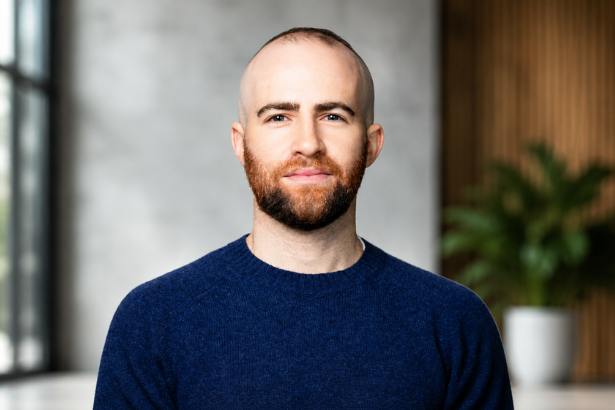
Substack sponsorships 2026 marks a strategic pivot for the newsletter platform, which has built its identity around subscriptions since launch but is now formally expanding into advertising. Substack hired former Roku and PayPal executive Dan Robbins as its first head of brand sponsorships, the company exclusively told Axios on June 15, 2026. The hire coincides with Substack’s announcement of an expanded native sponsorships program featuring inaugural partners including Uber, Whatnot, Granola, Balenciaga, T-Mobile, Polymarket, and Yahoo Scout, collectively investing millions of dollars in creators who choose to participate.
Who Is Dan Robbins and Why Was He Hired?
Substack has hired former Roku and PayPal executive Dan Robbins as its first head of brand sponsorships, he exclusively told Axios. Robbins joins Substack after senior roles at PayPal, Roku, and Nielsen, where he helped build advertising and commerce businesses.
He says the common thread throughout his career has been building monetization businesses “without bruising what made the companies special in the first place.” That framing speaks directly to the central tension Substack faces: introducing advertising revenue without compromising the subscription-first, independence-focused identity that has defined the platform since its founding.
Robbins is a longtime Substack fan himself. He says he has been reading and paying for Substack newsletters for nearly a decade, dating back to one of its earliest hits, Bill Bishop’s Sinocism. That personal history with the platform as a paying subscriber adds credibility to his stated commitment to protecting creator independence as the company scales its advertising business.
The Inaugural Sponsorship Partners: Uber, Balenciaga, T-Mobile, and More
Substack announced its expanded sponsorship program on Monday, June 15, with inaugural partners including Uber, Whatnot, Granola, Balenciaga, T-Mobile, Polymarket, and Yahoo Scout.
Substack CEO and founder Chris Best wrote in a blog post that the brands will be “building with, and investing millions of dollars in, the creators who choose to participate.” He emphasized that the arrangements are “direct partnerships between brands and publishers who have already built robust audience-first businesses.”
The brand roster spans multiple categories: Uber represents ride-sharing and delivery, Whatnot represents live shopping and resale, Granola represents productivity software, Balenciaga represents luxury fashion, T-Mobile represents telecommunications, Polymarket represents prediction markets, and Yahoo Scout represents Yahoo’s AI-powered content discovery product. The breadth of categories signals Substack’s effort to demonstrate cross-industry advertiser demand rather than a narrow vertical pilot.
How Substack’s Sponsorships 2026 Actually Work
Best described the model with explicit emphasis on creator control, distinguishing the program from conventional programmatic advertising.
These are not arbitrarily inserted ads. They are direct partnerships between brands and publishers who have already built robust audience-first businesses. Creators choose who they work with. They set the creative direction. They keep full editorial independence.
Best framed Substack’s role narrowly: “Our job is to take care of what they shouldn’t have to, the matchmaking, the infrastructure, the logistics, so they can stay focused on the work.” That description positions Substack as a facilitator connecting brands and creators rather than an ad network that controls placement, pricing, or creative content.
Dan Robbins reinforced the same creator-control framing in his comments to Axios. “Subscriptions remain the foundation of creator businesses on Substack,” Robbins said. “These are first steps towards a broader brand partnership platform, but the ambition is very much just in line with Substack’s ethos of independence, of ownership, of direct relationships.”
Creator Kits: The Tool Behind the Matchmaking
The mechanism through which creators signal their interest in sponsorship work is a new feature Substack is rolling out alongside the expanded program.
The company is introducing Creator Kits, a tool that helps publishers share their interest in sponsorship opportunities. If you are a Substack bestseller who is interested in participating and shaping the program, you can publish your Creator Kit now.
The Creator Kit functions as a structured profile that signals a creator’s audience characteristics, content focus, and openness to brand partnerships, allowing Substack and prospective sponsor brands to identify a match without requiring creators to individually pitch or negotiate with each potential partner. Robbins says the effort will be intentionally hands-on as Substack learns what a sponsorship business that is “uniquely Substack” should look like, suggesting the Creator Kit system and matching process will evolve significantly as the company gathers data from this expanded cohort.
By the Numbers: 100,000 Publishers and $100 Million in Top Earnings
The scale of Substack’s existing subscription business provides important context for why the company is choosing this moment to formalize sponsorships rather than earlier in its history.
More than 100,000 publishers make money through subscriptions on Substack, CEO Chris Best wrote in a Monday blog post about the “next phase” of the company’s native sponsorships program. The top 10 collectively generate more than $100 million annually, per Best.
That concentration at the top of Substack’s creator economy, with ten publishers generating $100 million combined, illustrates both the platform’s success in building a small cohort of extremely successful independent media businesses and the broader opportunity to extend monetization tools to the much larger base of publishers who have not yet reached that scale. Sponsorships represent an additional revenue lane specifically designed to complement, not replace, that subscription foundation.
The Polymarket Controversy: Gambling and Journalism Mix Criticized
Not every aspect of Substack’s sponsorship expansion has been received without controversy, particularly the inclusion of prediction market platform Polymarket among the inaugural partners.
Polymarket has joined Substack’s sponsorship pilot program, supporting a cohort of creators who integrate prediction market tools into their work. Polymarket wrote in a social media post announcing the partnership: “Journalism is better when it’s backed by live markets.” That framing drew immediate pushback from media commentators who noted that prediction markets are, in essence, gambling platforms, and questioned whether integrating betting-adjacent products into journalistic newsletters represented appropriate editorial boundaries.
The Polymarket partnership predates the broader June 2026 sponsorship expansion, having first been announced in February 2026 as an embed feature allowing writers to add prediction market data through the Substack Editor. Its inclusion in the expanded program signals that the earlier controversy did not deter Substack from continuing the relationship at a larger scale.
Why Substack Is Adding Ads Now: Competing With Beehiiv
The strategic context behind Substack’s pivot toward advertising connects to competitive pressure from rival newsletter platforms that have built advertising infrastructure more aggressively.
The move helps Substack better compete with rivals like Beehiiv, which operates an ad network. Substack’s growth in raw audience size has outpaced its growth in advertiser adoption: US unique visitors nearly doubled from 6.3 million in May 2024 to almost 14 million by May 2025, showing meaningful top-funnel interest, yet the platform remains barely present in creator marketing today.
Only 5% of brand marketers and 13% of agency marketers use Substack as a creator channel, and less than 1% cite it as their top ROI platform, according to CreatorIQ data. That gap between rising traffic and minimal marketer investment is precisely the problem Robbins’s hire and the expanded sponsorship program are designed to close. Ads aren’t new to Substack, but creators have historically been sourcing, negotiating, and managing those relationships themselves without platform-level infrastructure or brand introductions.
What This Means for Substack Creators
For the broader Substack creator base, the formalized sponsorship program represents a new revenue stream layered on top of, rather than replacing, the subscription model that remains central to the platform’s identity.
Substack will not take a cut of these brand deals during the pilot phase, though that arrangement is not guaranteed to continue once sponsorships expand beyond the initial pilot cohort. Native sponsorships will take the form of visible but non-disruptive markups within posts and publications, limited initially to creators already accepted into the program.
For creators outside the initial cohort of bestsellers and flagship partners, the practical path forward is publishing a Creator Kit to signal interest and building the kind of audience-first business that brands like Uber and Balenciaga are specifically seeking to partner with. As Robbins indicated, the program will expand iteratively as Substack learns what works, suggesting broader creator access to sponsorship opportunities is likely to follow in subsequent phases throughout 2026.
Latest Updates
Substack’s hire of Dan Robbins and its expanded sponsorship program were both announced on Monday, June 15, 2026. Axios confirmed the exclusive details of Robbins’s hiring, his background at PayPal, Roku, and Nielsen, and his direct quotes on creator independence and monetization philosophy. Variety and El-Balad confirmed the full list of inaugural sponsorship partners including Yahoo Scout, Whatnot, Granola, Balenciaga, T-Mobile, Polymarket, and Uber, along with CEO Chris Best’s quotes on the program’s structure. Substack’s own blog post via Chris Best confirmed the 100,000-publisher subscription base, the top 10 publishers generating $100 million combined, and the introduction of Creator Kits.
Full sources: Axios | IMDb | IMDb
Broader Implications
Substack’s pivot toward formalized advertising, anchored by Dan Robbins’s hire and the expanded sponsorship program, marks a maturation point for a platform that built its entire brand identity around rejecting the advertising-driven, algorithm-optimized media model that dominates most of the internet. The challenge Robbins himself articulated, building monetization “without bruising what made the companies special in the first place,” is the central risk Substack now has to manage as it scales beyond pure subscriptions.
The Polymarket controversy is an early test case for how that balance plays out in practice. A prediction market platform whose core product is fundamentally a betting mechanism partnering with journalists and newsletter writers raises legitimate questions about what kinds of brand relationships are compatible with the editorial independence Substack promises creators and readers alike. How Substack and individual creators navigate those boundary questions as the sponsorship program scales will shape perceptions of the platform’s credibility.
For the broader creator economy, Substack’s move validates a model where platforms compete to provide infrastructure and brand introductions while explicitly preserving creator control over content and partnership decisions, a meaningfully different value proposition than the algorithm-driven attention economy that has defined most social media monetization to date.
For more media, creator economy, and technology business coverage, visit The Tech Marketer.
Frequently Asked Questions
1. Who did Substack hire as head of brand sponsorships?
Substack hired Dan Robbins, a former Roku and PayPal executive, as its first head of brand sponsorships. The hire was announced exclusively to Axios on June 15, 2026. Robbins previously held senior roles at PayPal, Roku, and Nielsen, where he helped build advertising and commerce businesses.
2. What brands are part of Substack’s new sponsorship program?
Substack’s inaugural sponsorship partners announced June 15, 2026 include Uber, Whatnot, Granola, Balenciaga, T-Mobile, Polymarket, and Yahoo Scout. CEO Chris Best said these brands are collectively investing millions of dollars in the creators who choose to participate in the program.
3. How does Substack’s native sponsorship program work?
Substack’s sponsorships are direct partnerships between brands and individual creators, with creators choosing who they work with, setting creative direction, and keeping full editorial independence. Substack provides matchmaking, infrastructure, and logistics support. Creators signal their interest through a new tool called Creator Kits. Substack is not taking a cut of brand deals during the pilot phase.
4. How many publishers make money on Substack through subscriptions?
More than 100,000 publishers make money through subscriptions on Substack, according to CEO Chris Best. The top 10 publishers collectively generate more than $100 million annually. The new sponsorship program is designed as an additional revenue stream that complements, rather than replaces, the subscription model.
5. Why is the Polymarket partnership controversial?
Polymarket, a prediction market platform that is essentially a betting service, joined Substack’s sponsorship program, prompting criticism from media commentators about mixing gambling-adjacent products with journalism. Polymarket’s post stating “Journalism is better when it’s backed by live markets” drew particular pushback when the partnership was first announced in February 2026, ahead of its inclusion in the June 2026 expanded program.